Shape Recognition Easy Grade 2 Fractions of Shapes Worksheets
4 filtered results
-
From - To
Discover our engaging "Shape Recognition Easy Grade 2 Fractions of Shapes Worksheets" designed to enhance your child's understanding of geometry and fractions. These worksheets provide interactive activities that help students identify and classify various shapes while exploring fractions within those shapes. Ideal for second graders, the worksheets promote visual learning, making fractions more relatable through shapes like circles, squares, and triangles. With colorful visuals and simple instructions, your child will build essential skills in shape recognition and fraction comprehension. Foster a solid foundation in mathematics while making learning fun and enjoyable. Get started today to boost your child's confidence in math!
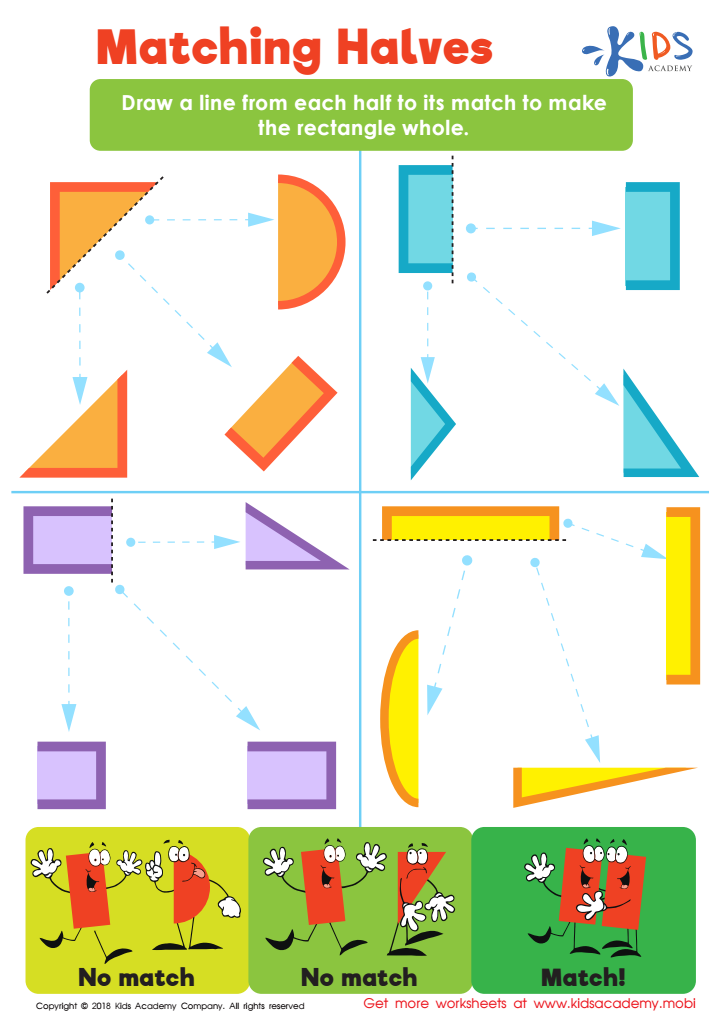
Matching Halves Worksheet
 Assign to My Students
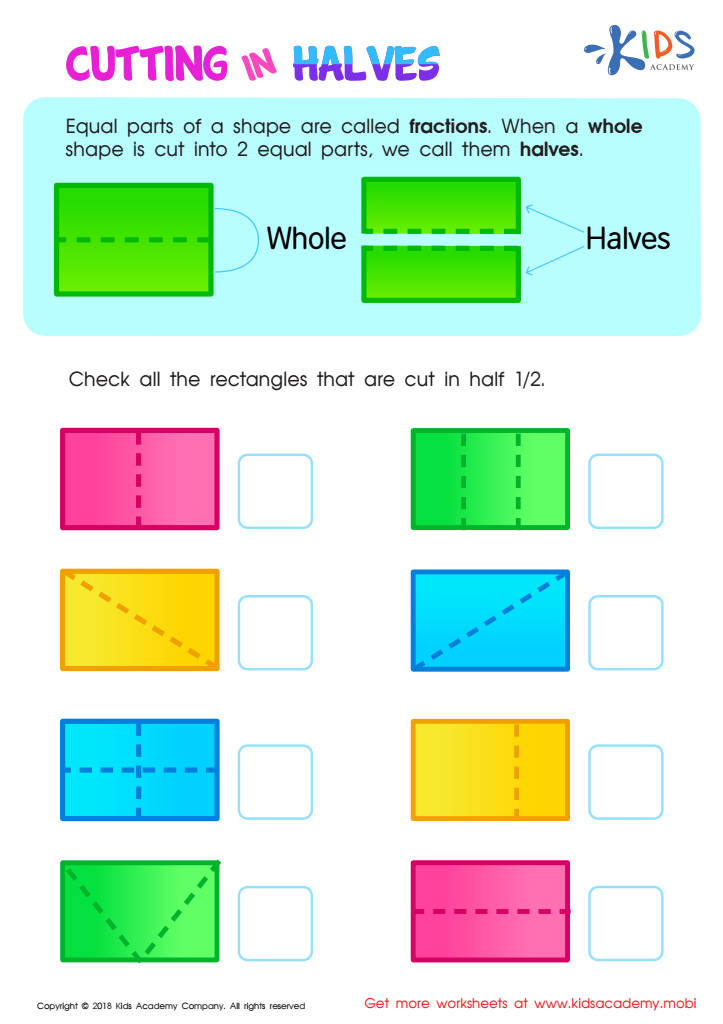
Cutting in Halves Worksheet
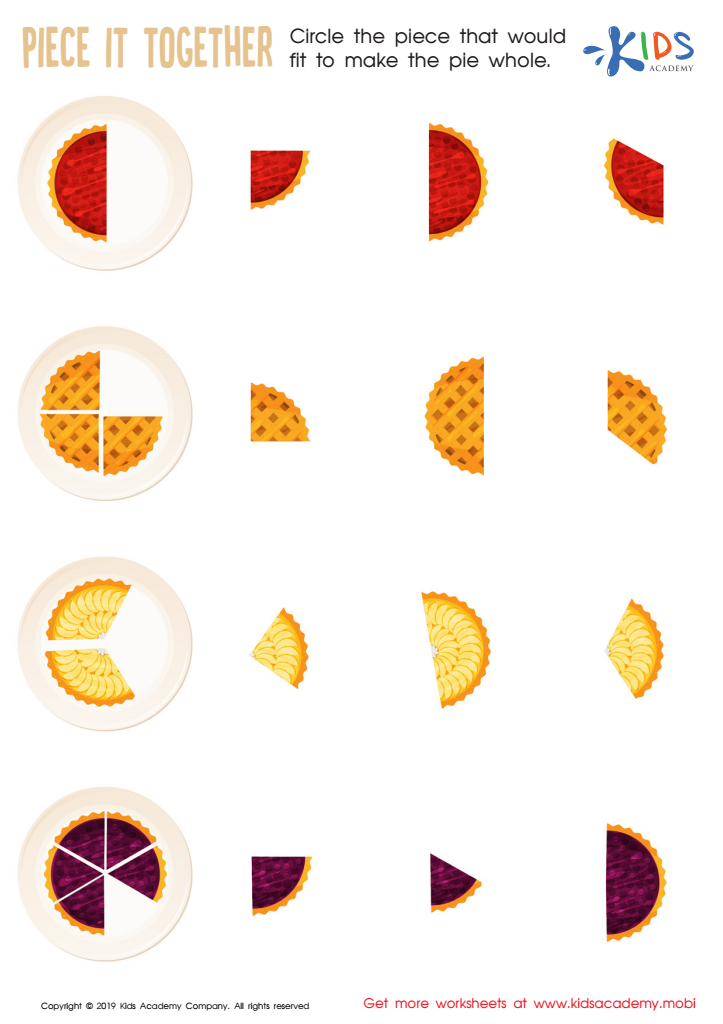
Piece it together Worksheet
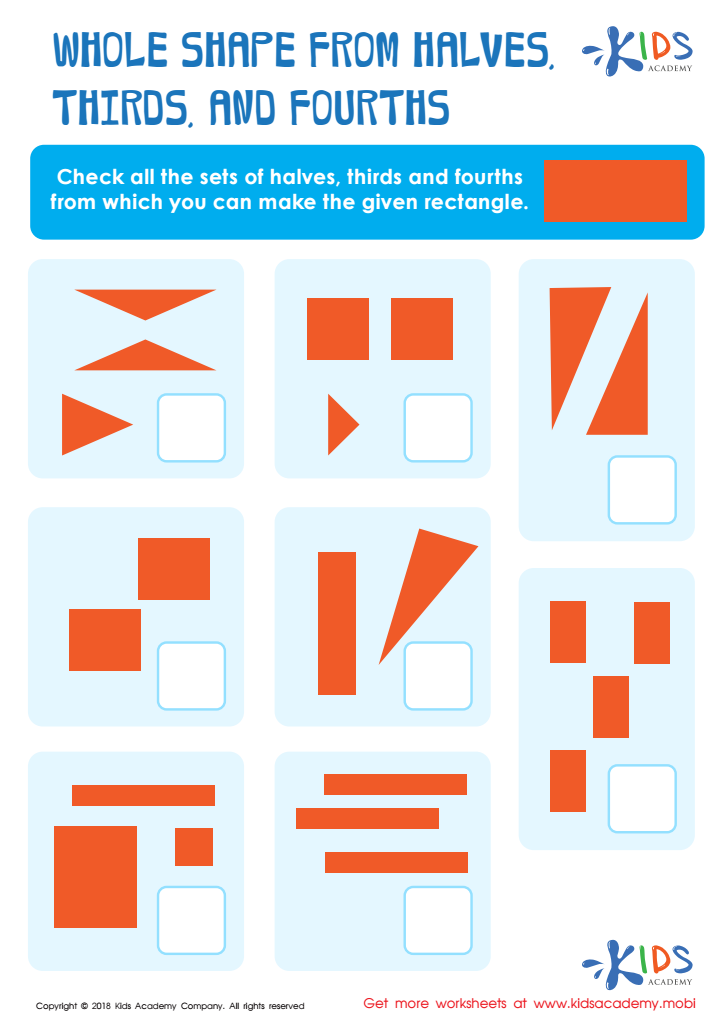
Whole Shape from Halves, Thirds and Fourths Worksheet





Shape recognition and an understanding of fractions of shapes are foundational skills for young learners in grade 2. Parents and teachers should prioritize these areas for several reasons.
Firstly, shape recognition helps children describe and categorize their world, enhancing their spatial awareness and cognitive skills. Recognizing different shapes fosters creativity and critical thinking as they engage in activities like art and problem-solving.
Secondly, introducing fractions of shapes at an early age lays the groundwork for mathematical understanding. By learning how shapes can be divided into parts, children develop their ability to comprehend more complex mathematical concepts later. Understanding fractions promotes skills in comparison, measurement, and basic operations—essential for future math success.
Furthermore, these concepts are intertwined with everyday experiences. Parents and teachers can create real-life applications—such as cooking, crafting, or playing games—that make learning both engaging and meaningful.
Lastly, supporting children in these areas builds their confidence and enthusiasm for math, setting positive attitudes towards learning. By making shape recognition and understanding fractions fun and interactive, educators and caregivers can help cultivate a lifelong love for math and problem-solving in young learners.