Comparing lengths Easy Grade 2 Math Worksheets
4 filtered results
-
From - To
Help your second grader excel in math with our "Comparing Lengths Easy Grade 2 Math Worksheets." These engaging worksheets are designed to make comparing lengths fun and educational. By using relatable visuals and simple instructions, children are encouraged to measure and compare objects effortlessly. Perfect for classroom and at-home practice, these worksheets help develop critical math skills while enhancing attention to detail and reasoning abilities. Download our free printable worksheets today and watch your child's confidence grow as they master important concepts in a playful and enjoyable way! Start comparing lengths now with Kids Academy!
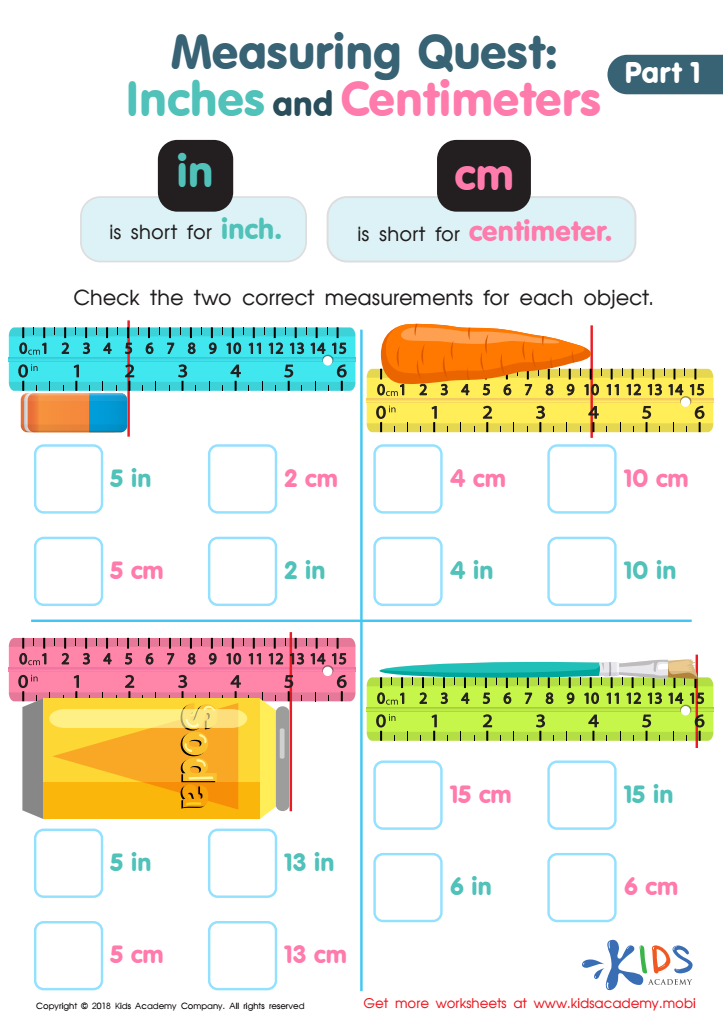
Measuring Quest: Inches and Centimeters Worksheet
 Assign to My Students
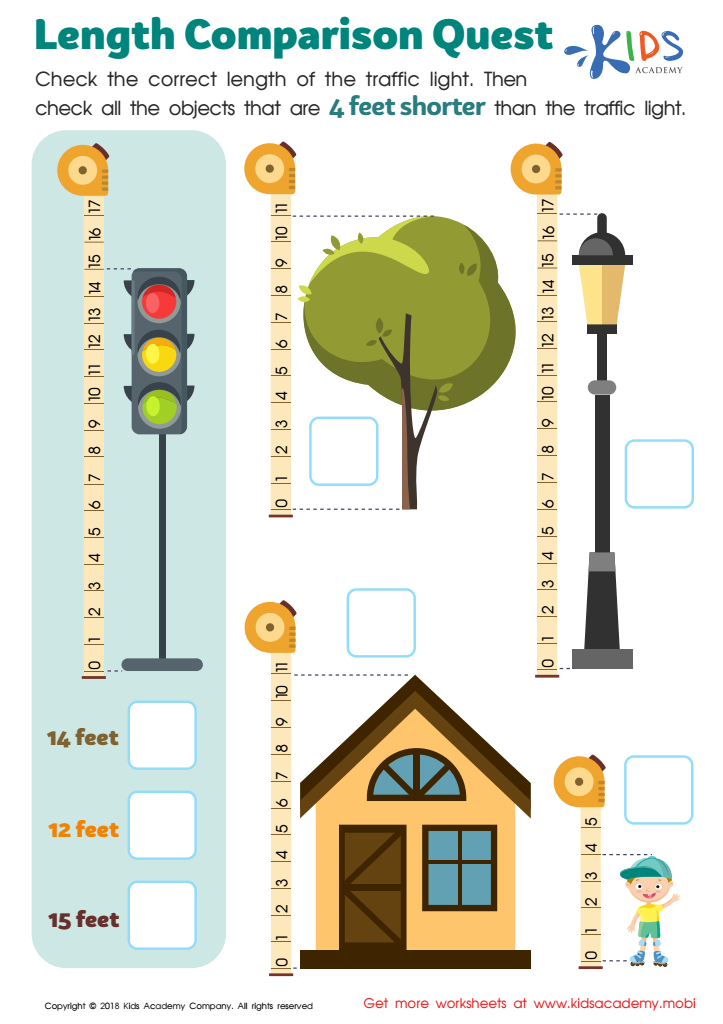
Length Comparison Quest Worksheet
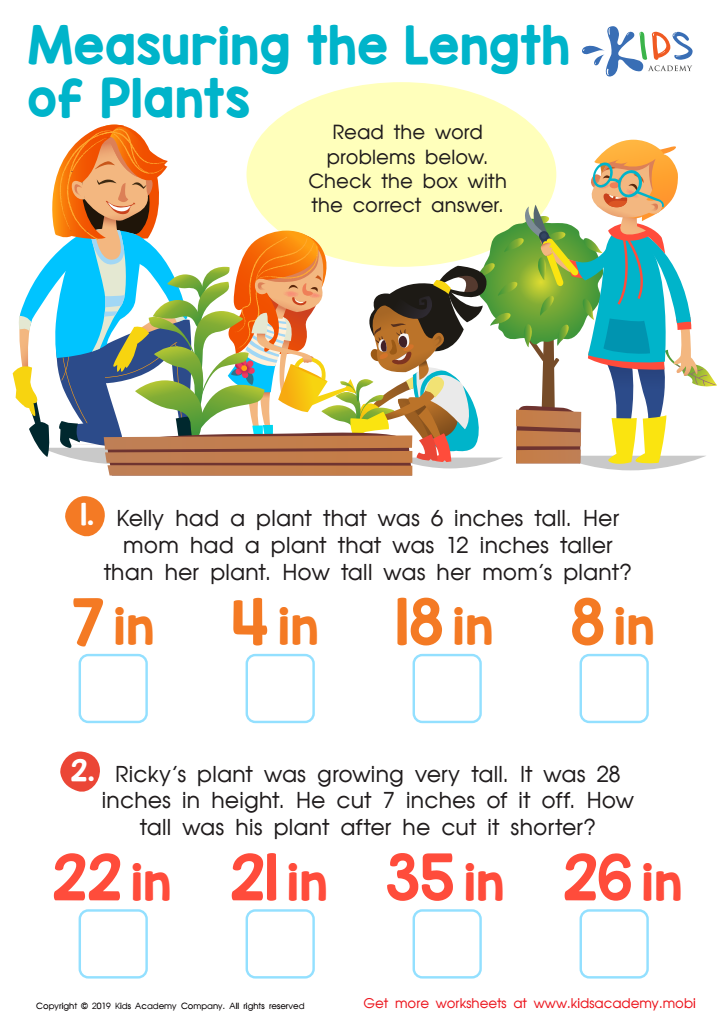
Measuring the Length of Plants Worksheet
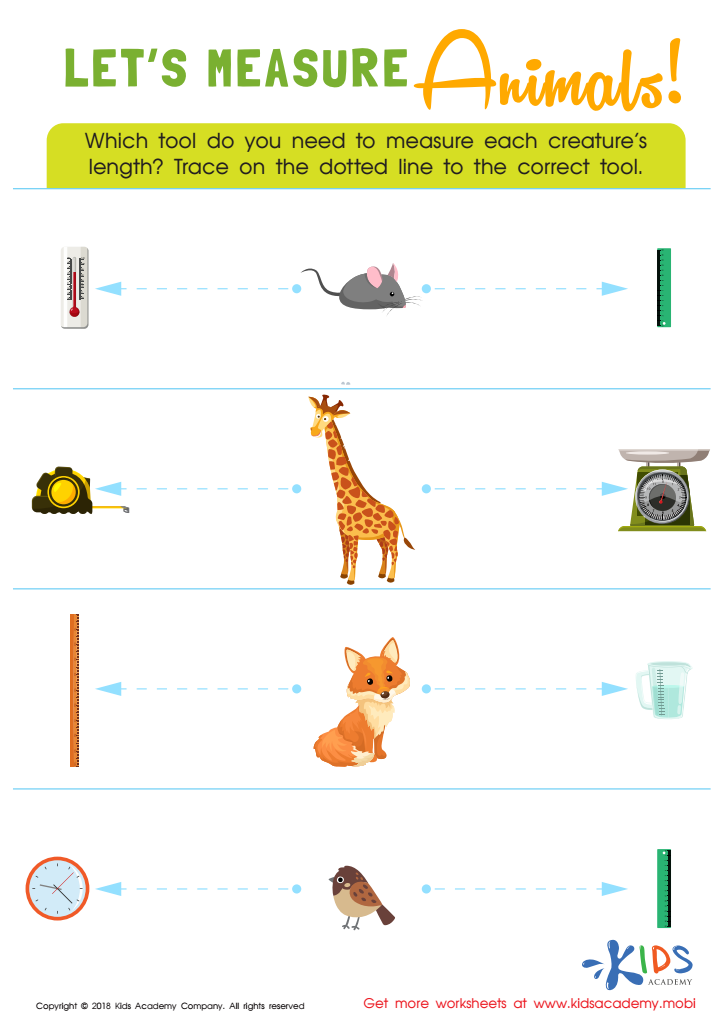
Let's Measure Animals! Worksheet






Comparing lengths is an essential early math skill in Grade 2 that parents and teachers should prioritize because it lays the foundation for understanding measurement, a core mathematical concept. By learning to compare the lengths of objects, children develop critical thinking skills and spatial awareness.
Firstly, introducing comparative measurements helps children grasp the idea of quantifying physical attributes, which is fundamental not only in math but also in everyday decision-making and problem-solving. Understanding terms like "longer," "shorter," and "equal" assists kids in making sense of the world around them and in communicating their observations more effectively.
Secondly, these early measurement activities are closely tied to practical life skills. Kids will frequently encounter tasks requiring measurement, such as determining if a shelf will fit in a desired space or measuring ingredients for a recipe. Developing these abilities in a classroom setting ensures that they are well-prepared to apply such knowledge in real-life contexts.
Moreover, fostering proficiency in comparing lengths also sets the stage for more advanced mathematical concepts, such as perimeter and area, which students will encounter later in their academic journey. Therefore, dedicating time to understanding these basics enhances students' confidence and competence in math by building a solid foundation that supports continued learning and problem-solving capabilities.