Understanding patterns Easy Grade 3 Worksheets
5 filtered results
-
From - To
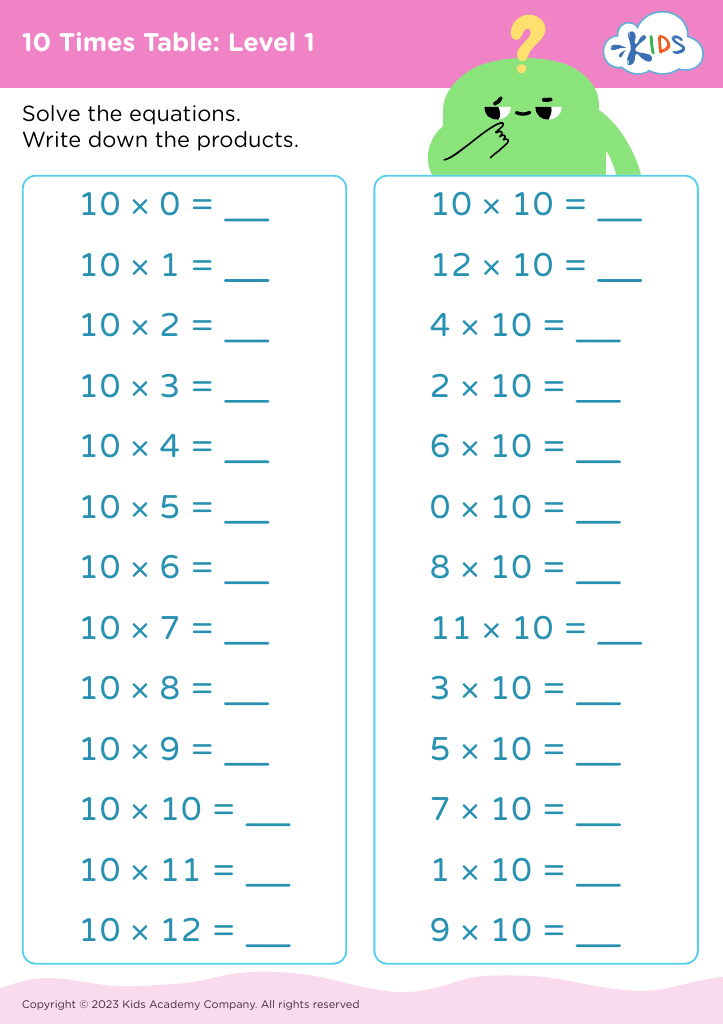
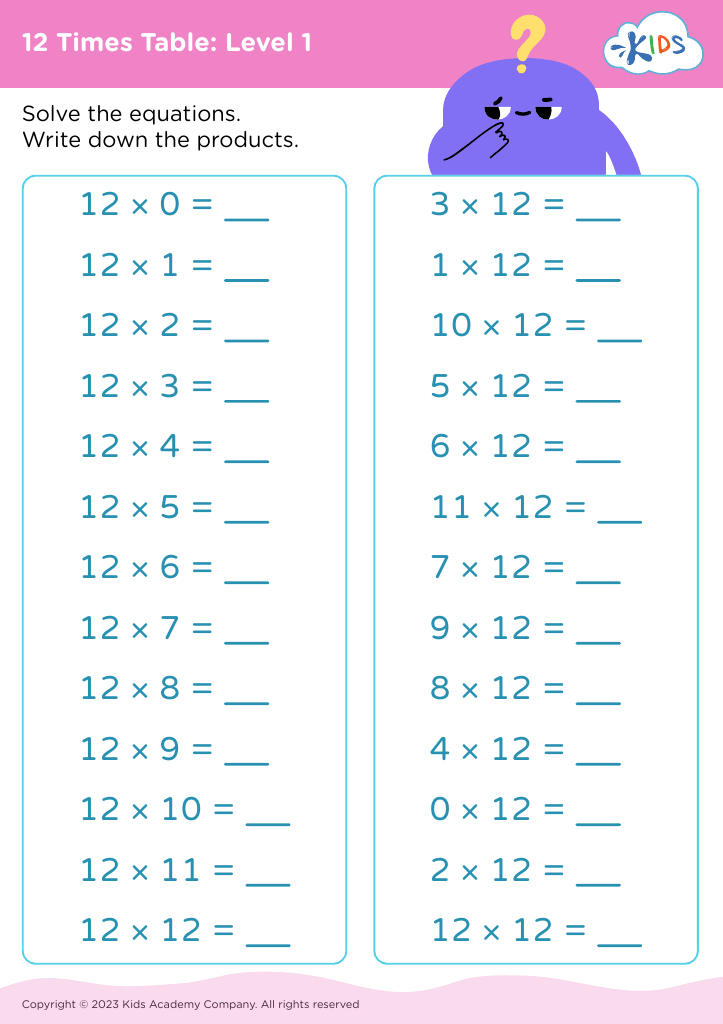
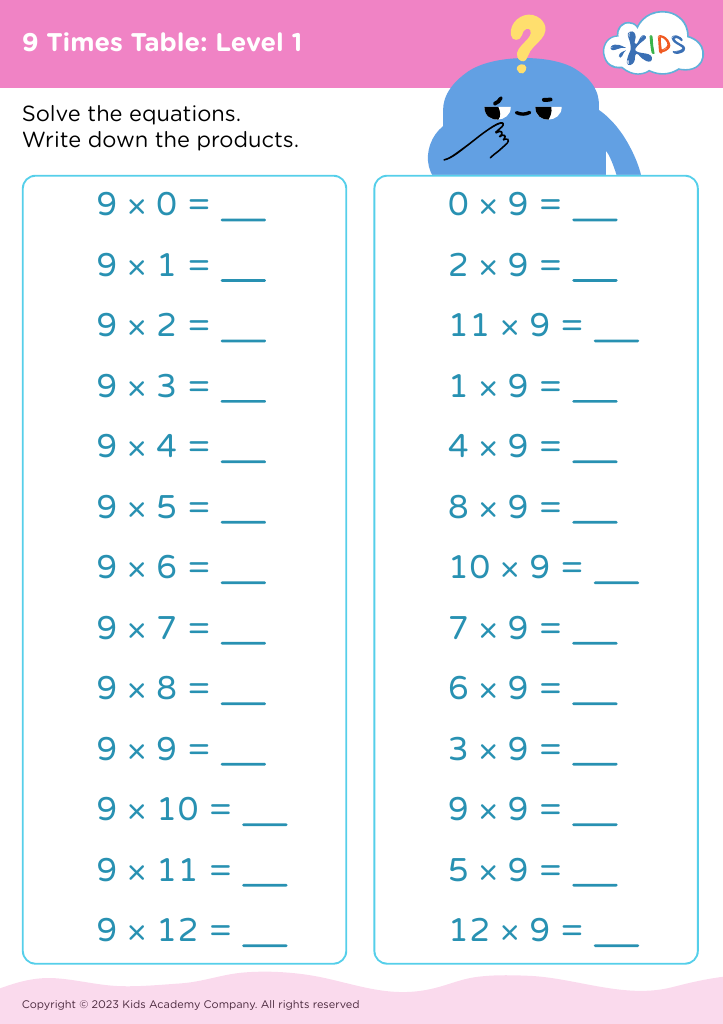
Explore our "Understanding Patterns Easy Grade 3 Worksheets," designed to enhance students' mathematical skills in a fun and engaging way. These worksheets aim to help young learners identify and analyze patterns, recognizing sequences in numbers, shapes, and colors. Each activity promotes critical thinking and problem-solving while aligning with educational standards. With vibrant illustrations and clear instructions, these resources stimulate creativity and reinforce understanding in diverse ways. Perfect for classroom use or home practice, our worksheets make learning enjoyable. Download and watch your child's confidence grow as they master patterns in a captivating format tailored for third graders!
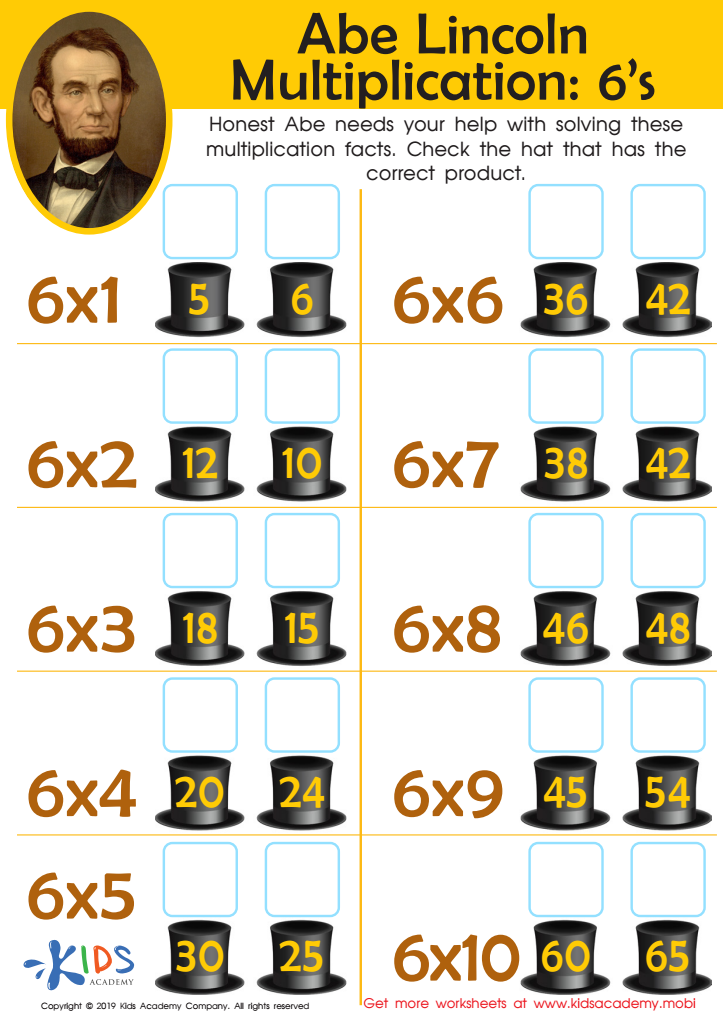
Abe Lincoln Multiplication: 6’s Worksheet
 Assign to My Students








Understanding patterns is a fundamental concept in early education, particularly for Grade 3 students. Parents and teachers should care about this subject because it forms the basis for critical thinking and problem-solving skills that students will use throughout their academic journey and in everyday life.
Firstly, recognizing patterns helps young learners develop logical reasoning abilities. For instance, when children can identify sequences or relationships, they begin to make predictions and draw conclusions based on their observations. This skill is essential in subjects like mathematics, where patterns are foundational in concepts such as addition, subtraction, and eventually, algebra.
Additionally, understanding patterns enhances creativity. When students explore patterns in art, music, and nature, they engage in critical thinking and are encouraged to experiment. This interdisciplinary approach makes learning more engaging and applicable, promoting a love for exploration.
Furthermore, recognizing and creating patterns fosters self-confidence. As children learn to identify and manipulate patterns, they gain a sense of accomplishment that motivates them to tackle more complex challenges.
In sum, emphasizing pattern recognition is vital for building a well-rounded educational experience that equips Grade 3 students with essential life skills, fostering intellectual growth and enhancing overall academic performance.