Understanding fractions Easy Grade 3 Math Worksheets
4 filtered results
-
From - To
Welcome to "Understanding Fractions: Easy Grade 3 Math Worksheets"! This webpage offers a collection of engaging and interactive worksheets designed specifically for third-grade students. Our resources aim to simplify the concept of fractions, making it fun and approachable. Kids will explore fraction basics, including recognizing, comparing, and adding fractions through vibrant visuals and practical exercises. Each worksheet supports curricular standards while promoting critical thinking and problem-solving skills. Whether at home or in the classroom, our user-friendly materials help young learners build a strong foundation in fractions, helping them gain confidence in their math abilities. Start your journey to mastering fractions today!
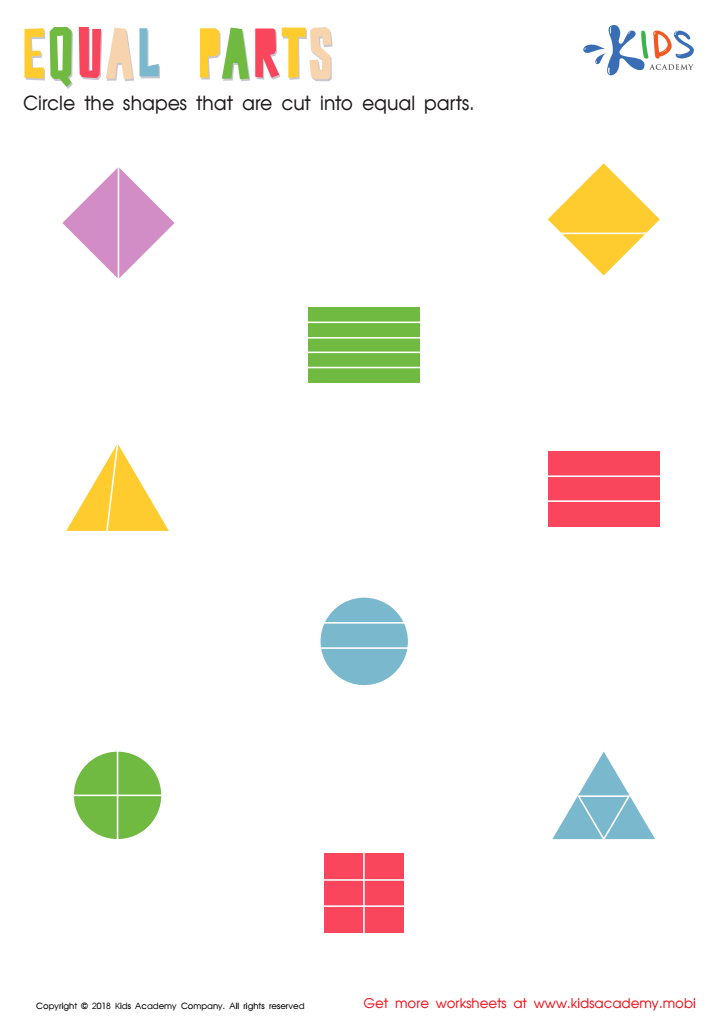
Equal Parts: Shapes Worksheet
 Assign to My Students
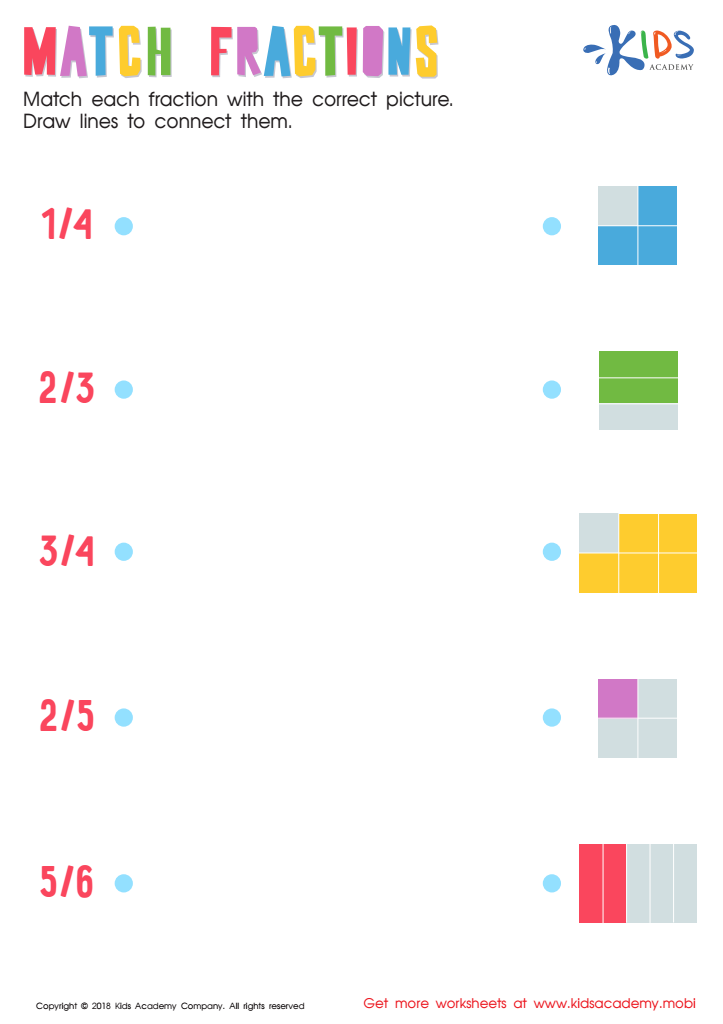
Match Fractions Worksheet
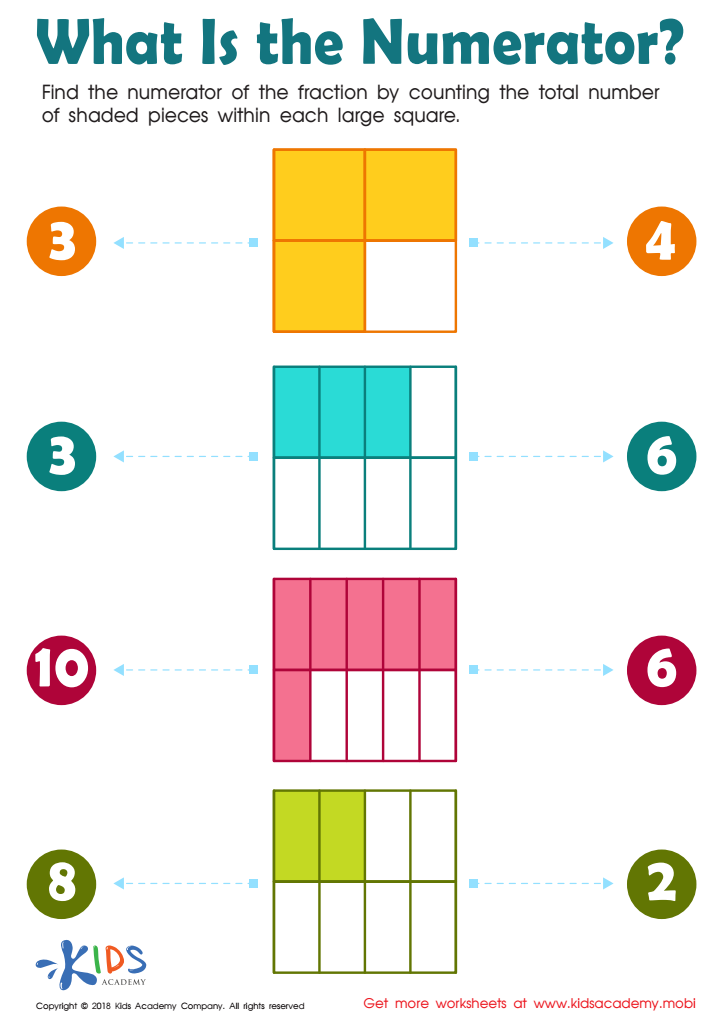
What Is the Numerator? Worksheet
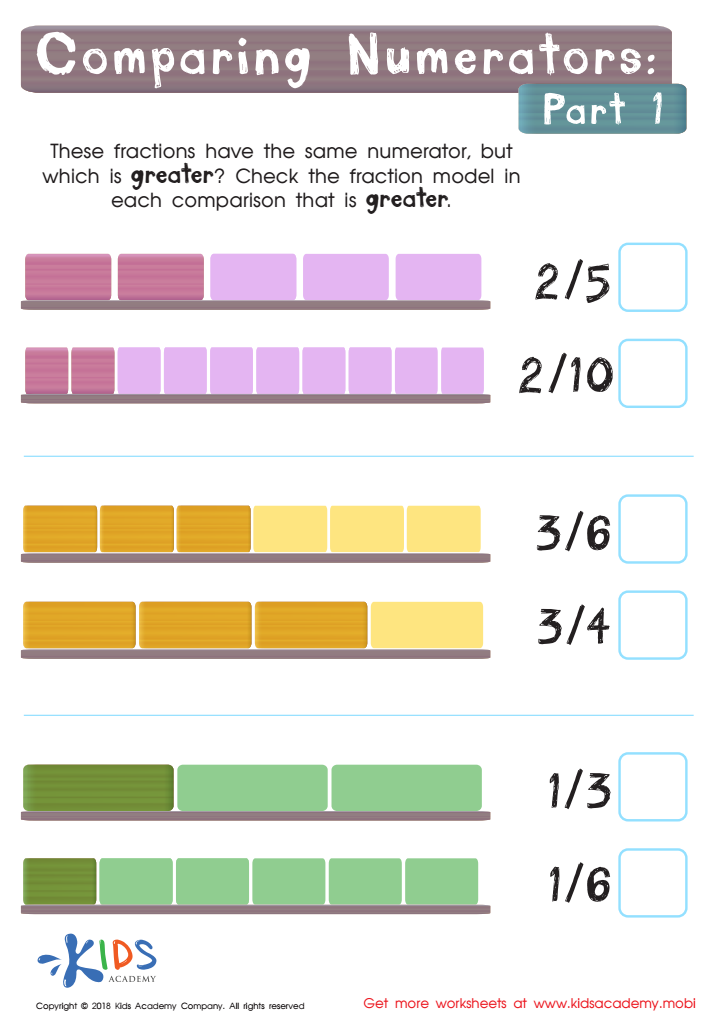
Comparing Numerators Part 1 Worksheet







Understanding fractions is essential for Grade 3 students as it lays the foundation for their future mathematical learning. For parents and teachers, grasping this concept is crucial for several reasons. Firstly, fractions are prevalent in everyday life—whether dividing a pizza or measuring ingredients while cooking. By helping children understand fractions, adults equip them with practical skills they will use regularly.
Secondly, fractions are a key component of the mathematics curriculum. Mastery of fractions at an early age fosters confidence and promotes a positive attitude toward learning math. When students comprehend fundamental concepts, such as equivalent fractions, addition, and subtraction, they are better prepared for more complex topics in higher grades, such as decimals and percentages.
Additionally, learning fractions enhances critical thinking and problem-solving skills. It demands students to visualize, reason, and apply their knowledge in various contexts. By nurturing these skills, parents and teachers ultimately contribute to developing a child's overall cognitive abilities.
Ultimately, when adults invest time and attention into teaching fractions, they not only support academic success but also cultivate lifelong learning habits in their children, making it crucial that they prioritize this topic in their teaching efforts.