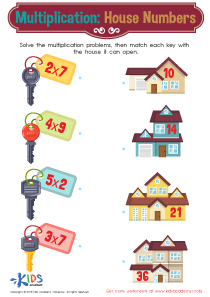
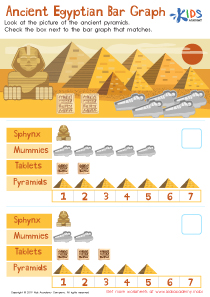
Understanding patterns Easy Grade 3 Multiplication Worksheets
4 filtered results
-
From - To
Welcome to our "Understanding Patterns" Easy Grade 3 Multiplication Worksheets! Designed to reinforce essential multiplication skills, these worksheets help students discover and analyze patterns in math through various engaging activities. With a focus on number relationships and repetition, kids will learn how to recognize trends that simplify their multiplication efforts. Each worksheet is thoughtfully crafted to cater to different learning styles, making math enjoyable and effective. Ideal for classroom use or homework, our resources aim to boost young learners' confidence and number sense, laying a strong foundation for future mathematical concepts. Explore the fun of multiplication through patterns today!
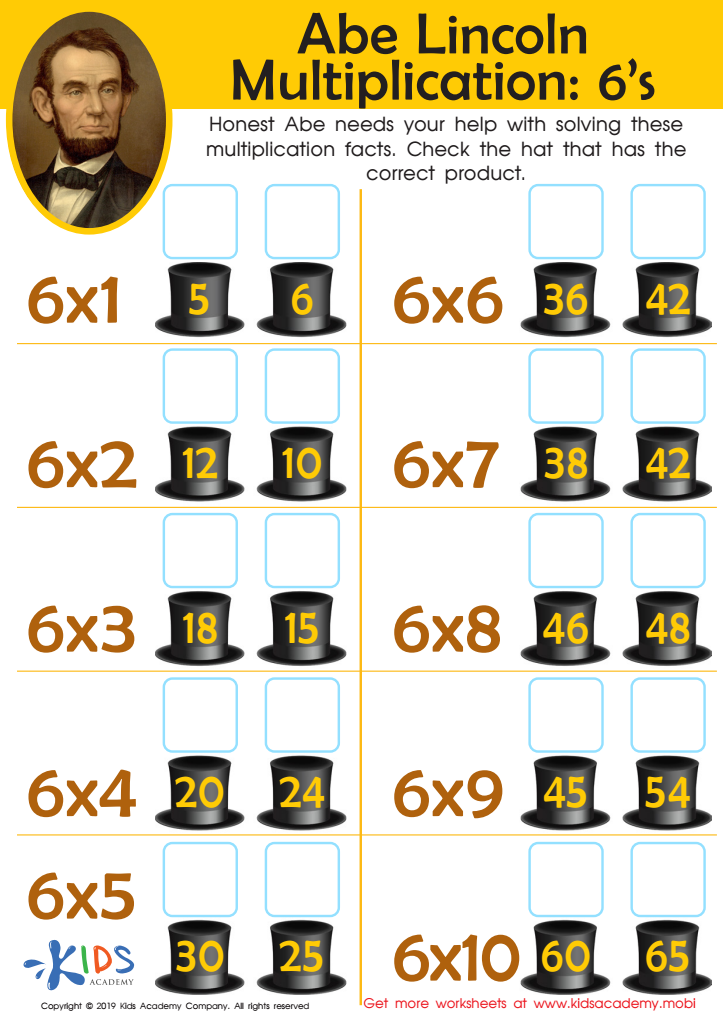
Abe Lincoln Multiplication: 6’s Worksheet
 Assign to My Students
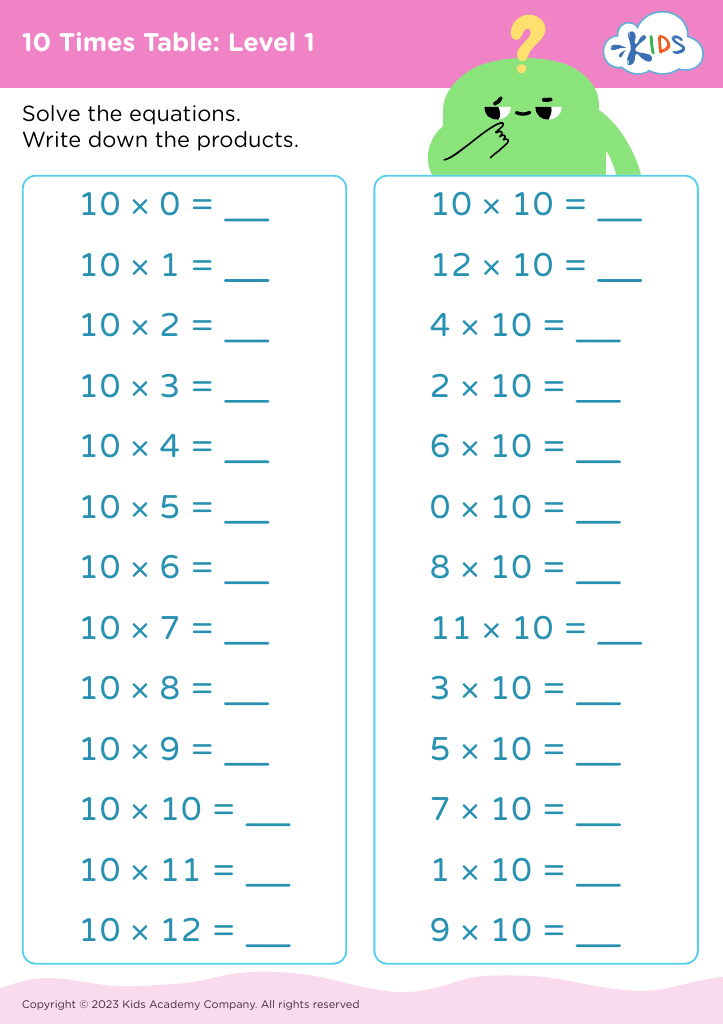
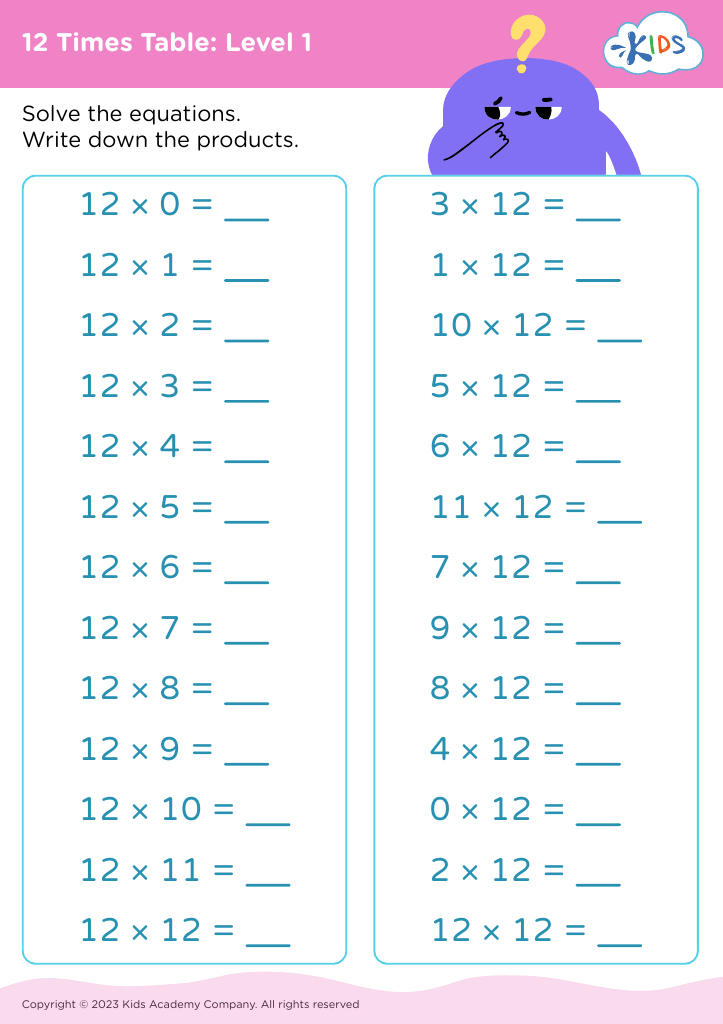
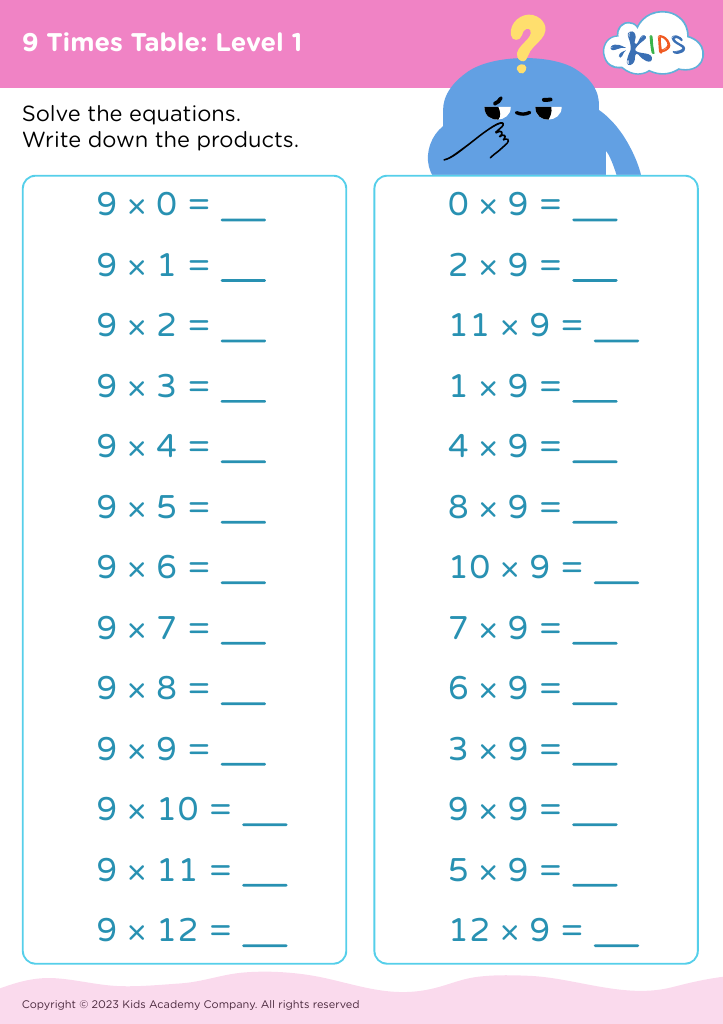







Understanding patterns in multiplication is crucial for third graders as it lays a solid foundation for more advanced math concepts. When parents and teachers focus on teaching patterns in multiplication, they help students recognize relationships between numbers, which enhances their problem-solving skills. For instance, observing that 4 times 3 can be viewed as double counting adds ease and speed to calculations.
Additionally, grasping patterns boosts students' confidence. When young learners see regularities, such as the results of multiplying by 5 (which always end in either 0 or 5), they feel empowered to tackle larger multiplication problems without fear. This understanding reduces anxiety associated with math and fosters a love for learning.
Moreover, patterns play a critical role in daily life. They can be seen in various contexts, from recycling numbers during grocery shopping to organizing information in various subjects. By encouraging student exploration of multiplication patterns, parents and teachers equip them with practical tools for everyday reasoning and logical thinking.
Ultimately, a strong comprehension of multiplication patterns will not only pave the way for successful future math learning but will also instill a lifelong appreciation for math as a fundamental aspect of education and life.