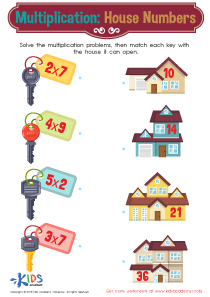
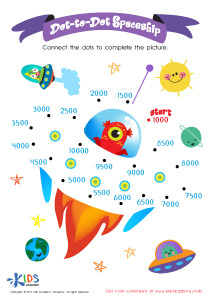
Visual Learning Easy Grade 3 Word Problems Worksheets
3 filtered results
-
From - To
Boost your child's problem-solving skills with our Visual Learning Easy Grade 3 Word Problems Worksheets! These engaging worksheets transform numbers into meaningful scenarios, helping third graders grasp math concepts through visual aids and real-life contexts. Designed to build confidence and competency in young learners, these tools encourage critical thinking and comprehension. Each worksheet is crafted to make math both fun and educational, supporting your child's journey toward math fluency. Ideal for both classroom use and home practice, our visual tools are an essential resource for any third-grade math curriculum. Explore now and make math learning an enjoyable experience!
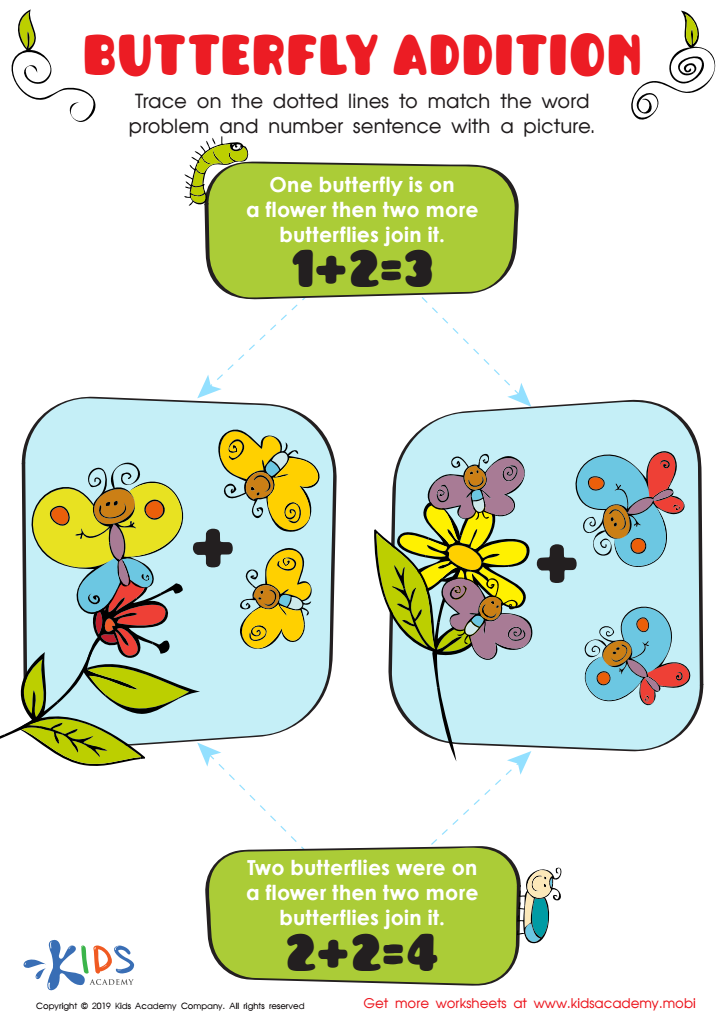
Butterfly Addition Worksheet
 Assign to My Students
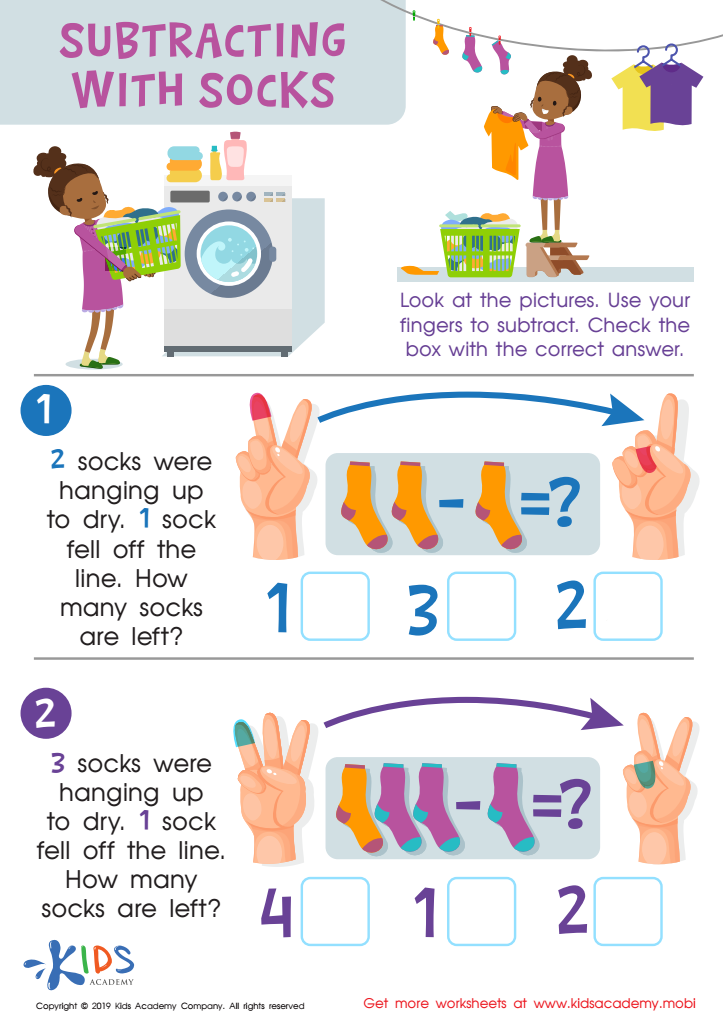
Subtracting Socks Worksheet
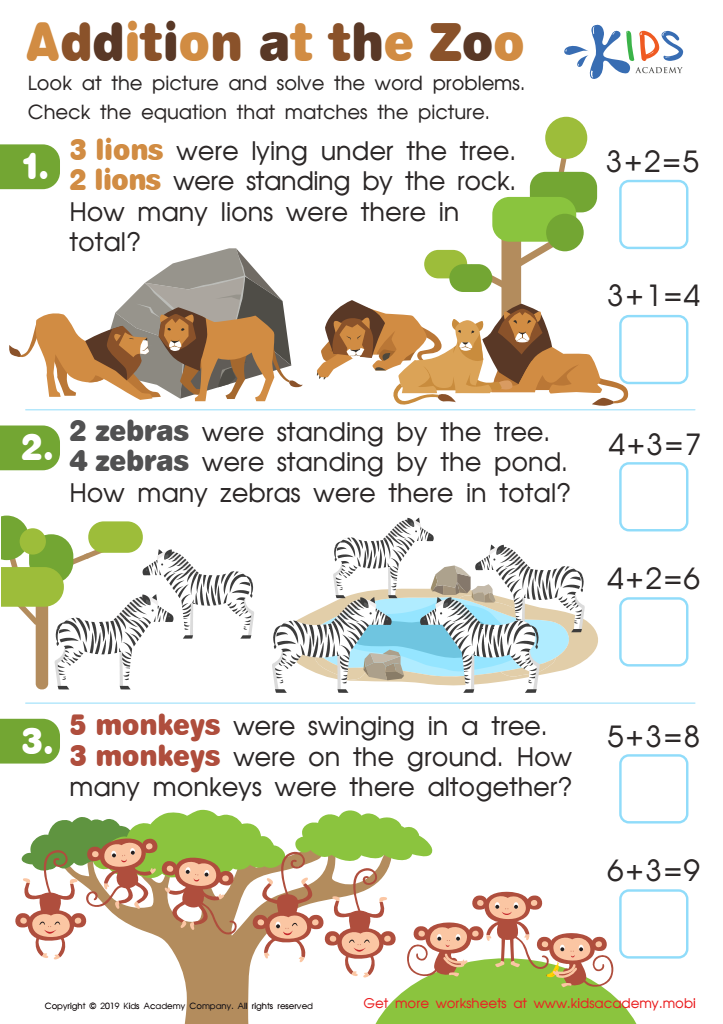
Addition at the Zoo Worksheet








Visual learning is a powerful educational tool, especially for third graders who are developing foundational math skills. Parents and teachers should care about incorporating visual elements into Grade 3 word problems for several key reasons.
Firstly, visuals can significantly enhance comprehension. At this age, children often struggle with abstract concepts, and visual aids like diagrams, charts, and pictures make these ideas more concrete. This ensures that the students can grasp the core of the problem, not just the numerical aspects.
Secondly, visual learning accommodates diverse learning styles. Every child learns differently; some may be auditory learners, while others may be visual or kinesthetic learners. Providing visual aids in word problems ensures that visual learners particularly—and others to some extent—receive an additional avenue for understanding the content.
Thirdly, visual aids help improve retention and recall. Studies have shown that information represented visually tends to be remembered longer than information presented through text alone. This benefit is crucial for young learners who are building their memory and study skills.
Finally, visual learning tools can foster greater engagement and interest in math. Engaging visuals can turn a daunting math problem into a fun and interactive thrill, encouraging a positive attitude towards learning mathematics.
By integrating visuals into word problems, parents and teachers can support holistic learning and understanding, setting the stage for more advanced math skills in future grades.