Alphabet understanding Grade 1 Alphabet Worksheets
5 filtered results
Difficulty Level
Grade
Age
-
From - To
Subject
Activity
Standards
Discover the essential "Alphabet Understanding Grade 1 Worksheets" designed to strengthen your child's foundational literacy skills! These engaging, printable worksheets focus on helping first graders recognize letters, comprehend their sounds, and enhance their writing abilities. With a variety of fun activities—like tracing, matching, and identifying letters—your child will build confidence and competence in their alphabet knowledge. Ideal for classroom use or at-home practice, these worksheets provide a stimulating way to develop early reading proficiency. Plus, they align perfectly with educational standards, making learning enjoyable and effective. Start nurturing your child's love for letters today!
Favorites
With answer key
Interactive
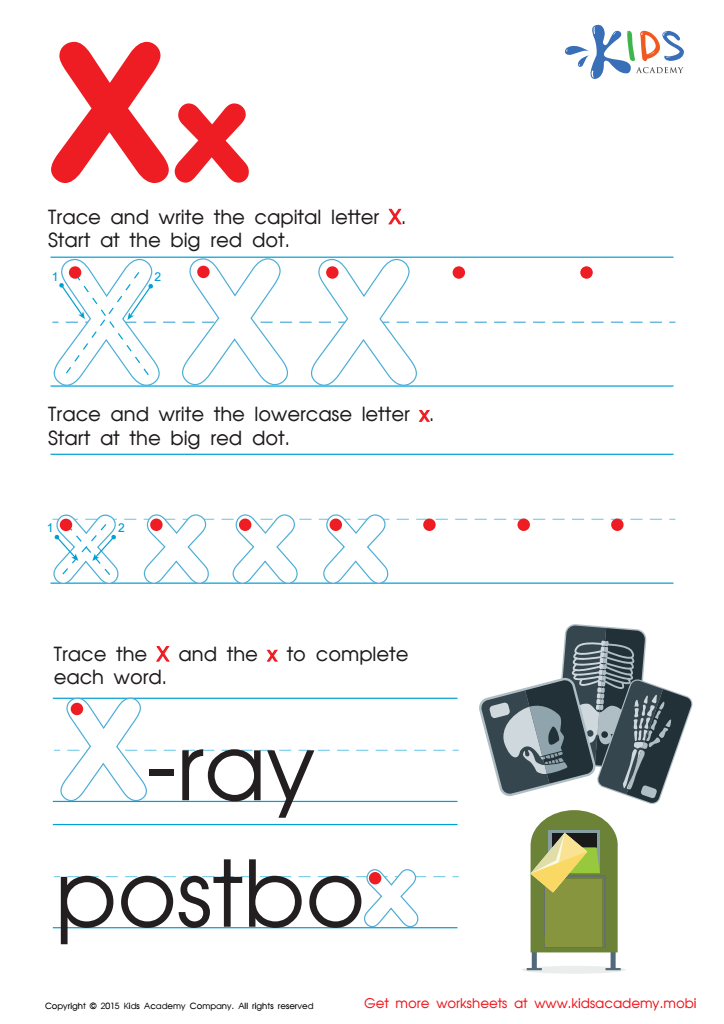
Letter X Tracing Page
Trace the uppercase letter "X" to learn, then write it yourself and practice. Then do the same with the lowercase "x" before completing the words "X-ray" and "postbox". Enjoy our alphabet printables!
Letter X Tracing Page
Worksheet
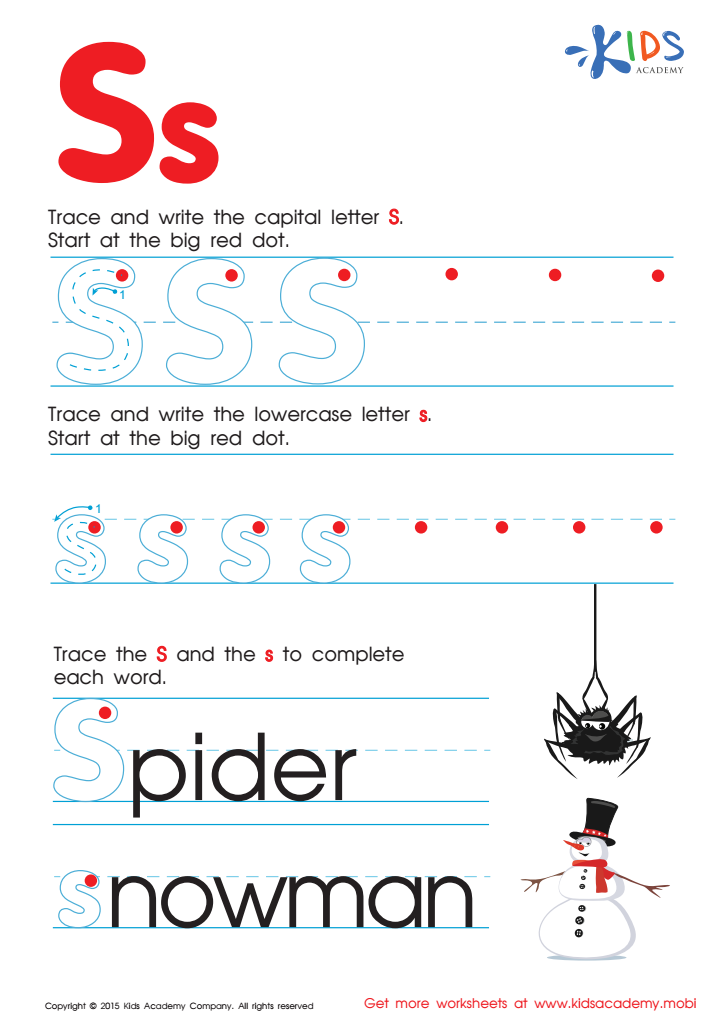
Letter S Tracing Page
Trace and write the capital and lowercase "S" on this ABC worksheet for kindergarten. Start with the big red dot and be careful. When you finish, help the spider and snowman in the pictures restore their words with the capital and lowercase letters. Continue learning the alphabet with Kids Academy.
Letter S Tracing Page
Worksheet
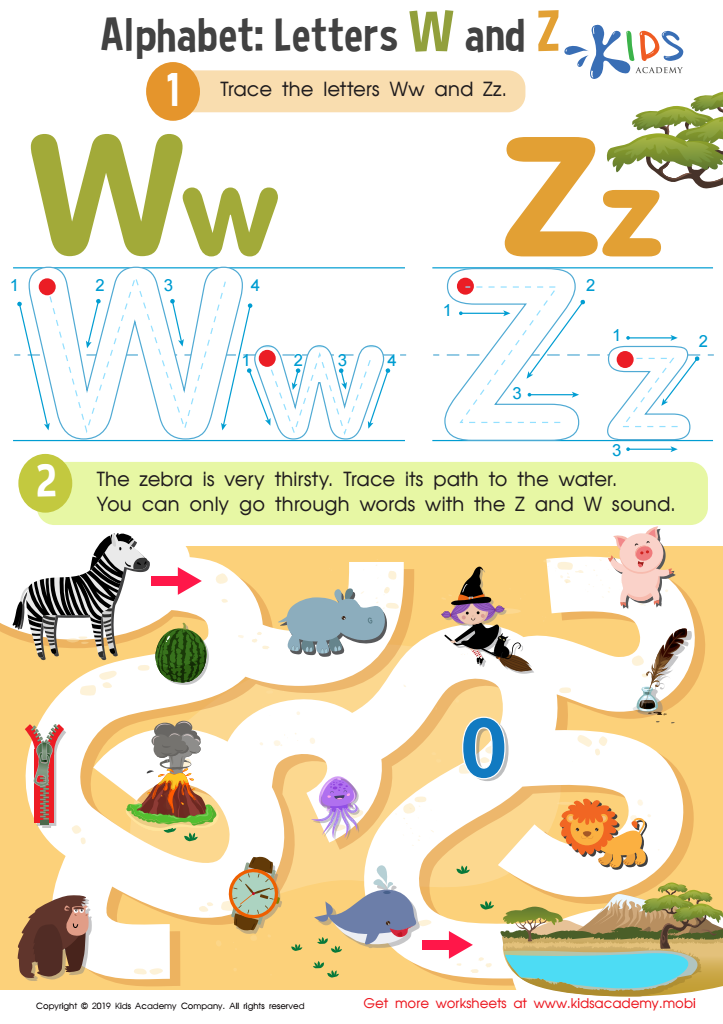
Letters W and Z Tracing Worksheet
Kids will go on a safari exploration of letters W and Z with this worksheet. Students will trace «W» and «Z» and then help the zebra find their watering hole, only following the path of the «W» and «Z» words among many others. It'll be a fun learning activity!
Letters W and Z Tracing Worksheet
Worksheet
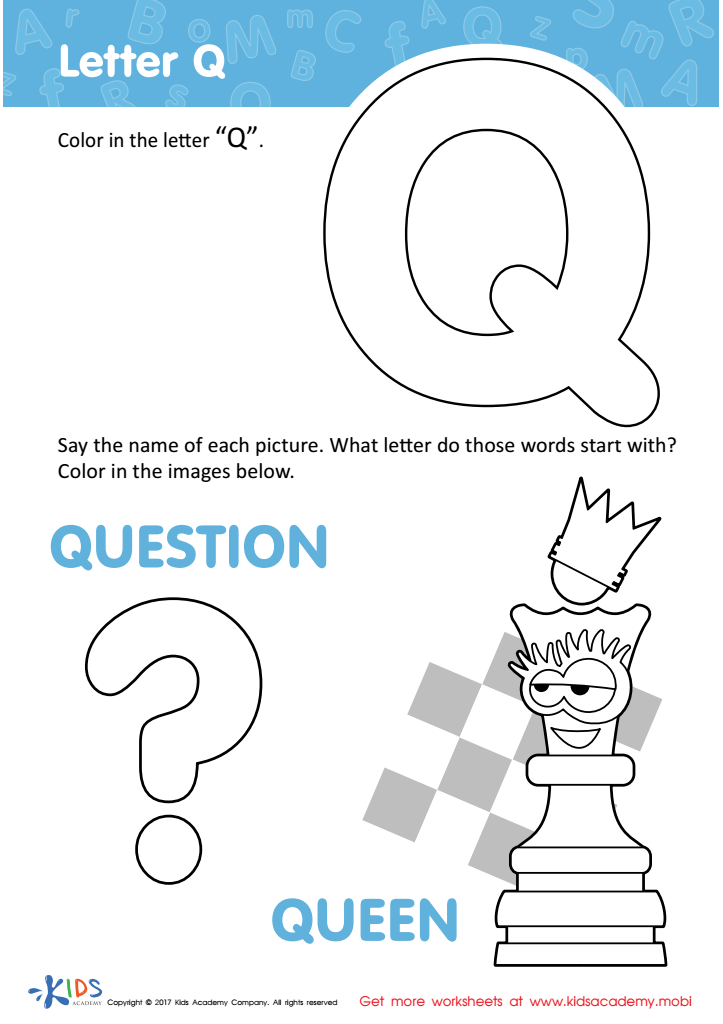
Letter Q Coloring Sheet
Kids need practice with letters not seen often. Give your child a boost with this letter "Q" coloring page! Have them color in the queen and question mark, while learning the sound "Q" makes. Fun and educational!
Download (PDF)
 Assign to My Students
Assign to My Students
Letter Q Coloring Sheet
Worksheet
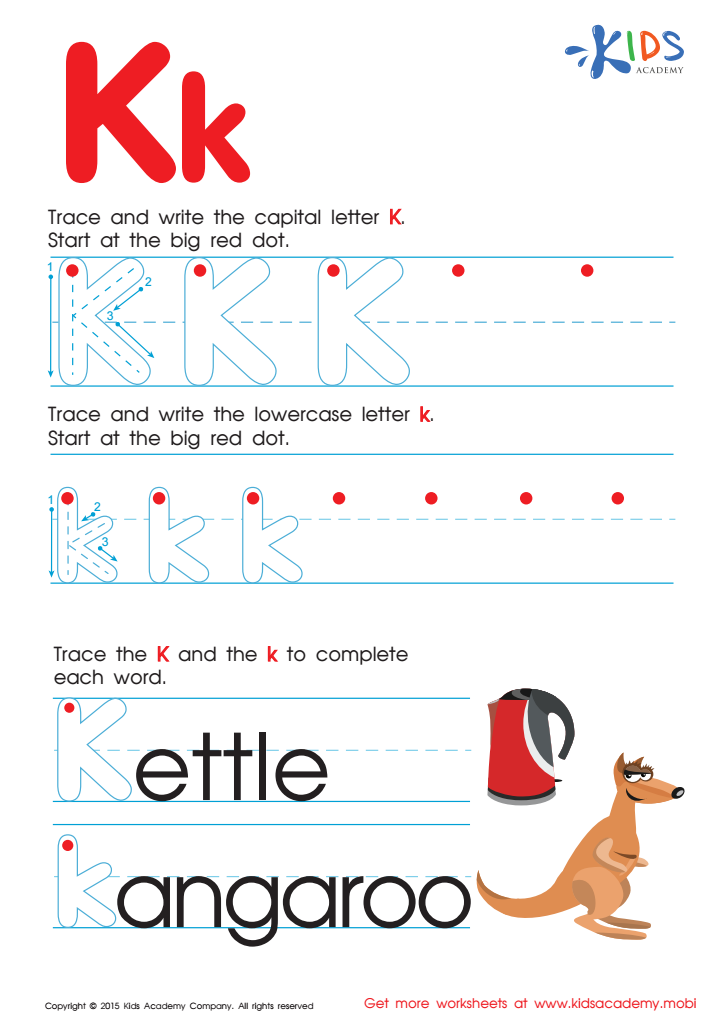
Letter K Tracing Page
Trace and write the letter K; start at the big red dot. Use it to complete words like "Kettle" and "Kangaroo". Visit Kids Academy for more free alphabet worksheets for kindergarten.
Letter K Tracing Page
Worksheet
Join Kids Academy for Free
Who is primarily going to use this learning content?








Alphabet understanding is a fundamental skill for Grade 1 students that lays the groundwork for their literacy development. For parents and teachers, fostering a strong grasp of the alphabet is essential for several reasons.
Firstly, recognizing letters and their sounds is vital for reading and writing. Children who understand the alphabet can decode words, develop phonemic awareness, and build their vocabulary. This foundational ability boosts confidence, motivation, and overall academic success.
Moreover, alphabet knowledge supports cognitive development. It encourages critical thinking and problem-solving as children learn to connect symbols with sounds and meanings. Engaging with the alphabet through songs, games, and stories enhances memory and retention.
Additionally, the ability to identify letters aids in literacy-rich environments. It allows children to engage with books and written materials more effectively, fostering a love for reading and encouraging communication skills.
Moreover, parents and teachers can observe individual progress in alphabet understanding, enabling targeted support and personalized instruction. This understanding promotes teamwork between home and school, ensuring children receive consistent encouragement.
In conclusion, alphabet understanding in Grade 1 is crucial for literacy, cognitive growth, and overall learning, making its cultivation a priority for parents and teachers alike.