Decision making skills Grade 1 Chess Worksheets
3 filtered results
Difficulty Level
Grade
Age
-
From - To
Subject
Activity
Standards
Unlock your child's potential with our engaging Grade 1 Chess Worksheets focused on decision-making skills! Designed to introduce young learners to the strategic world of chess, these worksheets help kids develop critical thinking, problem-solving, and reasoning abilities in a fun, interactive way. Each worksheet is crafted to encourage creativity and logical thought as students learn to anticipate moves, evaluate options, and make strategic decisions. Ideal for classroom or at-home learning, our decision-making skills worksheets provide a solid foundation in both chess and essential life skills. Start fostering your child's cognitive growth today with our innovative and educational resources!
Favorites
With answer key
Interactive
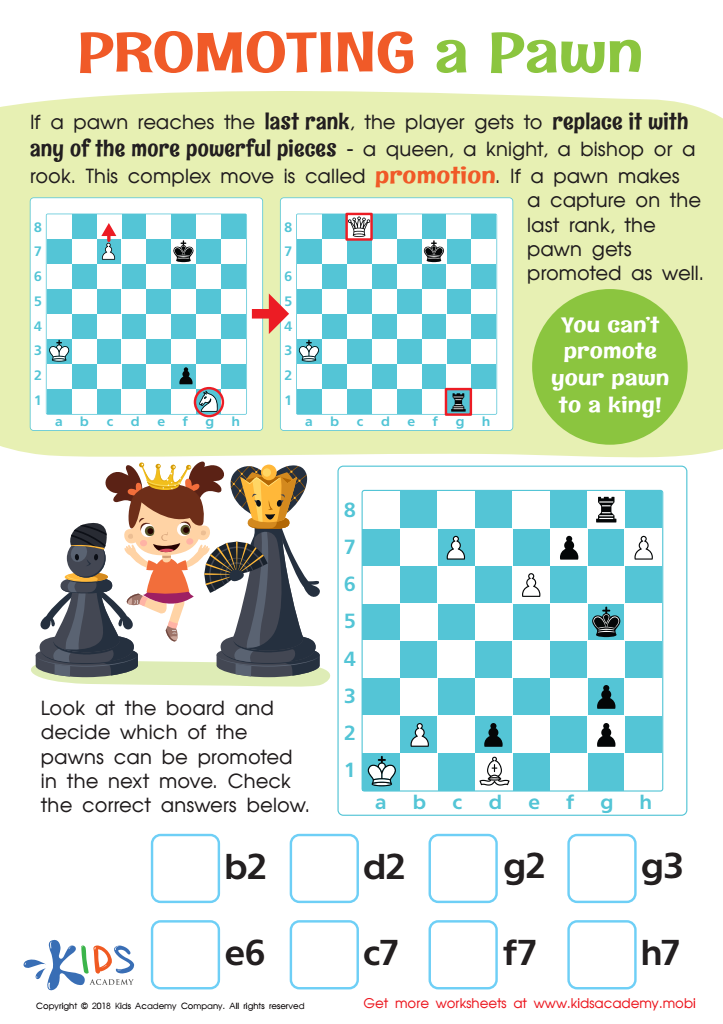
Promoting a Pawn Worksheet
Teach your kids all about pawns with this fun worksheet! Pawns may seem restricted, but experienced players can guide them across the board. If a pawn reaches the last rank, the player can upgrade it to a more powerful piece (e.g. queen, knight), or promote it if it captures an enemy piece. Give them the tools to master the game!
 Assign to My Students
Promoting a Pawn Worksheet
Worksheet
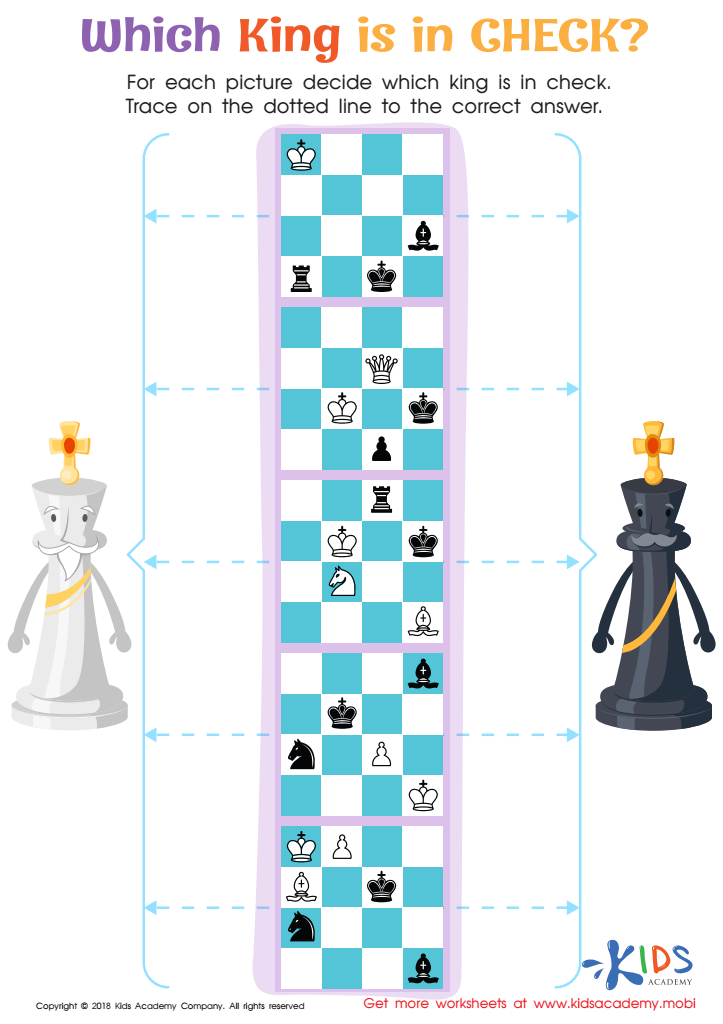
Which King is in Check? Worksheet
Teaching your children chess helps them solve problems, think critically, and develop logical patterns. With this free PDF, they'll analyze five boards to decide if the black or white king is in check. Tracing the lines, they'll improve their skills while having fun.
Which King is in Check? Worksheet
Worksheet
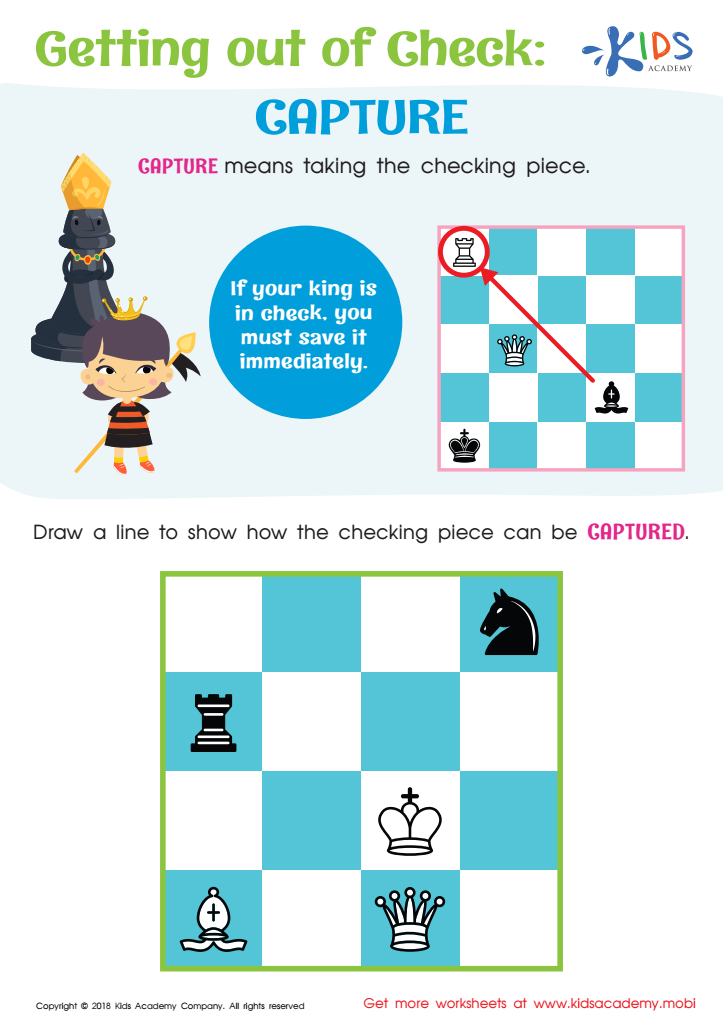
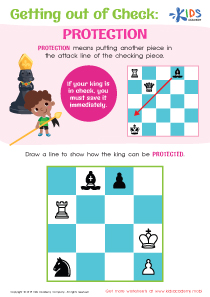
Getting out of Check: Capture
Kids love chess because it combines strategy and the thrill of outwitting their opponents! This free chess strategy worksheet teaches kids how to protect and capture the threatening piece when their king is in danger. The downloadable includes sample boards to practice with. Get it today and have your chess whiz mastering the game in no time!
Getting out of Check: Capture
Worksheet
Join Kids Academy for Free
Who is primarily going to use this learning content?





Decision-making skills, particularly shaped through activities like chess, play a pivotal role in the cognitive and emotional development of Grade 1 students. At this early stage, children are developing critical thinking abilities, learning to evaluate options, and making choices that fit their thoughts and feelings. Introduction to chess provides a structured environment where they can practice these skills in a fun and engaging way.
Firstly, playing chess fosters critical thinking. It challenges young minds to analyze situations, think ahead, and consider consequences, enhancing cognitive abilities. These experiences translate directly into better decision-making abilities in day-to-day life.
Secondly, chess teaches patience and foresight. As children learn to plan their moves and anticipate their opponent's responses, they build the ability to pause, reflect, and assess differences – indispensable skills in both academic and social settings.
Moreover, chess promotes self-confidence. Making independent decisions on the board helps youngsters feel empowered and capable, laying a foundation for future challenges they may face.
Lastly, involvement in chess can also strengthen the parent-child or teacher-student connection, as it encourages discussions, collaboration, and shared learning experiences. In essence, fostering decision-making through chess is a valuable investment in a child's development, shaping them into thoughtful, decisive individuals.