Number Recognition Grade 1 Chess Worksheets
4 filtered results
-
From - To
Enhance your first grader's number recognition skills with our engaging Chess Worksheets! Designed for young learners, these printable resources integrate the excitement of chess with essential math concepts. Each worksheet features fun chess-themed activities that help students identify, count, and understand numbers in a playful context. Perfect for reinforcing classroom learning or as supplemental practice at home, our worksheets are visually stimulating and easy to follow. Foster a love for both math and chess while building foundational skills. Download the Number Recognition Grade 1 Chess Worksheets today and watch your child’s confidence grow as they learn through play!
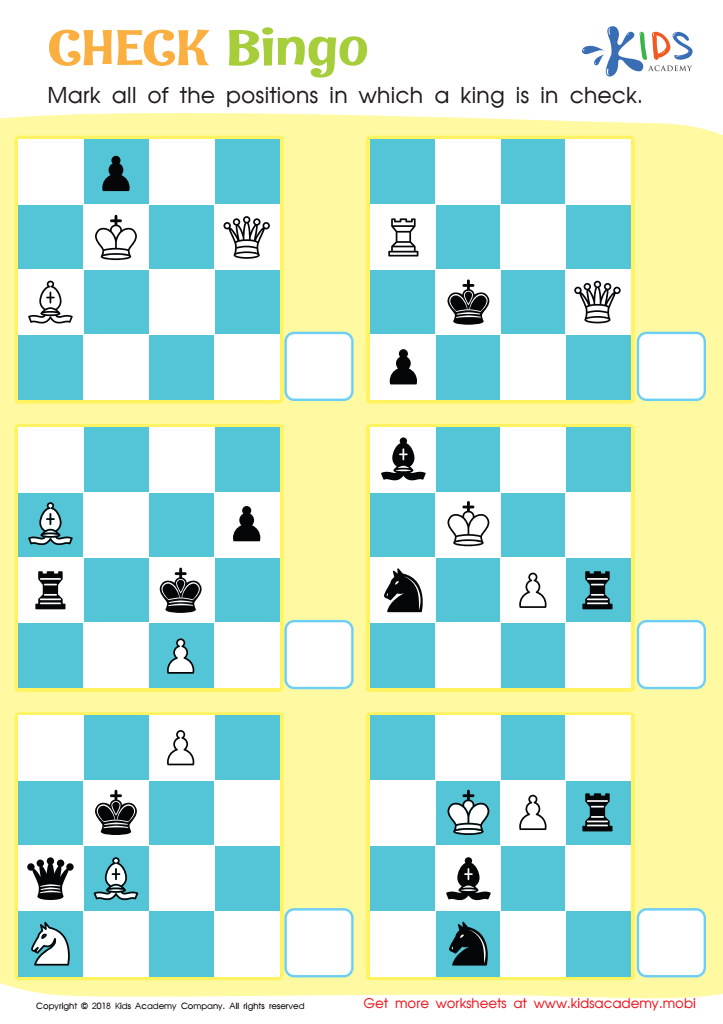
Check Bingo Worksheet
 Assign to My Students
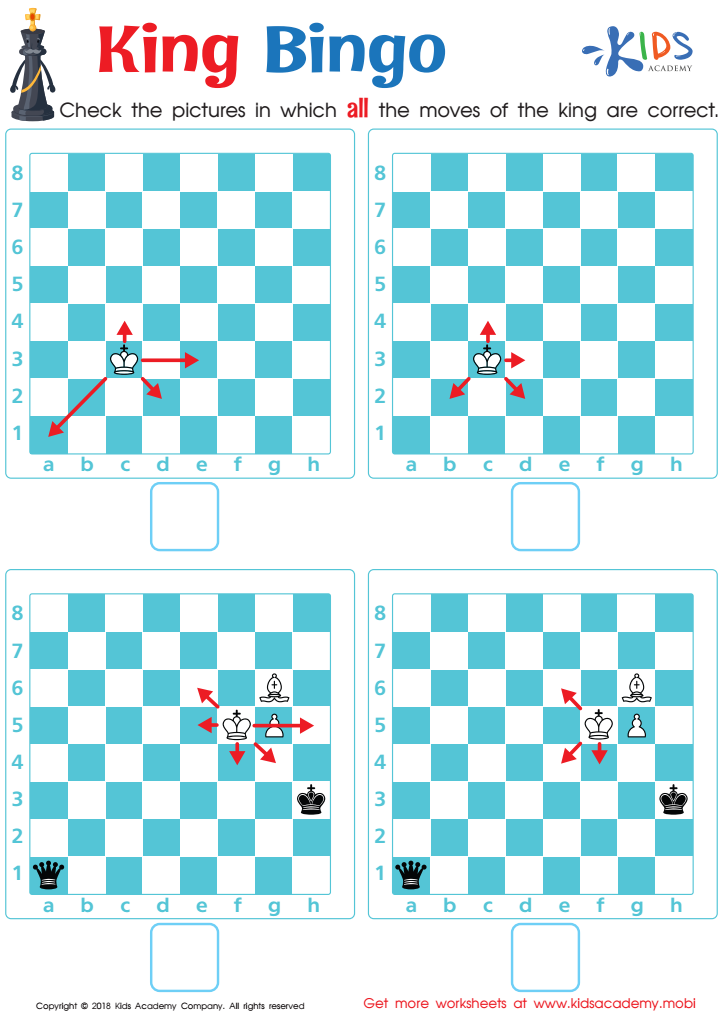
King Bingo Worksheet
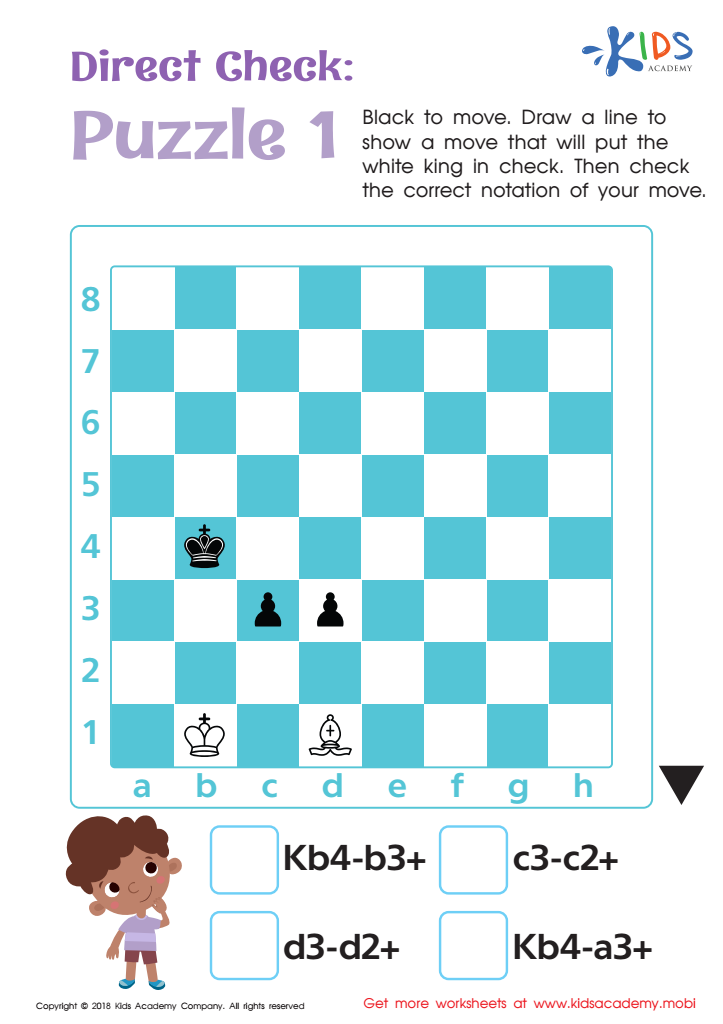
Direct Check: Puzzle 1 Worksheet
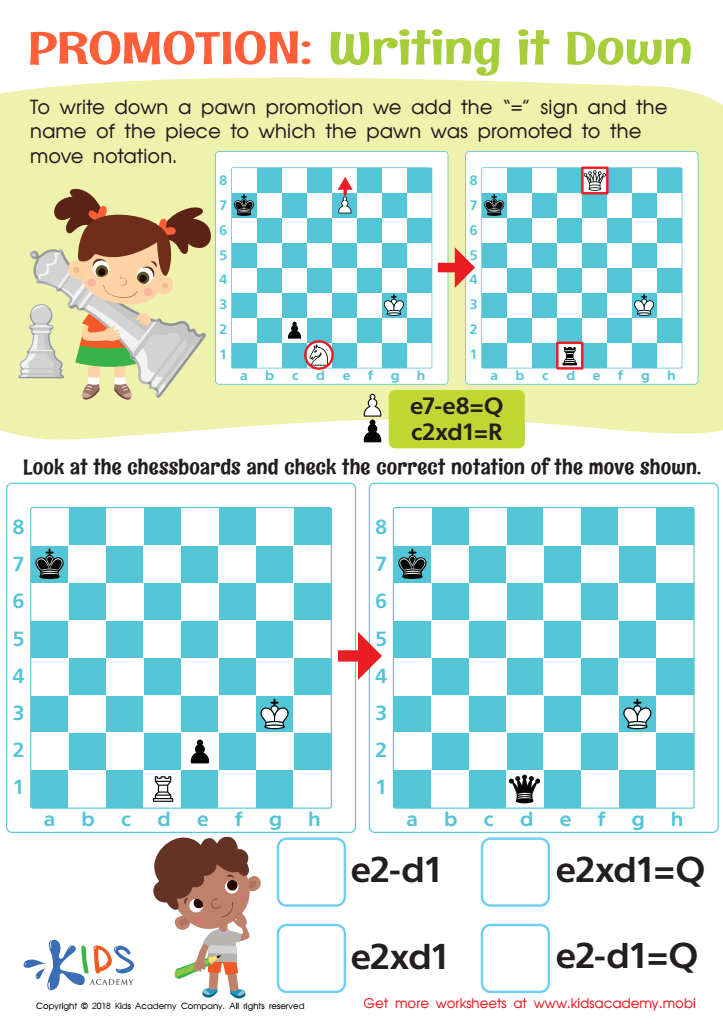
Writing it Down Worksheet





Number recognition is a foundational skill that plays a vital role in a child’s cognitive development and mathematical literacy. In Grade 1 chess, incorporating number recognition becomes especially important, as it lays the groundwork for various learning outcomes.
Firstly, understanding numbers helps young players grasp essential chess concepts such as scoring and piece values, enhancing their strategic thinking. When children learn to recognize numbers, they can better engage in tracking moves, counting squares, and understanding chess notation. This directly correlates to improved problem-solving skills as children analyze positions on the board.
Additionally, number recognition fosters confidence and enjoyment in learning. When students see progress with numbers in the context of a game, they are more likely to develop a passion for both mathematics and chess. This cross-disciplinary learning helps to create a well-rounded educational experience.
Moreover, a collaborative environment where parents and teachers reinforce number recognition allows for praising children's efforts, creating positive associations with learning. This encouragement is crucial during Grade 1, as it sets the tone for their future academic journey.
In summary, number recognition in Grade 1 chess nurtures essential life skills, enhances intellectual development, and creates adaptive and engaged learners. It is crucial for parents and teachers to take an active interest in this component of early education.