Animal recognition Grade 1 Worksheets
10 filtered results
Difficulty Level
Grade
Age
-
From - To
Subject
Activity
Standards
Enhance your first grader's learning experience with our engaging Animal Recognition Worksheets! Designed specifically for Grade 1 students, these interactive worksheets help children identify various animals and their unique characteristics. Featuring colorful illustrations and fun activities, young learners will develop their observation skills while expanding their vocabulary related to animals. Our thoughtfully crafted resources promote critical thinking as students categorize animals by their habitats, sizes, and features. Perfect for classroom use or at-home learning, these worksheets ignite curiosity and foster a love for the animal kingdom. Visit us to download your free Animal Recognition Worksheets today and make learning an adventure!
Favorites
With answer key
Interactive
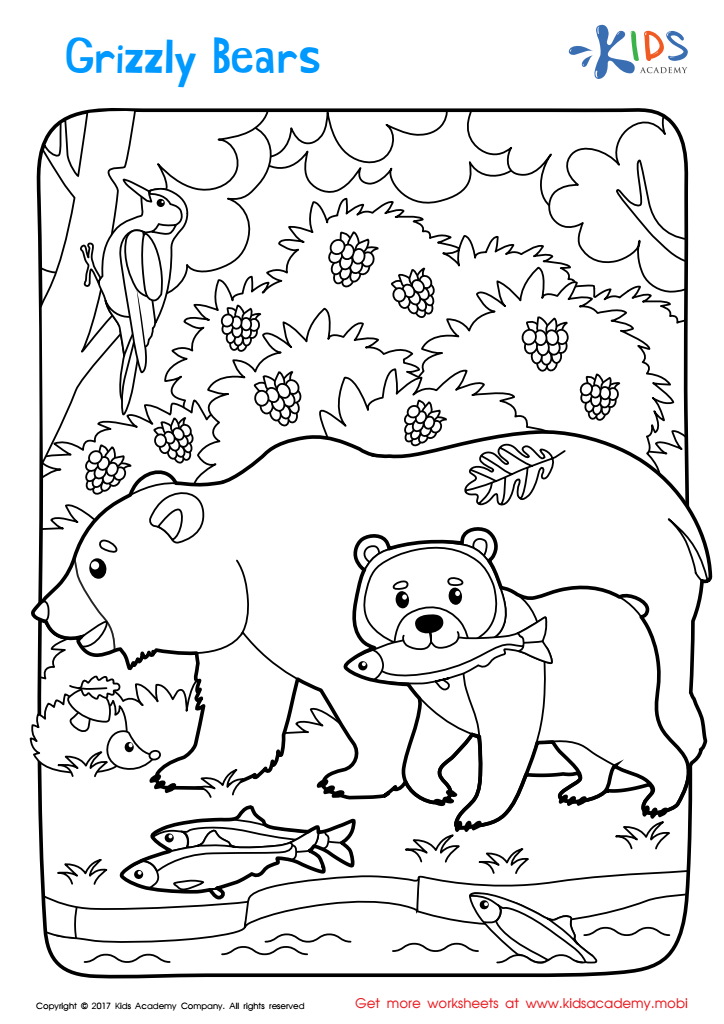
Free Printable Grizzly Bear Coloring Page
Today we're exploring the Great Plains and its most popular inhabitant: the grizzly bear! Our free printable coloring page introduces kids to the bear's natural habitat and food, like salmon and berries. Join us for a fun and educational experience!
Download (PDF)
 Assign to My Students
Assign to My Students
Free Printable Grizzly Bear Coloring Page
Worksheet
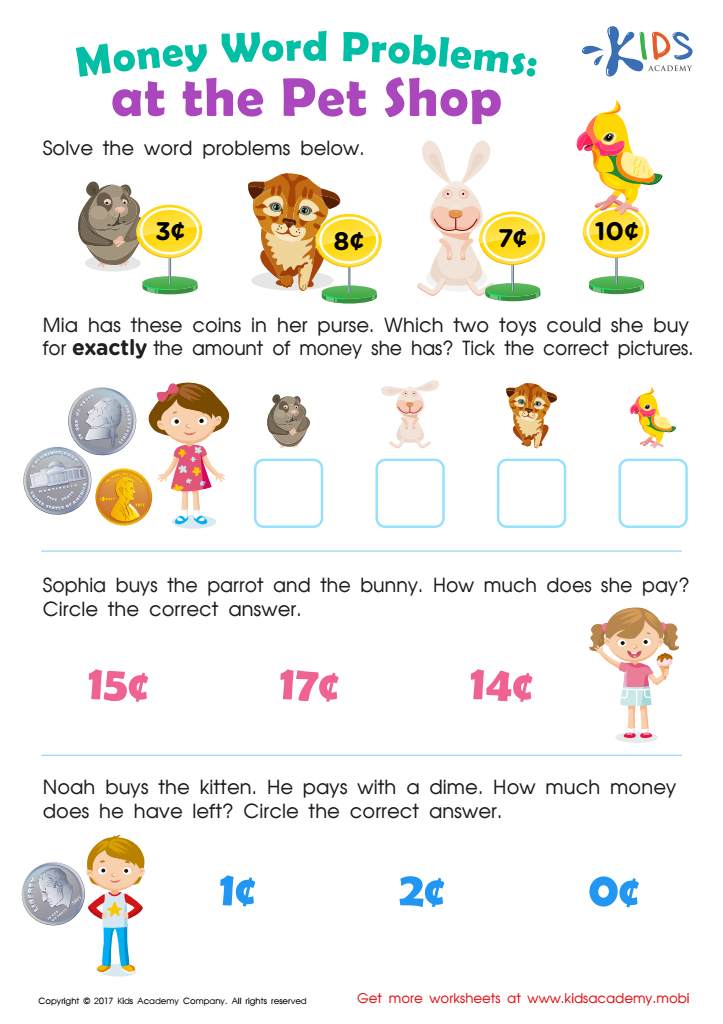
Pet Shop Worksheet
Teach your child a key life skill: counting and managing money. With this worksheet, they'll learn to count coins and calculate purchases at the pet shop. Give them colorful, fun math practice!
Pet Shop Worksheet
Worksheet
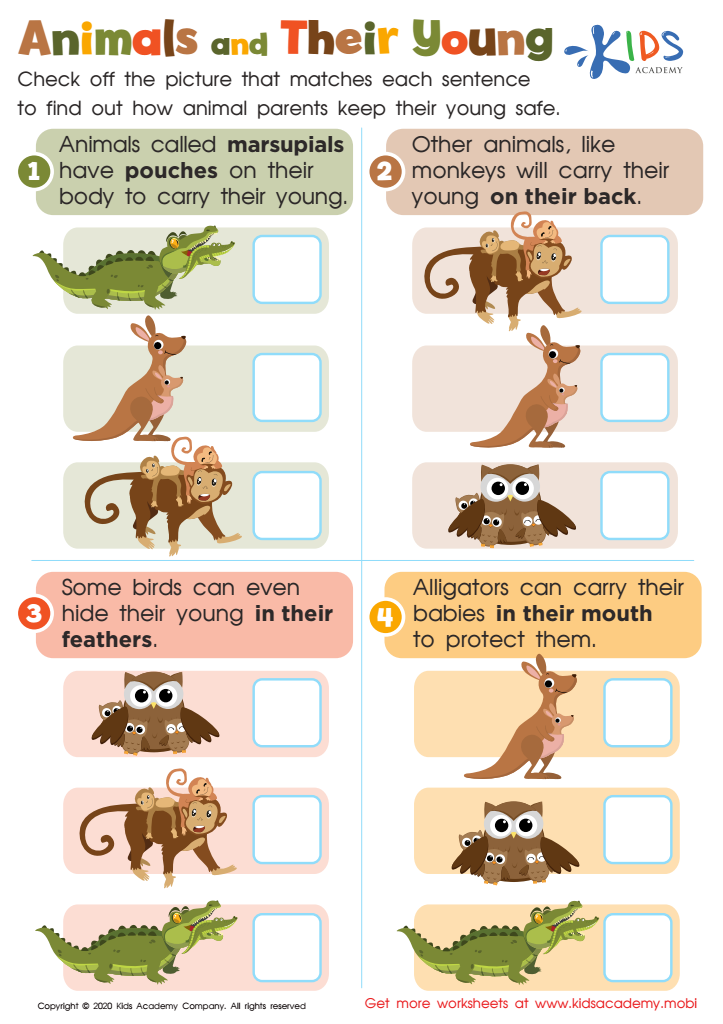
Animals and Their Young Worksheet
Help your child learn more about the animal kingdom with this cute science worksheet! They'll find out how animals protect and keep their babies close. From pouches to hitching a ride on mama’s back, they'll read the sentence above each illustration and select the description that fits. Check off the correct description as they go - a fun and educational activity!
Animals and Their Young Worksheet
Worksheet
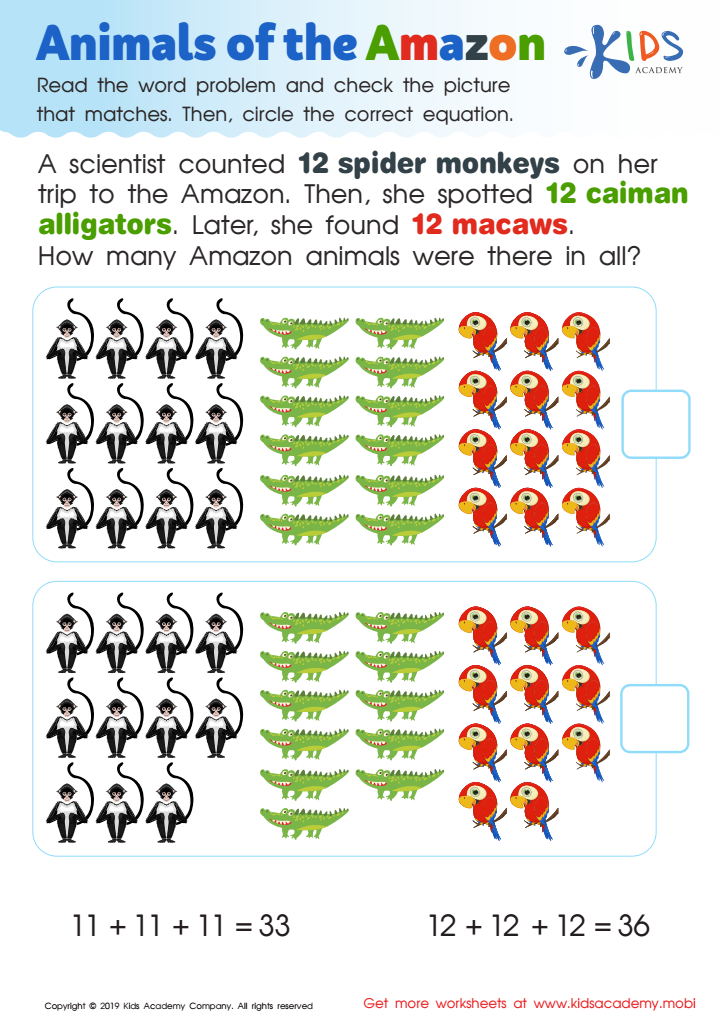
Animals of Amazon Worksheet
Kids will love exploring the Amazon while solving addition problems on this colorful PDF worksheet. They need to pay attention to the bolded info in each word problem to figure out the equation picture that matches. It's an exciting way to learn about the Amazon and practice adding multiple numbers!
Animals of Amazon Worksheet
Worksheet
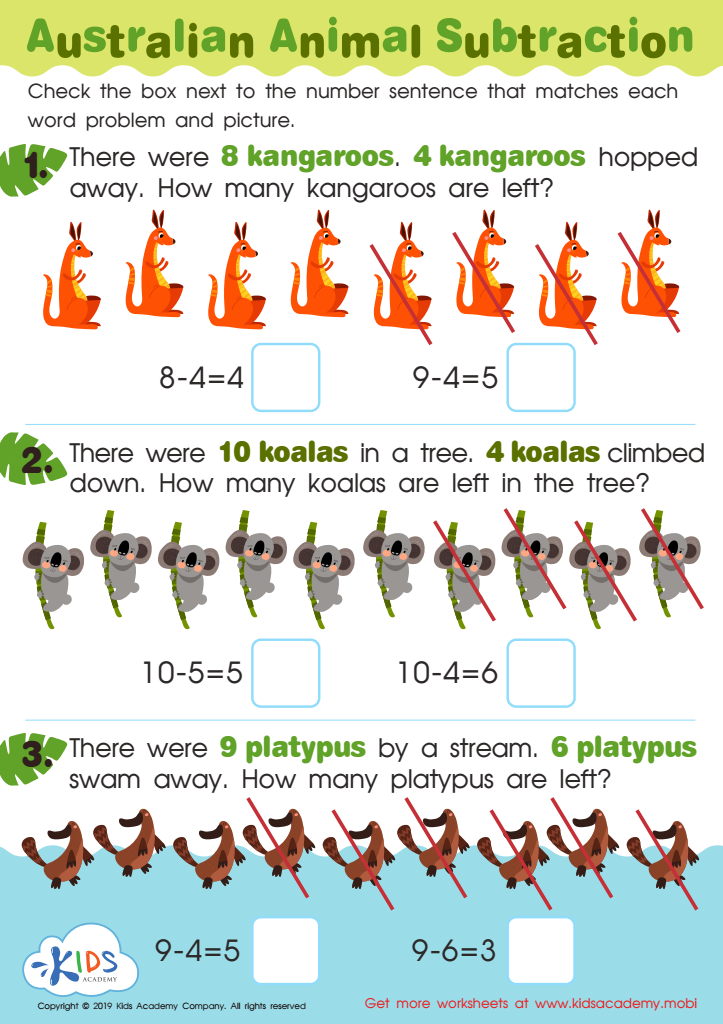
Australian Animal Subtraction Worksheet
Test your child's wildlife knowledge. Ask them to name animals indigenous to Australia or other countries. Show them the animals in this worksheet and have them match each word problem and picture with the correct number sentence.
Australian Animal Subtraction Worksheet
Worksheet
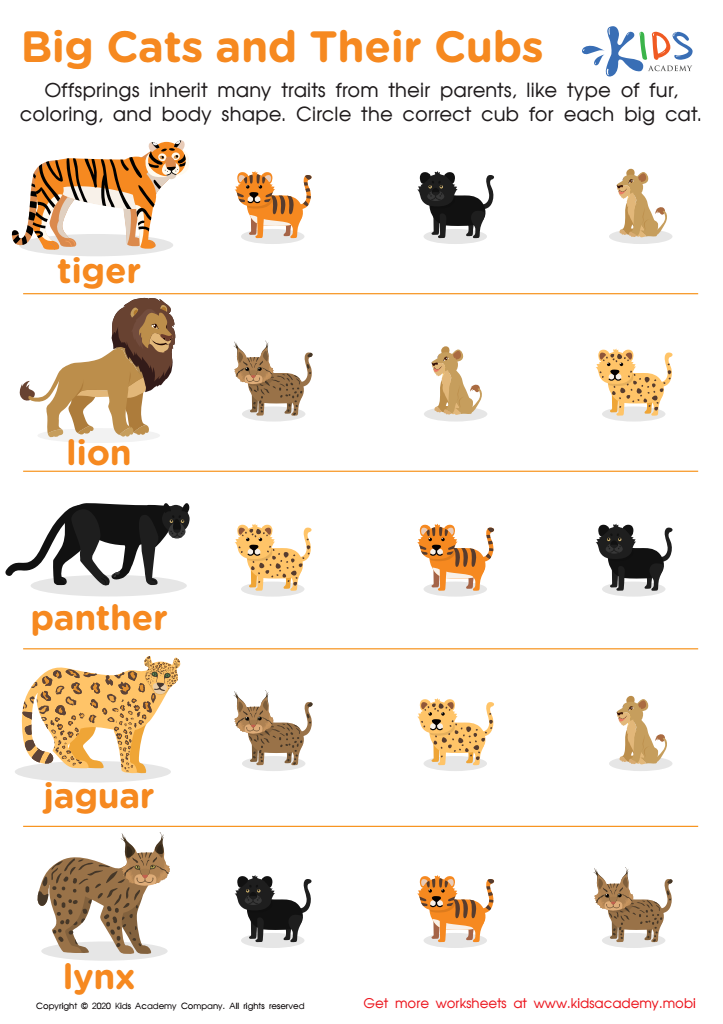
Big Cats and Their Cubs Worksheet
Kids are often like their parents, and the same is true for big cats and their cubs. Introduce your young scientists to genetics with this fun printable worksheet from Kids Academy! Observe the big cats and their cubs, then circle the right cub to complete! It's a great way to teach an early lesson in genetics.
Big Cats and Their Cubs Worksheet
Worksheet
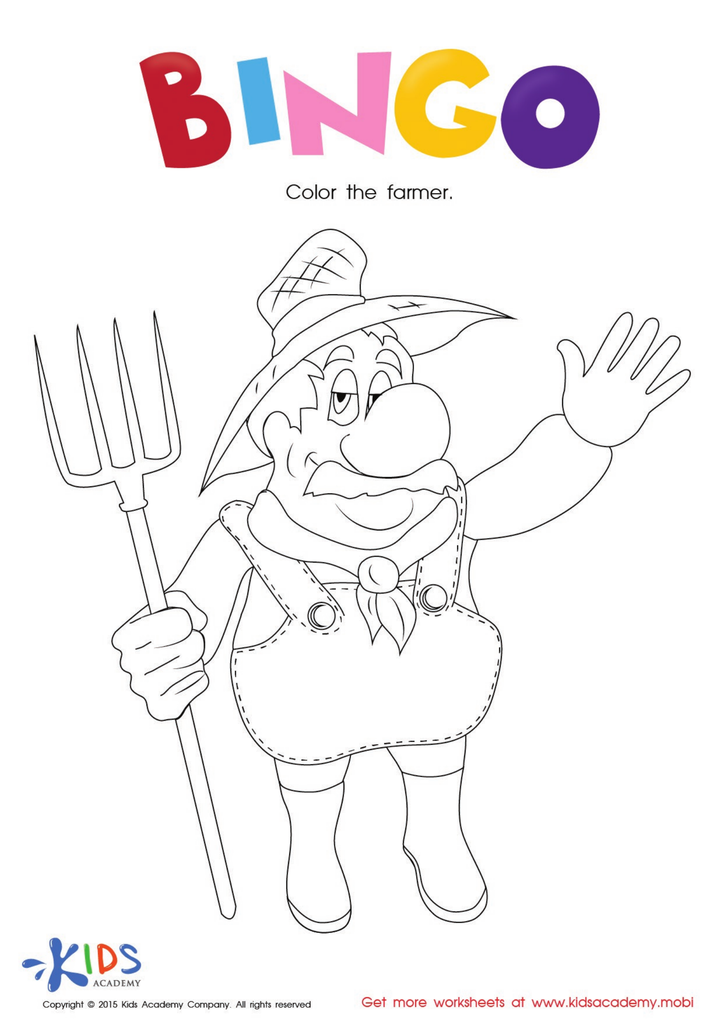
The Bingo Song: Coloring The Farmer Worksheet
Introduce The Bingo Song with concept questions then get your kids to color the free PDF coloring page. Visualize the characters while they sing and make the activity more fun with free nursery rhymes worksheets from our website. Clap along to The Bingo Song and enjoy!
The Bingo Song: Coloring The Farmer Worksheet
Worksheet
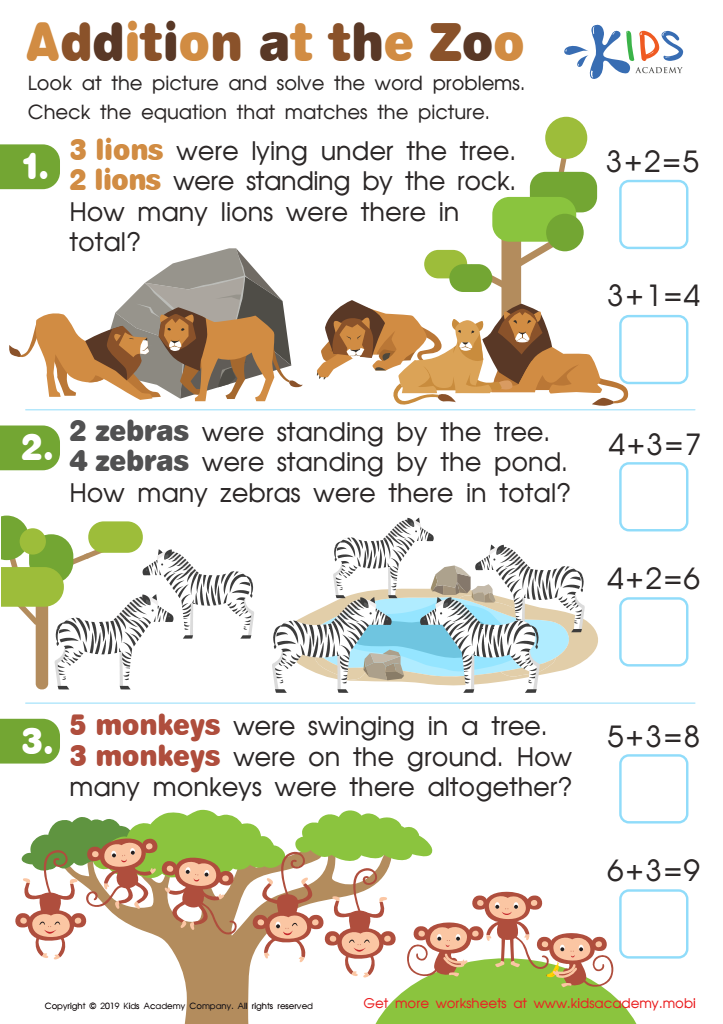
Addition at the Zoo Worksheet
Visit the zoo with your kids and point out all the different animals. Ask them to name their favorites and identify animals on a worksheet. Challenge them to solve word problems related to the pictures. Ask them for the equation that fits the picture and check the answer.
Addition at the Zoo Worksheet
Worksheet
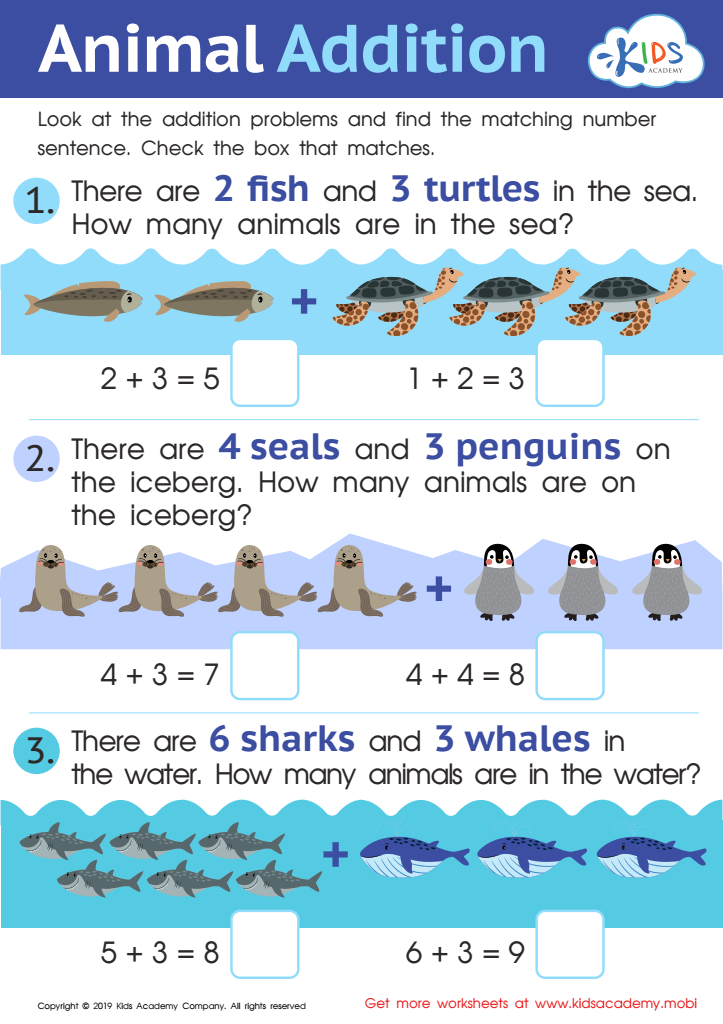
Animal Addition Worksheet
Get your kids learning addition and subtraction with this fun worksheet! Show them that solving equations can be enjoyable and help them match number sentences to the correct boxes. By doing this together, you'll create a positive learning experience that your kids won't forget.
Animal Addition Worksheet
Worksheet
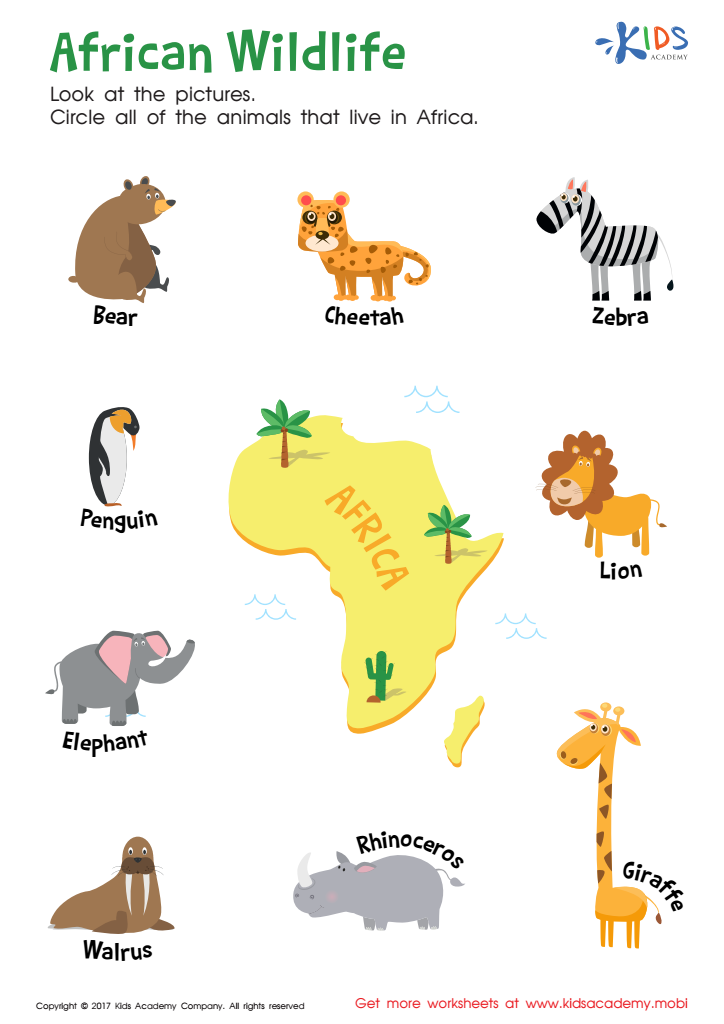
Join Kids Academy for Free
Who is primarily going to use this learning content?







Animal recognition is an essential skill for first-grade students, and parents and teachers should emphasize its importance for several reasons. Firstly, it fosters a child's connection to nature and the environment, promoting overall curiosity and appreciation for biodiversity. By learning to identify various animals, children develop observational skills and enhance their ability to engage with their surroundings.
Secondly, animal recognition encourages critical thinking and cognitive development. It helps sharpen memory, as children must remember names, appearances, habitats, and behaviors of different species. This skill can lay the foundation for biological sciences later on in their education.
Moreover, understanding animals can instill empathy and respect for living beings. Awareness of different species and their roles in ecosystems teaches children the importance of conservation and responsible stewardship of the environment.
Finally, integrating animal recognition into learning can make education more engaging and interactive. Hands-on activities such as field trips to zoos or nature walks provide memorable experiences that foster a love for learning.
In summary, establishing a strong understanding and recognition of animals in early education equips children with valuable skills, promotes environmental awareness, and aids in cognitive development, making it a vital aspect of their growth.