Chess piece identification Grade 1 Worksheets
3 filtered results
Difficulty Level
Grade
Age
-
From - To
Subject
Activity
Standards
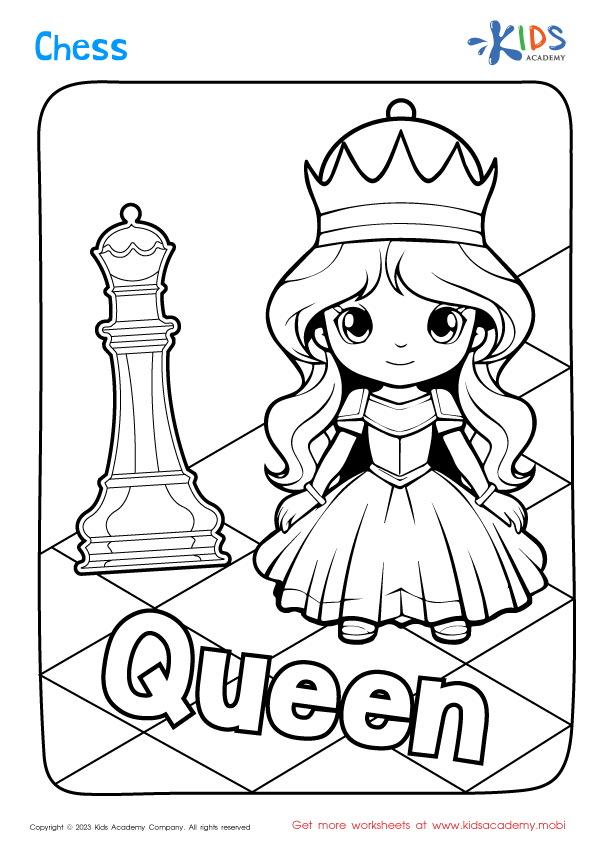
Introducing our engaging "Chess Piece Identification Grade 1 Worksheets," designed to introduce young learners to the exciting world of chess! These worksheets provide a fun, interactive way to help first graders recognize and understand the unique features of each chess piece, including the king, queen, bishop, knight, rook, and pawn. Through a variety of activities such as matching, coloring, and simple puzzles, students will build their confidence and knowledge about chess while developing critical thinking, visual recognition, and fine motor skills. Perfect for classroom use or at-home learning, these worksheets are a fantastic addition to your educational resources!
Favorites
With answer key
Interactive
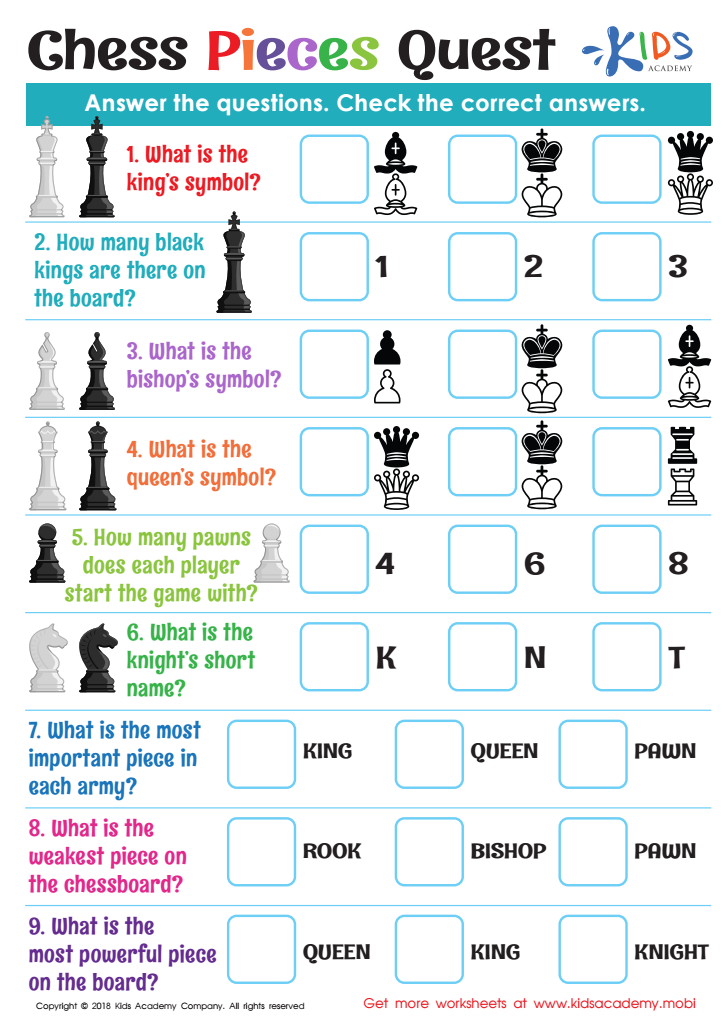
Chess Pieces Quest Worksheet
Help your child prepare for the chess quest by refreshing their knowledge of the symbols and characteristics of each chess piece. Then, have them try the 9 questions on this worksheet. These questions will assess their understanding of the symbols and how many pieces each player starts with.
 Assign to My Students
Chess Pieces Quest Worksheet
Worksheet
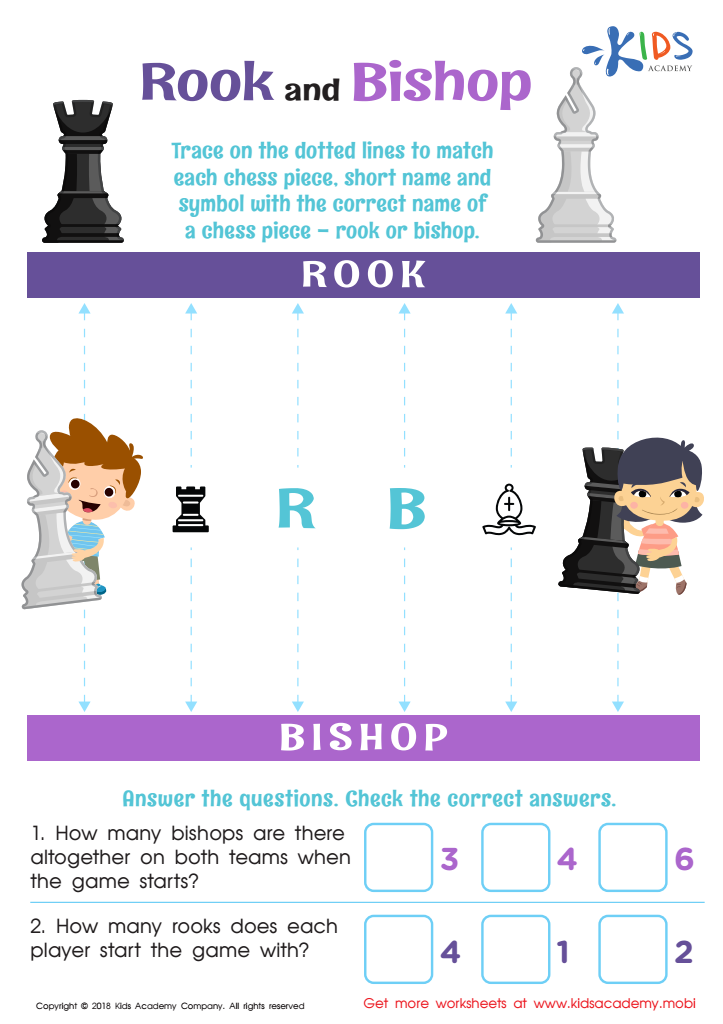
Rook and Bishop Worksheet
This tracing sheet helps your child learn chess pieces by matching each piece, short name and symbol to the correct name. After tracing, have them answer the questions and check their answers. It's a great way for them to become familiarized with chess.
Rook and Bishop Worksheet
Worksheet
Join Kids Academy for Free
Who is primarily going to use this learning content?






Chess piece identification is a fundamental skill for first-grade students that carries numerous educational benefits. Learning to recognize chess pieces—like pawns, rooks, knights, bishops, kings, and queens—enhances cognitive development and critical thinking skills. It promotes analytical reasoning as children begin to understand the unique roles and movements of each piece.
Moreover, engaging young learners in chess helps develop patience and discipline, as the game requires careful thought and strategy. As they memorize and identify pieces, children also improve their visual recognition skills and attention to detail. Additionally, chess fosters social skills; when played in pairs or groups, it encourages teamwork, communication, and sportsmanship.
Also, introducing chess at a young age provides a solid foundation for future learning opportunities. Students can translate the skills honed in chess—like pattern recognition and problem-solving—into various academic areas, including mathematics and logic.
For teachers and parents, supporting chess piece identification not only prepares children for playing the game itself but also nurtures essential life skills crucial for their overall development. As such, incorporating chess into early education can be a profoundly rewarding investment in a child's intellectual and social growth.