Phonics recognition Grade 1 Worksheets
6 filtered results
Difficulty Level
Grade
Age
-
From - To
Subject
Activity
Standards
Explore our engaging Grade 1 Phonics Recognition Worksheets to help your child build essential reading skills! Perfect for young learners, these worksheets focus on recognizing letter sounds, blending phonemes, and improving vocabulary. Designed to make learning fun and effective, our resources enhance comprehension and boost confidence. Each worksheet incorporates colorful visuals and interactive exercises that encourage students to sound out words and develop a strong phonics foundation. Ideal for classroom use or at-home practice, our worksheets cater to a variety of learning styles. Join us in fostering a love for reading with our structured and enjoyable phonics activities, perfect for first graders!
Favorites
With answer key
Interactive
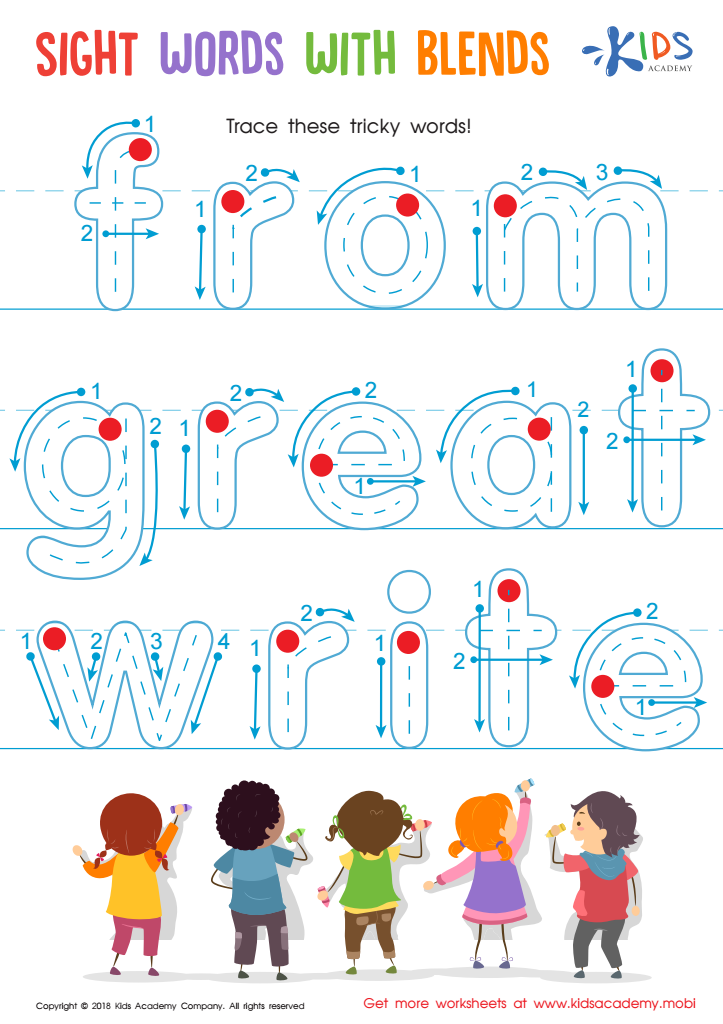
Sight Words with Blends Worksheet
This free PDF lets your children trace and write sight words with tricky blends. The guide numbers help them start from the top, building fine motor skills and enhancing sight word vocab. It's a great way to give your kids a solid foundation for reading!
 Assign to My Students
Sight Words with Blends Worksheet
Worksheet
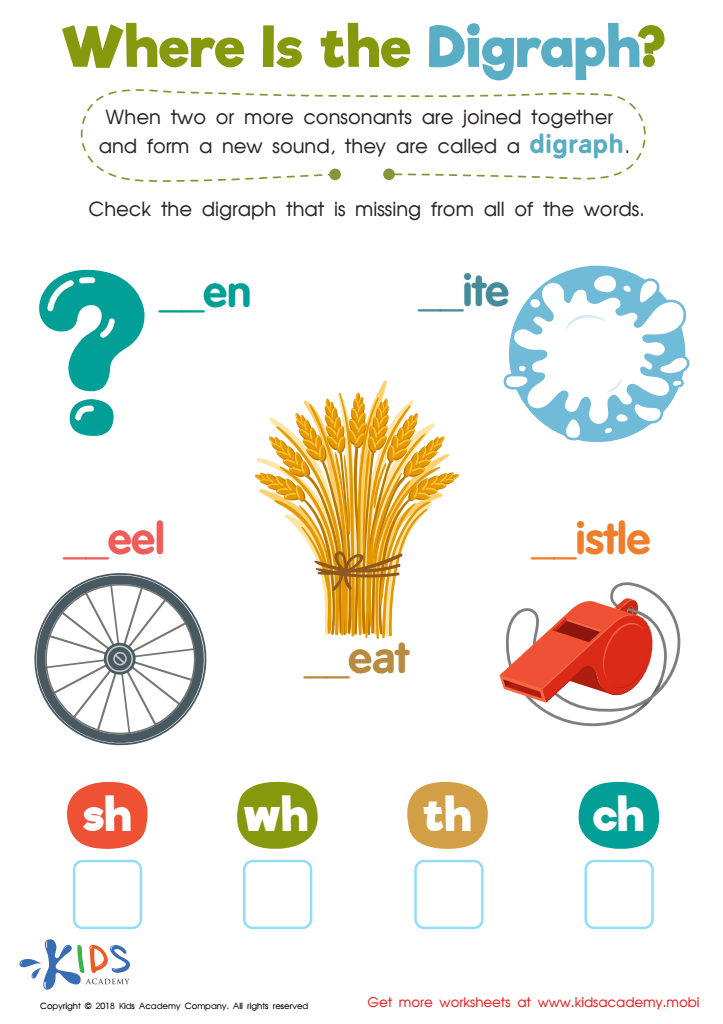
Where Is the Digraph? Worksheet
Teach your child about digraphs - two or more consonants that form one sound, like /wh/, /sh/, and /ch/. Show them words with these sounds and use this worksheet to help. Ask them which digraph is missing from the words and point out the pictures. 80 words.
Where Is the Digraph? Worksheet
Worksheet
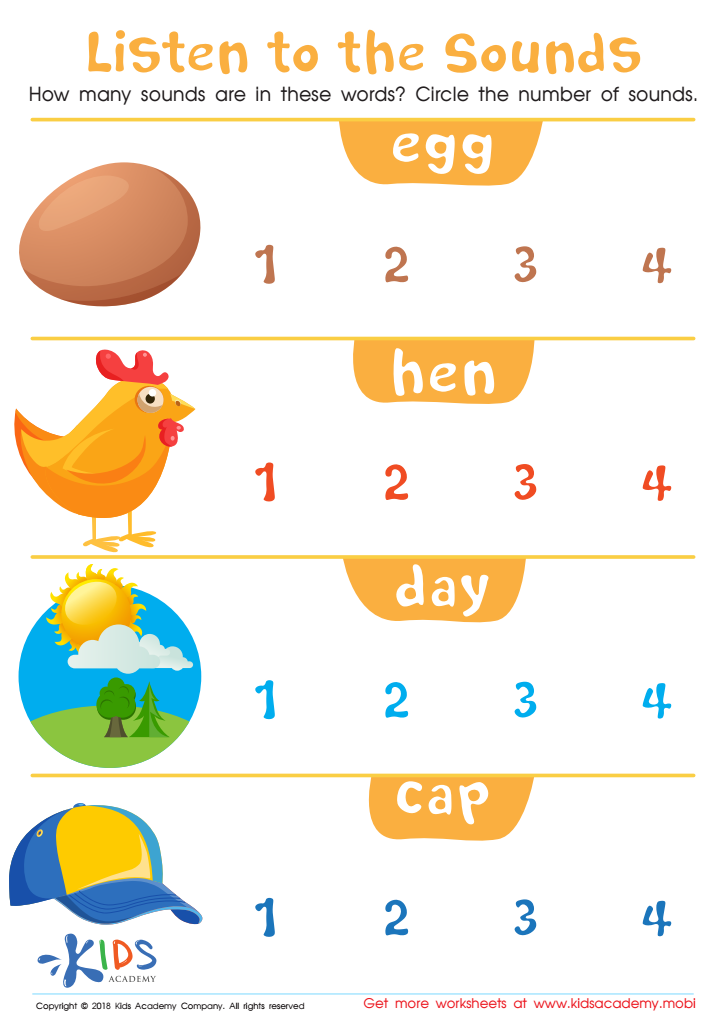
Listen to the Sounds Worksheet
This worksheet builds emerging readers' skills in using sounds for reading and spelling. It helps strengthen auditory processing by having them count the sounds in each word, then trace the corresponding number. Fun and cheerful!
Listen to the Sounds Worksheet
Worksheet
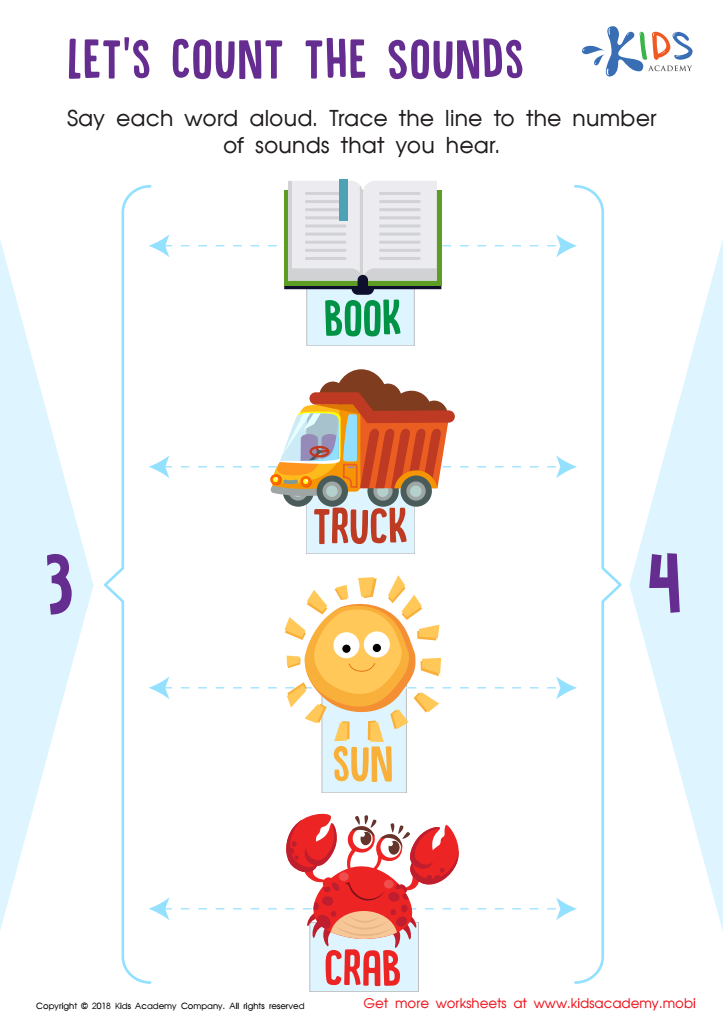
Let's Count the Sounds Worksheet
This bright and cheery traceable worksheet encourages children to practice auditory discrimination and phonological awareness. Using picture clues, they read each word and trace the line that represents the number of sounds heard. This builds decoding skills and helps them become successful readers.
Let's Count the Sounds Worksheet
Worksheet
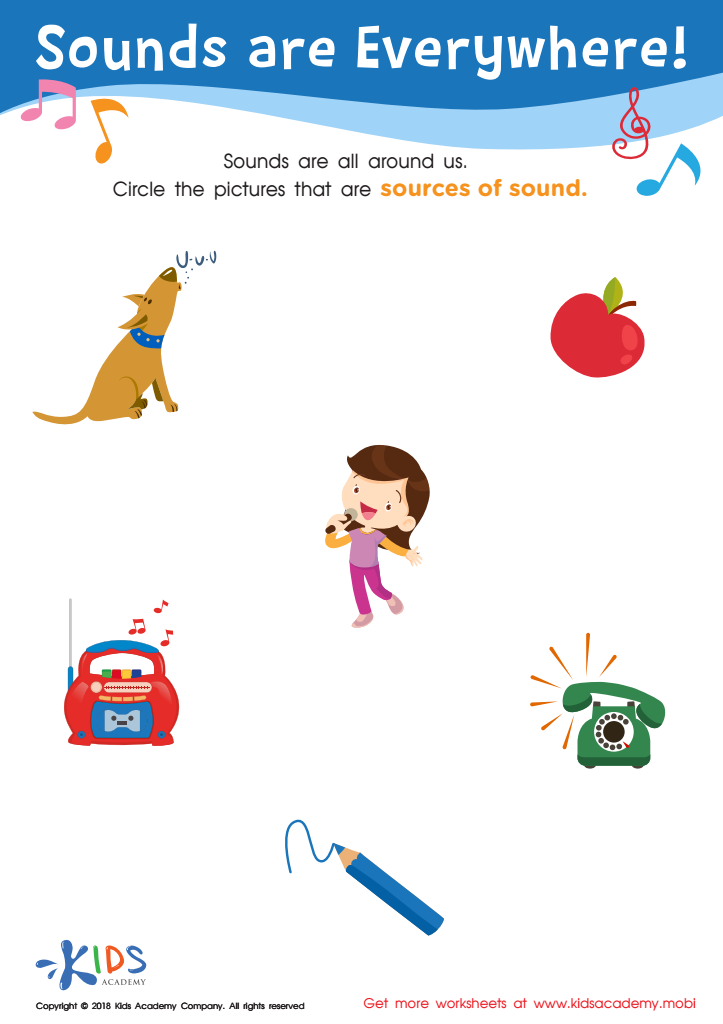
Sounds Are Everywhere! Worksheet
Ask your students to recall objects that make sound. Then, help them identify the sources of sound in the pictures of this worksheet.
Sounds Are Everywhere! Worksheet
Worksheet
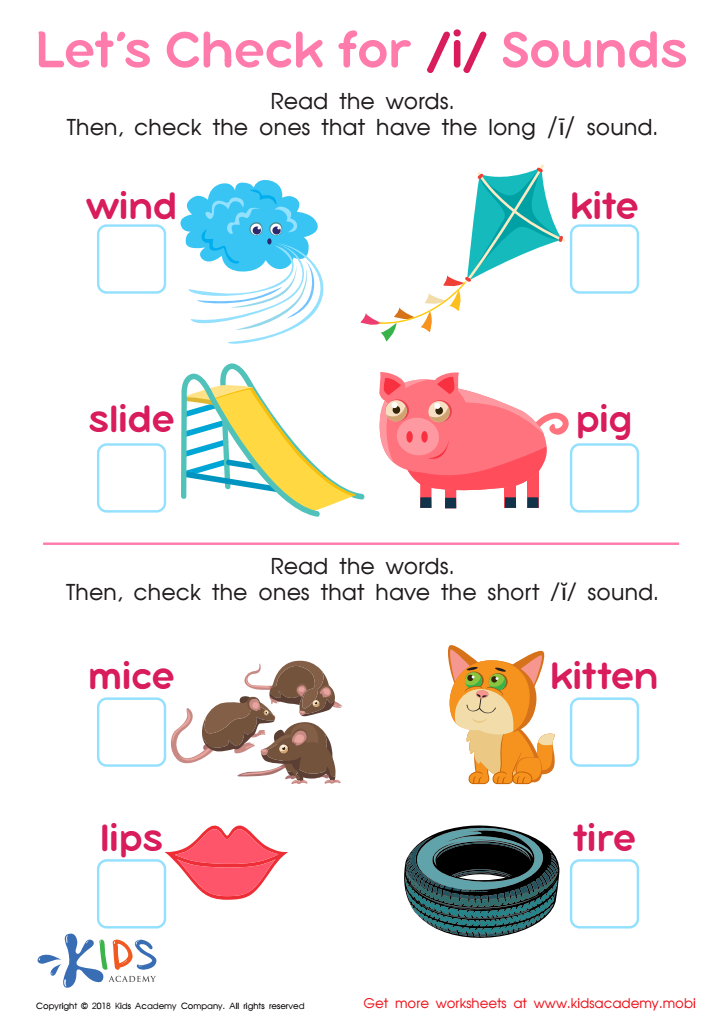
Let's Check for «i» Sounds Worksheet
This fun worksheet with pictures boosts phonics skills - differentiating between long «ī» and short «i» sounds in 1- and 2-syllable words. Kids use picture clues to read words, then check off the correct ones. It's a great way for new readers to practice early reading skills and find success on their own.
Let's Check for «i» Sounds Worksheet
Worksheet
Join Kids Academy for Free
Who is primarily going to use this learning content?





Phonics recognition is essential for students in Grade 1 as it lays the foundation for effective reading and writing skills. Understanding phonics helps children decode words, allowing them to make connections between letters and sounds. This skill is critical at an early age, as it promotes literacy development and boosts reading fluency.
Parents and teachers play a crucial role in facilitating phonics recognition, and their involvement can significantly impact a child’s academic journey. By reinforcing phonics at home or in the classroom, they can help children build confidence and enjoyment in reading. This can foster a lifelong love for literature and learning.
Moreover, proficiency in phonics contributes to overall academic success. Students who grasp phonics concepts tend to perform better in reading assessments, and strong reading skills are closely linked to achievement in other subjects, including mathematics and science.
Finally, early phonics education can identify any learning difficulties. By addressing these issues promptly, parents and teachers can provide the necessary support to help children thrive. Overall, prioritizing phonics in Grade 1 is vital for nurturing capable, confident readers who are prepared for future academic challenges.