Spatial reasoning Grade 1 Worksheets
6 filtered results
Difficulty Level
Grade
Age
-
From - To
Subject
Activity
Standards
Unlock your child's potential with our engaging Spatial Reasoning Grade 1 Worksheets! Designed to enhance critical thinking and problem-solving skills, these worksheets help young learners understand shapes, patterns, and spatial relationships. Activities include identifying, comparing, and sorting various objects, promoting analytical skills essential for math and science learning. With colorful illustrations and interactive exercises, your child will enjoy exploring spatial concepts in a fun and creative way. Perfect for use at home or in the classroom, our worksheets align with educational standards to ensure effective learning. Start building a strong foundation in spatial reasoning today! Visit our site for a wealth of resources.
Favorites
With answer key
Interactive
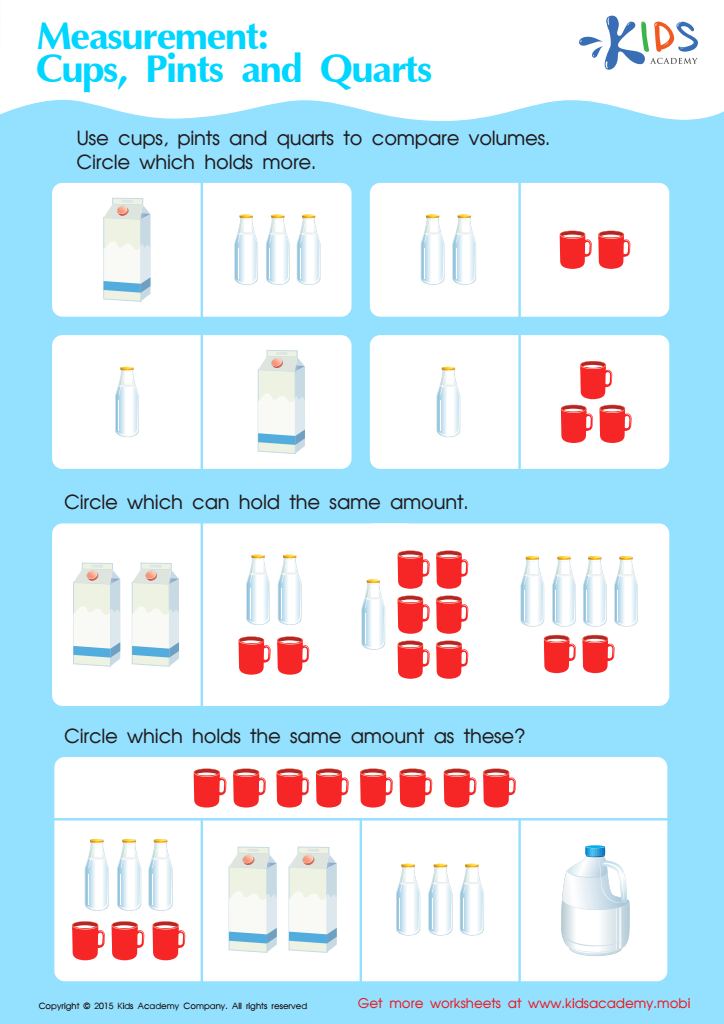
Measurement: Compare Volumes Worksheet
Compare volumes with Kids Academy and have fun! (80 words)
Practice measuring with Kids Academy and have fun! Compare volumes in pictures and circle which holds more. Keep learning with free math worksheets available on our website. Enjoy the process and have fun!
 Assign to My Students
Measurement: Compare Volumes Worksheet
Worksheet
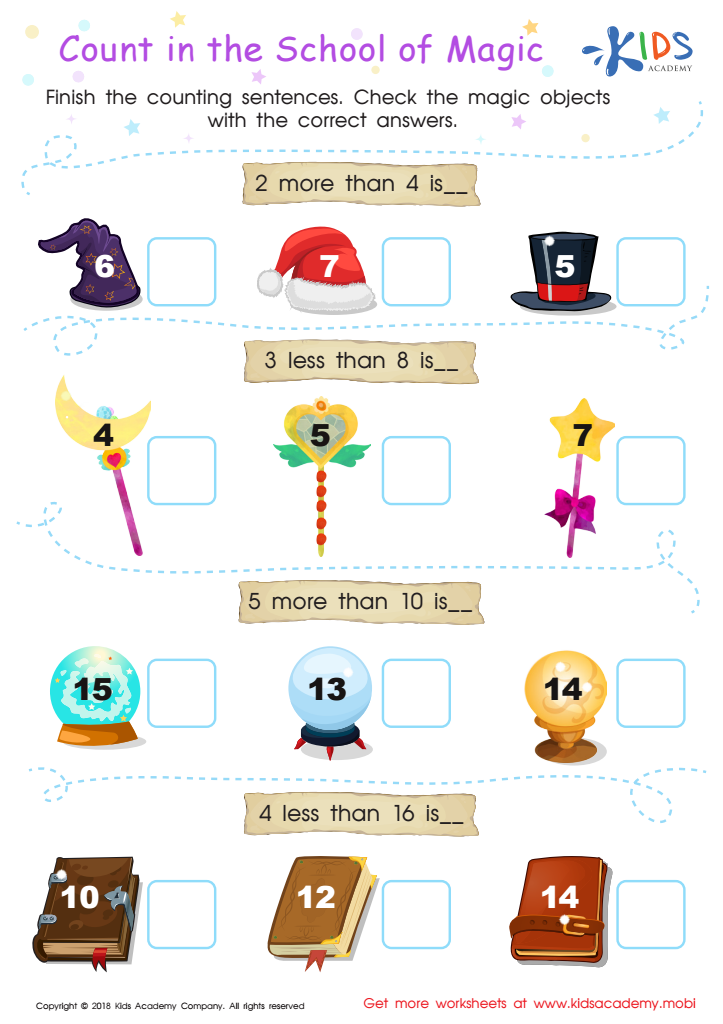
Count in the School of Magic Worksheet
Your math learners can explore the School of Magic with this worksheet. They'll read equations with addition and subtraction numbers under 20, count back and forth to find the answer, then complete the counting sentences. Fun pictures and easy accuracy make it an enjoyable and successful learning experience.
Count in the School of Magic Worksheet
Worksheet
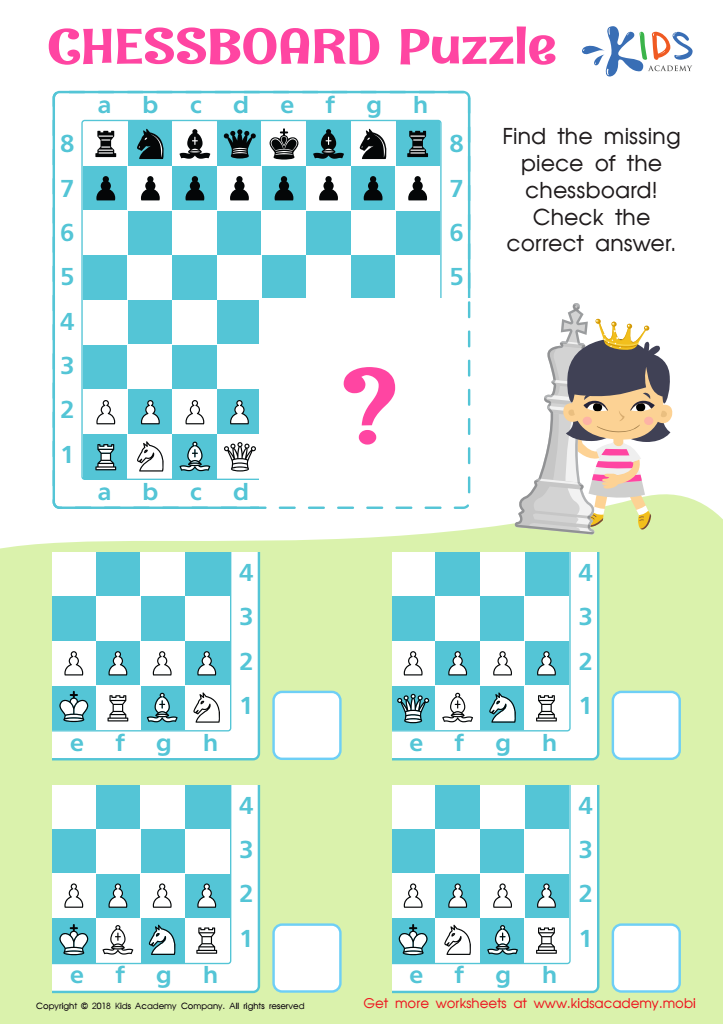
Chessboard Puzzle Worksheet
Test your child's chess prowess with this simple worksheet. They must find the missing pieces to complete the white side of an empty chessboard. The black pieces are already arranged properly on the board. Correct answers are provided so you can see how they did!
Chessboard Puzzle Worksheet
Worksheet
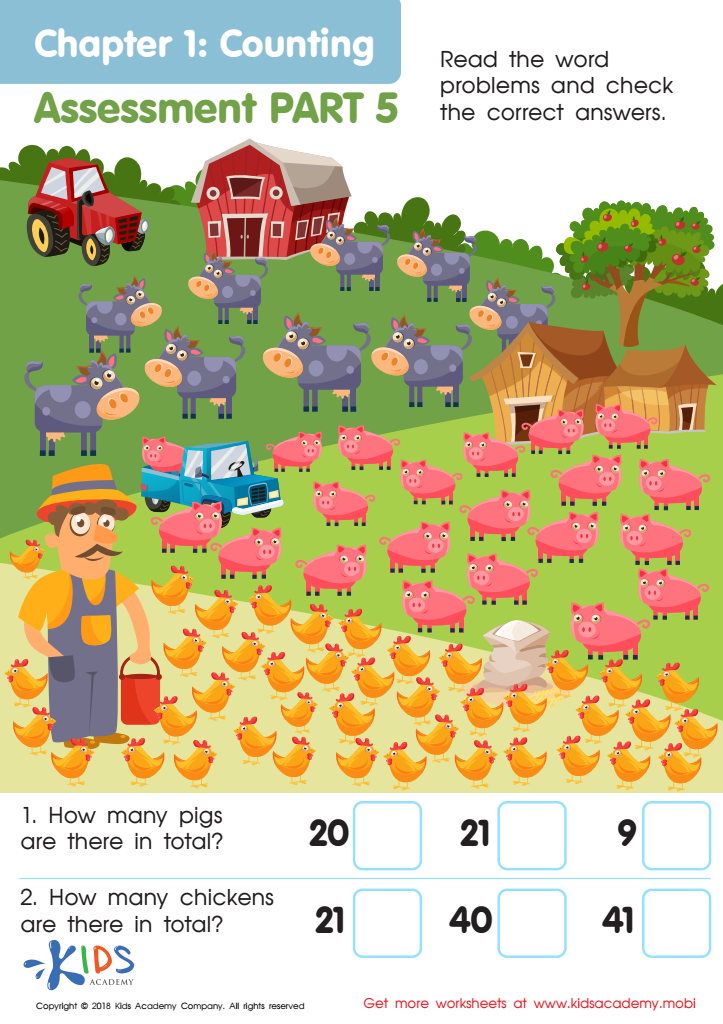
Counting: Assessment 5 Worksheet
Let your kids have fun counting farm animals on this worksheet! Help the farmer count the animals and have your child check the answers to assess their counting skills. Read the word problem at the bottom of the page and count the animals together. It's an entertaining way to practice counting and have a great time!
Counting: Assessment 5 Worksheet
Worksheet
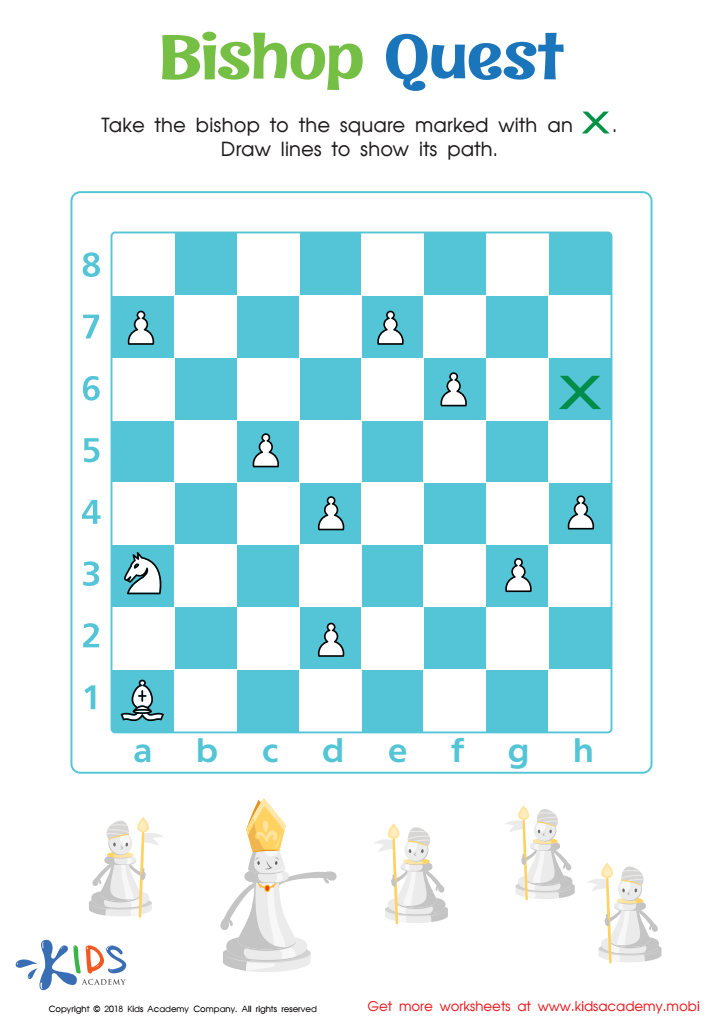
Bishop Quest Worksheet
Show kids the board and ask them to identify the bishop. Then ask them to move it to the square marked 'x', drawing lines to show its path. This worksheet helps teach kids how to move the bishop on a chessboard.
Bishop Quest Worksheet
Worksheet
Join Kids Academy for Free
Who is primarily going to use this learning content?





Spatial reasoning is a critical cognitive skill that refers to the ability to understand and manipulate two and three-dimensional space. For first graders, enhancing spatial reasoning is essential because it lays the foundation for future academic success, particularly in mathematics and science. At this stage, children are developing the ability to visualize shapes, understand spatial relationships, and navigate their environments, all of which contribute to problem-solving skills.
Parents and teachers should care about spatial reasoning because it is closely tied to children's everyday experiences and learning processes. Activities like building with blocks, playing with puzzles, or even drawing can significantly bolster children's spatial understanding. By fostering these skills, children not only improve their math abilities—like geometry—but also enhance their critical thinking and creativity.
Moreover, strong spatial reasoning has been associated with success in STEM (Science, Technology, Engineering, and Mathematics) fields, which are increasingly important in our modern world. Encouraging activities that promote spatial reasoning helps to equip children with essential life skills for the future. Thus, parents and teachers play a vital role in facilitating opportunities to nurture these abilities in young learners, ensuring they are well-prepared for future challenges and growth.