Understanding life cycles Grade 1 Worksheets
4 filtered results
-
From - To
At Kids Academy, our Grade 1 Understanding Life Cycles worksheets are designed to captivate young learners while teaching them about the fascinating stages of development in living organisms. These worksheets use engaging illustrations and easy-to-follow activities to guide students through the life cycles of plants, insects, and animals. By providing hands-on learning experiences, kids can better grasp concepts such as growth, metamorphosis, and reproduction. Ideal for both classroom and home use, these worksheets help build foundational science skills while sparking curiosity and promoting a love for learning. Perfect for first graders, they align with educational standards and make learning interactive and fun.
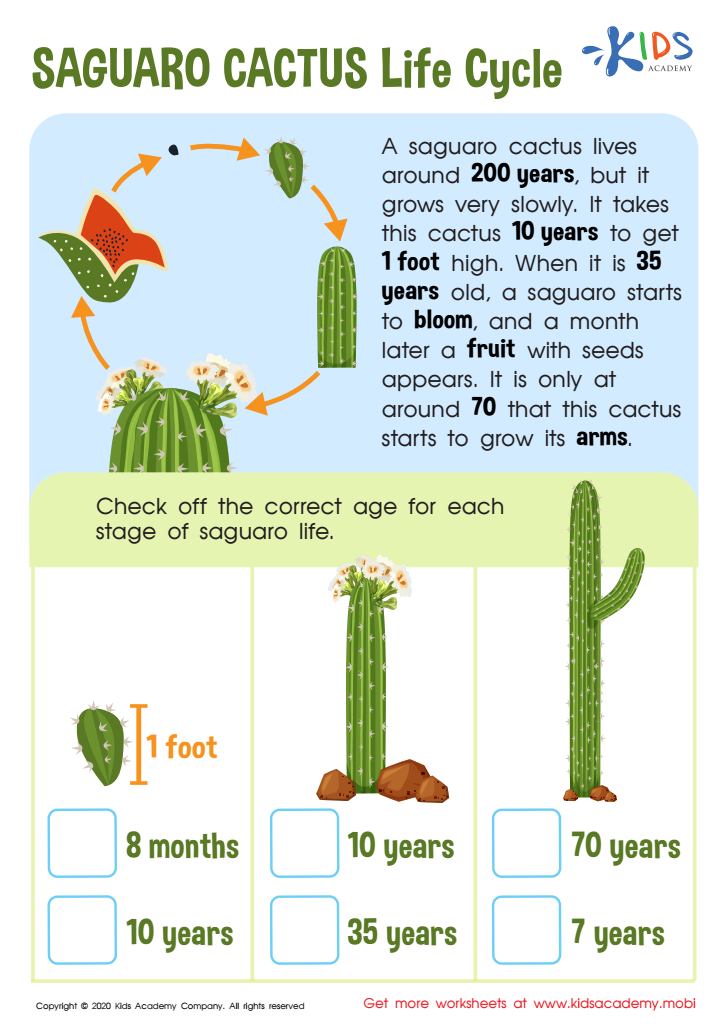
Saguaro Cactus Life Cycle Worksheet
 Assign to My Students
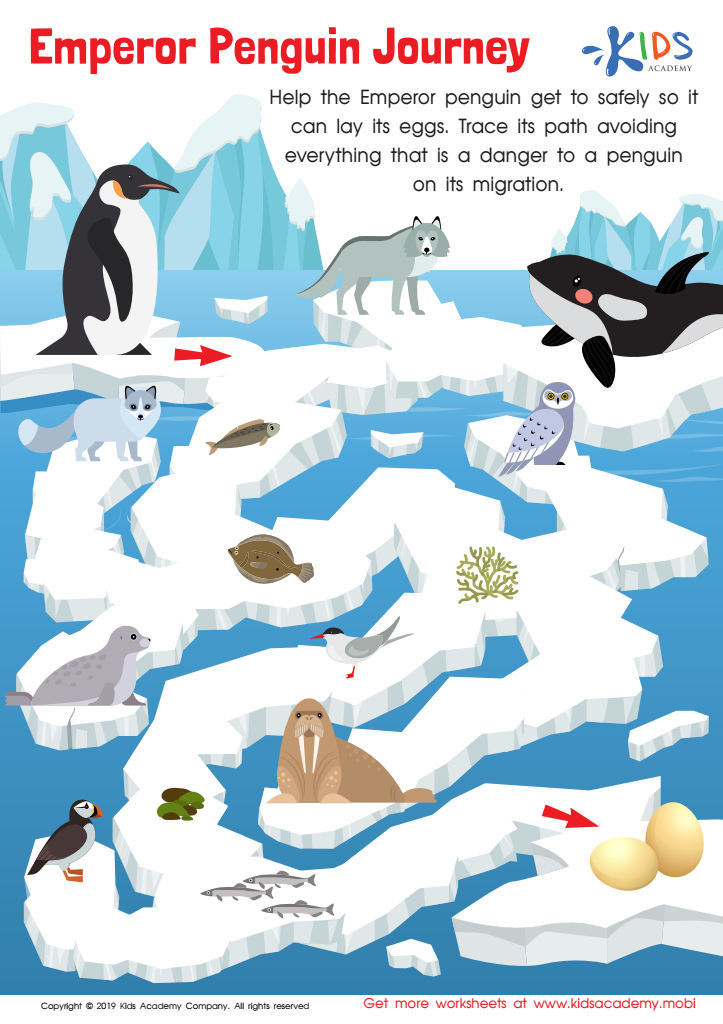
Emperor Penguin Journey Worksheet
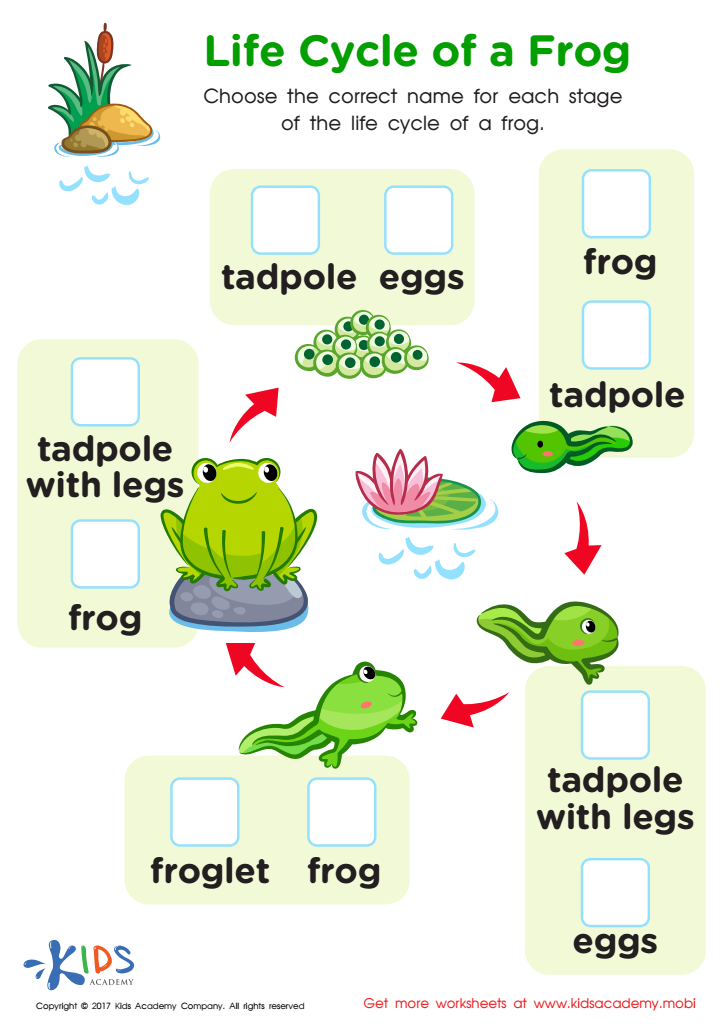
Life Cycle Frog Printable
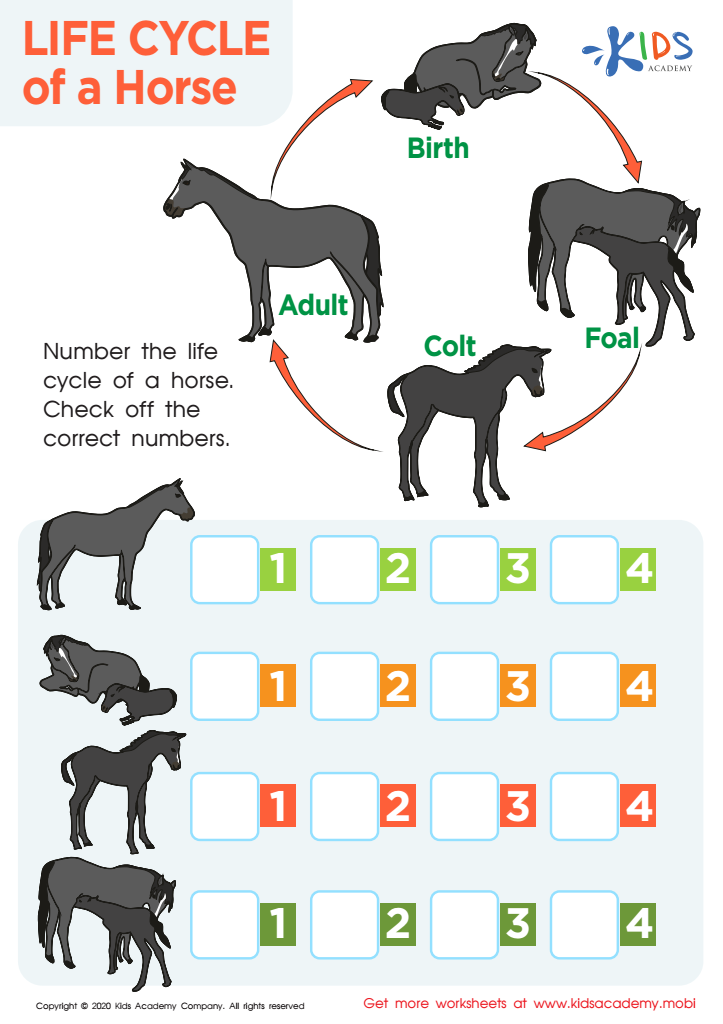
Life Cycle of a Horse Worksheet








Parents and teachers play a crucial role in early childhood education, and understanding life cycles for Grade 1 students is exceptionally important. This foundational knowledge is more than just part of a science curriculum—it's a cornerstone for comprehending the natural world and fostering a student's curiosity and sense of wonder.
Firstly, learning about life cycles helps children grasp the concept of change and growth. Through studying the stages of various plants and animals, children better understand their own development and the world around them. This not only supports cognitive development but also reinforces the concept of time and sequence, which are essential skills for young learners.
Secondly, engaging with life cycles can instill a sense of responsibility and care for living things. When children observe and learn about stages of life like those of a butterfly, frog, or flowering plant, they become more empathetic and better caretakers of the environment.
Moreover, understanding life cycles lays the groundwork for more complex scientific topics in the future. It promotes critical thinking and reinforces observational skills. Activities such as growing a plant or observing caterpillars turning into butterflies promote hands-on learning, making abstract concepts tangible.
By fostering an appreciation for life cycles, parents and teachers help children build an enduring curiosity and respect for life that extends beyond the classroom.