Understanding Sequences Grade 1 Worksheets
4 filtered results
Difficulty Level
Grade
Age
-
From - To
Subject
Activity
Standards
Welcome to our "Understanding Sequences Grade 1 Worksheets" page! Designed for young learners, these engaging worksheets help children grasp the concept of sequences through simple, interactive exercises. Our materials feature colorful visuals and relatable scenarios, making learning fun and enjoyable. Kids will practice identifying and creating patterns, connecting events in order, and enhancing logic skills in an easy-to-understand format. Perfect for classroom use or at-home learning, these worksheets support foundational skills essential for math and reading comprehension. Download and print these worksheets to empower your first grader in mastering sequences with confidence and excitement!
Favorites
With answer key
Interactive
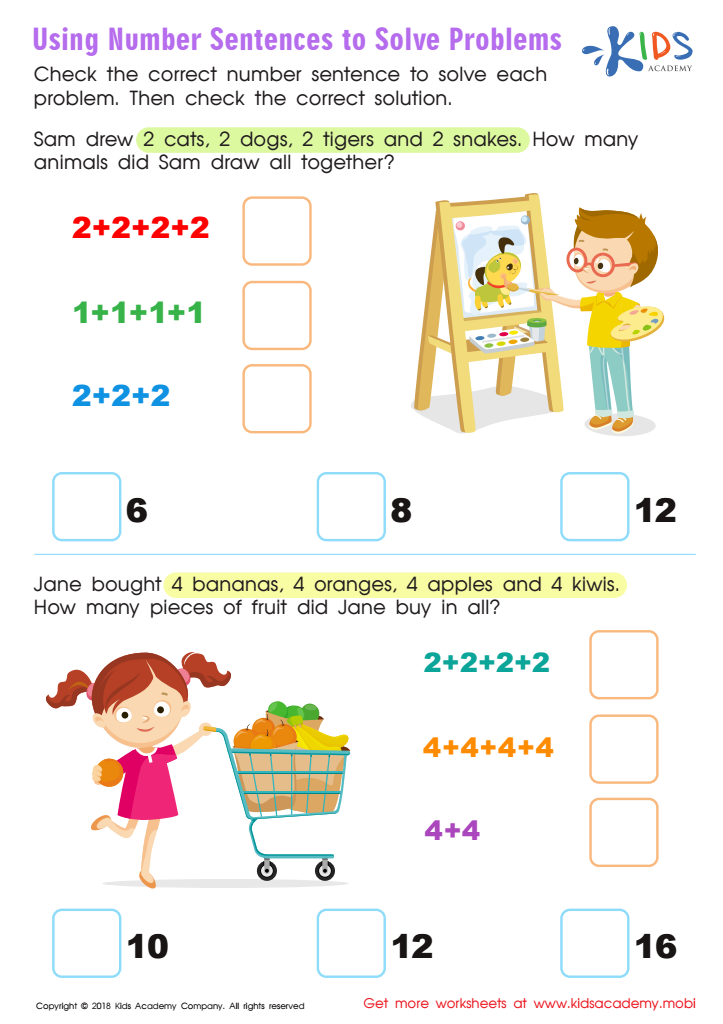
Using Number Sentences to Solve Problems Worksheet
Solving math problems requires an efficient strategy. Picture representation can help young mathematicians with basic addition problems, especially when it involves repeated addends. As they gain confidence, they'll be able to apply their number sentence solving abilities to more complex equations.
 Assign to My Students
Using Number Sentences to Solve Problems Worksheet
Worksheet
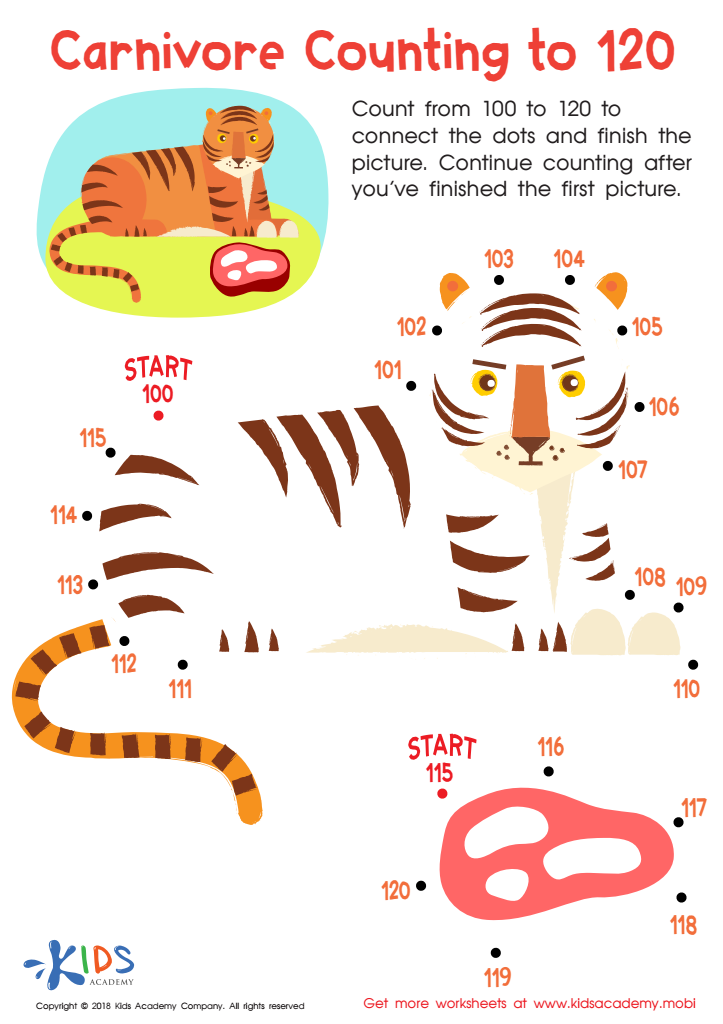
Carnivore Counting to 120 Worksheet
Ask your child to name some popular carnivores. Can they tell you what the animal in the worksheet is? A Tiger? Get them to count from 100 to 120 to connect the dots. After they finish the first picture, keep counting to help them practice!
Carnivore Counting to 120 Worksheet
Worksheet
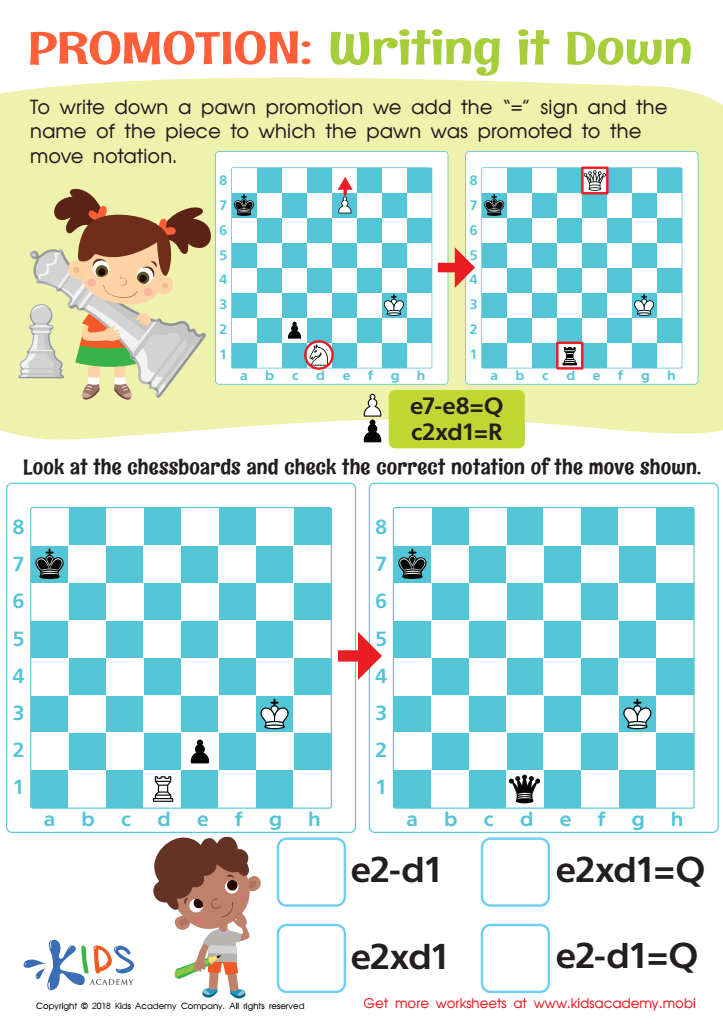
Writing it Down Worksheet
To document pawn promotion, add "=<piece name>" to the move notation. For example: e7-e8=Q. Ask your child to look at the chessboard and take note of the moves. Check the notations are correct. (80 words)
Writing it Down Worksheet
Worksheet
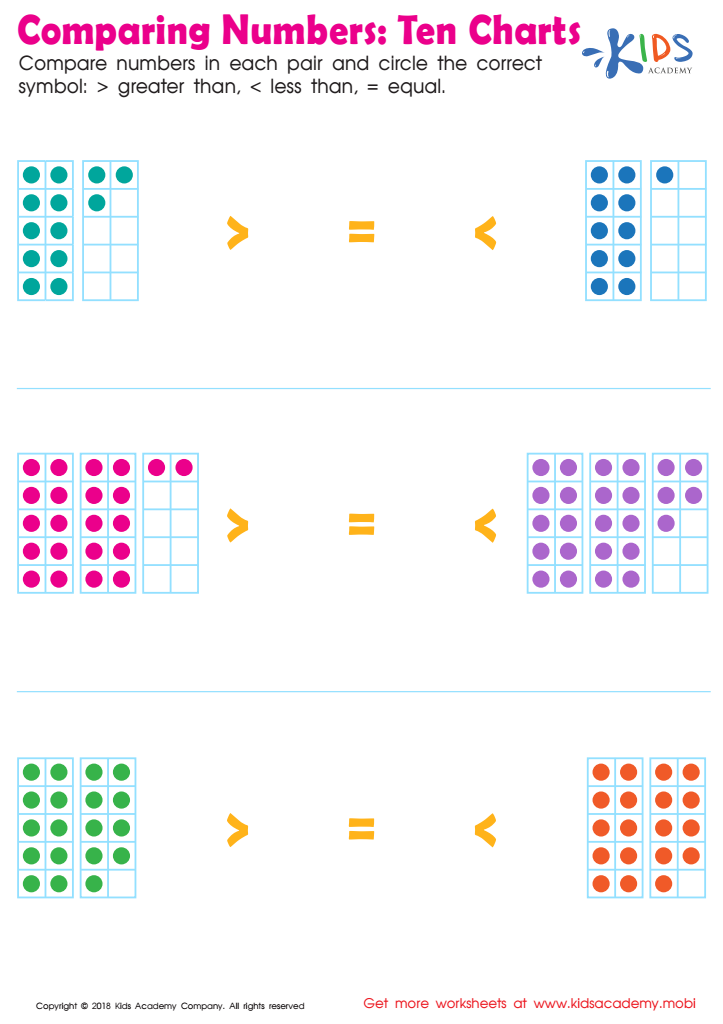
Ten Charts Worksheet
Help your child learn numbers in a creative way using this printable worksheet. They'll learn the difference between numbers, how to add them, and the symbols of "greater than", "less than" and "equals to". They can compare two sides, and identify which is greater, less or equal. Let their maths knowledge bloom!
Ten Charts Worksheet
Worksheet
Join Kids Academy for Free
Who is primarily going to use this learning content?




Understanding sequences is crucial for Grade 1 students as it forms the foundation for critical thinking and problem-solving skills. At this early stage, children begin to recognize patterns and order, which are fundamental mathematical concepts. Parents and teachers should care about teaching sequences because they impact a child's ability to predict outcomes and make logical connections, skills that extend beyond math into everyday life.
By introducing sequences, children learn to identify and create patterns, an essential skill in various subjects, including science and language arts. For example, they can understand the progression of events in a story or recognize the order of seasons in nature. Moreover, learning sequences fosters cognitive development; it sharpens attention and memory as students practice recalling and arranging items.
Understanding sequences also lays the groundwork for more complex mathematical topics, such as addition, subtraction, and even multiplication in later grades. Early mastery of these concepts boosts confidence and solidifies a positive attitude toward learning. Furthermore, when parents actively engage with their children in these discussions, it strengthens their bond and encourages a supportive learning environment. Thus, grasping sequences at this stage is vital for a child’s overall academic and personal growth.