Shape identification Grade 1 2D Shapes Worksheets
4 filtered results
Difficulty Level
Grade
Age
-
From - To
Subject
Activity
Standards
Discover our engaging Shape Identification Worksheets designed for Grade 1 students to master 2D shapes! These interactive resources help young learners recognize and identify various two-dimensional figures, such as circles, squares, triangles, and rectangles. With a variety of fun activities, including drawing, coloring, and matching tasks, students will develop their spatial awareness and shape recognition skills. Each worksheet is crafted to support critical thinking and enhance creativity while making learning enjoyable. Perfect for classroom use or at-home practice, our worksheets pave the way for a solid foundation in geometry. Explore our collection and watch your child's confidence soar!
Favorites
With answer key
Interactive
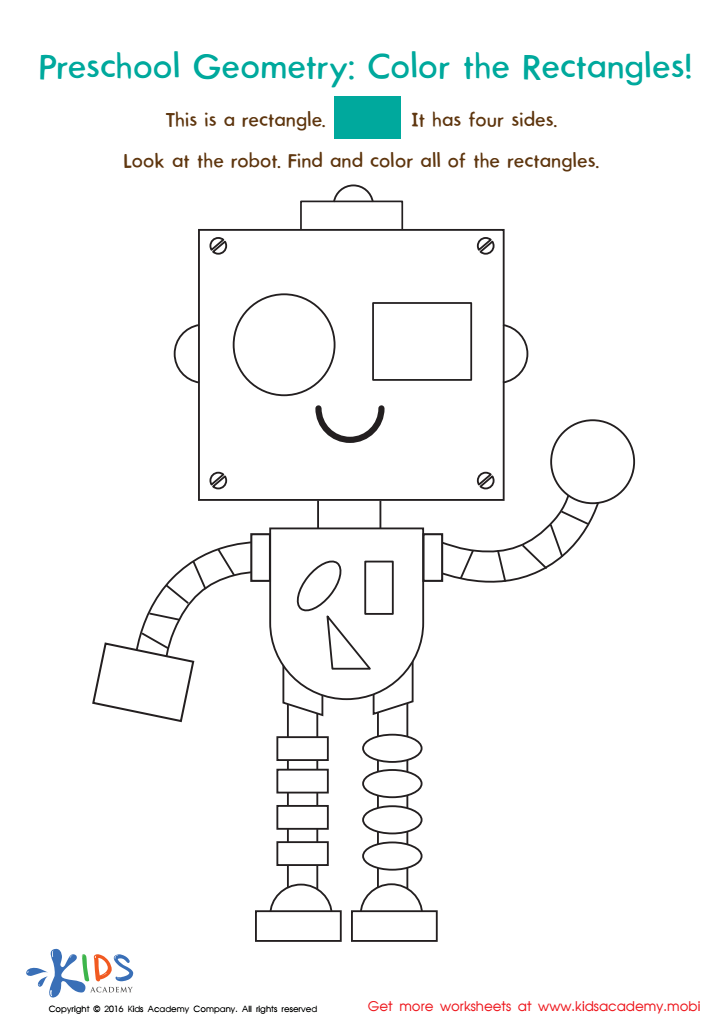
Geometry Worksheet
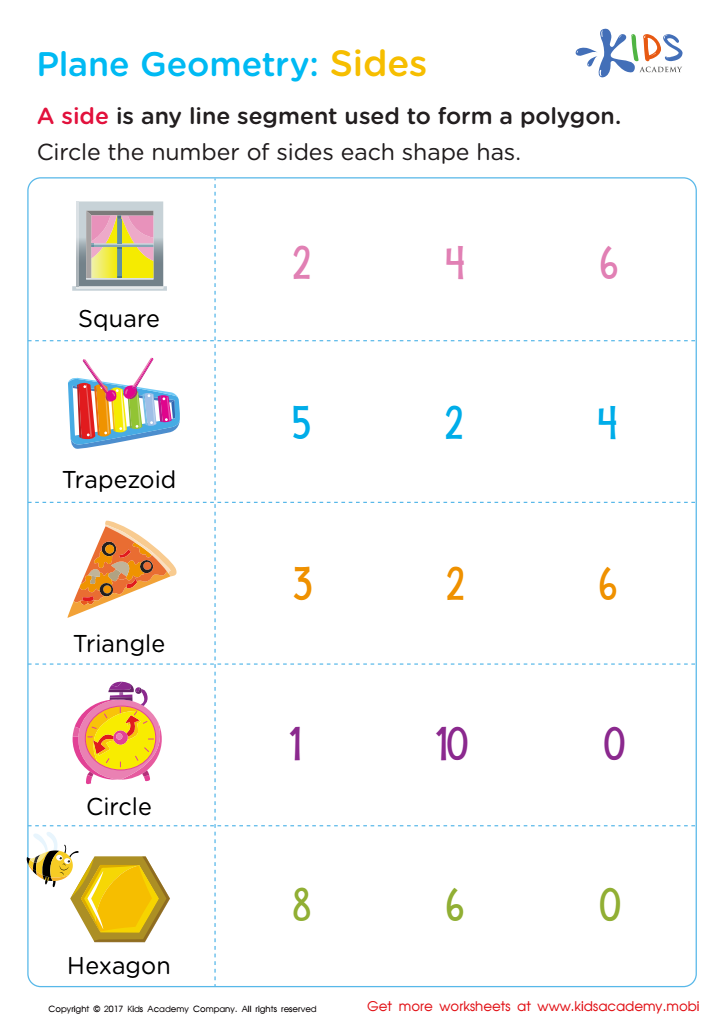
Geometry can be fun for kids! They explore shapes that create their favorite pics and objects. This preschool worksheet explains that rectangles have four sides, then kids color rectangles on a funny robot!
 Assign to My Students
Geometry Worksheet
Worksheet
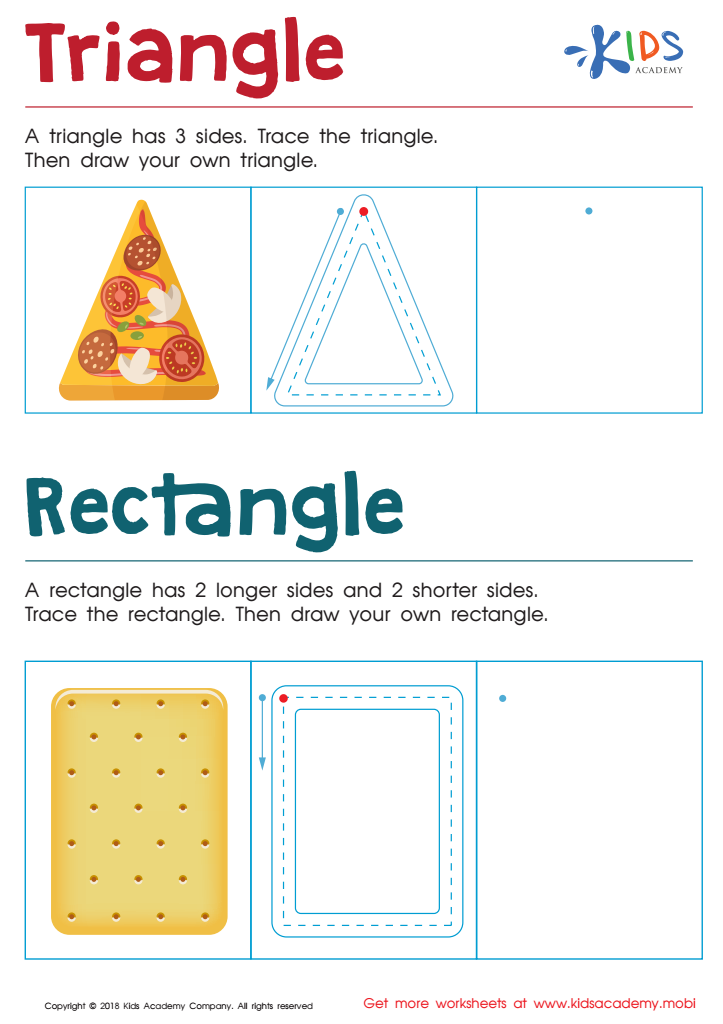
Triangle Rectangle Worksheet
This printable worksheet helps kids draw rectangles and triangles. Have your child trace the pizza and cracker shapes to become familiar, then try their own. Perfect for second graders! Coloring and creativity make this fun and educational.
Triangle Rectangle Worksheet
Worksheet
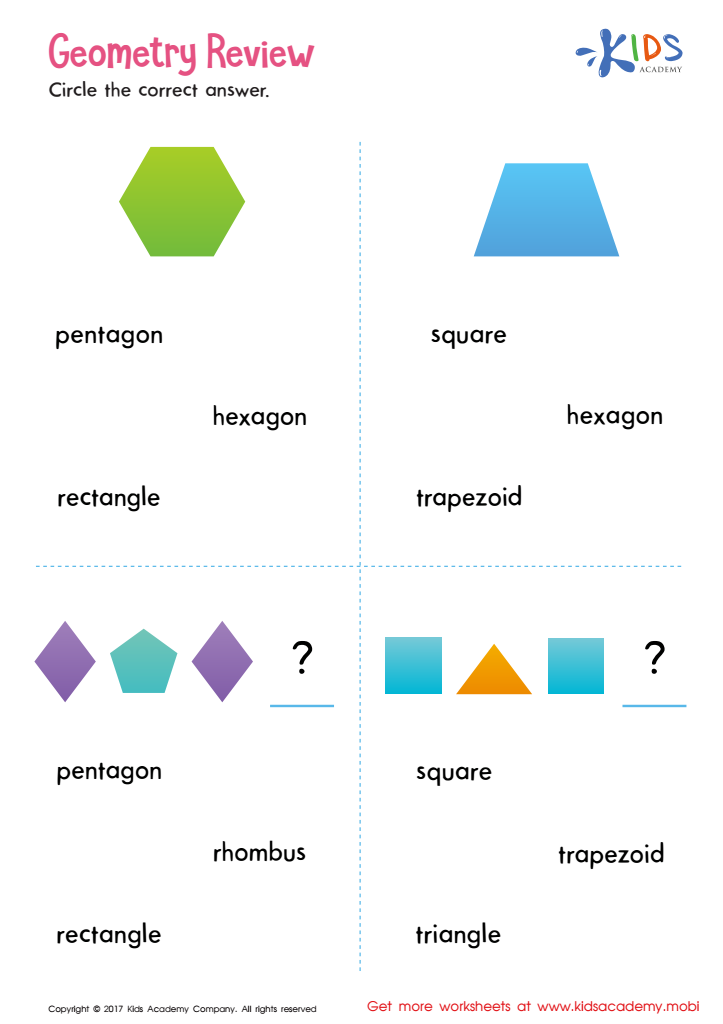
Geometry Review Printable
Repetition is key to success; give your child the practice they need with this geometry worksheet.
Geometry Review Printable
Worksheet
Join Kids Academy for Free
Who is primarily going to use this learning content?





Shape identification is a fundamental skill for Grade 1 students, laying the groundwork for essential cognitive development and mathematical understanding. Parents and teachers should prioritize this early learning because recognizing and differentiating 2D shapes—such as circles, squares, triangles, and rectangles—enhances children's visual-spatial awareness. This skill is necessary for STEM learning and everyday problem-solving.
Understanding shapes also correlates with the development of critical thinking skills. When children engage in activities that involve identifying and describing shapes, they learn to observe details, make comparisons, and manipulate their environment intellectually. These fundamental skills are essential as they progress to more advanced concepts in geometry, measurement, and even algebra.
Furthermore, shape identification is linked to creativity. Exploring shapes through art, building with blocks, or playing interactive games encourages children to think innovatively. Parents and teachers can foster a supportive and engaging learning environment that integrates shape recognition into playful, hands-on activities.
In summary, shape identification not only contributes to academic readiness but also cultivates problem-solving abilities and creativity in Grade 1 students. Thus, it is an essential focus for parents and educators, preparing children for a well-rounded future in learning.