Visual discrimination Grade 1 2D Shapes Worksheets
3 filtered results
-
From - To
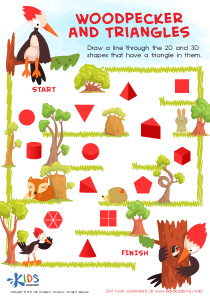
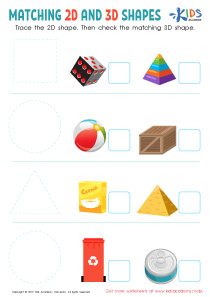
Enhance your first grader's visual discrimination skills with our engaging 2D shapes worksheets! Tailored for young learners, these worksheets focus on identifying, comparing, and categorizing various geometric shapes, fostering essential visual skills. With colorful illustrations and interactive activities, students can practice recognizing similarities and differences among shapes like circles, squares, and triangles. Ideal for classroom use or at-home learning, our worksheets help children develop a strong foundation in math as they learn to visually distinguish shapes. Boost confidence and critical thinking in mathematics while ensuring fun learning experiences with these vibrant and comprehensive visual discrimination worksheets for Grade 1!
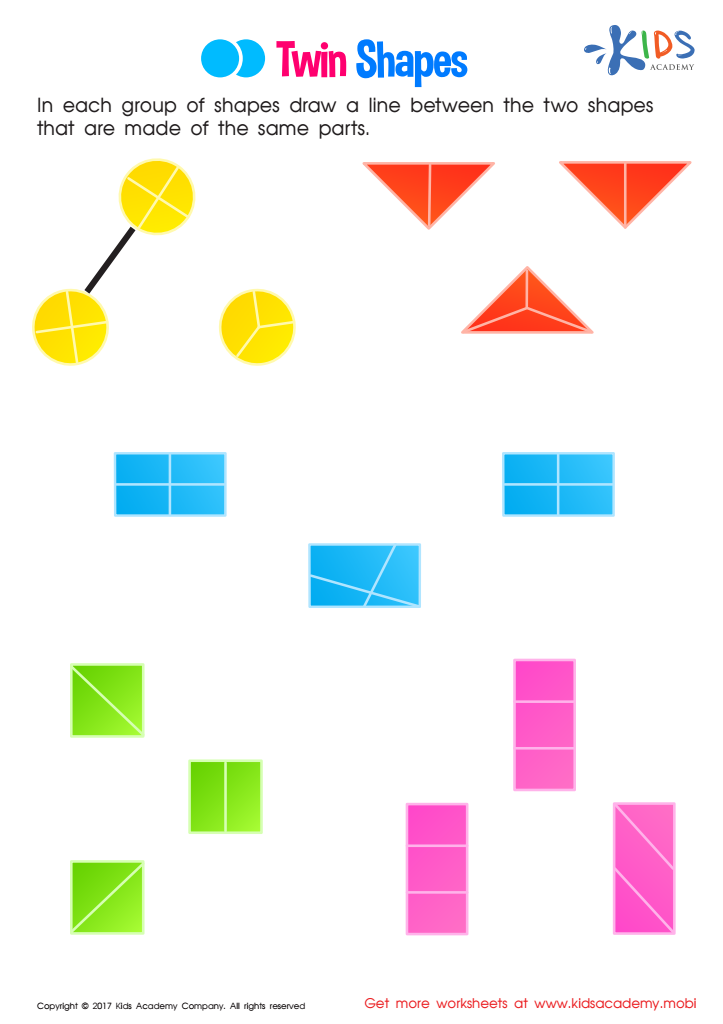
Twin Shapes Worksheet
 Assign to My Students
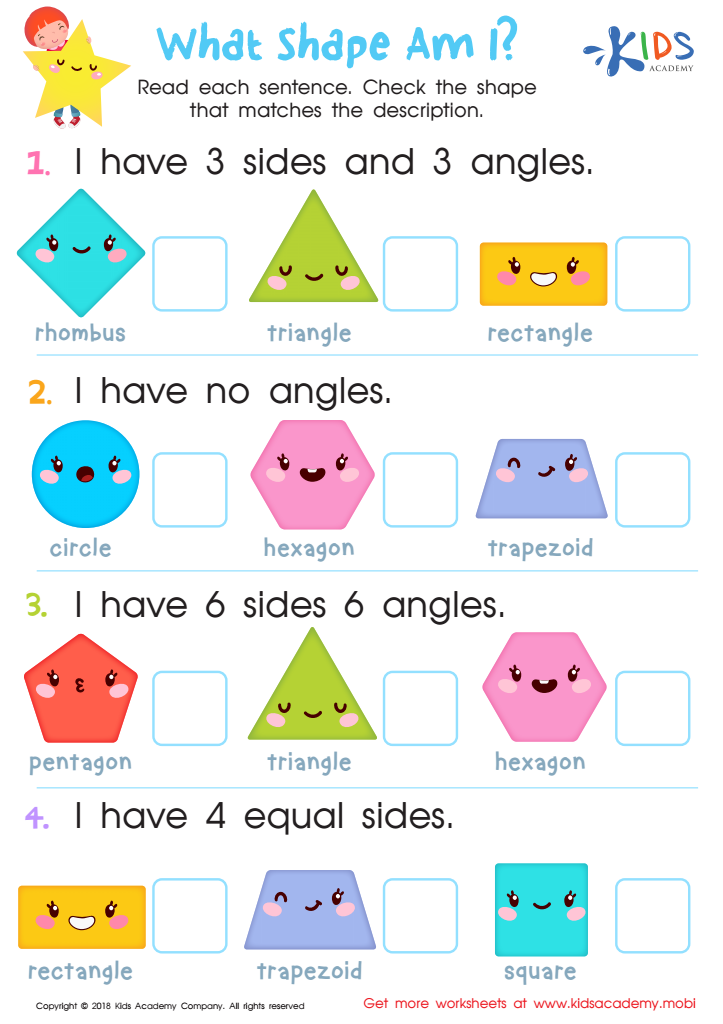
What Shape Am I? Worksheet
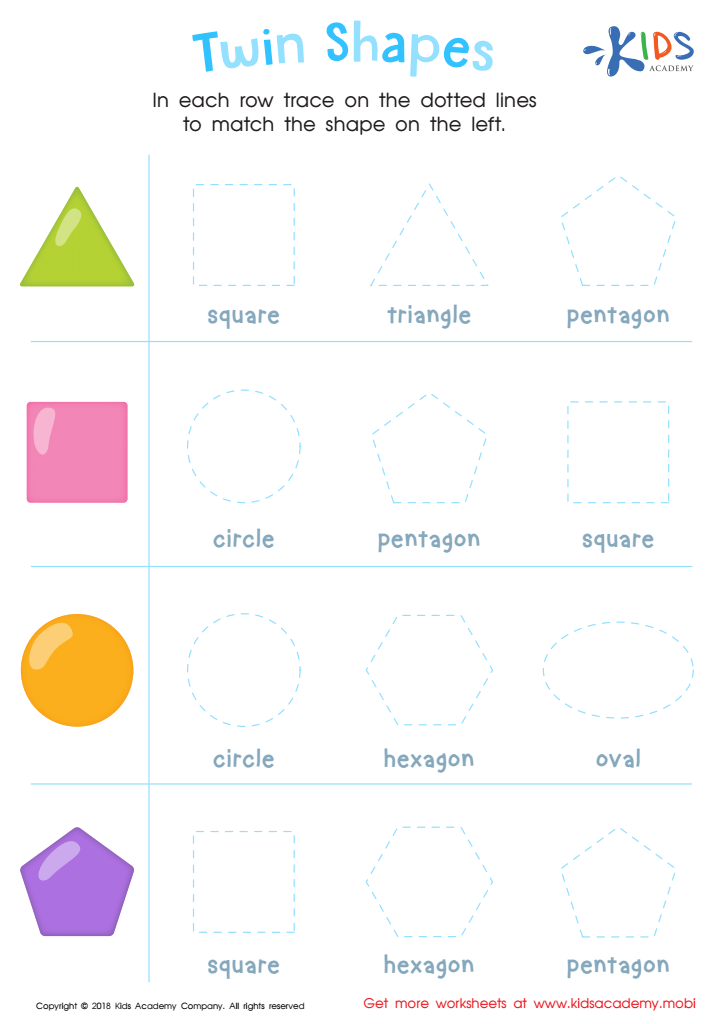
Twin Shapes Dot-to-Dot Worksheet





Visual discrimination is a critical skill for early learners, particularly in Grade 1, where students begin to explore and understand 2D shapes. This skill involves the ability to differentiate between various visual stimuli, which is essential for successful learning in multiple areas, including math, literacy, and spatial awareness. Caring about visual discrimination in the context of 2D shapes is important for several reasons.
Firstly, understanding 2D shapes builds a foundation for mathematical reasoning. When students can recognize, compare, and classify shapes, they learn to apply these concepts in geometry as they progress. This paves the way for problem-solving skills that will serve them well in higher-level mathematics.
其次,视觉辨别力对于学生在日常生活中进行导航和理解周围世界至关重要。 Shapes are everywhere, from architecture to nature, and being able to identify them can help students make sense of their environment.
Additionally, visual discrimination impacts literacy. Characters in books, letters, and words all have distinct visual features, and students who struggle with shape recognition may also face challenges in reading and writing.
By prioritizing visual discrimination in 2D shapes, parents and teachers promote a more solid academic foundation and enable children to develop critical thinking and observational skills essential for lifelong learning.