Basic subtraction skills Grade 1 Addition & Subtraction Worksheets
3 filtered results
Difficulty Level
Grade
Age
-
From - To
Subject
Activity
Standards
Enhance your first grader's mathematical journey with our Basic Subtraction Skills worksheets! Designed specifically for Grade 1 students, these engaging activities focus on developing foundational subtraction skills. Each worksheet offers a variety of fun and interactive exercises that make learning enjoyable. Students will explore number patterns, solve simple problems, and gain confidence in their subtraction abilities. Whether used in the classroom or at home, our printable resources are perfect for reinforcing essential math concepts. Help your child master subtraction while building a solid maths foundation. Check out our collection of worksheets today and watch your child's skills soar!
Favorites
With answer key
Interactive
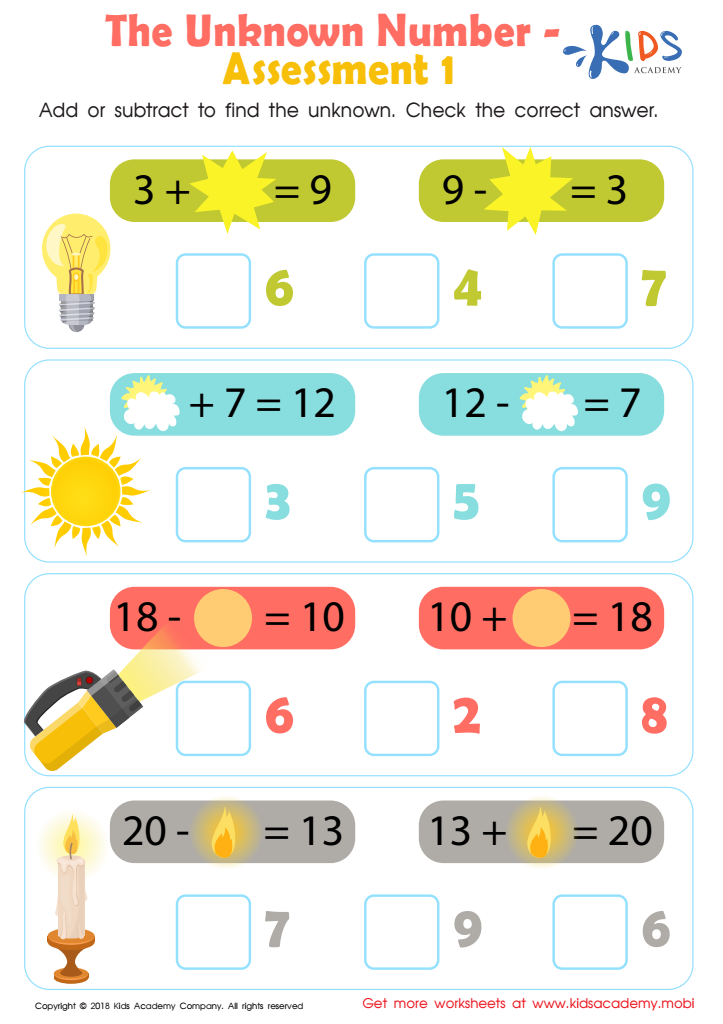
The Unknown Number: Assessment 1 Worksheet
Engage your child's mind with this simple worksheet. Help them overcome math stress and practice their skills! Add or subtract to find the unknown and help them circle the correct answer. Make learning fun and help your kids excel in math - all with this one printout.
 Assign to My Students
The Unknown Number: Assessment 1 Worksheet
Worksheet
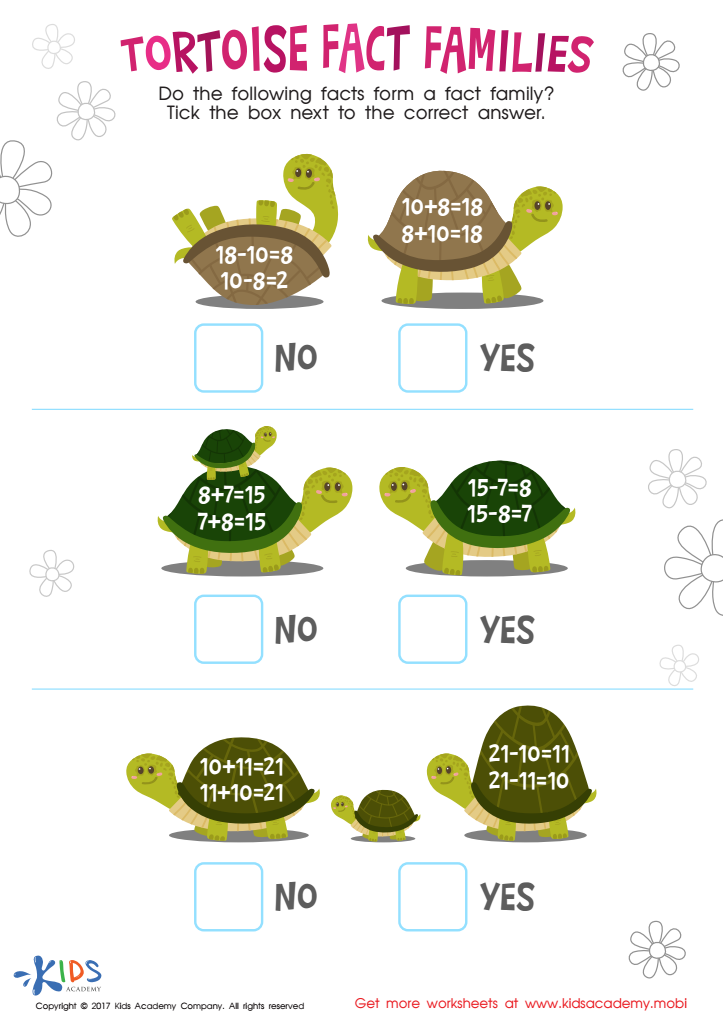
Tortoise Fact Families Printable
With 1st grade add & subtract tortoises, kids can improve their math understanding and skills. Enjoy fun, hands-on practice with fact families and strengthen logical reasoning and critical thinking!
Tortoise Fact Families Printable
Worksheet
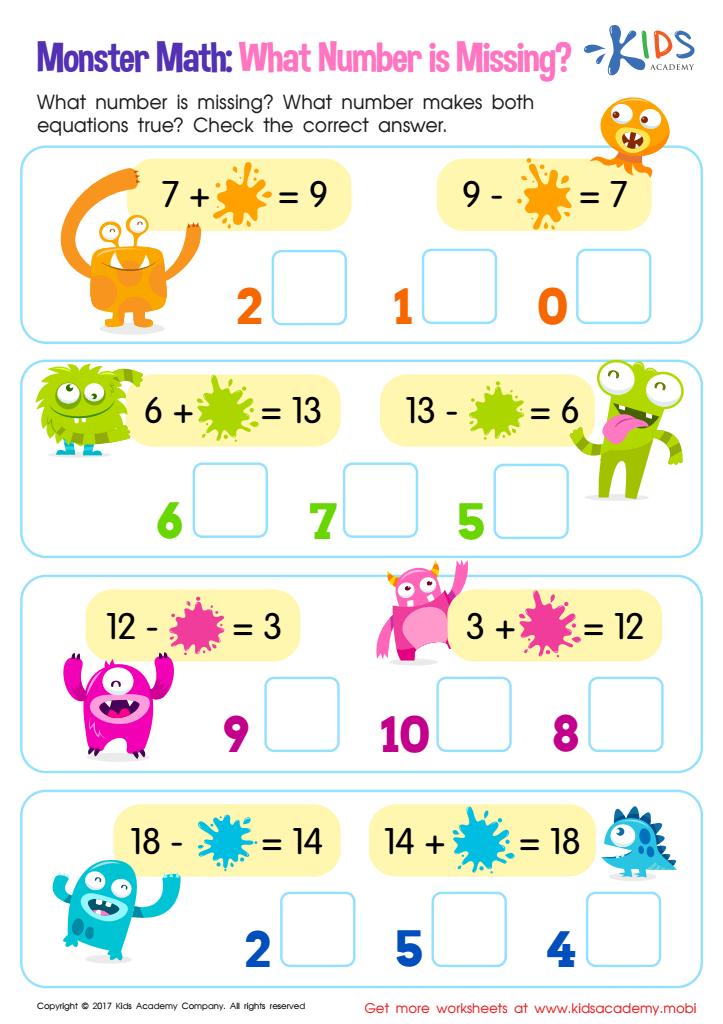
Missing Number: Monster Math Worksheet
Engage your child in monster math fun with a worksheet! They'll need to use their counting, addition and subtraction skills to solve equations on both sides. On the left side, they must complete an addition problem and on the right, the equation is in subtraction form. Assist them in selecting the right number out of the given options to make both equations true.
Missing Number: Monster Math Worksheet
Worksheet
Join Kids Academy for Free
Who is primarily going to use this learning content?








Basic subtraction skills are essential for Grade 1 students, and both parents and teachers should prioritize them for several reasons. First, subtraction helps children develop problem-solving abilities. Learning to subtract enables students to analyze situations and make decisions, skills that will serve them well in complex topics later.
Second, mastering subtraction creates a strong foundation for more advanced mathematical concepts. Addition and subtraction are fundamental operations, and a solid understanding of these skills allows students to tackle multiplication and division more confidently in subsequent grades.
Moreover, proficiency in subtraction enhances overall cognitive development. Engaging with numbers nurtures critical thinking and logical reasoning skills, which are crucial beyond just mathematics. It also boosts students' confidence as they gain a sense of achievement in their calculations.
Socially and emotionally, strong basic skills can reduce anxiety around math, promoting a positive attitude toward the subject. When teachers and parents reinforce subtraction skills through practice and positive reinforcement, children are more likely to develop a love for learning.
Ultimately, these foundational skills prepare children not only for academic success but for daily life tasks, fostering independence and analytical thinking in real-world situations. Thus, parents and teachers play a key role in supporting this critical area of early education.