Mental math skills Grade 1 Addition Worksheets
5 filtered results
-
From - To
Enhance your child's math abilities with our engaging Grade 1 Addition Worksheets focused on mental math skills! Designed for young learners, these worksheets support the development of quick thinking and problem-solving when adding numbers. Each worksheet offers fun exercises that boost students' confidence and proficiency in mental calculations, laying a strong foundation for future math success. Parents and teachers will find these resources ideal for practice at home or in the classroom. Encourage your first grader to strengthen their mental math abilities while enjoying a variety of interactive and stimulating activities. Download your additions worksheets today and watch your child's skills flourish!
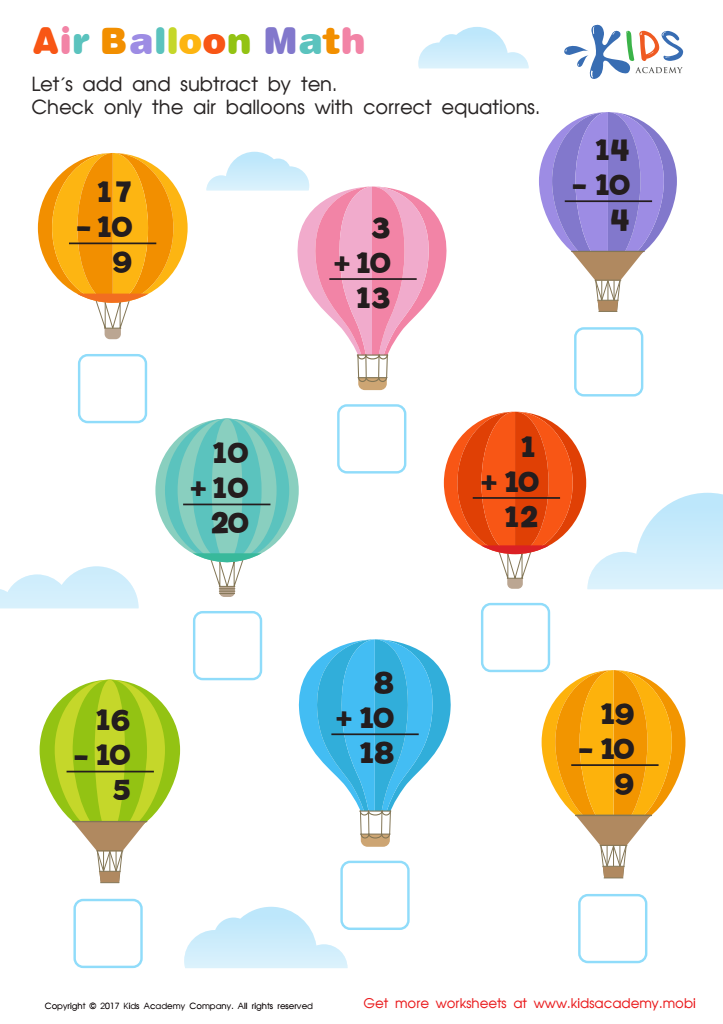
Air Balloon Math Worksheet
 Assign to My Students
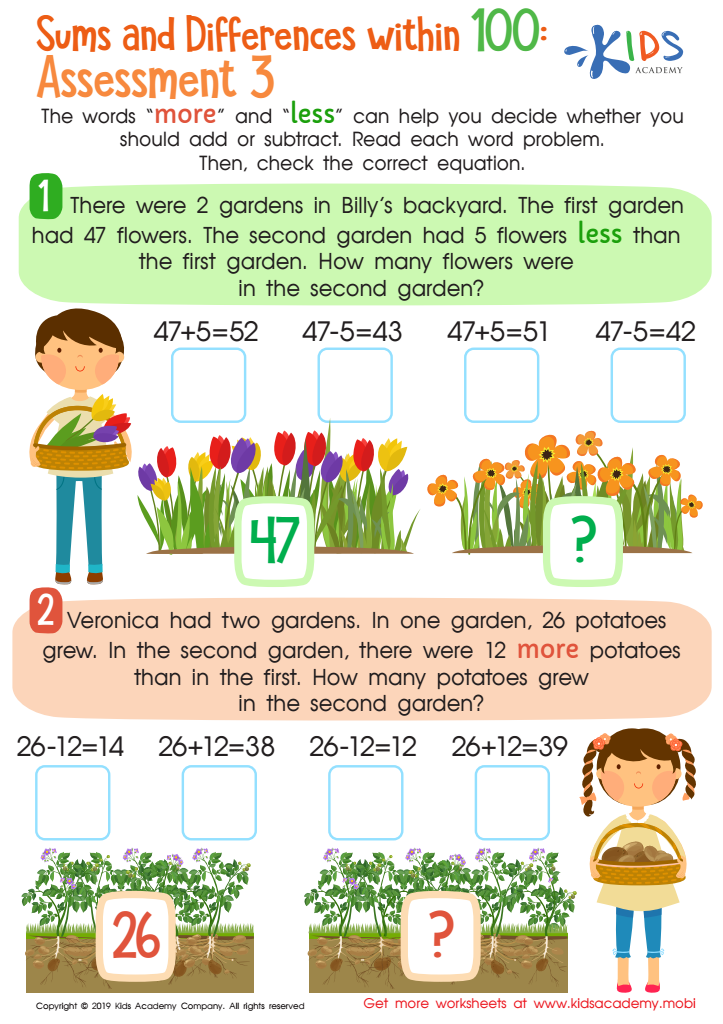
Sums and Differences Within 1 - Assessment 1 Worksheet
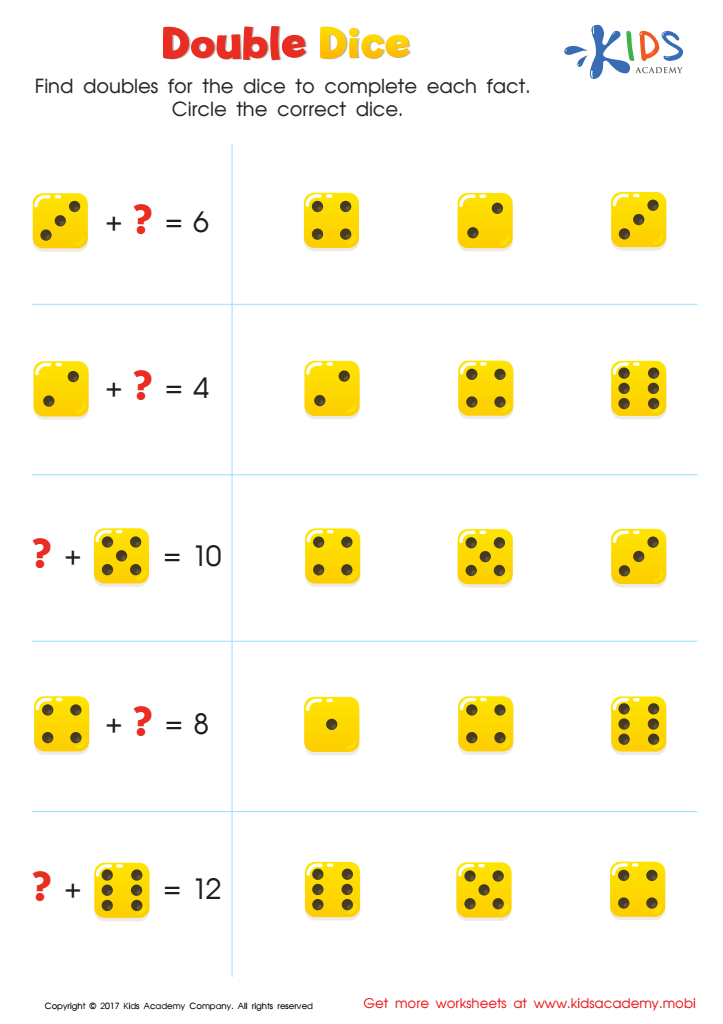
Addition Facts: Double Dice Worksheet
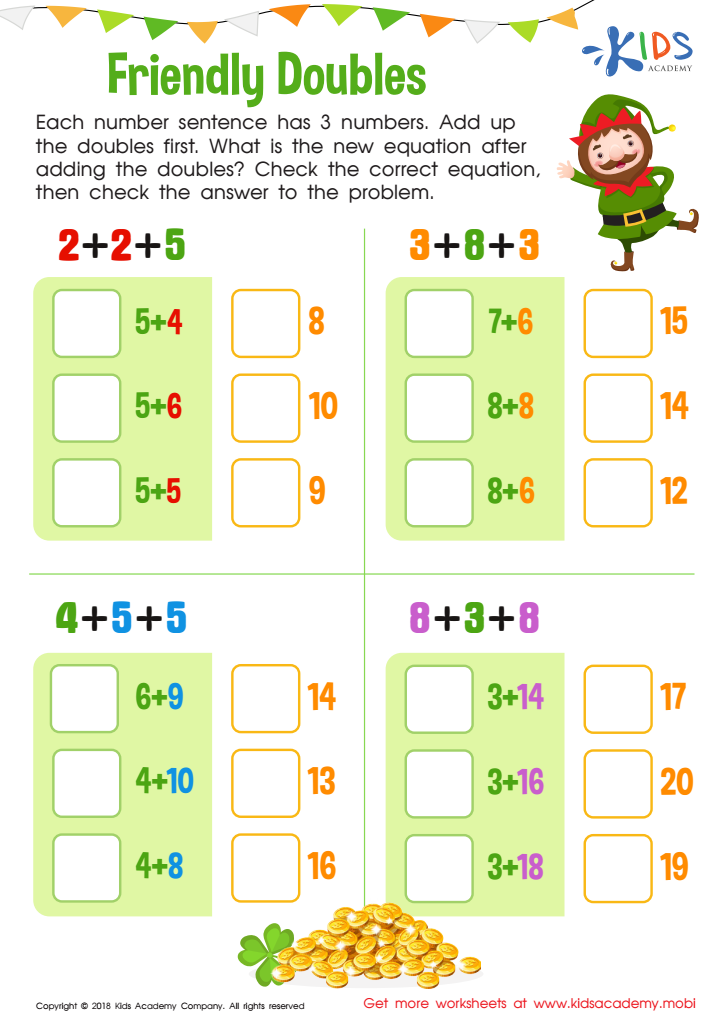
Friendly Doubles Worksheet
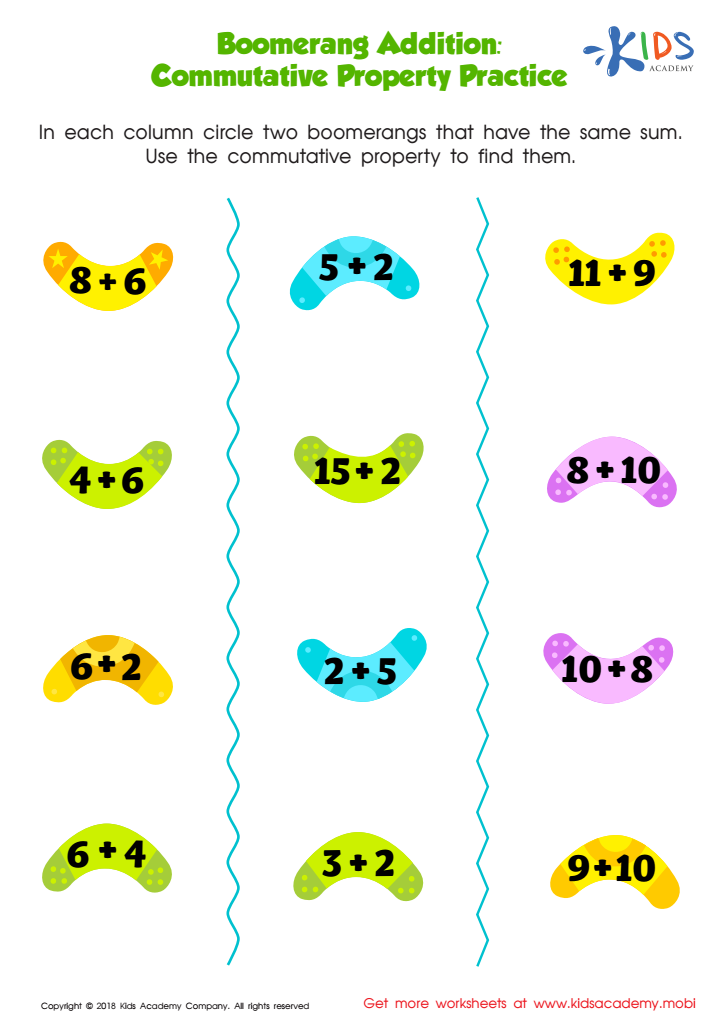
Boomerang Addition Worksheet








Mental math skills in Grade 1 addition are crucial for young learners, as they lay the foundation for more complex mathematical concepts and problem-solving abilities in later grades. Understanding addition without relying on calculators or written methods encourages children to develop number sense and promotes confidence in their mathematical reasoning.
When parents and teachers emphasize mental math, they foster a habit of flexible thinking. Children learn to visualize numbers and understand how to manipulate them, which enhances their ability to make connections between different mathematical ideas. Additionally, strengthening mental math skills can improve working memory and concentration, benefitting overall academic performance.
Moreover, mental math promotes engagement and can make learning fun. Simple games and activities such as counting objects, using everyday scenarios for problem-solving, or playful math challenges can spark interest and encourage a positive attitude towards math.
Furthermore, developing a strong grasp of basic addition helps students transition more easily to higher-level math, reducing frustration as they encounter more challenging concepts. Ultimately, nurturing mental math skills reinforces critical thinking and equips students with essential tools for success in school and everyday life. Parents and teachers play a vital role in creating this supportive environment for exploration and growth.