Vocabulary enhancement Grade 1 Geometry Worksheets
4 filtered results
Difficulty Level
Grade
Age
-
From - To
Subject
Activity
Standards
Boost your Grade 1 students' understanding of geometry with our engaging Vocabulary Enhancement worksheets! Designed to enrich vocabulary and embed geometric concepts, these worksheets introduce essential terms such as "shape," "angle," "square," and "triangle." Through fun activities like matching, fill-in-the-blanks, and visual aids, kids will learn to recognize and describe various geometric shapes effectively. Our resources support educators in fostering critical thinking and language skills while making learning enjoyable. Perfect for both classroom use and homework, these worksheets provide a solid foundation in geometry and empower young learners to confidently express their geometric knowledge. Start enhancing vocabulary today!
Favorites
With answer key
Interactive
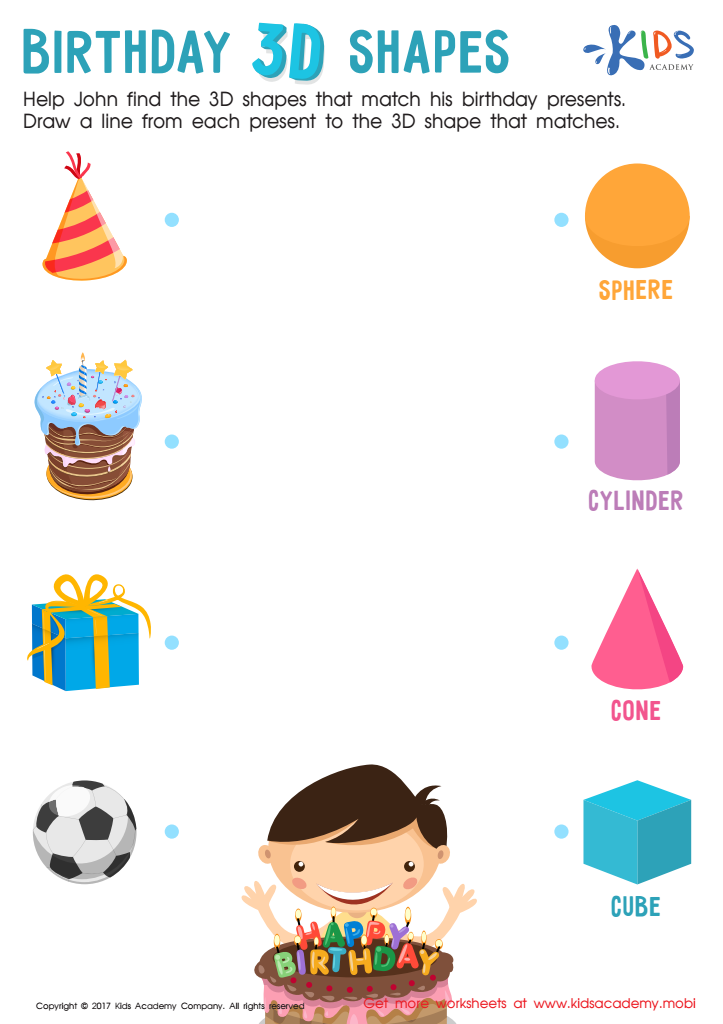
Birthday 3D Shapes Worksheet
It's John's birthday and he needs your help. Ask your kids to draw a line from each present to the matching 3D shape. First, check they understand the difference between 2D and 3D shapes. Then, they can help John figure out which 3D shape matches each present.
 Assign to My Students
Birthday 3D Shapes Worksheet
Worksheet
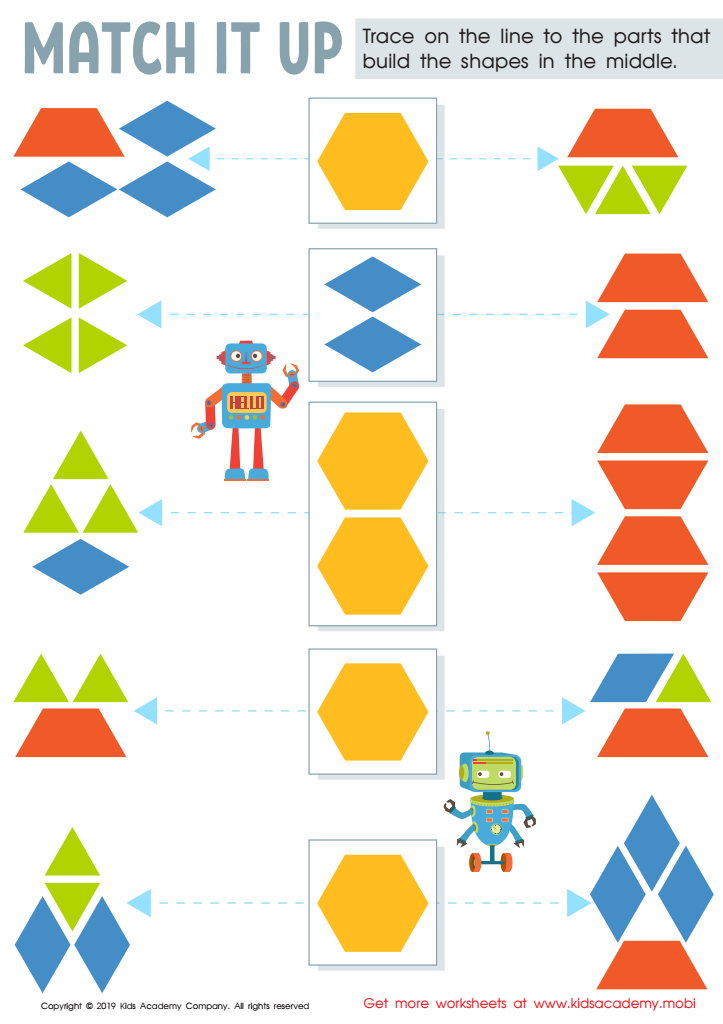
Match It up Worksheet
If your kids are into robots, they'll be thrilled to work on this worksheet. Ask them to name shapes they know, and help them draw and identify these shapes. Look at the shapes in the middle, and the sides. Finally, help your kids trace the lines to build the shapes in the middle.
Match It up Worksheet
Worksheet
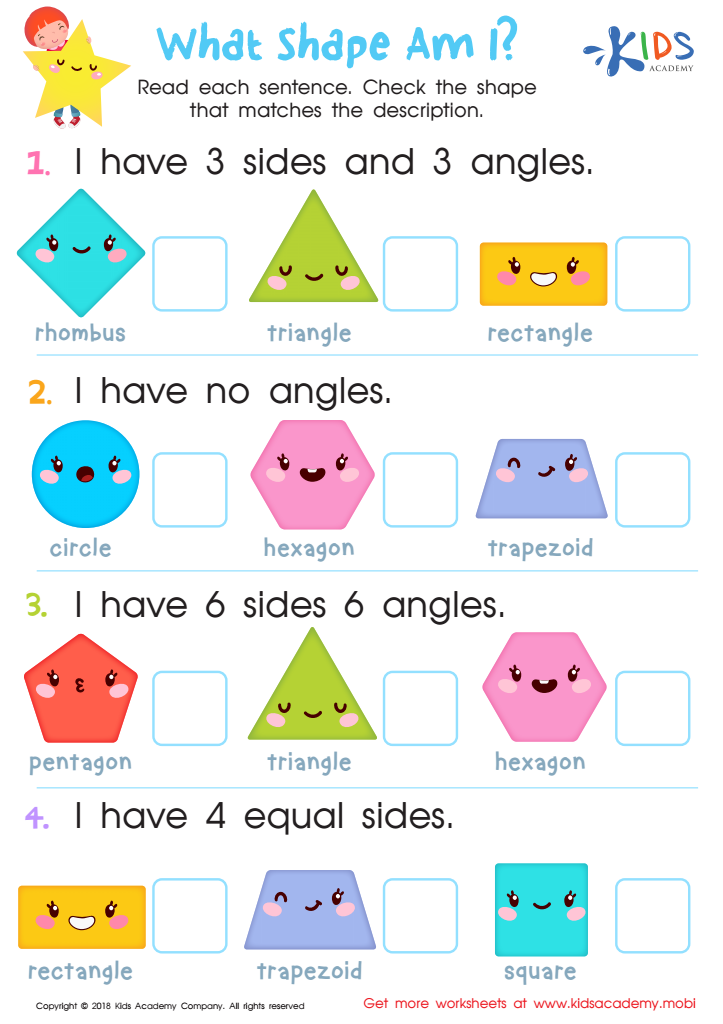
What Shape Am I? Worksheet
Help your child read each sentence in this colorful worksheet. Have them identify the shapes described and check the boxes. To prepare, ask simple questions like "How many sides does a triangle have?" and "Which shape has 4 equal sides?" Your child will become more skilled at shapes by the end of this activity.
What Shape Am I? Worksheet
Worksheet
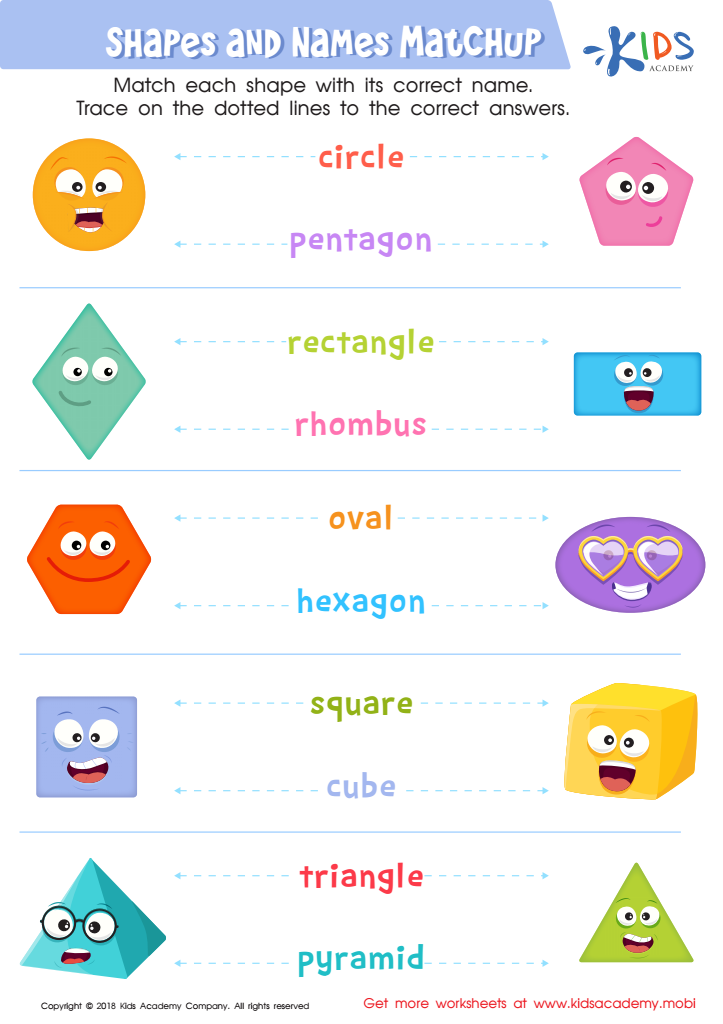
Shapes and Names Matchup Worksheet
Introduce your students to shapes if they aren't familiar. Look at the sheet with them and ask them to identify shapes. Help them match each shape to its name, then trace the dotted lines to the answers. Even if they haven't seen shapes before, this exercise will be easy - with your help!
Shapes and Names Matchup Worksheet
Worksheet
Join Kids Academy for Free
Who is primarily going to use this learning content?








Vocabulary enhancement in Grade 1 geometry is crucial because it lays the foundation for students' understanding of mathematical concepts. In this developmental stage, children begin to explore shapes, sizes, and spatial relationships, and the vocabulary they acquire helps them articulate their understanding and engage in deeper discussions about geometry.
By enhancing vocabulary, teachers enable students to identify shapes like circles, triangles, and squares confidently, leading to improved problem-solving skills. Familiarity with terms such as "sides," "corners," "above," and "below" empowers children to describe their observations and thoughts more clearly, fostering critical thinking. Effective communication about geometric concepts also supports student collaboration during group activities, creating a richer learning experience.
Furthermore, integrating vocabulary enhancement with geometry promotes overall literacy development, as children learn to connect words to concepts. Parents can reinforce this by engaging in interactive learning at home, such as reading books about shapes, discussing measurements in everyday life, or playing shape-related games.
In summary, a strong vocabulary not only enhances comprehension in geometry but also equips Grade 1 students with essential language skills that transcend mathematics, preparing them for future academic success. Investing in vocabulary development is therefore beneficial for both teachers and parents.