Decision making skills Grade 1 Math Worksheets
3 filtered results
-
From - To
Our "Decision Making Skills Grade 1 Math Worksheets" are designed to help first graders enhance their critical thinking and problem-solving abilities through engaging math activities. These worksheets introduce the basics of decision making by presenting various scenarios where children evaluate choices, analyze outcomes, and select the best solutions. The exercises include sorting, classifying, and simple pattern recognition, supporting the development of logical reasoning in young students. With vibrant illustrations and age-appropriate challenges, these worksheets make learning fun and interactive. Empower your child with essential decision-making skills that will benefit their academic journey and everyday life.
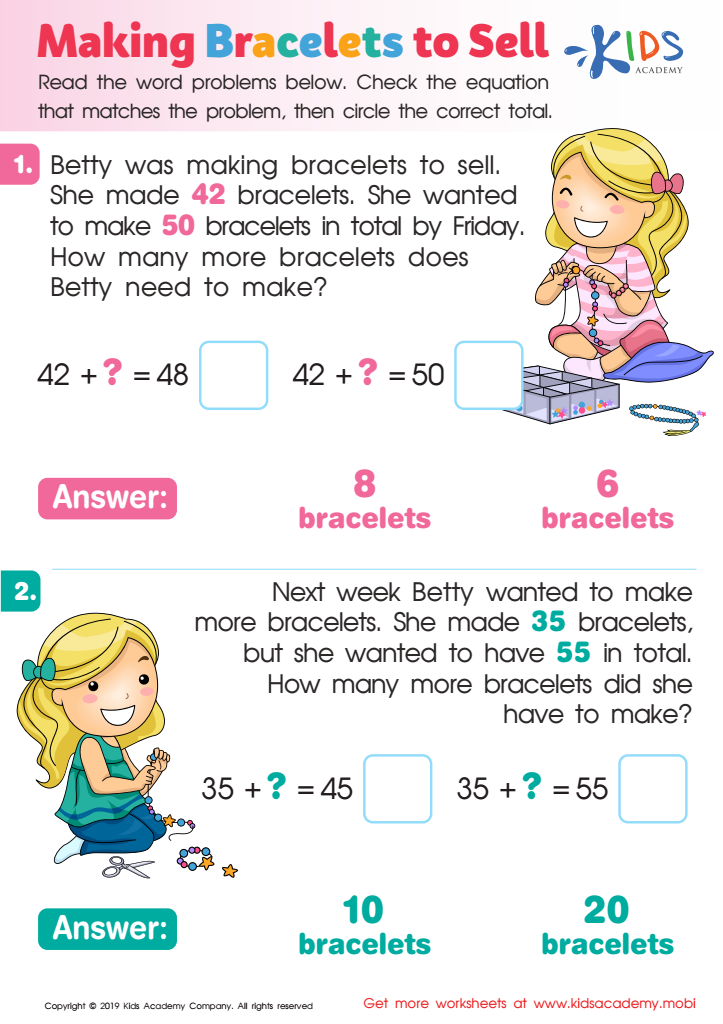
Making Bracelets to Sell Worksheet
 Assign to My Students
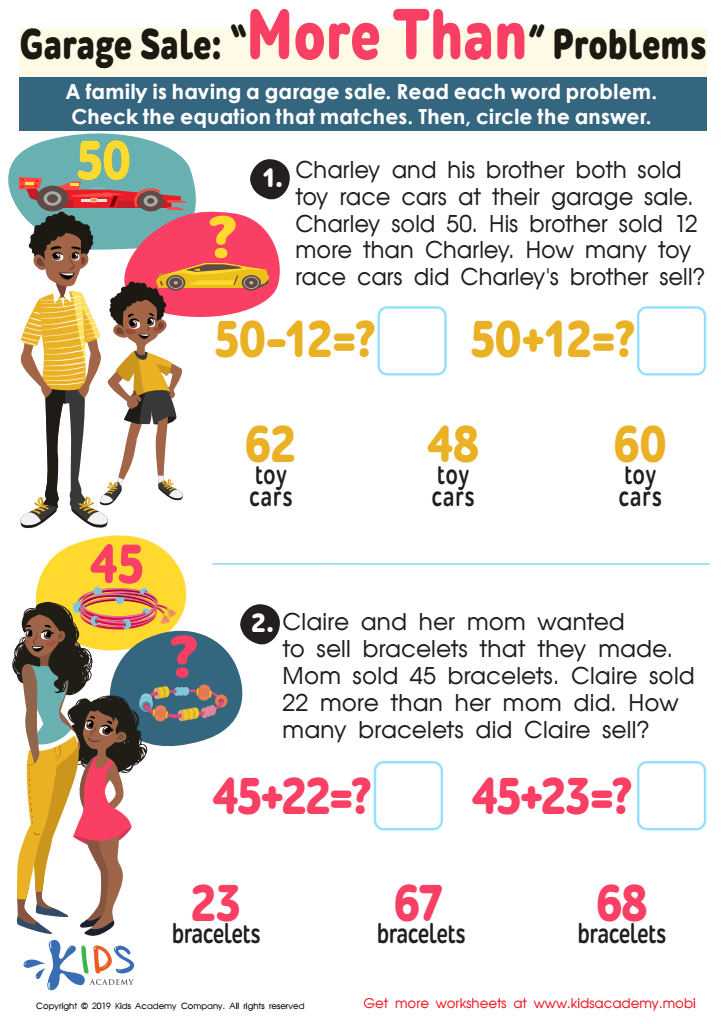
Garage Sale - More yhan Worksheet
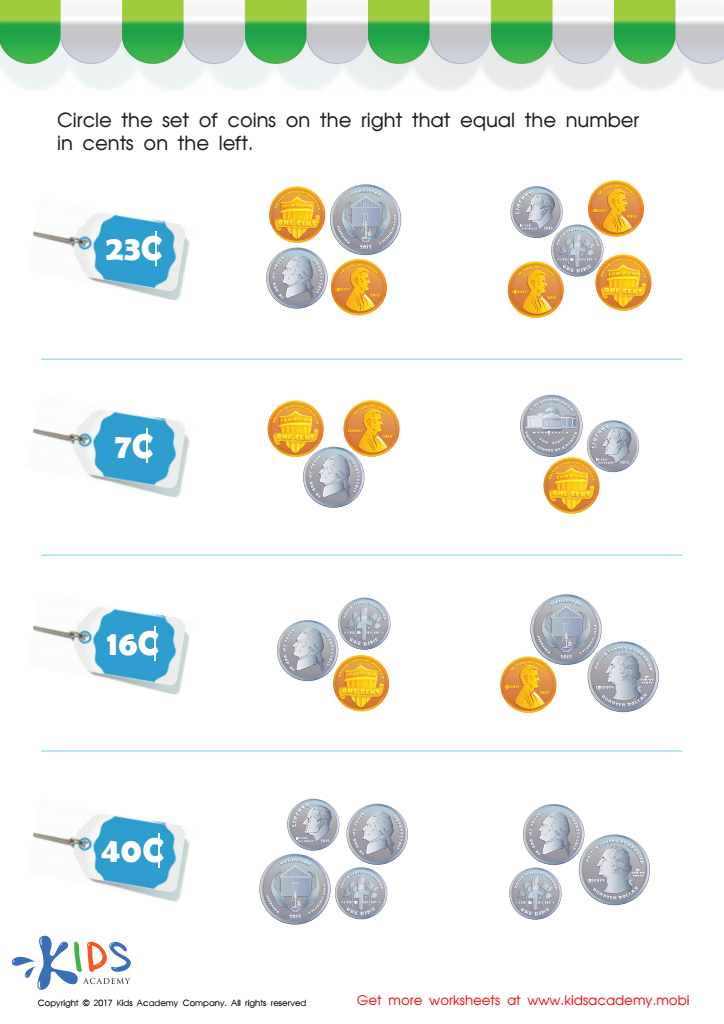
Picking the Coins You Need Money Worksheet







Decision-making skills in Grade 1 math are crucial for young students as they lay the foundation for a variety of life and cognitive skills. At this early stage, children are constantly processing new information and learning to approach problems with thoughtful strategies. When parents and teachers emphasize decision-making in math, they teach children how to think critically, weigh options, and determine the best course of action.
These skills go beyond simply solving math problems; they foster reasoned thinking and boost confidence. For instance, when a student decides between different methods to solve an addition problem, such as using fingers, counting objects, or mental math, they are engaged in an evaluative process that enhances their understanding and adaptability. This practice makes them not only better mathematicians, but also more skilled in making everyday decisions.
Furthermore, decision-making skills in math often require collaboration and discussion, promoting communication and teamwork. They learn to articulate their thought processes and understand the reasoning of others, which enhances their cognitive and social growth.
Early investment in decision-making skills empowers students by equipping them with tools to navigate academic challenges and real-world problems effectively, laying the groundwork for lifelong problem-solving abilities. Therefore, parents and teachers should prioritize building these skills to support children’s holistic development.