Shape Recognition Grade 1 Math Worksheets - Page 2
28 filtered results
-
From - To
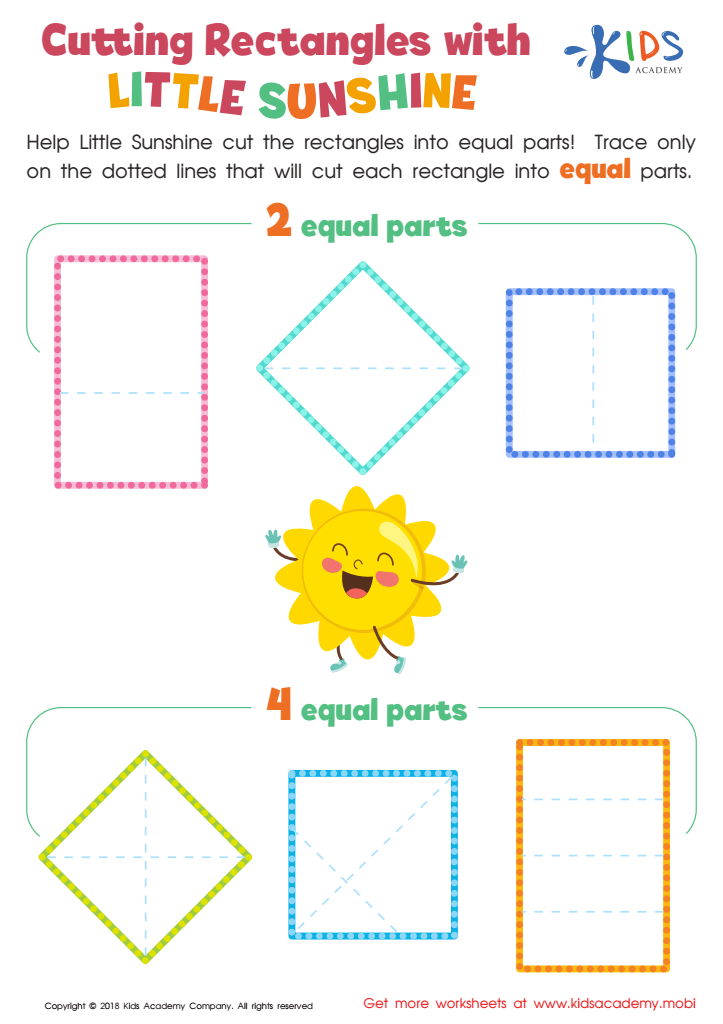
Cutting Rectangles with Little Sunshine Worksheet
 Assign to My Students
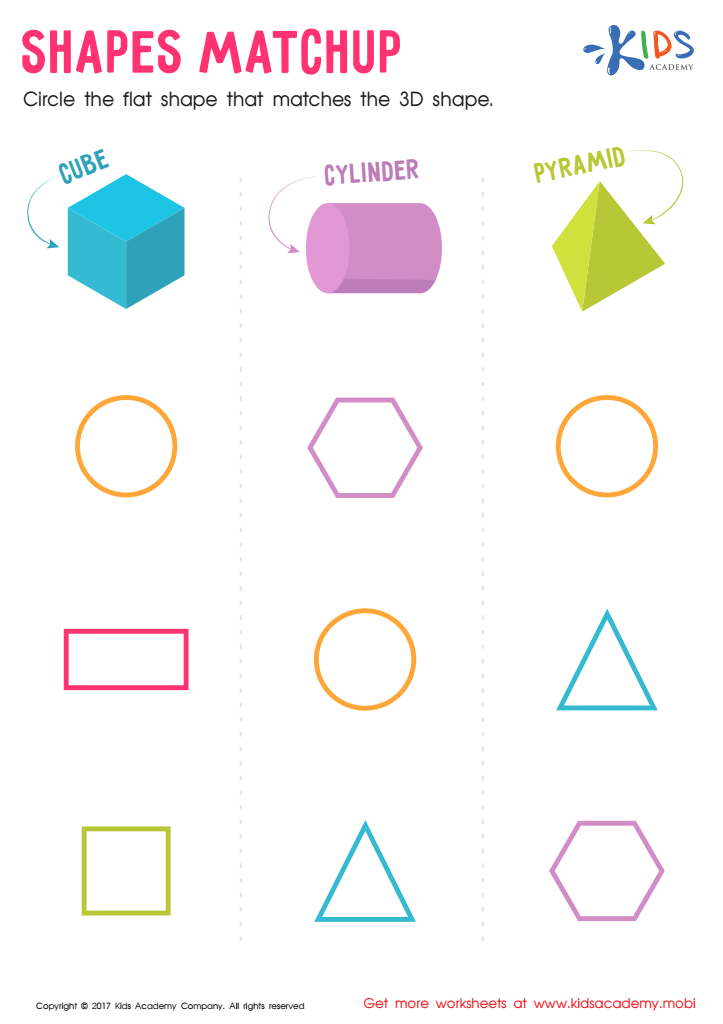
Shapes Matchup Worksheet
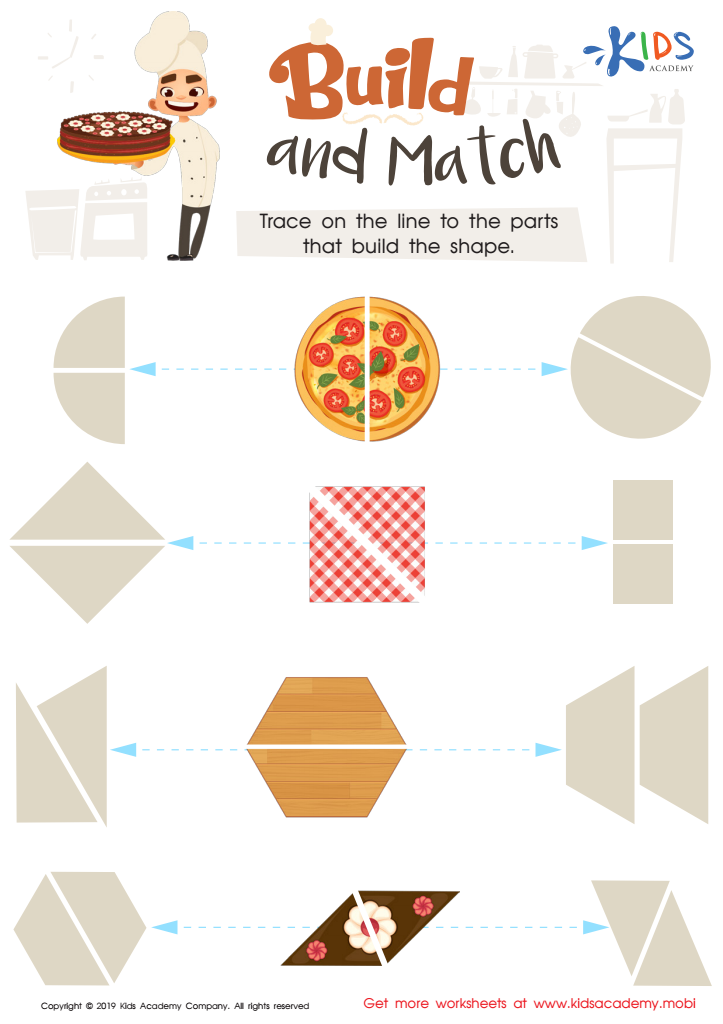
Build and Match Worksheet
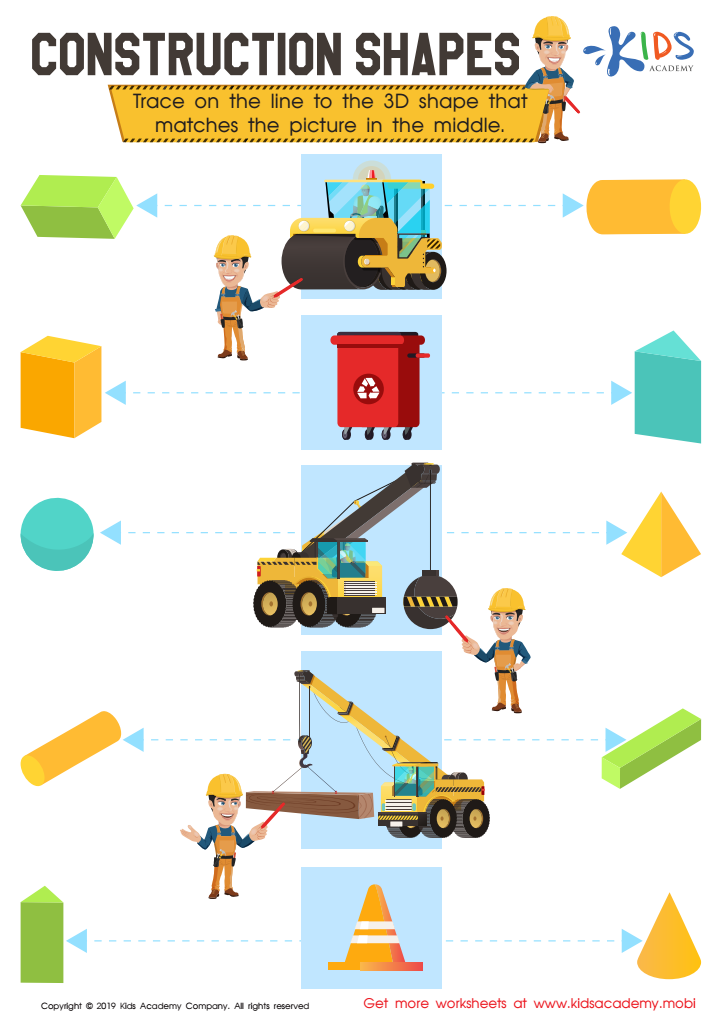
Construction Shapes Worksheet








Shape recognition is a fundamental skill in Grade 1 math that has lasting implications for a child's cognitive and mathematical development. Understanding shapes helps children develop spatial awareness, which is crucial for various learning experiences. By recognizing and categorizing shapes, students enhance their problem-solving skills and ability to think logically.
Parents and teachers should prioritize shape recognition because it forms the basis for more complex mathematical concepts, such as geometry, measurement, and symmetry. Early exposure to identifying and comparing shapes allows children to make connections between concrete objects and abstract ideas, fostering a deeper understanding of mathematical principles.
Moreover, shape recognition can aid in developing fine motor skills through hands-on activities like drawing, tracing, and building with shapes. These activities not only enhance motor coordination but also promote creativity and critical thinking.
Additionally, shape recognition has real-world applications, such as helping children navigate their environment and understand everyday objects, which boosts their confidence in using math outside the classroom. Ultimately, prioritizing shape recognition in early education cultivates a foundation for lifelong learning and equips children with essential skills that will benefit them across various disciplines.