Time recognition Grade 1 Math Worksheets
3 filtered results
-
From - To
Unlock the world of time-telling for young learners with our Grade 1 Math Worksheets on Time Recognition from Kids Academy! Designed to build a strong foundation in time-related skills, these engaging worksheets help first graders grasp the concepts of hours, minutes, and the elements of a clock. Featuring colorful illustrations and fun activities, our time recognition printables encourage active learning, making it easy for kids to master the basics of telling time. Ideal for classroom use or at-home practice, these worksheets offer an interactive way for children to develop their time-telling skills confidently and accurately. Inspire your child's journey in math today!
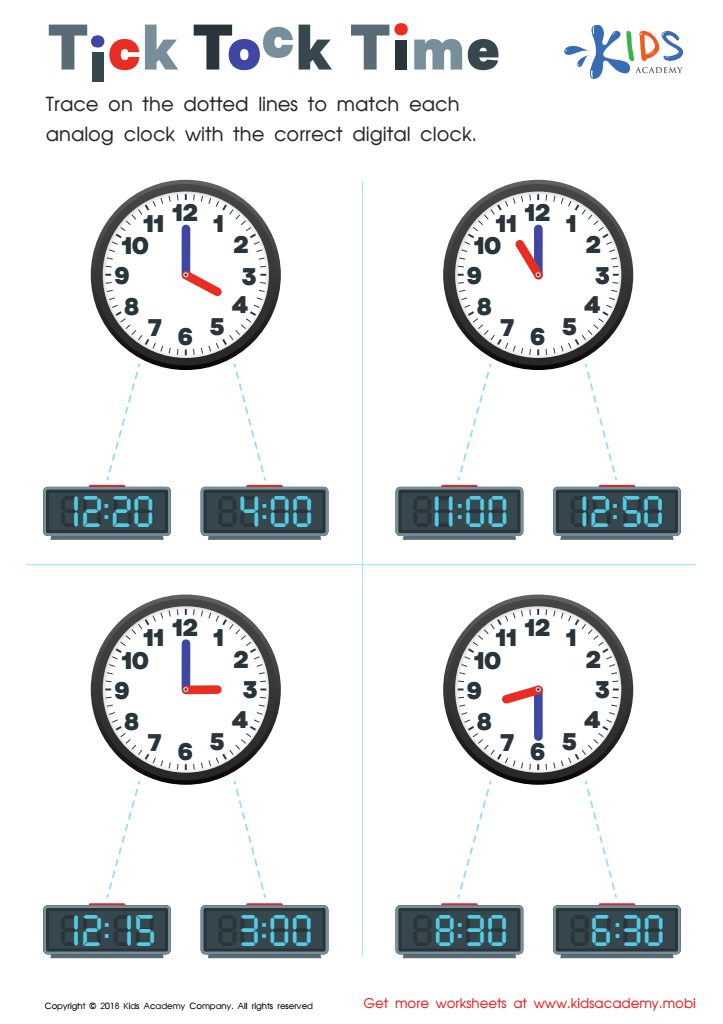
Tick Tock Time Worksheet
 Assign to My Students
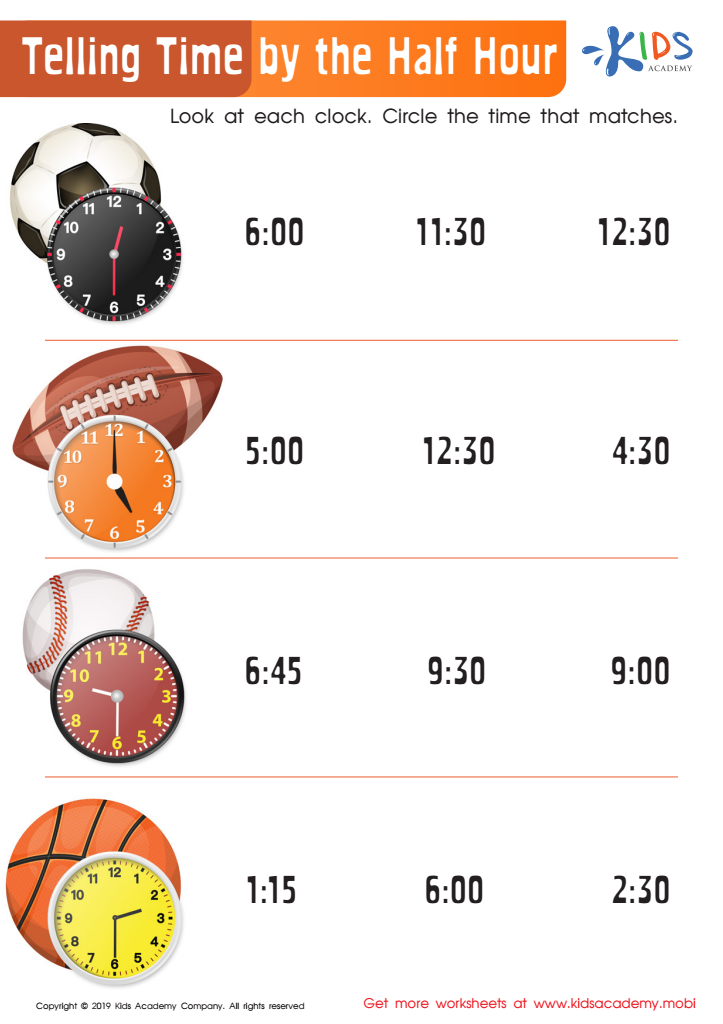
Telling Time by the Half Hour Worksheet
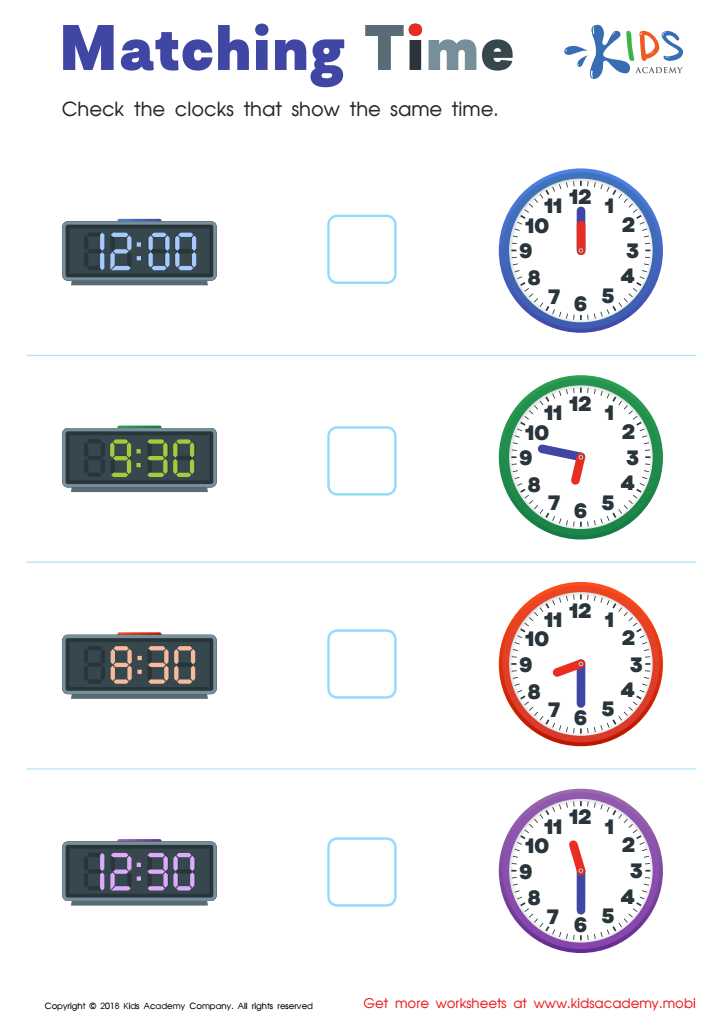
Matching Time Worksheet








Time recognition is a fundamental skill that Grade 1 students start to develop, and it's crucial for several reasons. Firstly, understanding time helps children navigate their daily routines and brings a sense of predictability and structure to their lives. Simple activities like knowing when it's time for school, lunch, or bedtime hinge on being able to tell the time.
Secondly, recognizing time aids in developing mathematical skills. Learning to read clocks and understand hours and minutes requires basic counting, addition, and an introduction to the concept of fractions – skills foundational for more advanced mathematics in later grades.
Moreover, time recognition nurtures responsibility and independence. When children know how to tell time, they can begin managing their schedules and understanding the importance of punctuality. This promotes self-discipline and punctual behavior, traits valued in both academic settings and everyday life.
Lastly, engaging with time-based activities can enhance cognitive skills like memory and attention. For example, games and exercises that involve setting timers or arranging activities sequentially encourage focus and strategic thinking.
In conclusion, parents and teachers should emphasize time recognition in Grade 1 as it lays a critical foundation for both academic growth and important life skills. Through learning to tell time, children gain essential tools for organization, responsibility, and cognitive development.