Understanding measurements Grade 1 Measurement Worksheets
7 filtered results
Difficulty Level
Grade
Age
-
From - To
Subject
Activity
Standards
Discover our "Understanding Measurements Grade 1 Measurement Worksheets" designed to make learning measurements fun and engaging for first graders. These worksheets cover essential measurement skills such as comparing lengths, heights, and weights using familiar objects and clear visuals. Each activity encourages students to practice estimating and measuring with both standard and non-standard units, promoting a solid foundation for future math success. Perfect for both classroom use and home practice, Kids Academy's expertly crafted worksheets help young learners develop confidence in measurement concepts through interactive and hands-on experiences. Unlock your child’s potential with our innovative educational resources!
Favorites
With answer key
Interactive
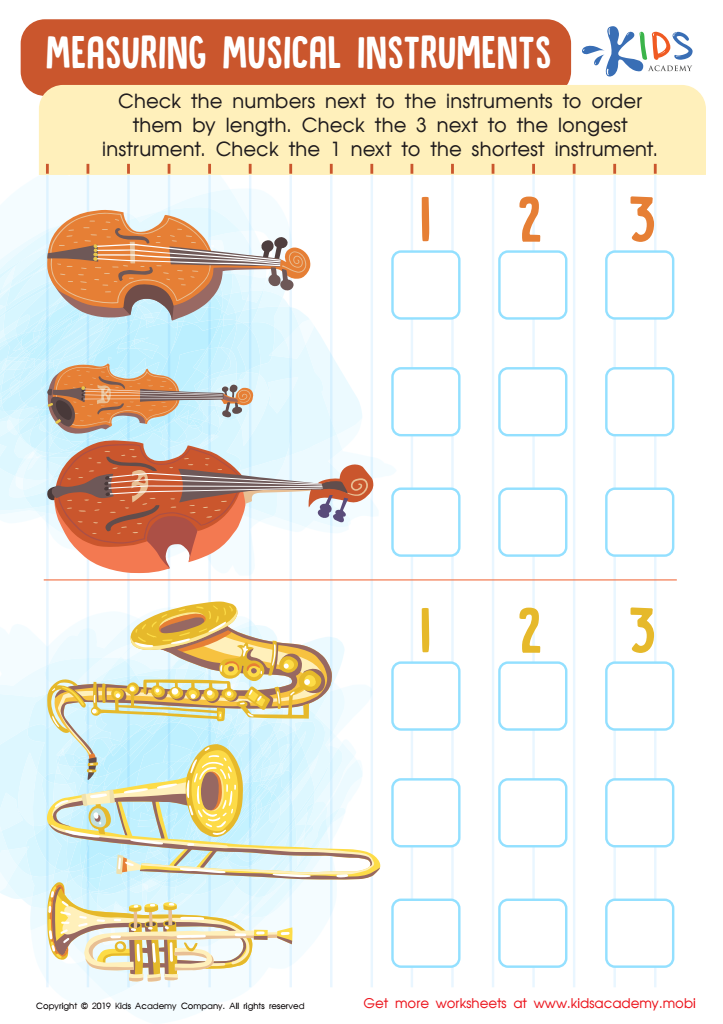
Measuring Musical Instruments Worksheet
Learning measurements can be tricky, but this worksheet makes it easy. Ask your child to identify the instruments in the pictures. Then, order them by length using the numbers. 3 is the longest, 1 is the shortest. Simple exercises like this will help them understand the different metric systems.
 Assign to My Students
Measuring Musical Instruments Worksheet
Worksheet
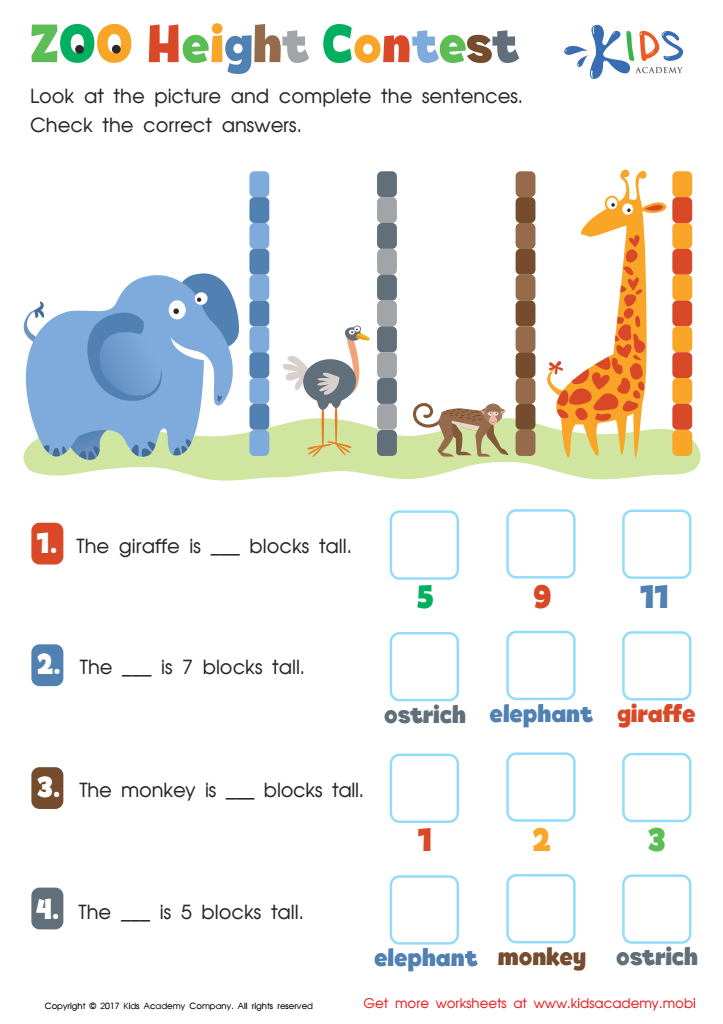
Zoo Height Contest Worksheet
Let's head to the zoo and use colorful blocks to measure your child's favorite animals! With this Kids Academy worksheet, help them practice and prepare for learning measurement. Guide them in looking at the zoo animals and counting blocks to find the height. Then, read the questions and check the box next to the correct answer.
Zoo Height Contest Worksheet
Worksheet
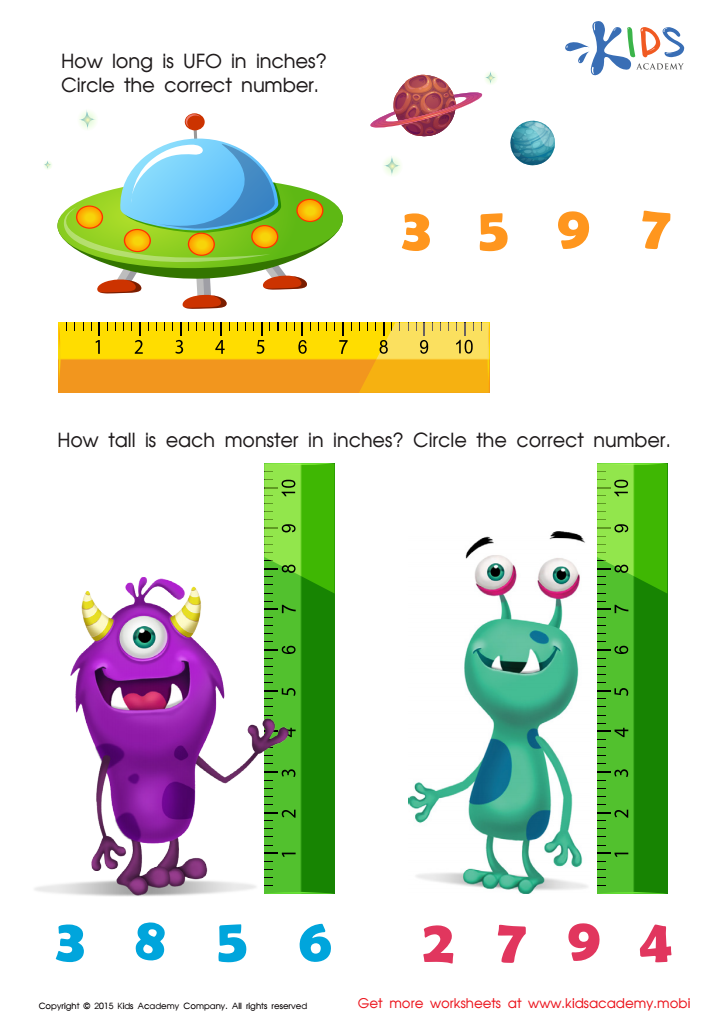
Measuring in Inches Worksheet
Look at the picture, can you measure the UFO & monsters? Write down how long each is. Which is tallest? Circle it. Get more free printable math worksheets for kindergarten at our website.
Measuring in Inches Worksheet
Worksheet
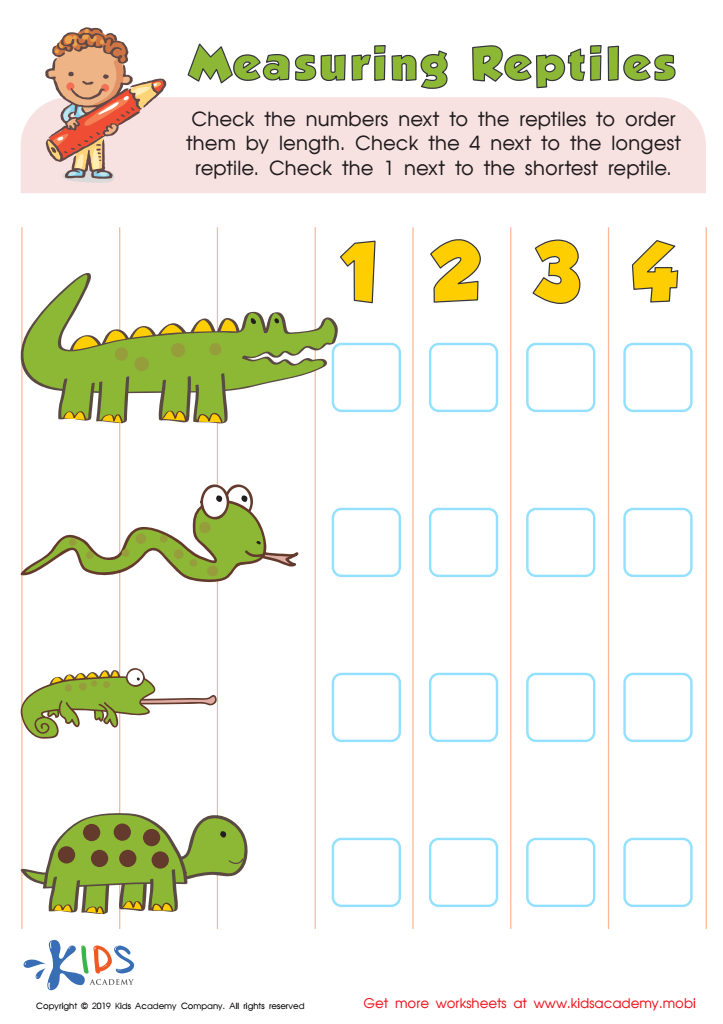
Measuring Reptiles Worksheet
Do your kids know what reptiles are? Ask them to name some and name features. In this activity, your kindergartners will measure with reptiles. Show them the picture and get them to order by length, starting with the one with 4 by the longest reptile, then the one with 1 by the shortest.
Measuring Reptiles Worksheet
Worksheet
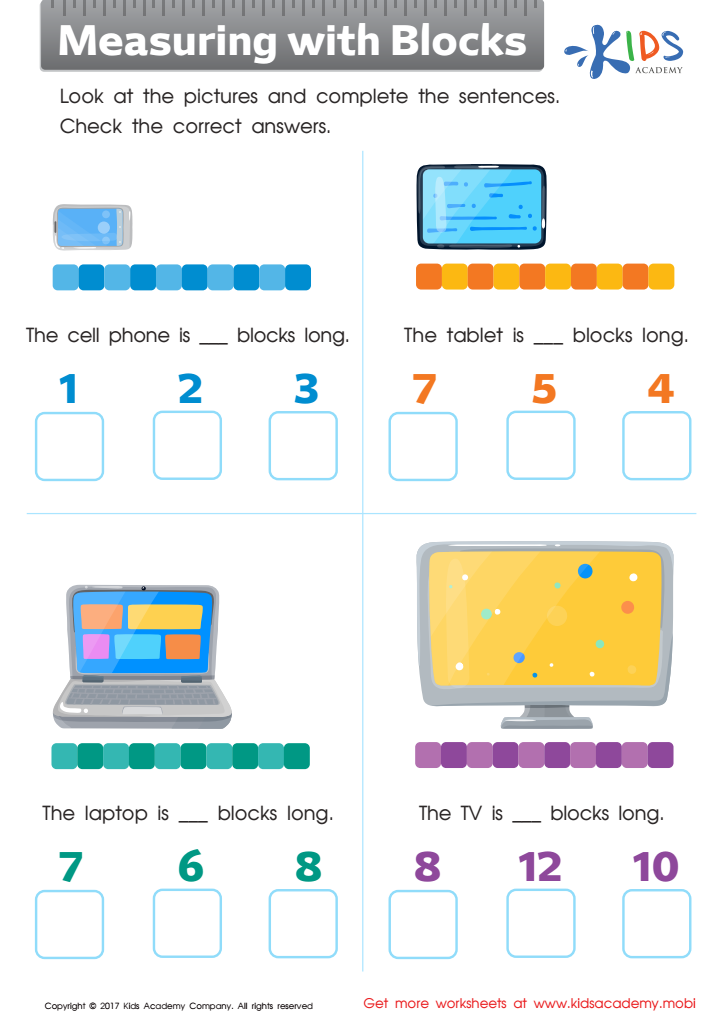
Measuring with Blocks Worksheet
Help your child get ready for math success with this Kids Academy worksheet. It provides colorful blocks to practice measuring objects. Coach them to count the boxes under each picture, then check the box with the right answer. It's a fun way to get acquainted with rulers!
Measuring with Blocks Worksheet
Worksheet
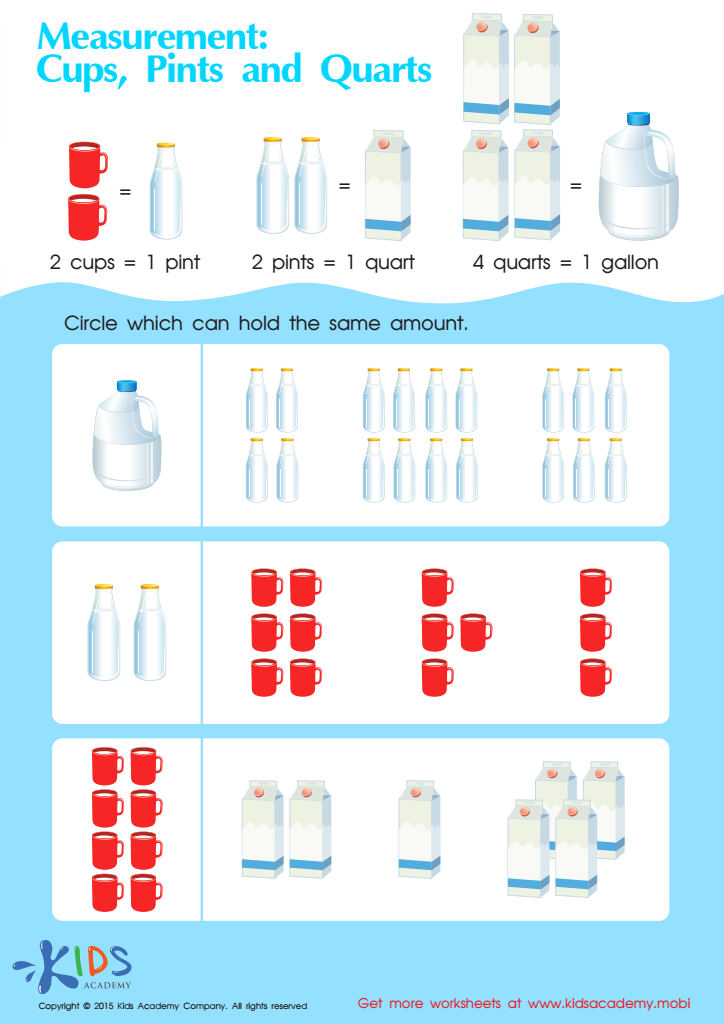
Cups, Pints and Quarts 2 Worksheet
Practice measuring liquids with our free math worksheets. Learn how many cups are in a quart and how many quarts are in a gallon. Accurately calculate the answers and write them in the provided spaces. Visit Kids Academy for a collection of free worksheets and make math fun!
Cups, Pints and Quarts 2 Worksheet
Worksheet
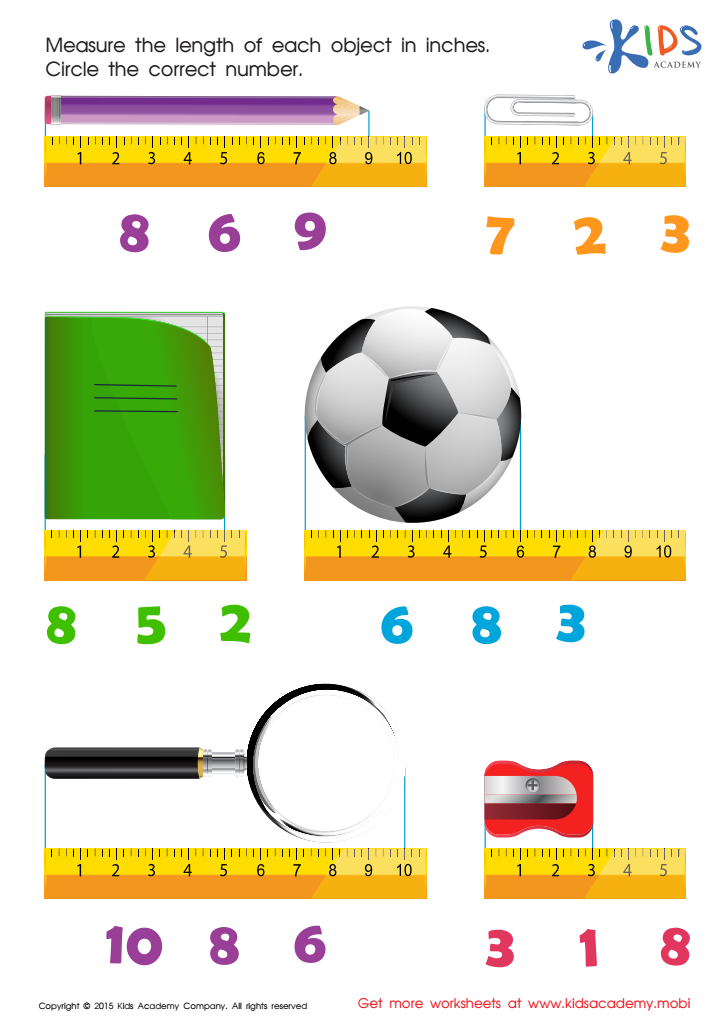
Learning measuring objects in inches Worksheet
Help your little learners gain confidence in using a ruler! Print out our free worksheet, cut out the inch ruler, and let them measure and record objects' width and length. Kids Academy has a variety of math worksheets to make learning math fun! Check out our website for more free printables!
Learning measuring objects in inches Worksheet
Worksheet
Join Kids Academy for Free
Who is primarily going to use this learning content?




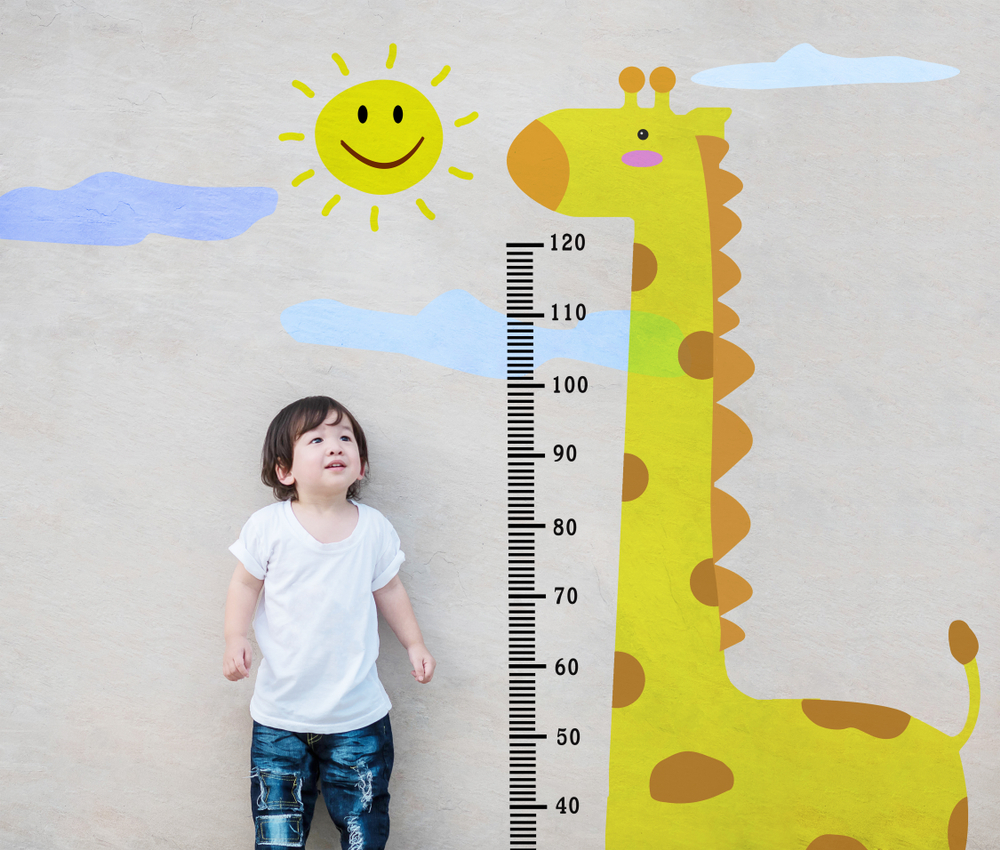

Parents and teachers play crucial roles in a child's early education, and understanding measurements in Grade 1 is a foundation that significantly impacts various aspects of a child's learning and day-to-day life. At this stage, children are introduced to basic measurement concepts like length, weight, and volume, along with comparison terms such as "longer," "heavier," and "more."
One of the primary reasons parents and teachers should care is that measurement skills are essential for daily activities. From pouring a glass of water to understanding height differences, these skills help children navigate their world more effectively. Encouraging children to practice measurements can enhance their problem-solving abilities and critical thinking from a young age.
Moreover, proficiency in measurement is tightly connected to mathematical skills. It helps children grasp advanced math concepts like addition, subtraction, multiplication, and division later on. For instance, learning to measure with rulers or scales involves reading numbers, which reinforces their number sense.
Finally, early exposure to measurement can inspire curiosity and scientific thinking. Simple activities like measuring the ingredients for a recipe or tracking the growth of a plant lay the groundwork for scientific and mathematical inquiry, sparking a lifelong interest in STEM (Science, Technology, Engineering, and Mathematics) fields.
In short, fostering strong measurement skills in Grade 1 sets the stage for academic success and practical competences, making it a focus area that deserves attention from both parents and teachers.