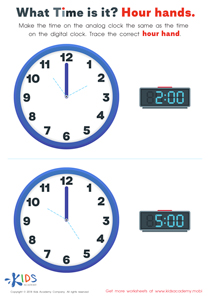
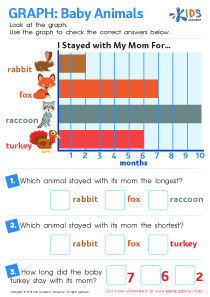
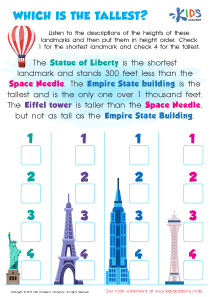
Time recognition Grade 1 Time Worksheets
3 filtered results
-
From - To
Enhance your first graders' understanding of time with our engaging Time Recognition Grade 1 Worksheets! Designed to make learning fun, these worksheets help young learners master essential concepts of reading clocks, identifying hours and minutes, and understanding daily routines. With colorful graphics and interactive exercises, students will develop their time-telling skills in a playful way. Ideal for home and classroom use, our worksheets cater to various learning styles, ensuring every child can thrive. Start your journey towards time mastery today and equip your child with the confidence to read time effortlessly and apply it in everyday life!
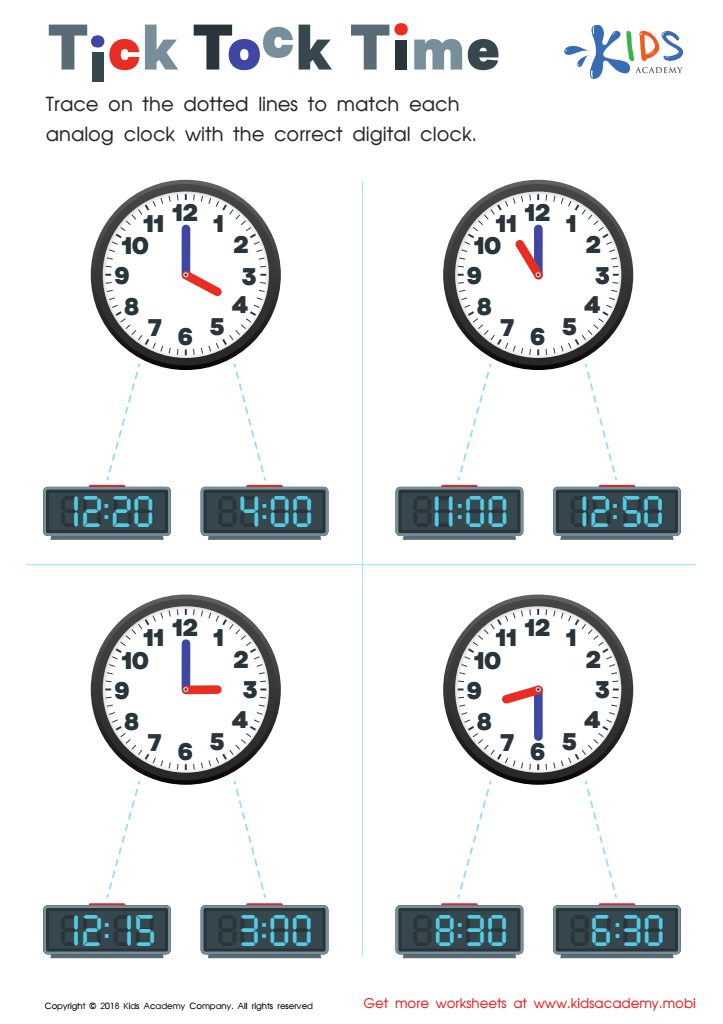
Tick Tock Time Worksheet
 Assign to My Students
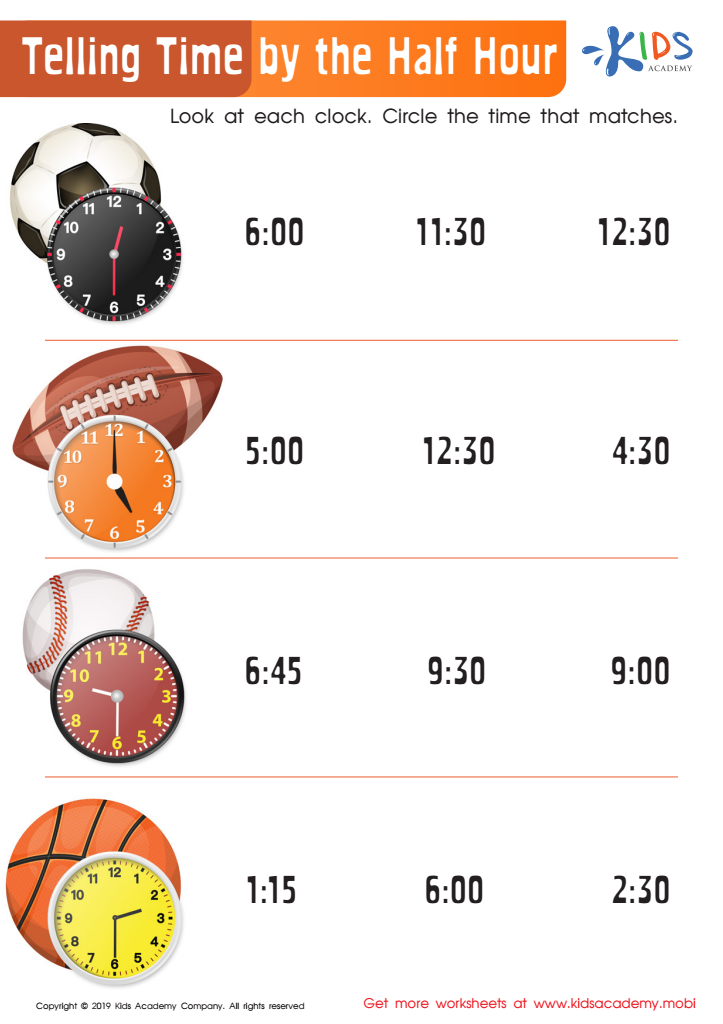
Telling Time by the Half Hour Worksheet
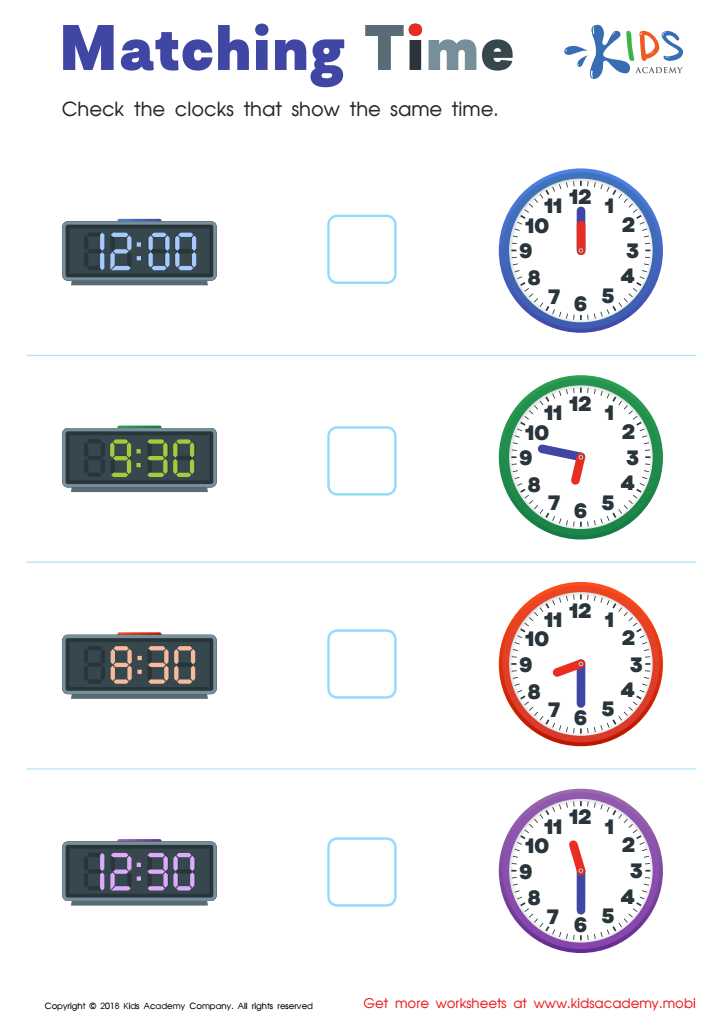
Matching Time Worksheet






Time recognition is a fundamental skill that Grade 1 students need to master for various reasons. First, understanding time helps children structure their daily lives, enhancing their ability to follow schedules and routines. By learning how to read both digital and analog clocks, students gain a sense of independence, empowering them to manage activities like school homework, playtime, and chores without constant supervision.
In addition, time recognition fosters critical cognitive skills such as sequencing and planning. Students learn to gauge durations, which enhances their ability to estimate time needed for tasks, an essential skill in both academic and real-life situations. This learning paves the way for essential math skills, as time is measured quantitatively, helping students grasp concepts of addition and subtraction related to minutes and hours.
Moreover, when parents and teachers emphasize the importance of time recognition, they are equipping children with life skills that extend beyond the classroom. It encourages responsibility and accountability, as knowing how to manage one’s time is crucial as they progress in education and life. Thus, prioritizing time recognition not only enriches a child’s academic journey but also lays a strong foundation for their future success.