Filters

6 filtered results

Clear all filters
Favorites
With answer key
Interactive

6 filtered results

Difficulty Level

Grade


Discover our engaging Basic Addition Grade 1 Word Problems Worksheets designed to help young learners develop their addition skills through fun and relatable scenarios. Tailored for first-grade students, these worksheets integrate real-life contexts to enhance problem-solving abilities and critical thinking. Children will encounter vibrant illustrations and simple, age-appropriate language that encourages them to practice addition in a hands-on way. Ideal for classroom use or at-home learning, our worksheets provide teachers and parents with the tools to make math enjoyable. Boost your child's confidence in math and support their foundational skills with our easy-to-use addition word problems today!

Check out this FREE Grade 1 Trial Lesson on Word Problems!

Solve Tricky Number Situations by Drawing (3 numbers) - Part 2

Favorites
With answer key
Interactive
  • Grade 1
  • Basic Addition
  • Word Problems
Assessment 2 Math Worksheet

Assessment 2 Math Worksheet

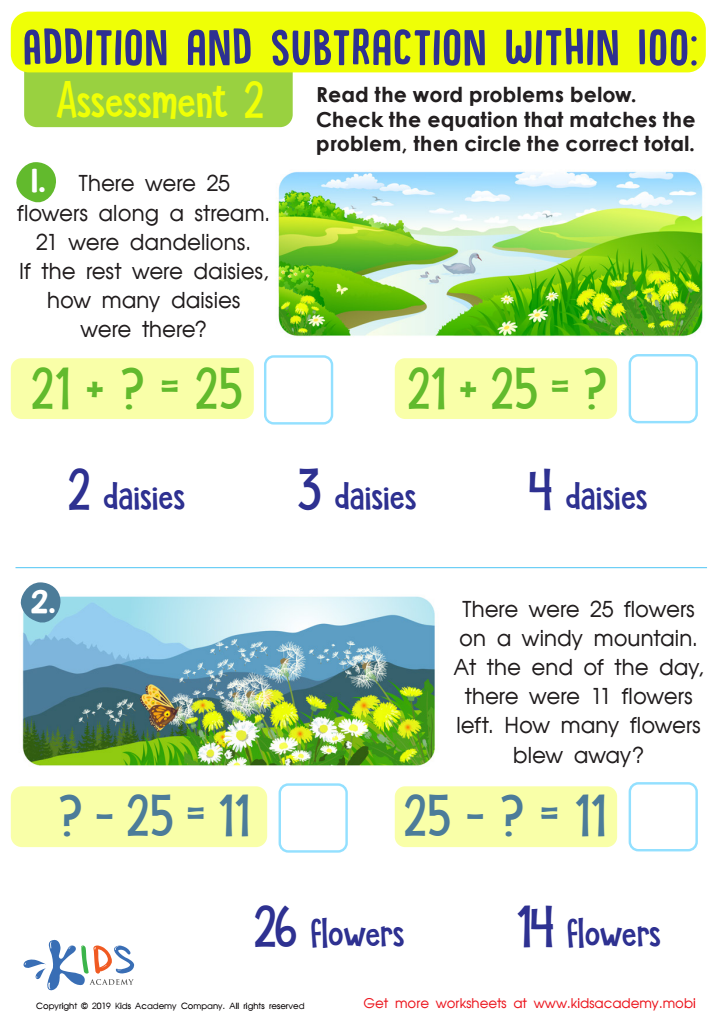
Using fun exercises and pictures, you can get kids excited about math. With practice and reminders of what they've learnt, they'll be solving simple addition and subtraction equations with ease. Read the word problems in the picture to them, then help them check the equation and choose the correct answer.
Assessment 2 Math Worksheet
Worksheet
Going Bananas Worksheet

Going Bananas Worksheet

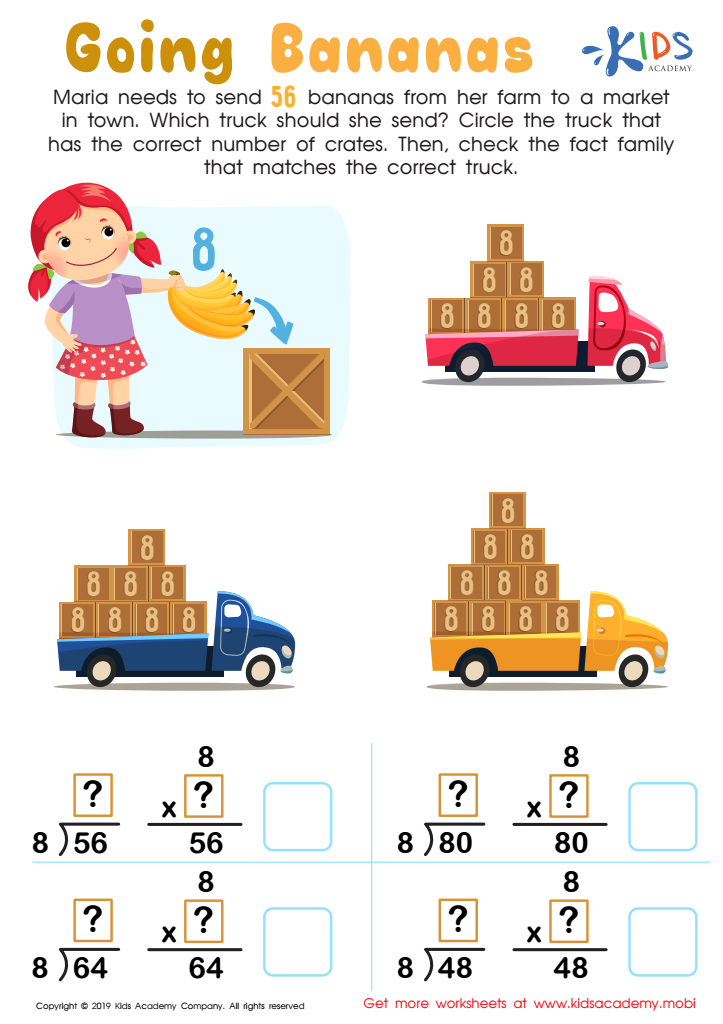
Marla needs to send 56 bananas in batches of 8. Help your child practice division and learn about fact families with this free worksheet. It'll help boost their multiplication skills and increase speed when solving problems.
Going Bananas Worksheet
Worksheet
Sea Math Worksheet
Sea Math Worksheet

Sea Math Worksheet

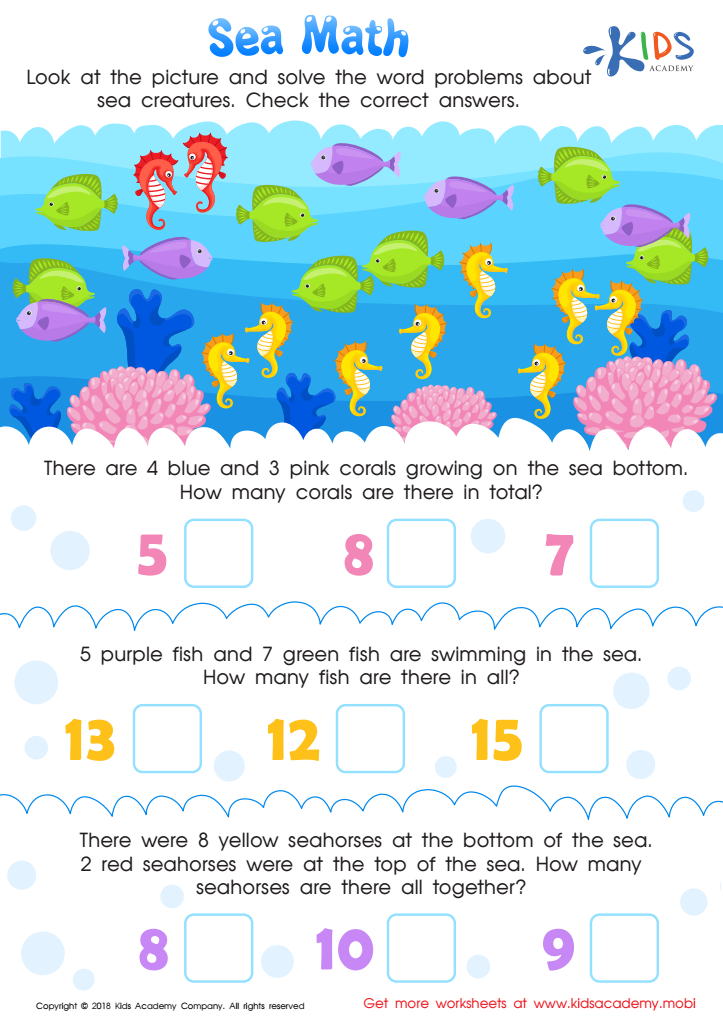
Dive into an ocean of addition with this fun math worksheet! Help your little mathematician count and add colorful coral and fish. Point out phrases like "in total" or "all together" as a reminder to use addition. Watch them add to find the answer and check the boxes to finish!
Sea Math Worksheet
Worksheet
Problem Solving: Tony's Wreath Worksheet

Problem Solving: Tony's Wreath Worksheet

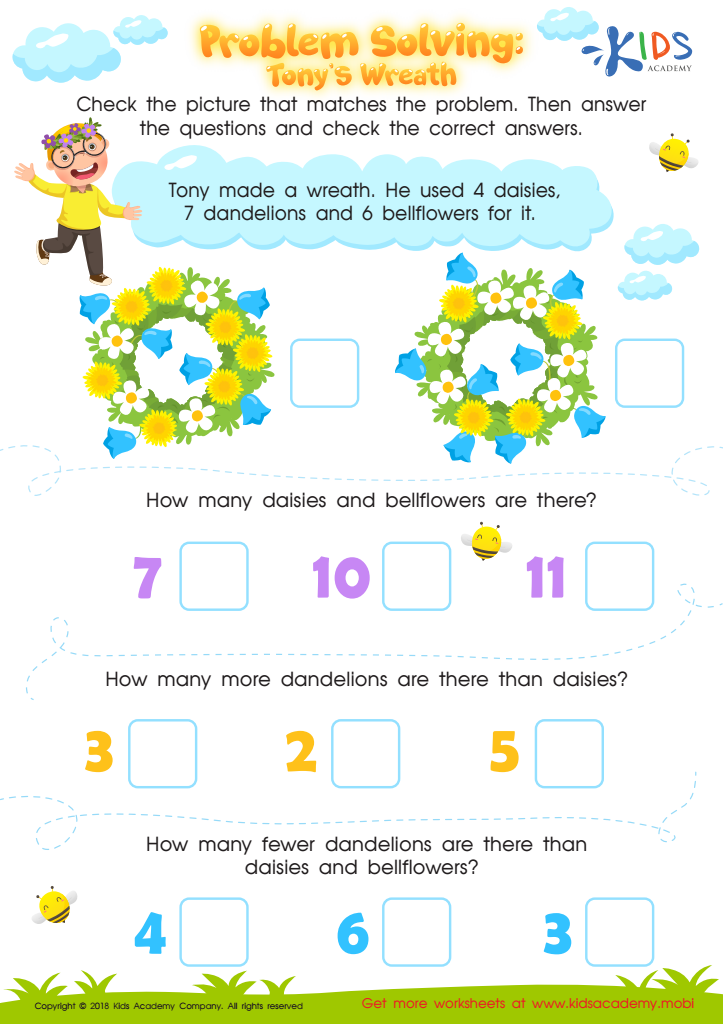
Tony needs help! He's made a beautiful, colorful wreath and needs help counting the flowers. Your math student can read the word problems, match answers to the problems and solve basic addition and subtraction. They'll practice with two and three addends, minuends and subtrahends to find sums and differences and help Tony and his bee friends.
Problem Solving: Tony's Wreath Worksheet
Worksheet
Counting with Drawings:Fruits & Flowers Worksheet

Counting with Drawings:Fruits & Flowers Worksheet

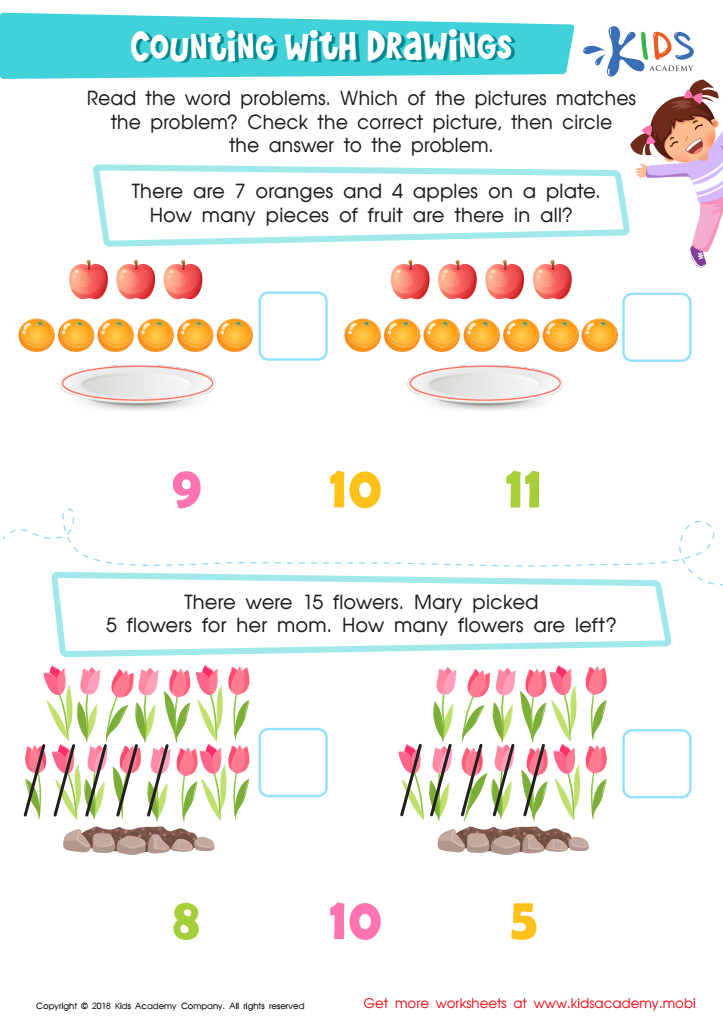
At Kids Academy, we know pictures make math come alive and make sense. This worksheet is perfect for early learners to practice word problems. Kids read each problem and count the images that represent the numbers, then solve the problem with addition or subtraction to get the right answer.
Counting with Drawings:Fruits & Flowers Worksheet
Worksheet
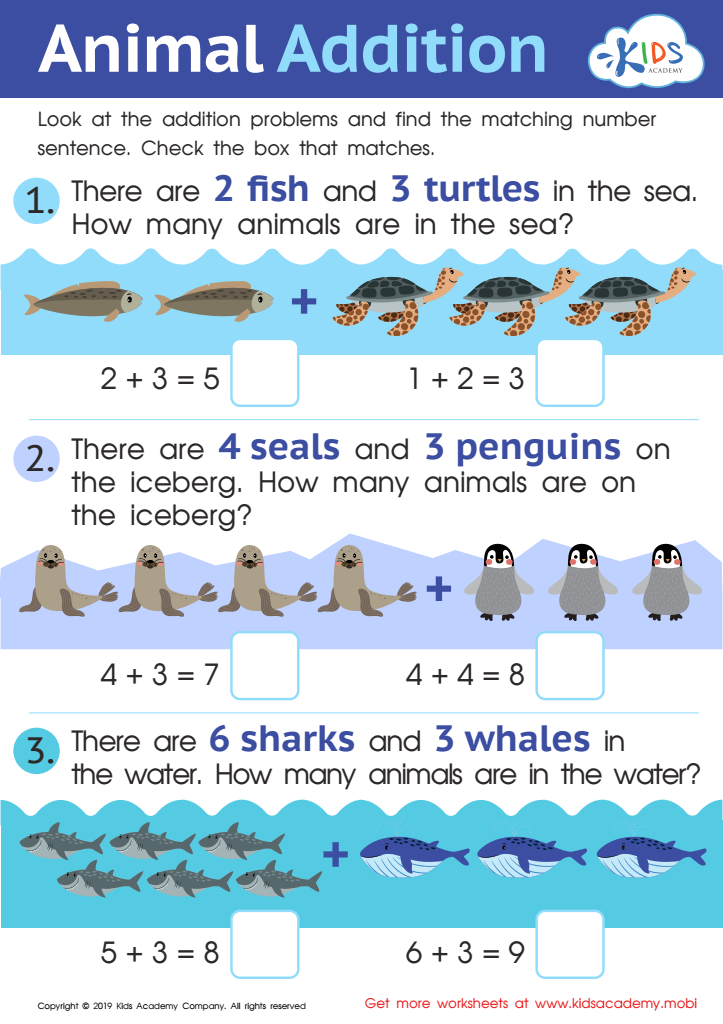
Animal Addition Worksheet


Animal Addition Worksheet

Get your kids learning addition and subtraction with this fun worksheet! Show them that solving equations can be enjoyable and help them match number sentences to the correct boxes. By doing this together, you'll create a positive learning experience that your kids won't forget.
Animal Addition Worksheet
Worksheet


Parents and teachers should care about basic addition word problems in Grade 1 because they lay the essential foundation for mathematical literacy and problem-solving skills. At this stage, students begin to connect abstract number concepts with real-life applications. Word problems encourage children to think critically, enabling them to decode information, identify relevant data, and determine the correct operations to use.

Engaging with these problems fosters a deeper understanding of addition, moving beyond rote memorization of facts to a more comprehensive grasp of how numbers work together in practical contexts. This cognitive development is crucial, as it helps young learners build confidence in math and develop a positive attitude toward the subject, reducing anxiety related to numbers later on.

Moreover, basic addition word problems promote language skills, as students must read and comprehend scenarios before solving them. This interdisciplinary approach enhances their vocabulary and comprehension abilities. Ultimately, when parents and teachers prioritize these skills, they empower children to navigate everyday challenges with resilience and creativity, preparing them not just for future math endeavors but for critical thinking in academic and real-world situations.