Rhyming skills development Grade 1 Reading Worksheets
3 filtered results
Difficulty Level
Grade
Age
-
From - To
Subject
Activity
Standards
Enhance your Grade 1 students' reading proficiency with our engaging Rhyming Skills Development Worksheets! Designed to foster phonemic awareness, these worksheets help children identify, create, and manipulate rhymes, boosting their vocabulary and pronunciation. Through fun activities and interactive exercises, learners will practice recognizing sound patterns, enhancing their reading fluency. Our curriculum-aligned resources support diverse learning styles, making it easy for teachers to tailor lessons for every child. Whether used in the classroom or at home, these worksheets offer an enjoyable way to build essential literacy skills. Empower your young readers and spark their love for language with our innovative rhyming activities created just for Grade 1!
Favorites
With answer key
Interactive

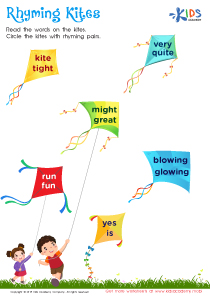
Rhyming Words Rhyming Worksheet
This worksheet is great for honing pre-reading skills. It helps kids make connections between pictures and written words, use problem-solving, and recognize sounds and words that rhyme. Have fun exploring rhyming words with your child, and they'll be rhyming in no time!
 Assign to My Students
Rhyming Words Rhyming Worksheet
Worksheet
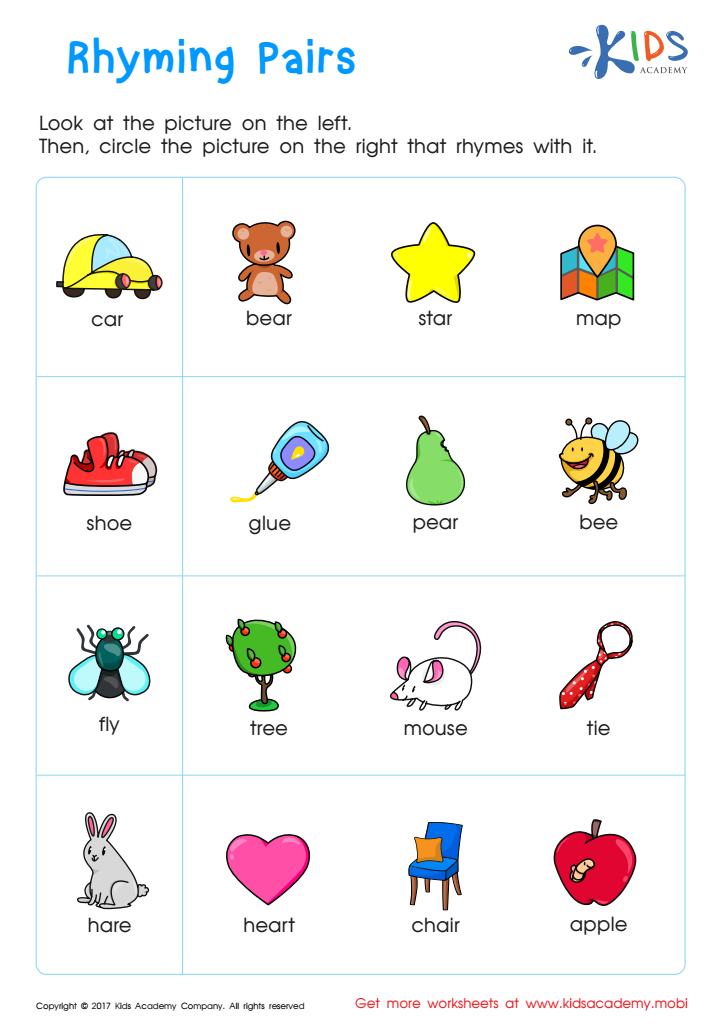

First Words: Picture Rhymes Worksheet
Rhyming helps kids understand language, read and write better. This printable worksheet boosts problem-solving and cognitive skills with vibrant pictures. It teaches kids to identify words, recognize rhymes, complete mental tasks and write words. An extra activity: show them how rhyming words share some of the same letters.
First Words: Picture Rhymes Worksheet
Worksheet
Join Kids Academy for Free
Who is primarily going to use this learning content?







Rhyming skills development is crucial for Grade 1 reading and should be a priority for parents and teachers. Firstly, rhyming helps children develop phonemic awareness, which is foundational for reading. Recognizing and producing rhyming words enhances children's understanding of sounds in language, a skill directly linked to their ability to decode words.
Secondly, engaging with rhymes fosters vocabulary growth. When children learn new words through rhythmic patterns, they are more likely to remember and understand these words, expanding their language base. Furthermore, rhyming activities often make reading and phonics practice enjoyable, keeping young learners motivated and engaged.
Additionally, rhyming supports memory and recall, as children often remember songs and poems better than straightforward text. This can aid not only in literacy but also in overall cognitive development. Lastly, routines that incorporate rhymes—such as reading storybooks or singing songs—improve the emotional bond between parents and children, enhancing the learning experience.
In summary, focusing on rhyming skills offers children a strong grounding in reading, fosters a love for language, and strengthens relationships, making it an essential area of focus in early education.