Vocabulary development Grade 1 Reading Worksheets
5 filtered results
Difficulty Level
Grade
Age
-
From - To
Subject
Activity
Standards
Discover our engaging Grade 1 Reading Worksheets focused on vocabulary development! Designed to enhance young learners' language skills, these worksheets feature fun activities that introduce new words, promote comprehension, and encourage context usage. Children will explore diverse exercises including matching words to pictures, fill-in-the-blanks, and simple sentences to boost their vocabulary retention. Perfect for classroom instruction or at-home practice, these resources help instill a love for reading while building essential language skills. Empower your first graders to confidently understand and use vocabulary with our thoughtfully crafted worksheets. Visit us now and watch your child excel in their reading journey!
Favorites
With answer key
Interactive
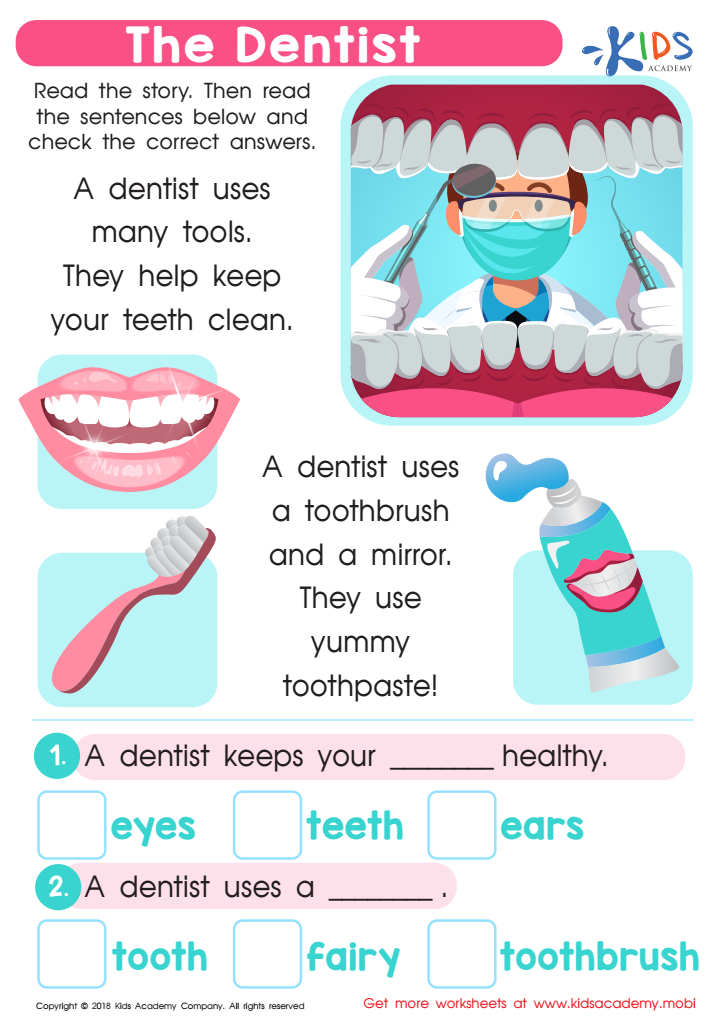
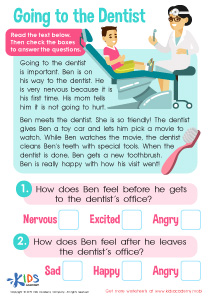
The Dentist Worksheet
Community helpers are essential for our wellbeing. This vibrant worksheet is a great way to introduce children to the dentist and their tools. They'll read the text, use the pictures and answer questions about what the dentist does and what they use. It's a great way to make the dentist more approachable, as well as help with comprehension.
 Assign to My Students
The Dentist Worksheet
Worksheet
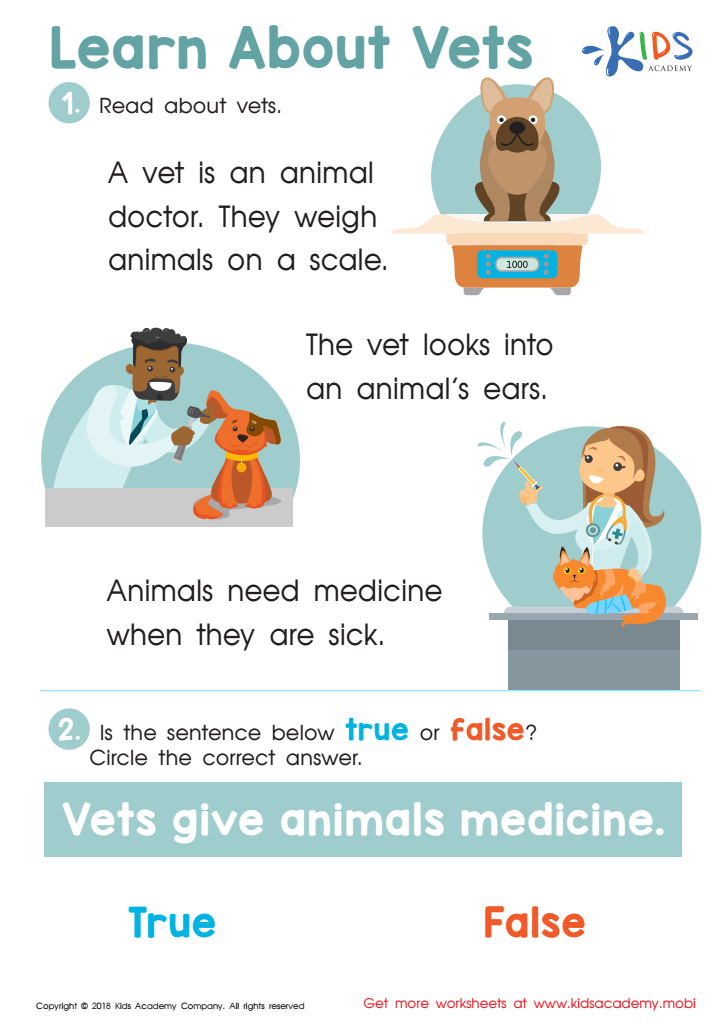
Learn About Vets Worksheet
Assess your child's reading comprehension and recall with this ELA worksheet! It reviews interesting facts about vets with brief passages and pictures to help your reader. Ask the question at the bottom to see what they learned. It's a great way to check understanding!
Learn About Vets Worksheet
Worksheet
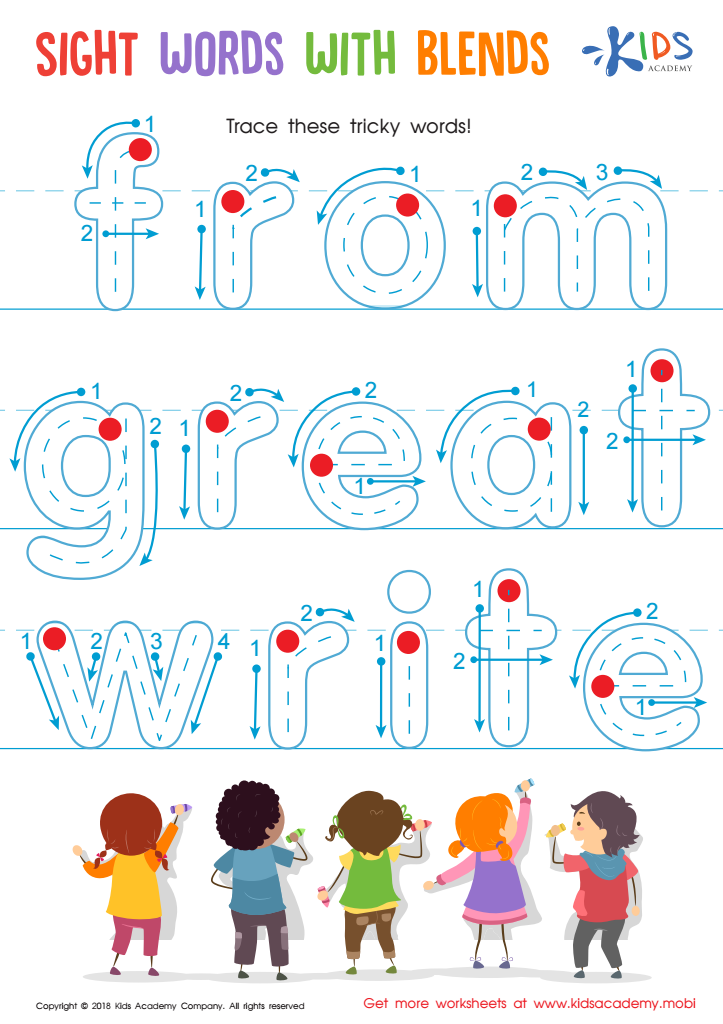
Sight Words with Blends Worksheet
This free PDF lets your children trace and write sight words with tricky blends. The guide numbers help them start from the top, building fine motor skills and enhancing sight word vocab. It's a great way to give your kids a solid foundation for reading!
Sight Words with Blends Worksheet
Worksheet
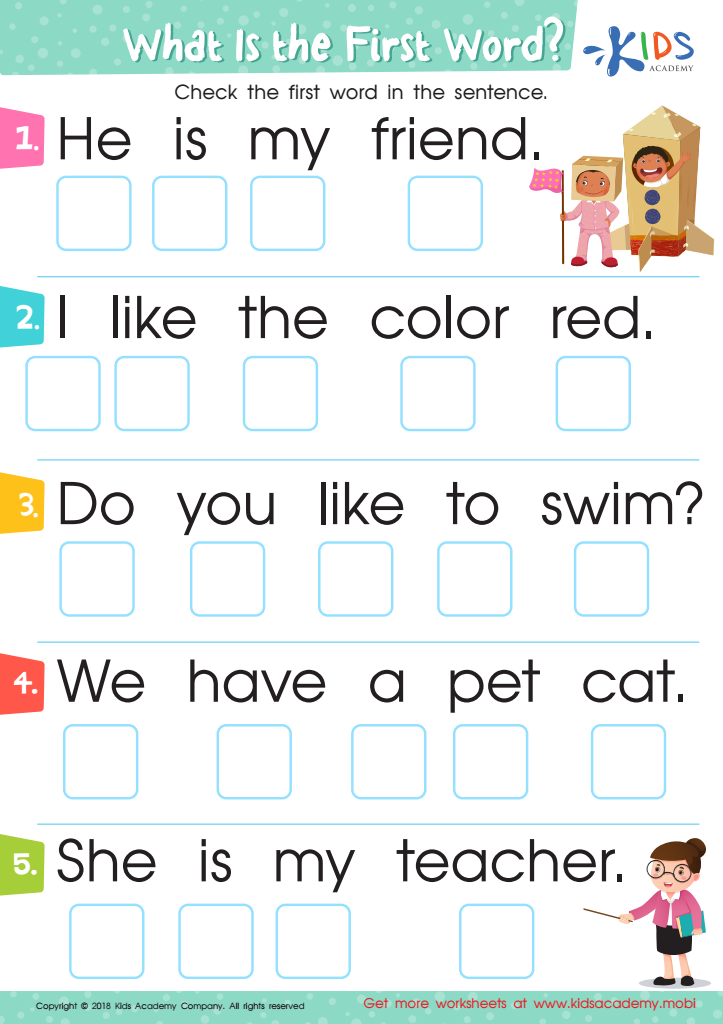
What is the First Word? Worksheet
Help your students test their sentence-reading skills with this printout! After teaching the alphabet, have them identify and write the first word in each sentence. With this exercise, they'll gain reading proficiency and be better prepared to write their own sentences.
What is the First Word? Worksheet
Worksheet
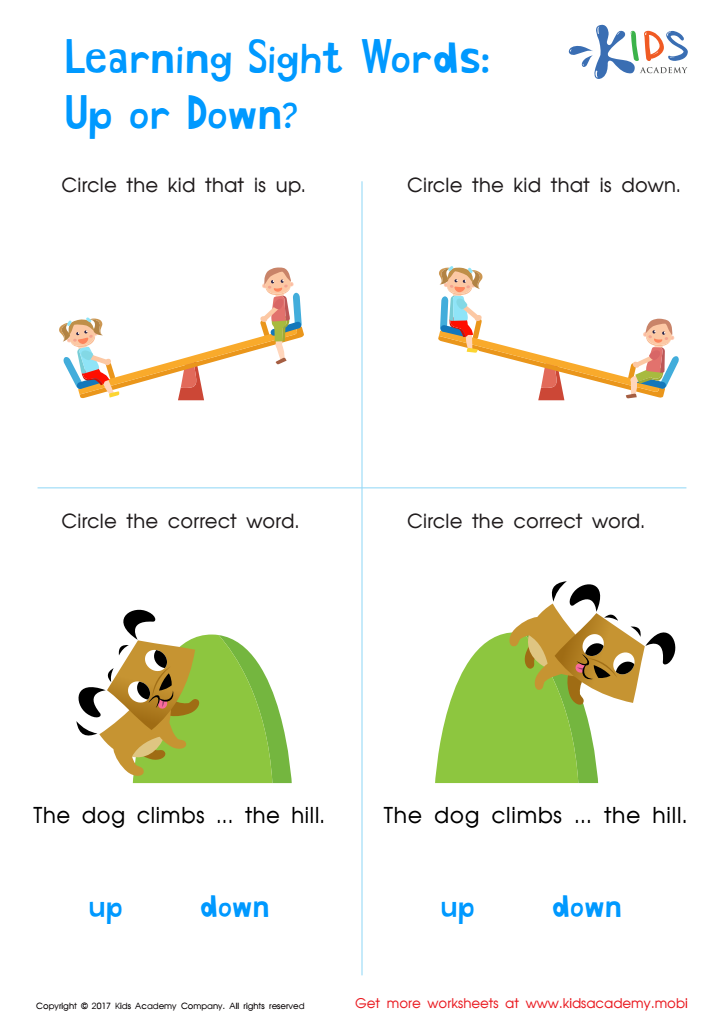
Up or Down Printable Sight Words Worksheet
Help your child identify up and down in print with this sight words worksheet. It has simple sentences, vibrant images and easy-to-read language that allow your little learner to practice these essential sight words. Perfect for early readers!
Help your early reader identify and read up and down with this sight words worksheet. It provides simple sentences, clear language and vibrant images to help them practice these essential sight words. Perfect for toddlers!
Up or Down Printable Sight Words Worksheet
Worksheet
Join Kids Academy for Free
Who is primarily going to use this learning content?







Vocabulary development is vital in Grade 1 reading skills, as it lays the foundation for a child's overall literacy and communication abilities. At this stage, children are transitioning from learning to read to reading to learn, necessitating a robust vocabulary to comprehend the texts they encounter.
Firstly, a rich vocabulary enhances comprehension. The more words children know, the better they can understand the stories, concepts, and ideas presented in their reading material. This understanding fosters a love for reading, encouraging them to engage with new texts and ideas.
Secondly, vocabulary development directly influences academic success. Strong vocabulary skills are linked to better performance across all subjects, not just reading. When children can express their thoughts and understand instructions clearly, they participate more effectively in classroom discussions and activities.
Moreover, vocabulary acquisition in early grades supports social and emotional development. Children with a wider range of words better navigate social interactions, express feelings, and share experiences.
Parents and teachers play a critical role as facilitators in this process. By creating enriching language experiences through conversations, reading aloud, and interacting with diverse texts, they significantly contribute to a child's vocabulary growth, setting them on a path toward lifelong learning success.