Animal recognition Grade 1 Science Worksheets
3 filtered results
-
From - To
Explore our engaging Animal Recognition Grade 1 Science Worksheets, designed to foster curiosity and understanding of the animal kingdom. Ideal for young learners, these worksheets encourage students to identify various animals through fun illustrations and interactive activities. Packed with vibrant visuals and easy-to-follow instructions, our resources help Grade 1 students develop critical thinking and observation skills as they classify animals by their characteristics and habitats. Perfect for classroom or home use, these worksheets make learning about animals an exciting adventure. Download our Animal Recognition Worksheets today and allow your child to discover the fascinating world of animals in a playful and educational way!
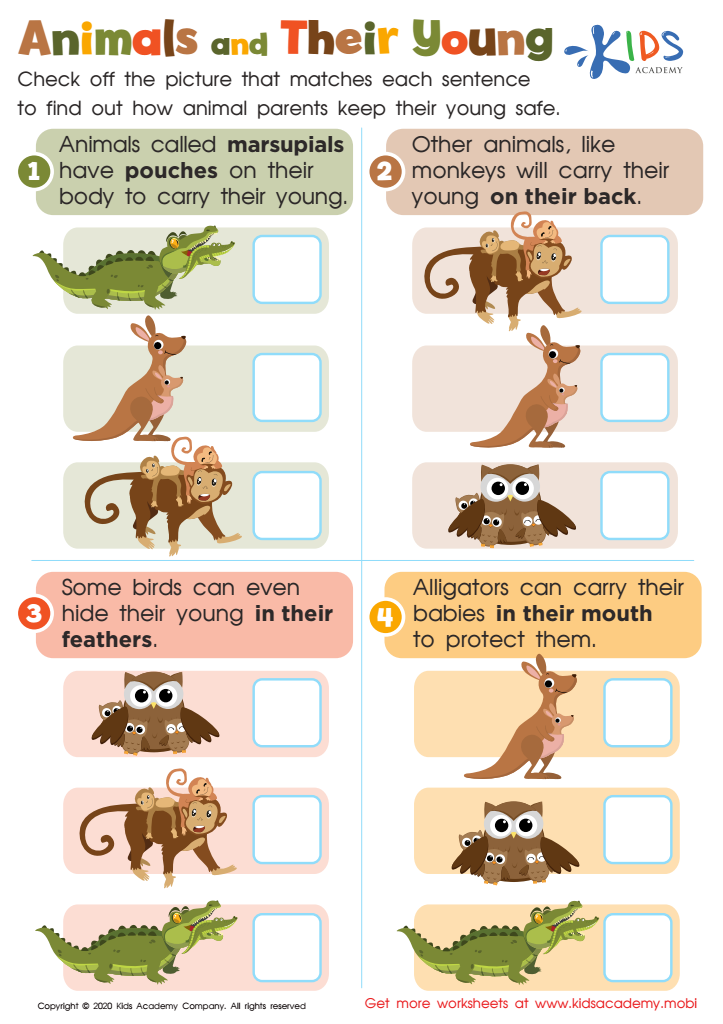
Animals and Their Young Worksheet
 Assign to My Students
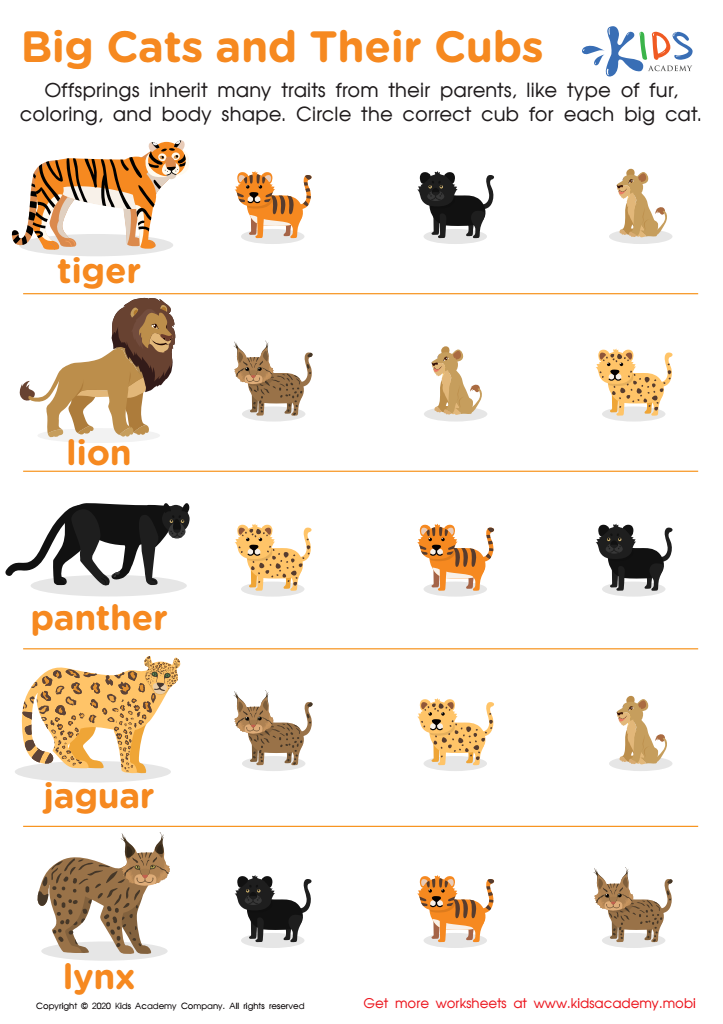
Big Cats and Their Cubs Worksheet
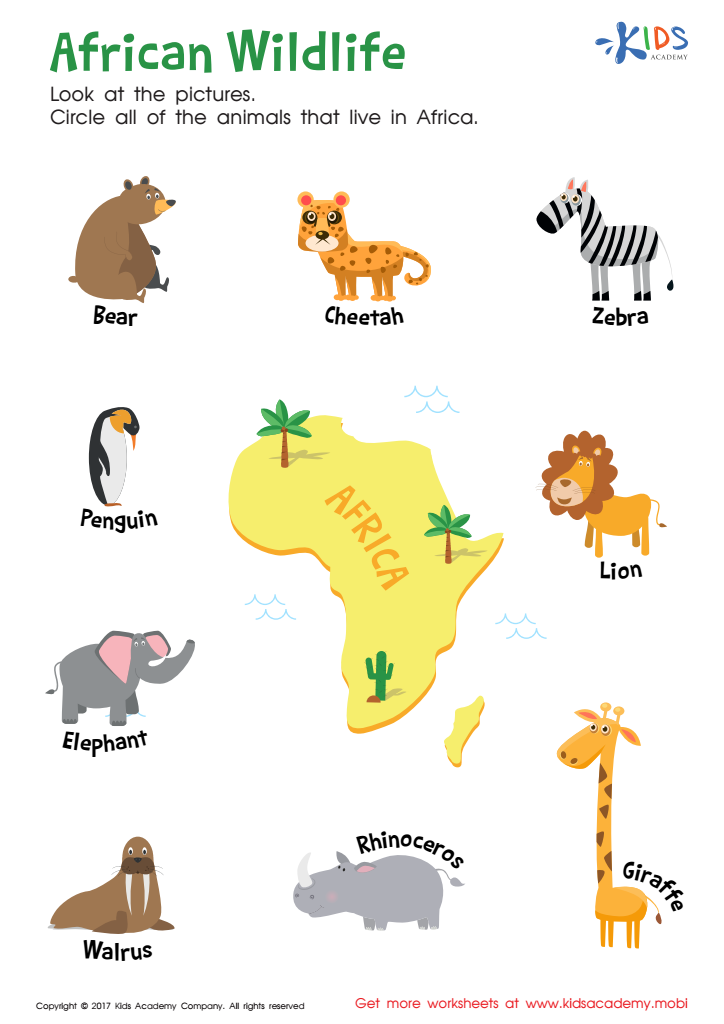







Animal recognition is a vital component of Grade 1 Science, and parents and teachers should prioritize it for several important reasons. Firstly, understanding different animals fosters curiosity and a love for nature, encouraging children to explore their environment. Learning about animals helps develop critical observational skills, as children identify various creatures in their surroundings, enhancing their scientific inquiry.
Moreover, recognizing animals is fundamental for nurturing empathy and respect for living beings. When children learn about different species, their habitats, and their roles in ecosystems, they become more aware of the importance of biodiversity and conservation. This awareness can cultivate a sense of responsibility towards wildlife and the environment.
Additionally, animal recognition supports language development and cognitive skills. Students expand their vocabulary through learning specific terms and descriptions of various animals. Engaging in discussions about animals also encourages teamwork and communication skills in group activities.
Furthermore, incorporating animal recognition into school curricula can stimulate arousal in other subjects, such as geography and ethics, as children ponder the implications of each animal's existence and interconnections within ecological systems. Overall, offering a foundation in animal recognition not only enhances educational growth but also equips children with essential life skills and ethical values.







