Categorization skills Extra Challenge Worksheets for Ages 3-4
3 filtered results
-
From - To
Enhance your child's learning journey with our Categorization Skills Extra Challenge Worksheets for ages 3-4! Designed to develop critical thinking and classification abilities, these engaging worksheets help young learners identify, sort, and group objects based on various attributes. Through fun activities, kids will explore colors, sizes, shapes, and more while honing their cognitive skills. Perfect for preschool and home education, our printable resources make categorization enjoyable and interactive. These extra challenges not only reinforce essential concepts but also promote a love for learning. Empower your child to think independently and creatively with our exciting categorization worksheets today!
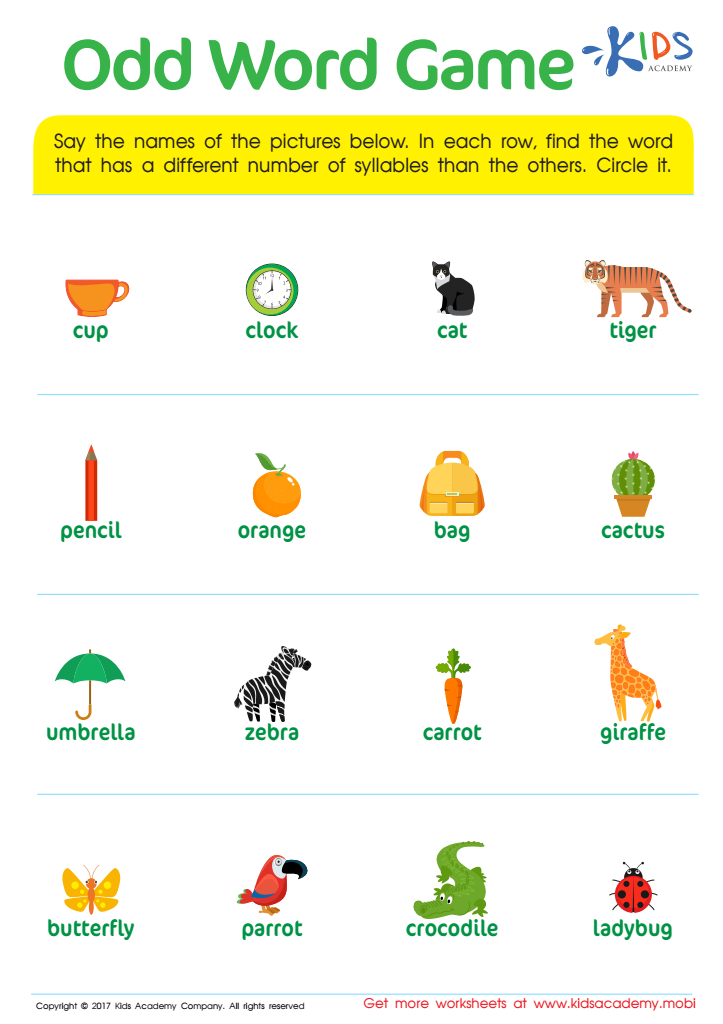
Count Syllables: Odd Word Game Worksheet
 Assign to My Students
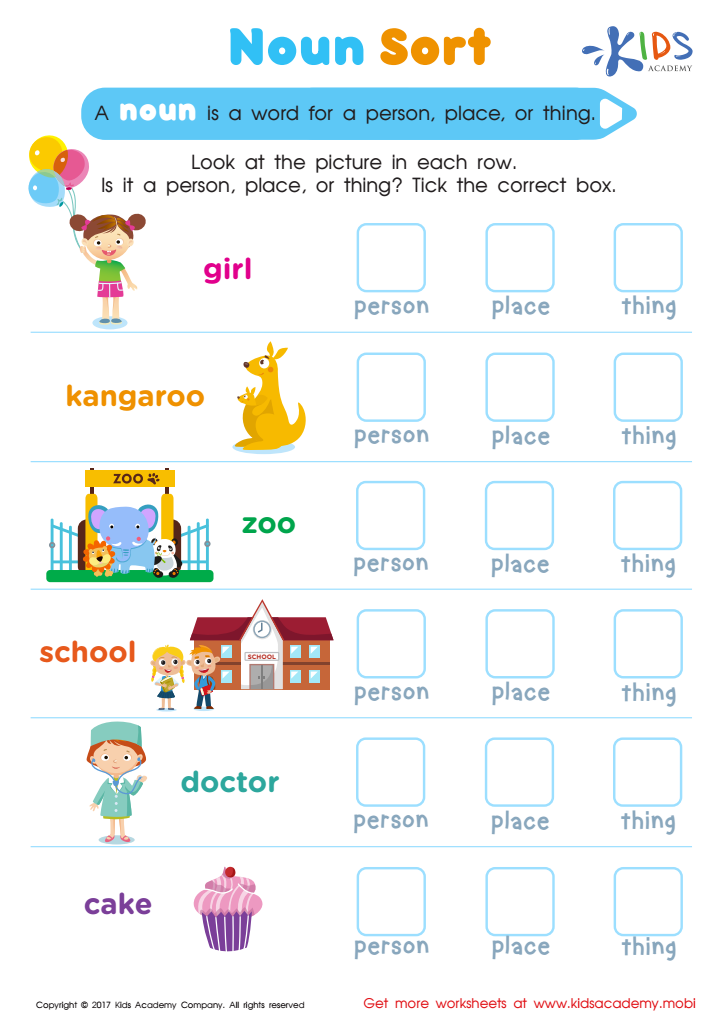
Noun Sort Printable
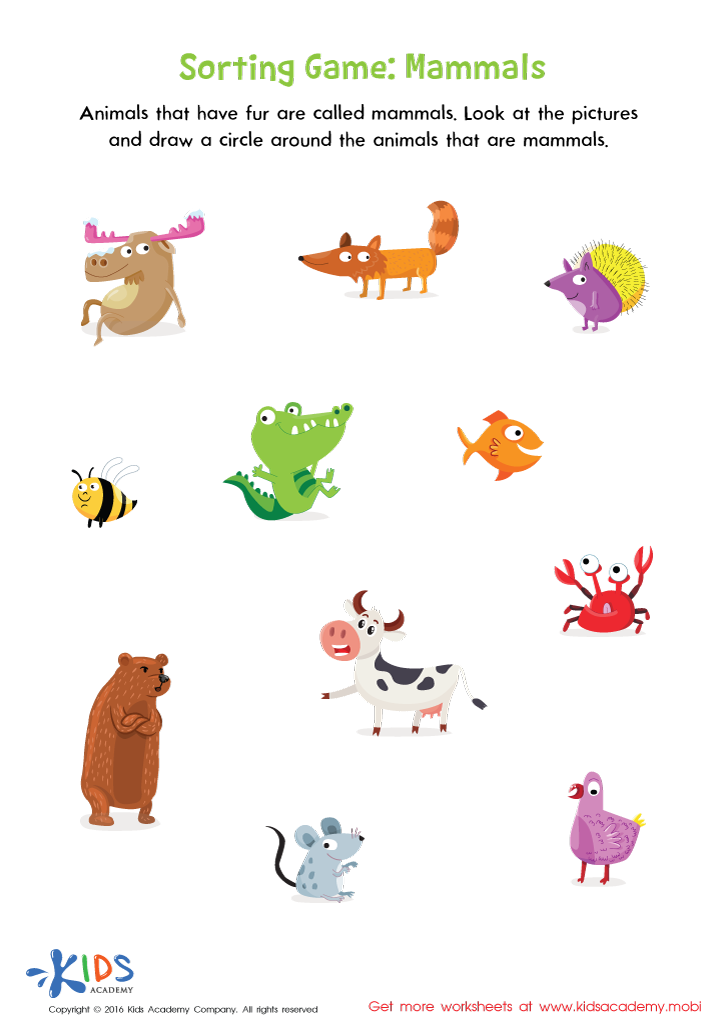
Mammals Sorting Worksheet







Categorization skills are foundational for young children's cognitive and social development, making it essential for parents and teachers to prioritize this aspect of learning, especially for ages 3-4. At this age, children begin to understand the world around them by sorting and grouping objects based on various characteristics, such as color, shape, size, or function. This foundational skill promotes important cognitive processes, including critical thinking, problem-solving, and enhancing memory.
By engaging in categorization activities, children learn to recognize similarities and differences, which supports their ability to make connections and draw conclusions. These skills are crucial for future learning, particularly in mathematics and science. Furthermore, categorization contributes to language development; as children classify objects, they also expand their vocabulary and improve their communication skills.
Socially, categorization fosters cooperation and sharing, as children often work together to group items, stimulating collaboration and understanding among peers. For educators and parents, nurturing these skills provides opportunities for structured play, enhanced curiosity, and a sense of accomplishment in children. In summary, focusing on categorization skills can lead to broad developmental benefits that set a solid foundation for lifelong learning and interpersonal relationships. Investing time in these activities enriches children's educational experiences and enhances their cognitive growth.








