Understanding currency Extra Challenge Worksheets for Ages 3-4
3 filtered results
-
From - To
Delve into our "Understanding Currency Extra Challenge Worksheets for Ages 3-4," specifically tailored to enhance early learning. These engaging activities introduce young learners to the basics of money through fun and interactive means. Carefully designed to be age-appropriate, the worksheets help kids identify currencies, understand their value, and apply their knowledge in everyday scenarios. Perfect for both classroom and home settings, these printables support developmental milestones by combining education with play. Foster financial awareness and critical thinking skills in your child today with our foundational currency challenges. Equip your little one with essential life skills from an early age!
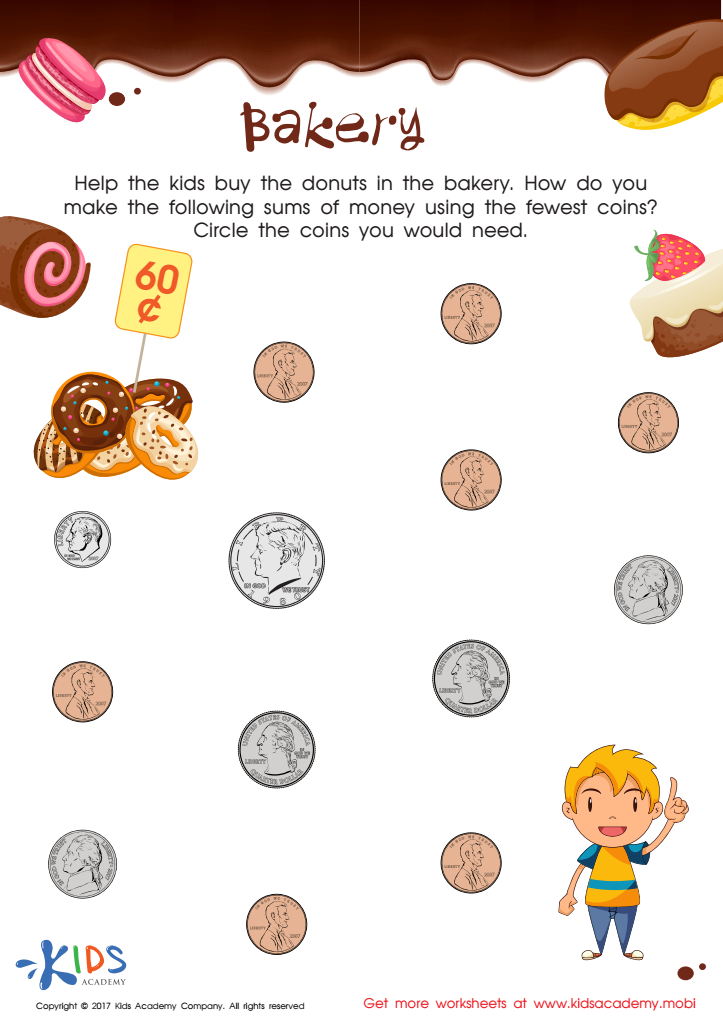
Counting Coins Worksheet
 Assign to My Students
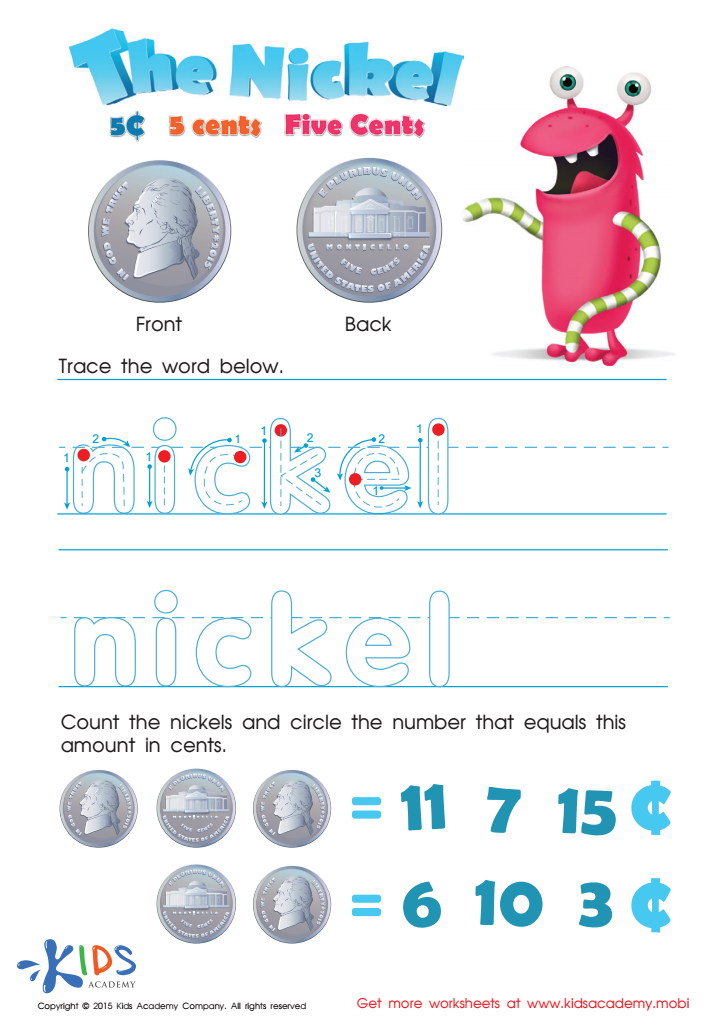
Five Cents or the Nickel Money Worksheet
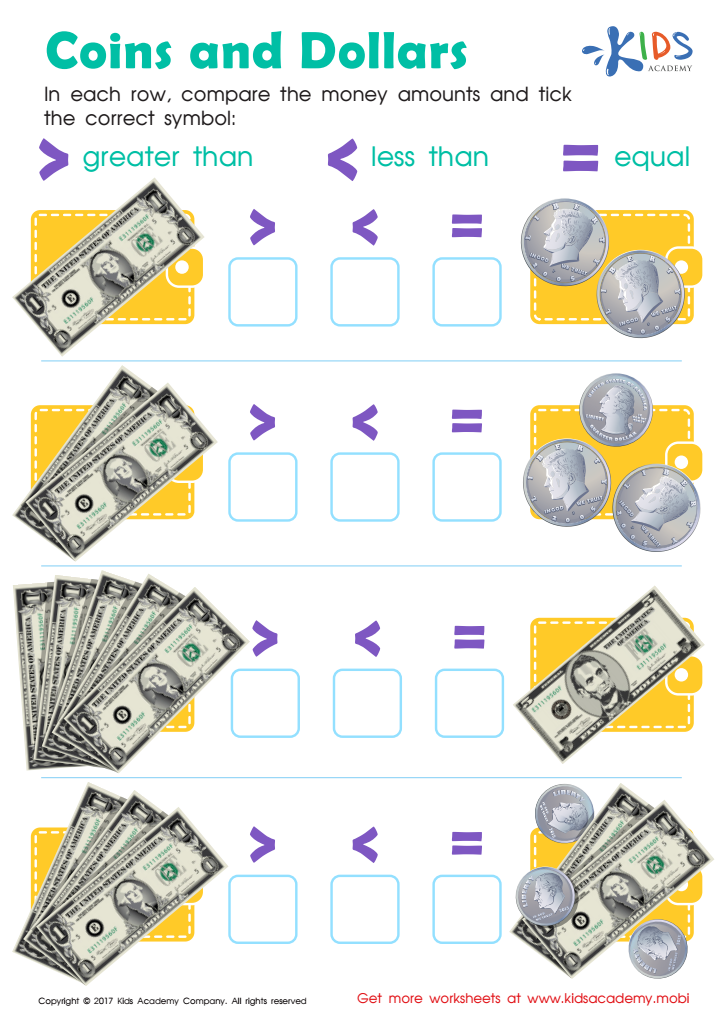
Money: Coins Dollars Printable






.jpg)
.jpg)
Understanding currency at an early age, such as 3-4 years old, lays the foundation for essential financial literacy skills that children will use throughout life. Though it might seem premature, engaging young children in simple activities involving currency can significantly benefit their cognitive and social development.
Firstly, introducing the concept of money helps children develop basic math skills like counting, recognizing numbers, and understanding the value of different coins and bills. These fundamental skills directly support more complex mathematical learning they will encounter in school.
Secondly, early exposure to currency aids in teaching children the concept of value and trade. Recognizing that money is a medium for obtaining goods and services helps them understand decision-making and prioritizing needs versus wants. This understanding promotes critical thinking and problem-solving skills.
Furthermore, by handling money and engaging in simulated buying activities, children improve their fine motor skills. Picking up coins, placing them in slots, or counting them prompts the use of small muscles in their hands, which is vital for other tasks such as writing.
Lastly, it fosters a sense of responsibility and the understanding of saving. Simple activities where children save coins in a jar for a desired toy can build patience and the understanding that rewards often follow delayed gratification.
Overall, integrating currency education in early childhood prepares children for future financial responsibility, boosts their math skills, and develops their fine motor abilities.








