
Financial literacy Extra Challenge Money Worksheets for Ages 3-4
3 filtered results
Difficulty Level
Grade
Age
-
From - To
Subject
Activity
Standards
Introduce your little one to the essentials of financial literacy with our engaging Extra Challenge Money Worksheets, designed specifically for ages 3-4. These fun and educational printables make counting money enjoyable, helping kids recognize coins and understand basic monetary concepts. Perfect for early learners, the activities nurture essential math skills, problem-solving abilities, and cognitive development. Discover a seamless blend of play and learning as your child navigates through colorful illustrations and practical tasks, building a strong foundation for future financial knowledge. Empower their journey towards smart money management with Kids Academy’s interactive worksheets!
Favorites
With answer key
Interactive
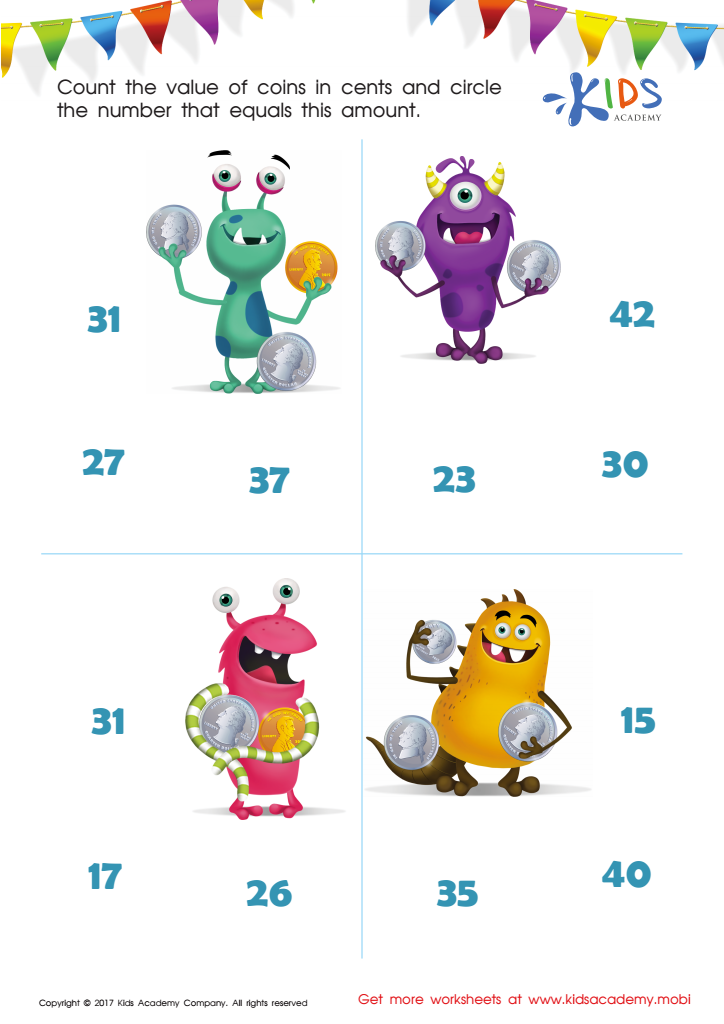
How Many Coins Money Worksheet
Have fun while counting coins: look at the monsters and count the coins in their hands. Challenge your little learners to count and write down the number of coins each one has. Enjoy the time together!
 Assign to My Students
How Many Coins Money Worksheet
Worksheet
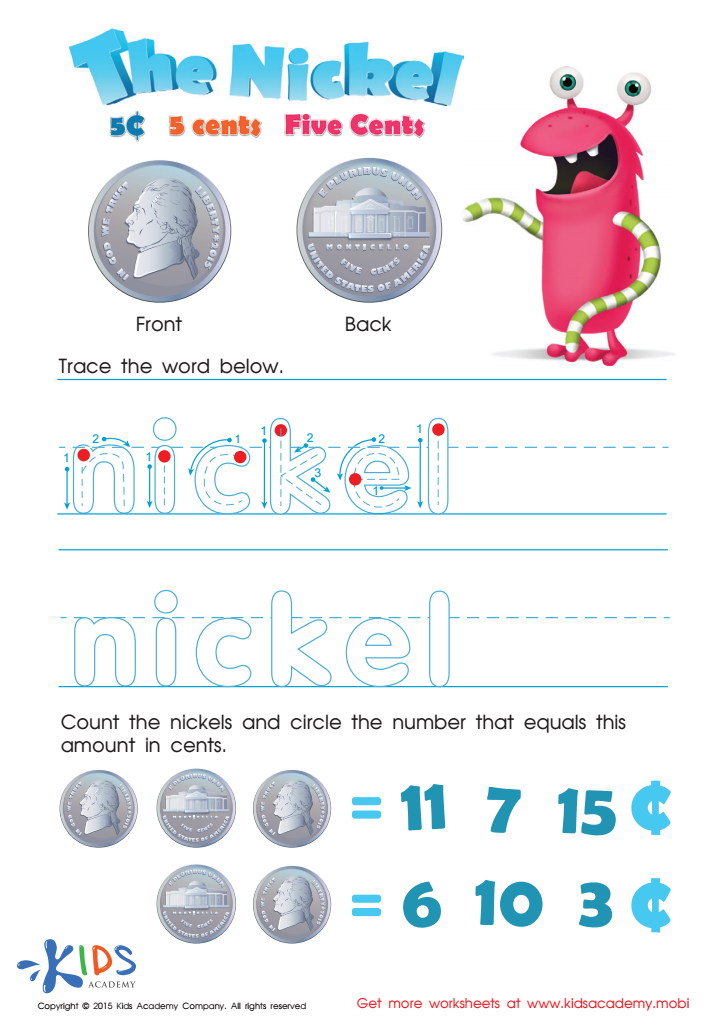
Five Cents or the Nickel Money Worksheet
Counting money games help kids make learning money fun and easy. Next up: the 5 cent coin, or nickel. Look at both sides and remember them. Then, trace the word "nickel" to help you remember. Finally, count the nickels and work out amounts in cents. Let's do this! Kids Academy helps make money learning easy and fun!
Five Cents or the Nickel Money Worksheet
Worksheet
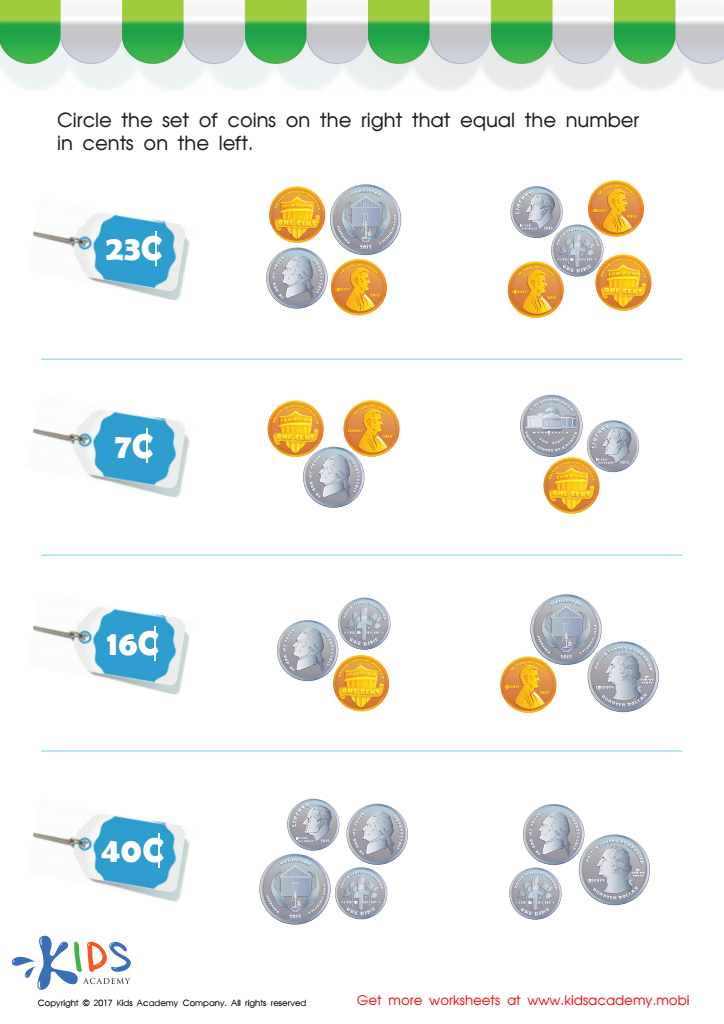
Picking the Coins You Need Money Worksheet
Let's learn to count money with Parents and Kids Academy! Investigate a real shop together: buy a globe, pencils, books, and a school bag using coins. Then, circle the coins you'll need. Visit our website for more free and fun money games for kids!
Picking the Coins You Need Money Worksheet
Worksheet
Join Kids Academy for Free
Who is primarily going to use this learning content?








Parents and teachers should value introducing financial literacy through activities like the Extra Challenge Money for young children aged 3-4 because these early years are critical for foundational development. At this age, kids are incredibly receptive to new concepts, and embedding financial literacy early can create a lifelong understanding and respect for money management.
Engaging children in age-appropriate financial activities can teach them basic ideas like the value of money, distinguishing between wants and needs, and recognizing coins and notes. Such practices can also embed essential skills like counting, sorting, and basic math in a fun and integrated manner. Moreover, these early lessons can establish positive habits such as saving money, making thoughtful purchasing decisions, and avoiding impulsive spending.
Starting financial education early also prepares children to navigate a world where financial transactions are increasingly digital and ubiquitous. By fostering an early understanding of money-related concepts, children can develop confidence and capacity in handling future financial situations effectively.
In essence, by nurturing financial awareness from a young age, parents and teachers are equipping children with essential life skills that pave the way for responsible and informed financial behaviors in adulthood. This proactive approach can have enduring benefits, helping children grow into financially literate and independent individuals.








