Fine Motor Skills Extra Challenge Math Worksheets for Ages 3-4 - Page 2
25 filtered results
-
From - To
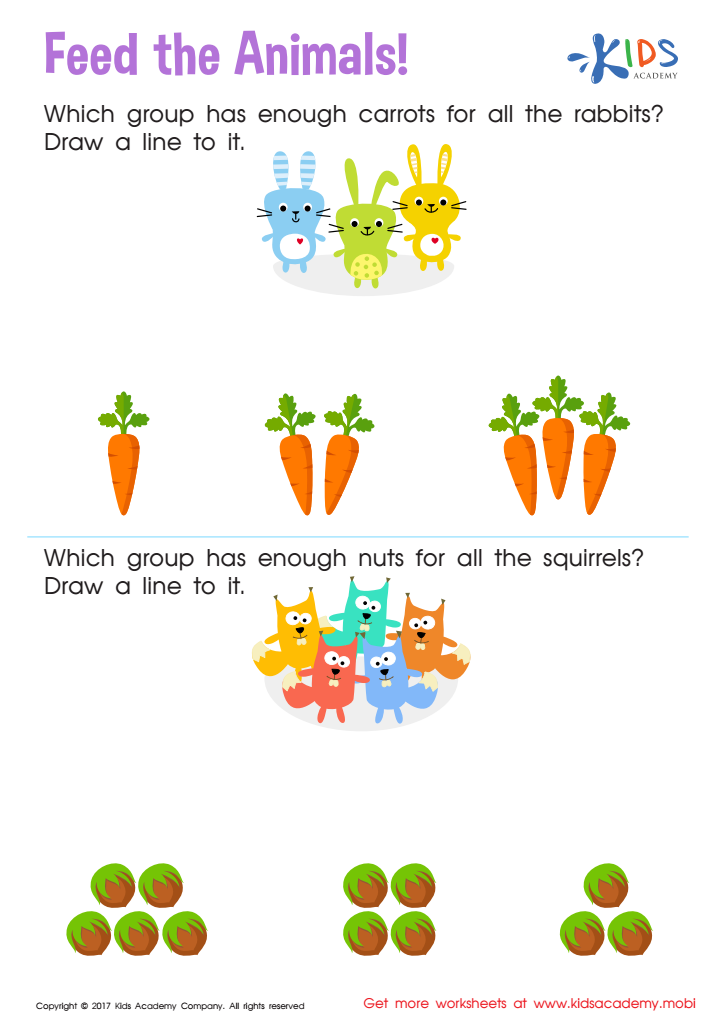
Count and Match: Feed the Animals Worksheet
 Assign to My Students








Fine motor skills are essential for early childhood development, and integrating them with math activities can significantly enhance a child's learning experience. For children aged 3-4, these skills involve the ability to use small muscles in the hands and fingers, which are crucial for tasks like writing, drawing, cutting, and manipulating small objects.
Engaging in Fine Motor Skills Extra Challenge Math activities can help children build their dexterity while learning essential math concepts such as counting, sorting, and shape recognition. These activities not only make learning fun and interactive but also support cognitive development by encouraging problem-solving and critical thinking through hands-on experiences.
Parents and teachers should care about these integrated activities because they promote a holistic approach to learning. When fine motor skills are developed alongside early math competencies, children experience a more robust foundation for future academic success. Additionally, these activities can engage children in collaborative learning environments, fostering social skills as they work with peers.
Ultimately, focusing on fine motor skills within math challenges allows for a balanced development, making learning enjoyable and effective while laying the groundwork for lifelong skills in both math and dexterity. Investing in these foundational abilities today will significantly benefit children tomorrow.