
Shape identification Extra Challenge Math Worksheets for Ages 3-4
3 filtered results
Difficulty Level
Grade
Age
-
From - To
Subject
Activity
Standards
Unlock your child's potential with our Shape Identification Extra Challenge Math Worksheets designed specifically for ages 3-4! These engaging worksheets offer a fun and interactive way for young learners to explore shapes while developing essential problem-solving skills. Packed with a variety of activities that challenge and stimulate, children will recognize and differentiate between shapes like circles, squares, triangles, and more. Expand their knowledge with colorful illustrations and creative exercises that promote fine motor skills, visual discrimination, and cognitive growth. Perfect for at-home learning or classroom use, our extra challenge worksheets make mastering shapes an enjoyable adventure for your little ones!
Favorites
With answer key
Interactive
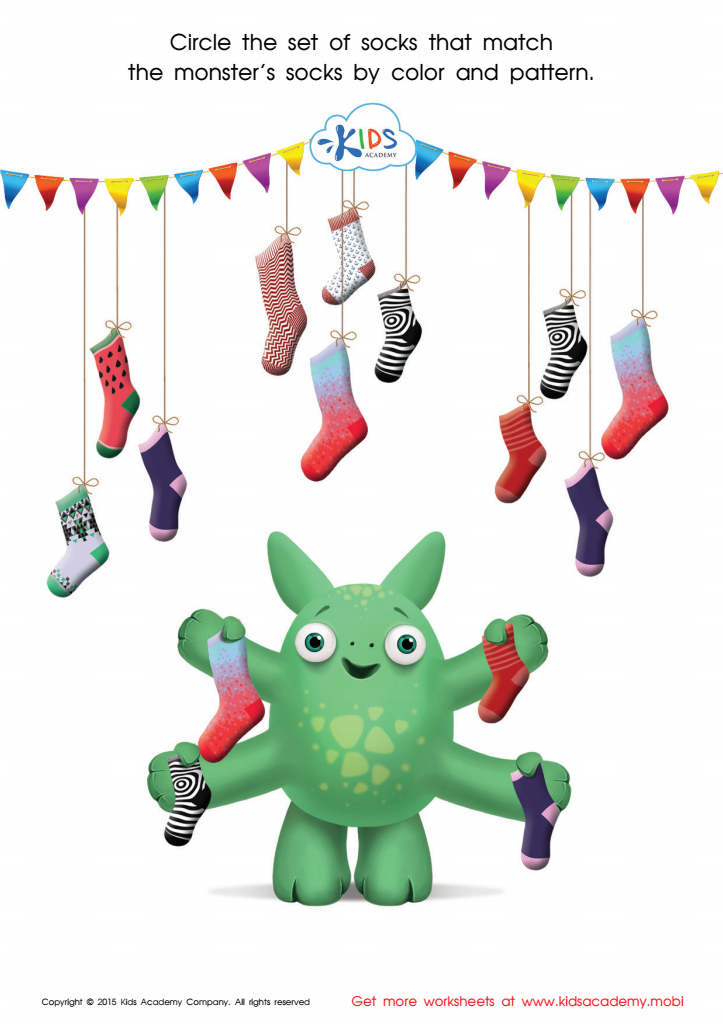
Sort the Monster's Socks Worksheet
Let your little one challenge herself and practice with matching Monster socks. She must be very attentive to match the same socks and draw a line connecting them!
 Assign to My Students
Sort the Monster's Socks Worksheet
Worksheet
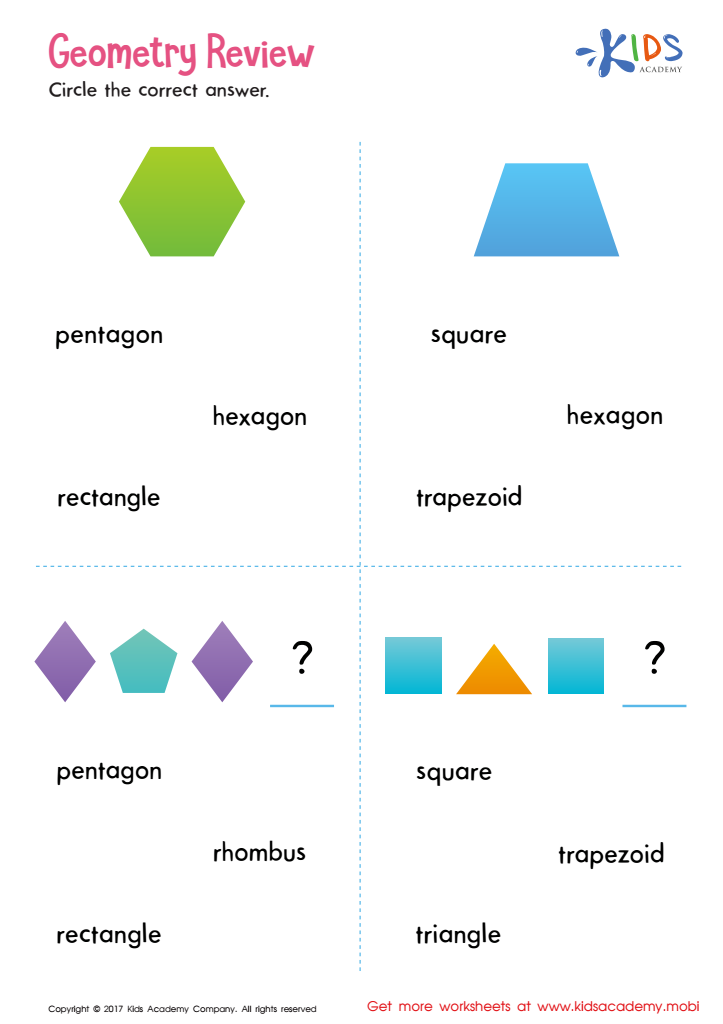
Geometry Review Printable
Repetition is key to success; give your child the practice they need with this geometry worksheet.
Geometry Review Printable
Worksheet
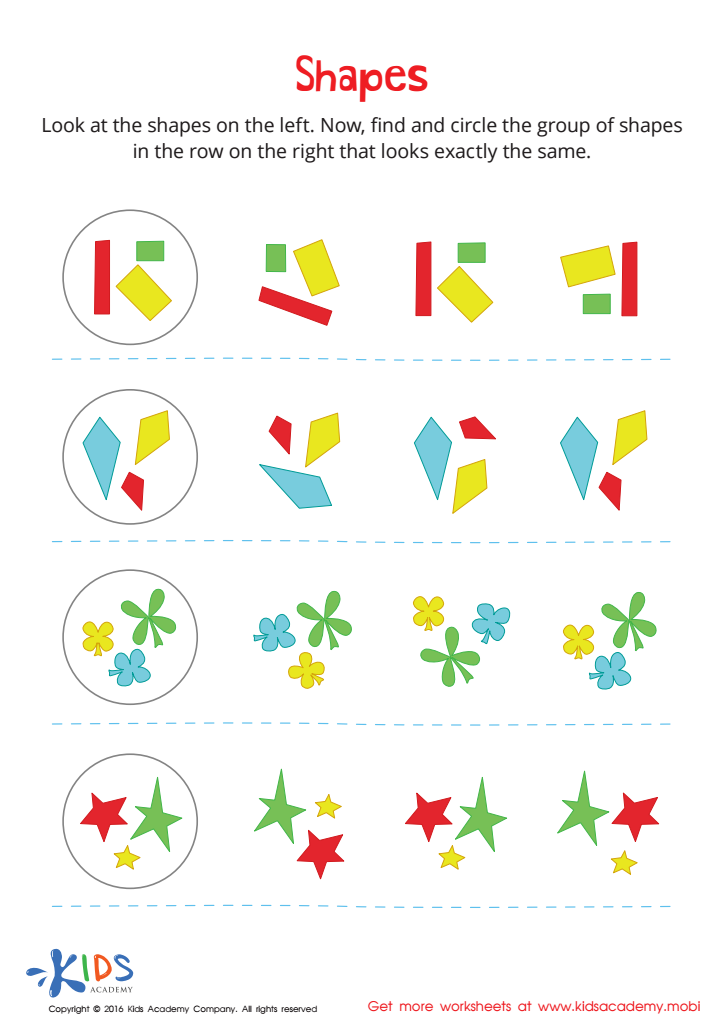
Shapes Worksheet
This fun worksheet will challenge your child to recognize tricky patterns, sort through similar ones, and create strategies to get the right answer. It'll also help them to strengthen problem-solving skills and build confidence. With more challenging tasks, your child will be ready to tackle higher level math and sequencing skills.
Shapes Worksheet
Worksheet
Join Kids Academy for Free
Who is primarily going to use this learning content?








Shape identification is a vital foundational skill for young learners aged 3-4, playing an essential role in mathematics and cognitive development. Engaging in shape identification through extra challenge math activities nurtures curiosity and encourages critical thinking. At this age, children are naturally explorative, making it the perfect time to introduce shapes as they discover the world around them.
Parents and teachers should care about incorporating shape identification challenges, as these activities enhance spatial awareness and geometric understanding, which are crucial for later math skills. They lay the groundwork for more complex concepts like measurement, symmetry, and spatial reasoning. Additionally, engaging children in these challenges fosters problem-solving abilities and systematic thinking.
Moreover, these activities promote fine motor skills and hand-eye coordination as children manipulate shapes during interactive tasks, whether through cutting, drawing, or assembling. Encouraging participation in shape identification also supports language development, as children learn to articulate their understanding of different shapes and their properties.
Overall, focusing on shape identification through extra challenge math not only enhances early mathematical competency but also enriches children's cognitive skills and prepares them for future academic success in a supportive and interactive learning environment.








