
Visual perception Extra Challenge Math Worksheets for Ages 3-4
6 filtered results
Difficulty Level
Grade
Age
-
From - To
Subject
Activity
Standards
Discover the perfect resource for sparking early math skills with our Visual Perception Extra Challenge Math Worksheets for ages 3-4! Designed to enhance cognitive development, these worksheets focus on pattern recognition, counting, and basic arithmetic through engaging and visually stimulating exercises. Each worksheet offers an exciting challenge that captivates young learners, refining their visual perception abilities and laying a solid foundation for future mathematical success. Ideal for parents and teachers, these worksheets are a fun, effective way to promote early learning, ensuring preschoolers build confidence and skills in a supportive, creative environment. Unlock your child's potential today!
Favorites
With answer key
Interactive
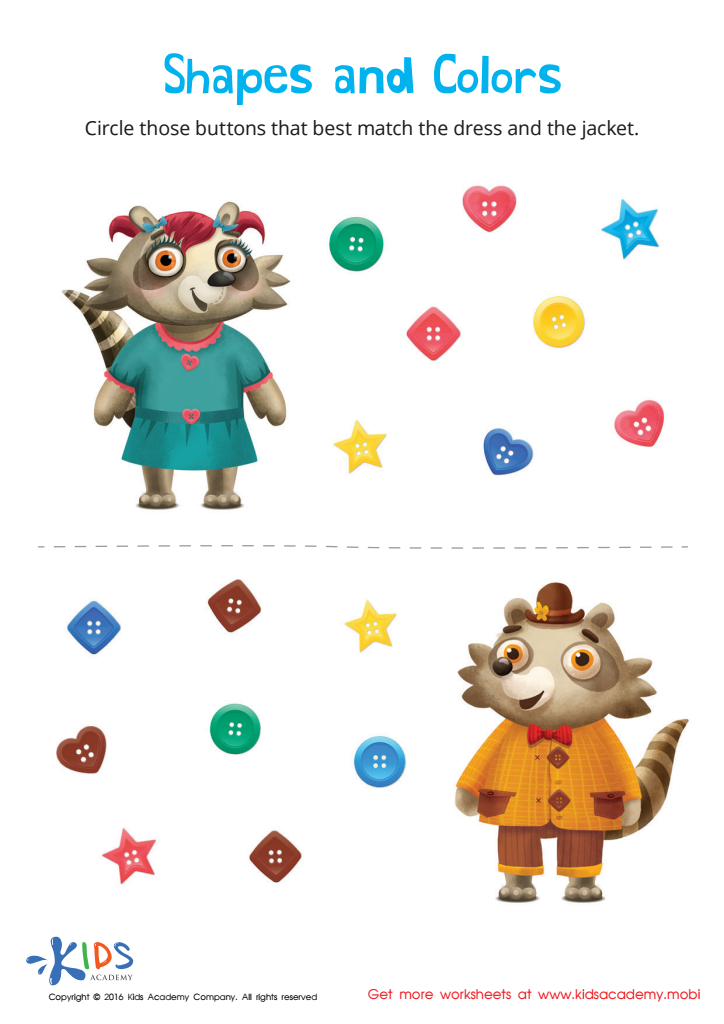
Matching: Shapes and Colors Worksheet
Help Mr. and Mrs. Raccoon find the right buttons to match their shirts! Kids will identify shapes and colors and learn to match them correctly.
 Assign to My Students
Matching: Shapes and Colors Worksheet
Worksheet
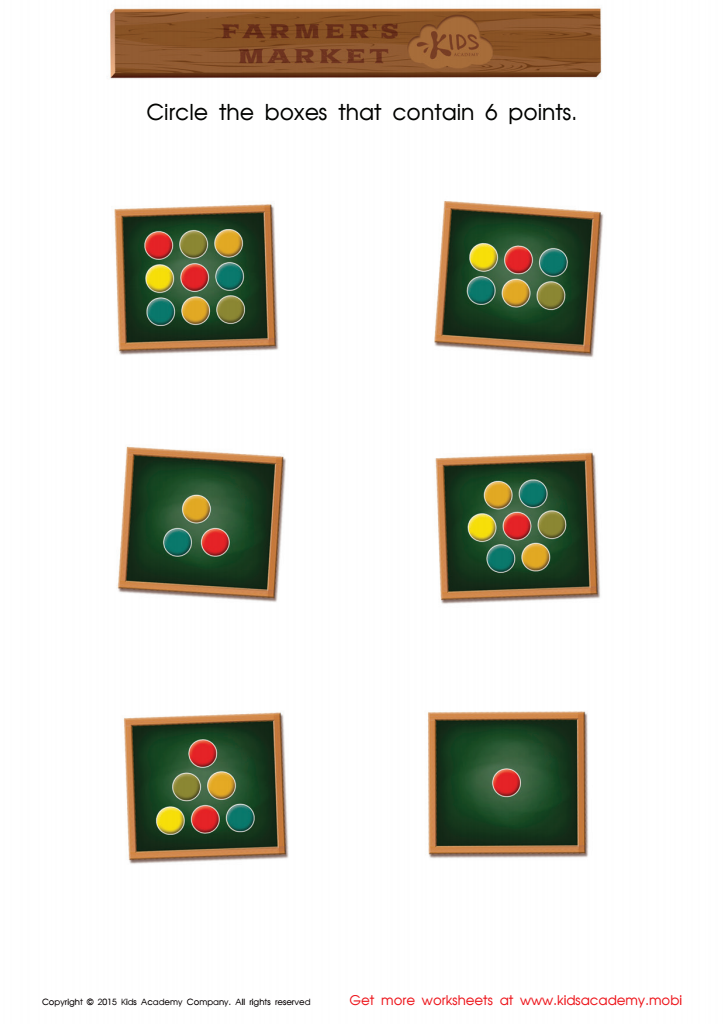
Count and Match Points 6 Math Worksheet
Help your child with mathematics by guiding them with this fun printable worksheet. They will practice counting numbers by looking at all the boxes and circling the ones containing 6 dots. Together you will gain a better understanding of mathematics.
Count and Match Points 6 Math Worksheet
Worksheet
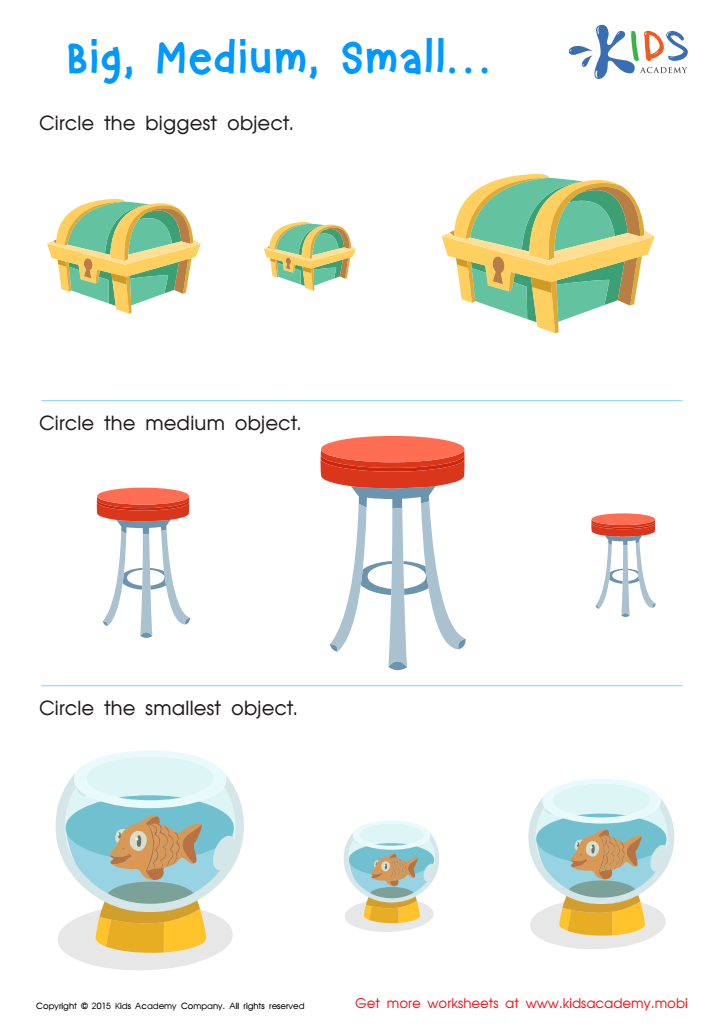
Big Medium Small Worksheet
Kids practice size words as they spot big, medium, and small objects. It's an entertaining way to help children describe the world around them.
Big Medium Small Worksheet
Worksheet
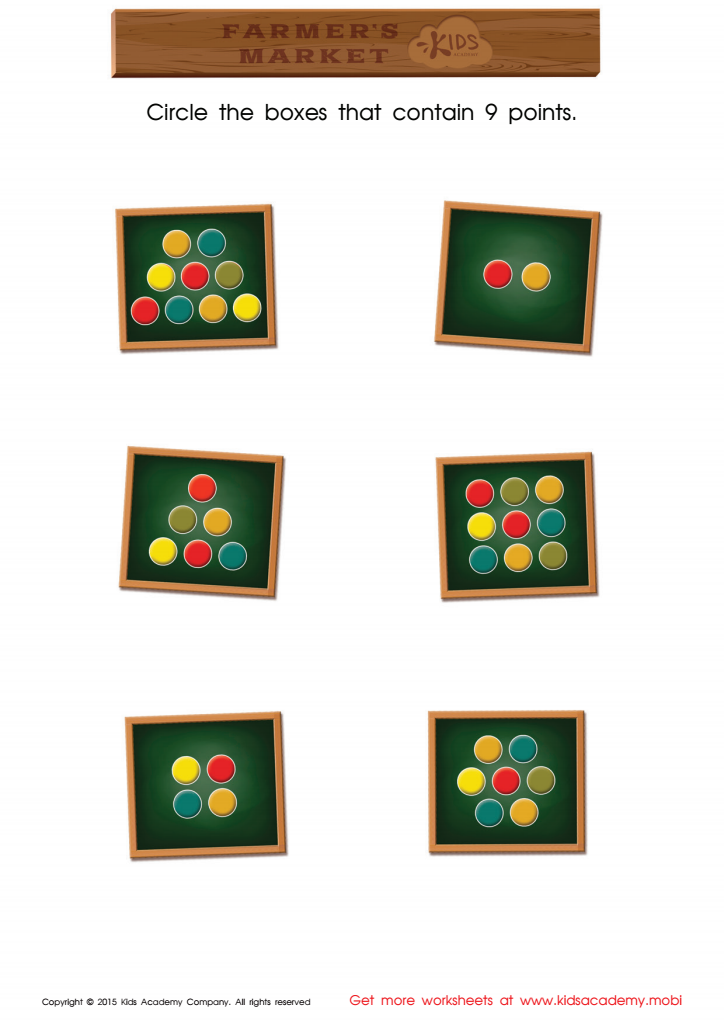
Count and Match Points 9 Math Worksheet
Circle the boxes with 9 points. Examine and count the colorful points in each of the 6 boxes. It's not easy as points are not arranged similarly, so have your child think hard and count carefully.
Count and Match Points 9 Math Worksheet
Worksheet
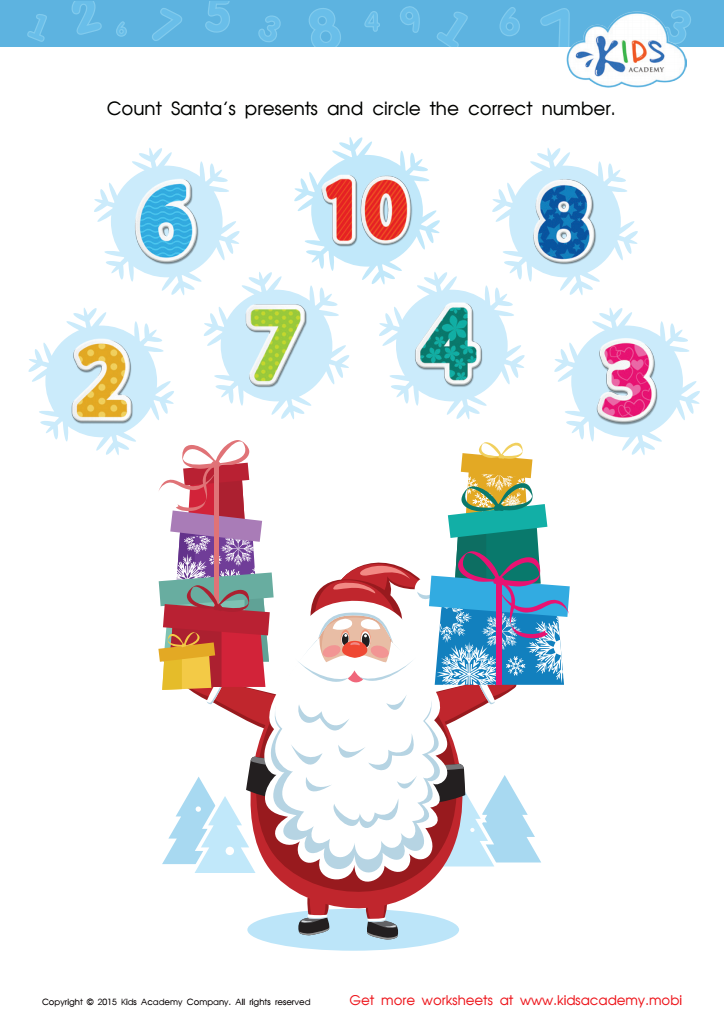
Count Santa's Presents Worksheet
With Kids Academy's free Christmas math worksheet, your kindergartener can help Santa count presents. The worksheet encourages recognizing and counting numbers, fostering the Christmas spirit. Print it out, have fun, and get ready to circle the right number! Get more math printables to learn numbers in a fun way.
Count Santa's Presents Worksheet
Worksheet
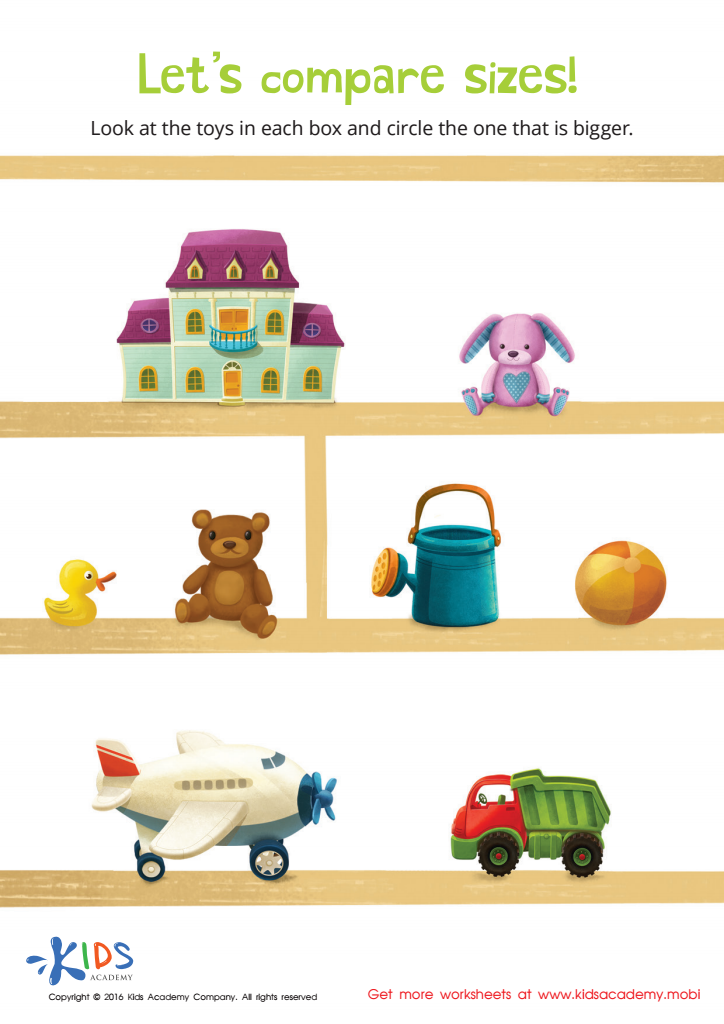
Classifying by Size Sorting Worksheet
Help your preschooler recognize differences in size using this fun worksheet! Your child will engage in important spatial recognition and problem-solving skills while talking with you about objects that can be small or large. Enjoy the vibrant pictures together!
Classifying by Size Sorting Worksheet
Worksheet
Join Kids Academy for Free
Who is primarily going to use this learning content?






Visual perception plays a crucial role in early childhood development and learning. At ages 3-4, children are at a formative stage where their cognitive, motor, and sensory skills are rapidly developing. Engaging them in Visual Perception Extra Challenge Math activities can offer significant benefits.
Firstly, these activities help with the overall development of visual-spatial skills, which are essential for understanding and interpreting visual information. This ability lays the foundation for reading, writing, and solving mathematical problems later on. For instance, recognizing shapes, patterns, and spatial relationships are precursors to more complex skills like geometry and arithmetic.
Secondly, involving young children in these activities aids in improving their fine motor skills. Manipulating objects, drawing lines to connect dots, and other tasks involved in visual perceptual challenges require hand-eye coordination, which is critical for everyday tasks like dressing, eating, and more.
Additionally, these math challenges encourage critical thinking and problem-solving from an early age. They require children to observe, analyze, and make decisions, thereby fostering cognitive development.
Through playful engagement, kids learn mathematical concepts and enjoy the process. This positive early experience sets the tone for a lifelong interest in mathematics and learning in general, making it important for parents and teachers to integrate visual perception challenges in early education settings.








