Handwriting practice Extra Challenge Letter Recognition Worksheets for Ages 3-5
5 filtered results
-
From - To
Enhance your child's early literacy skills with our "Handwriting Practice Extra Challenge Letter Recognition Worksheets" designed specifically for ages 3-5. These engaging and interactive worksheets not only focus on improving handwriting but also reinforce letter recognition through fun activities tailored for young learners. Each worksheet features vibrant illustrations and stimulating exercises that make learning both enjoyable and effective. Perfect for preschool or kindergarten settings, these resources support children in mastering the foundational skills required for reading and writing. Give your child a head start on their educational journey with our expertly crafted worksheets that spark creativity and encourage a love of learning!
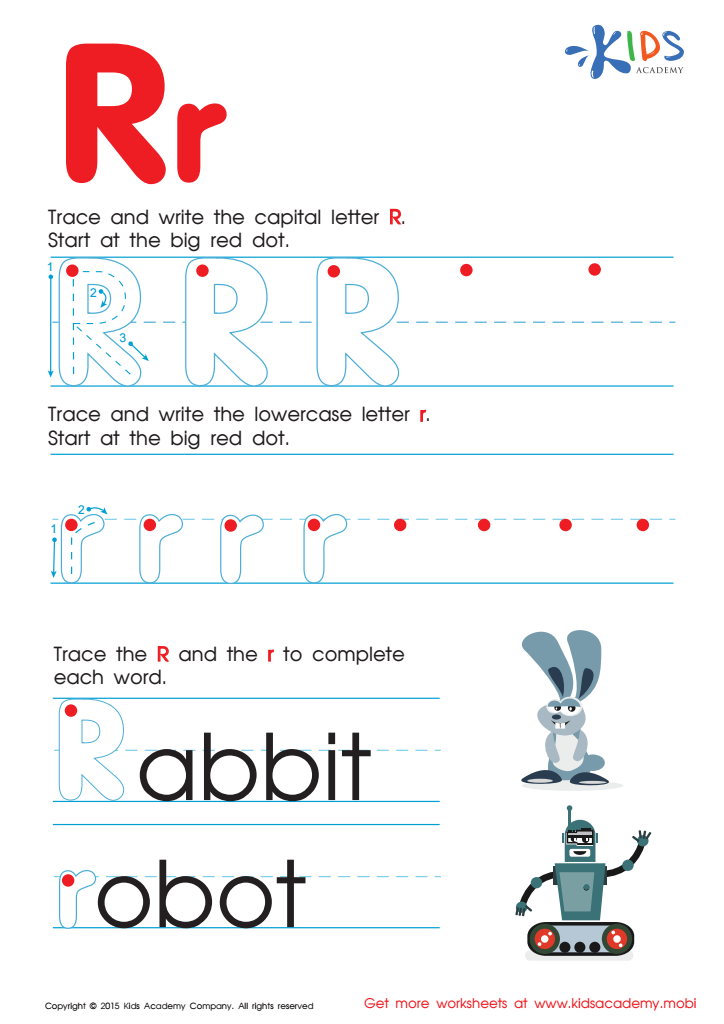
Letter R Tracing Page
 Assign to My Students
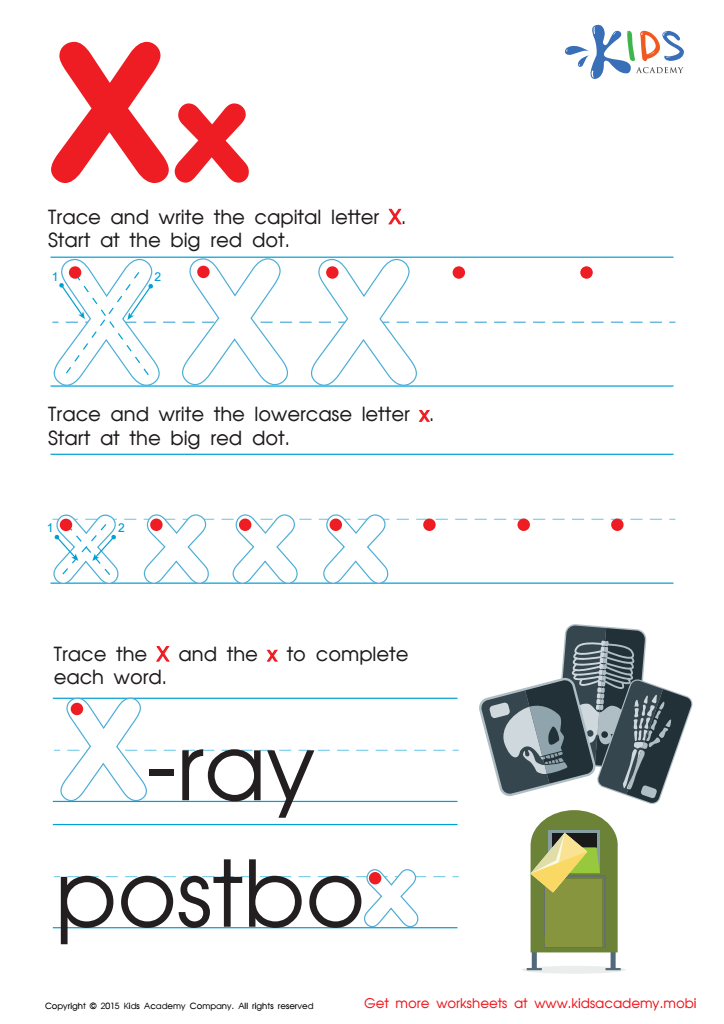
Letter X Tracing Page
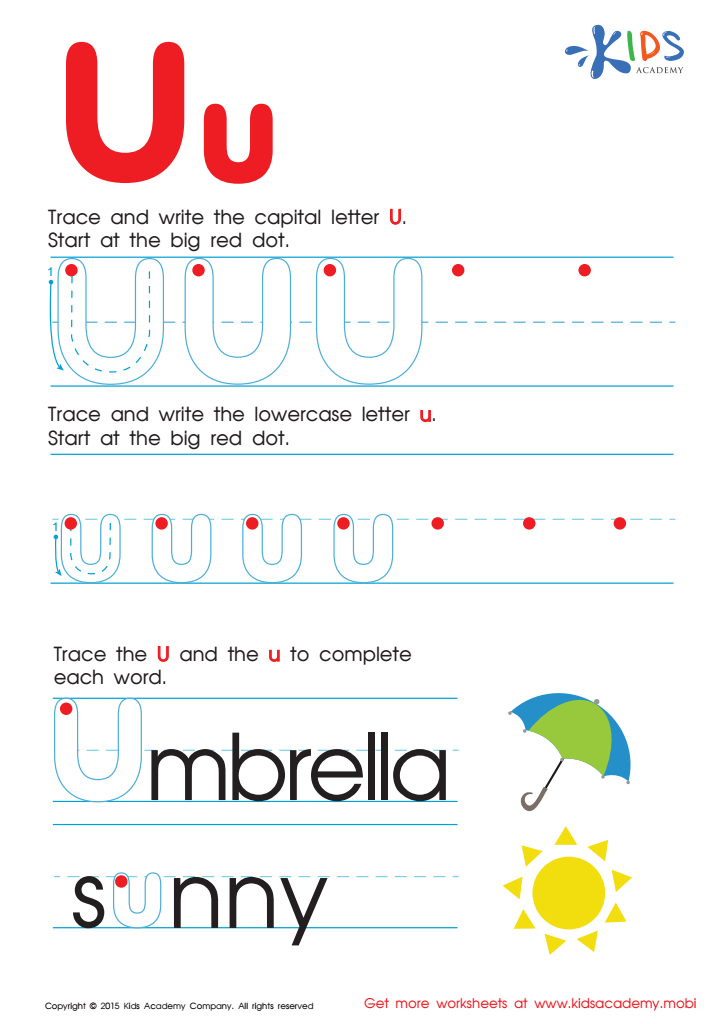
Letter U Tracing Page
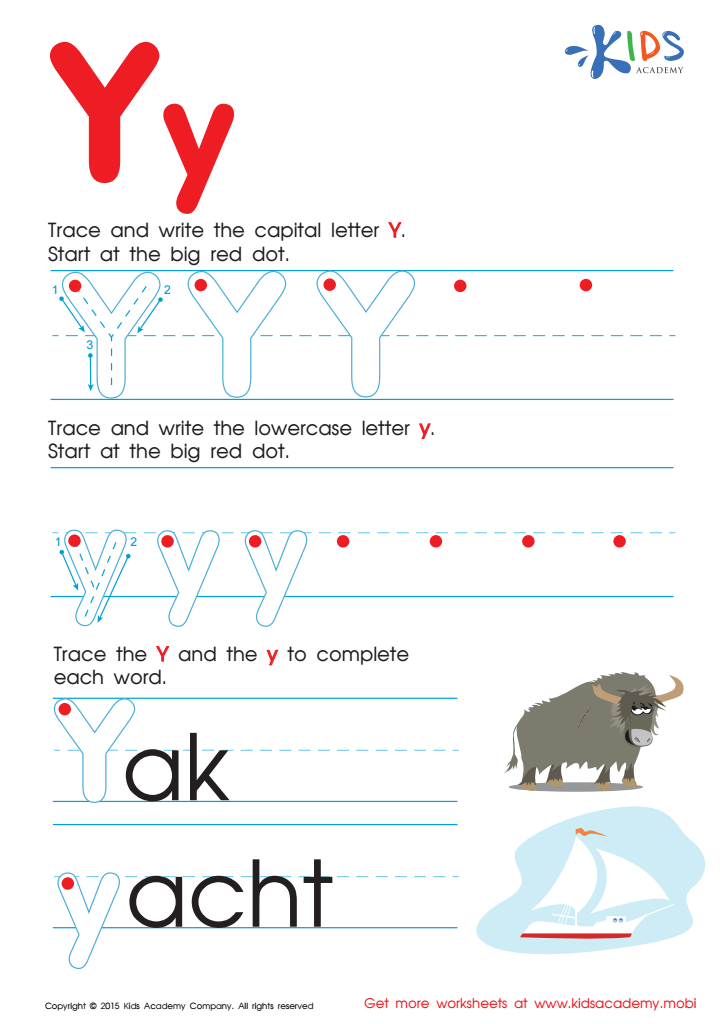
Letter Y Tracing Page
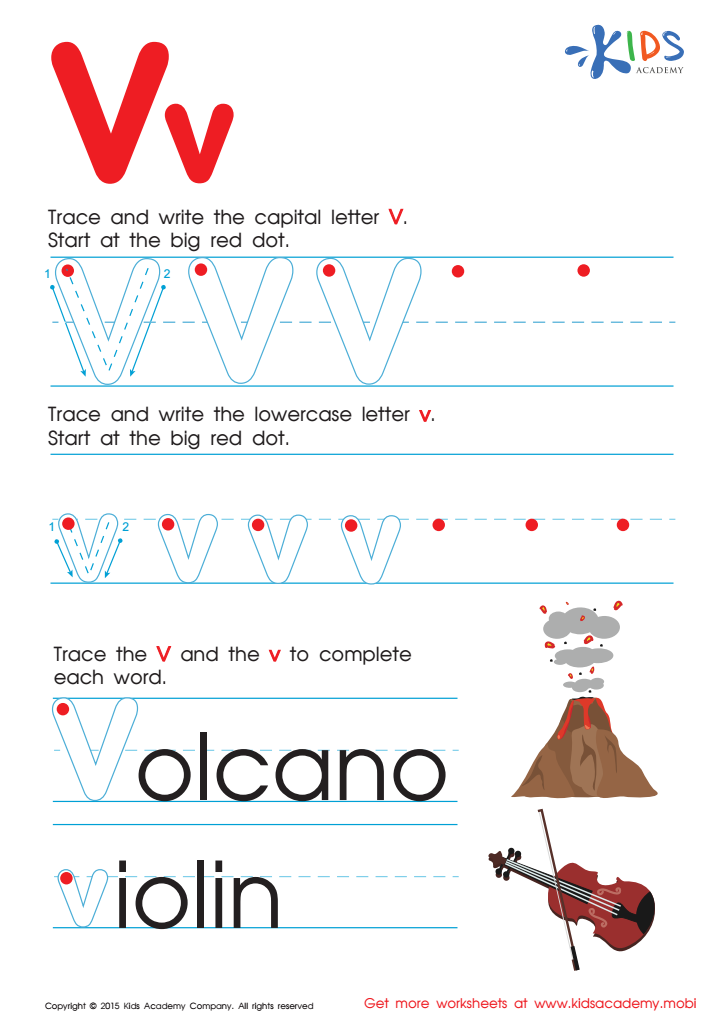
Letter V Tracing Page








Parents and teachers should prioritize handwriting practice and letter recognition for children aged 3-5 because these skills serve as foundational building blocks for effective communication and literacy. At this early age, children are not only developing fine motor skills—crucial for tasks like writing—but they are also beginning to recognize letters, which are essential for reading and spelling.
Handwriting practice helps strengthen hand-eye coordination and muscle control, enabling children to grasp writing utensils correctly and form letters more easily. Additionally, focusing on letter recognition fosters language development; children who recognize letters can start to decode words, ultimately promoting reading skills.
Engaging in fun, interactive handwriting activities can make learning enjoyable, enhancing a child's motivation and interest in literacy. These early experiences build confidence and a positive attitude toward writing and reading, which can influence their long-term educational journey. Moreover, developing consistent handwriting and letter recognition skills early on can lead to improved academic performance in later grades, as these are critical foundational skills that support more advanced learning.
In essence, supporting handwriting practice and letter recognition sets the stage for lifelong learning and communication abilities, making it vital for parents and teachers to engage in these activities.