Alphabet Recognition Extra Challenge Tracing Letters Worksheets for Ages 3-5
3 filtered results
-
From - To
Give your child an extra challenge with our Alphabet Recognition Extra Challenge Tracing Letters Worksheets for ages 3-5! These engaging and educational worksheets are designed to help early learners master the alphabet while developing their fine motor skills. Each sheet encourages kids to trace both uppercase and lowercase letters, fostering letter recognition and handwriting proficiency. Perfect for preschoolers, these worksheets provide an exciting way to reinforce alphabet knowledge through fun and interactive activities. Watch as your child gains confidence and enjoys the learning process with these thoughtfully crafted tools, designed to make early education enjoyable and effective.
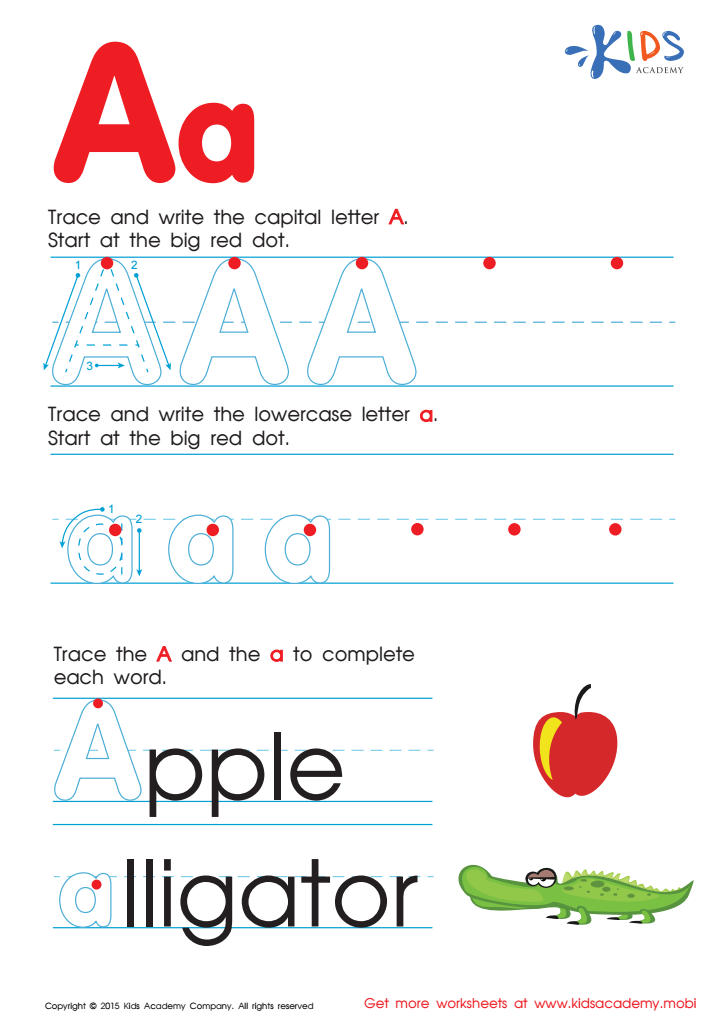
Letter A Tracing Page
 Assign to My Students
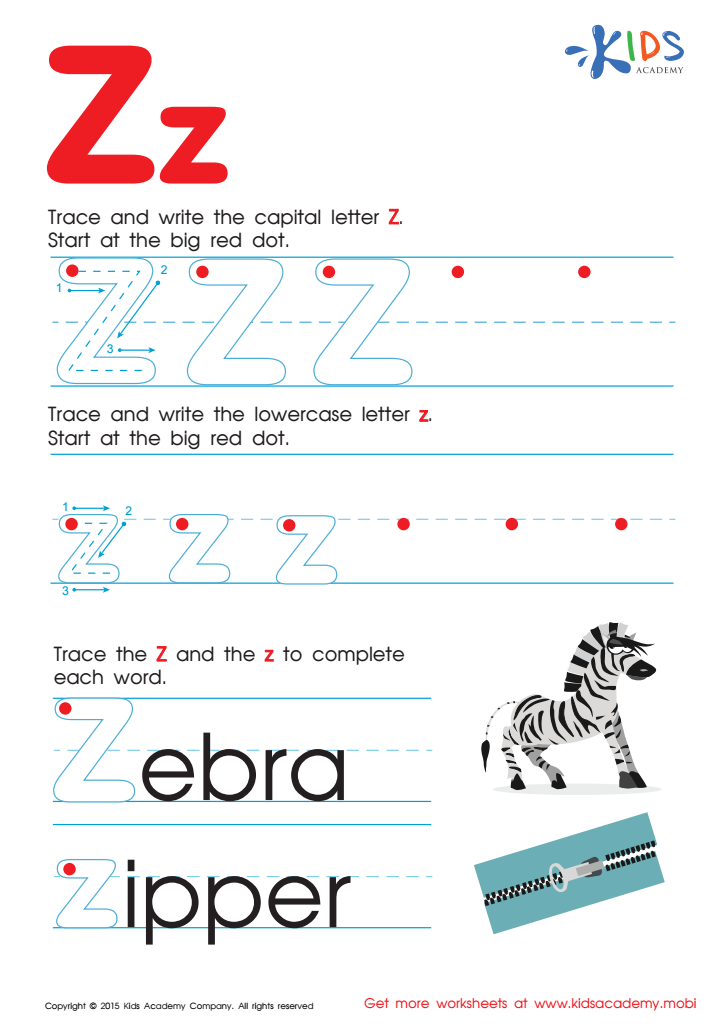
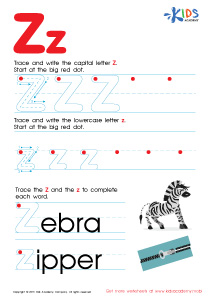
Letter Z Tracing Page
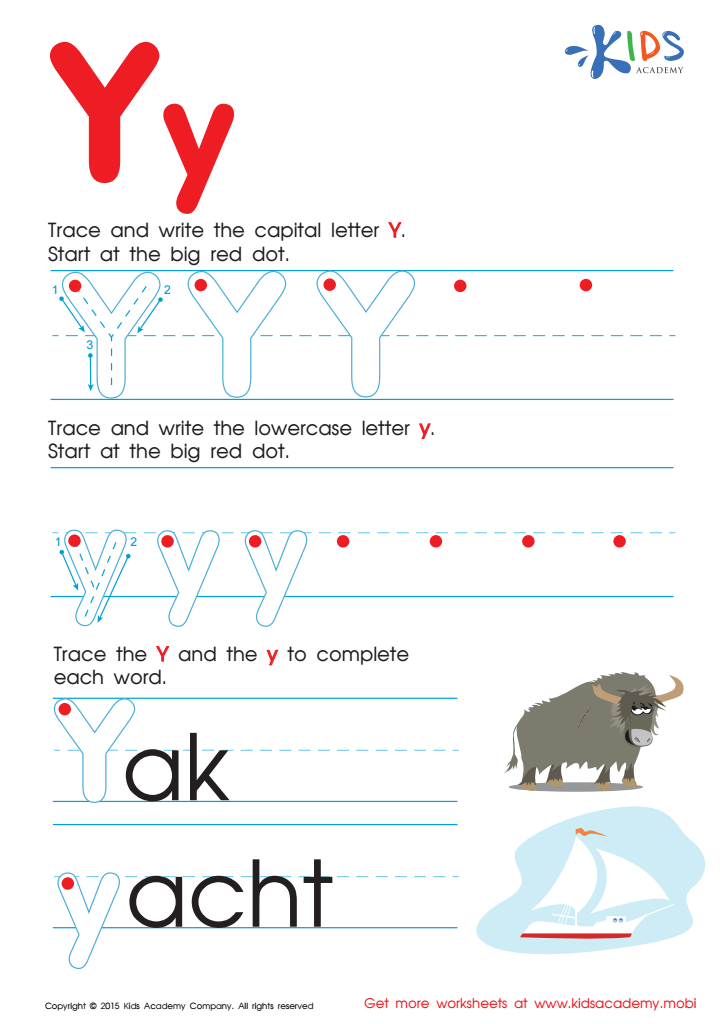
Letter Y Tracing Page








Parents and teachers should prioritize alphabet recognition and tracing letters activities for children aged 3-5 because these early literacy skills are foundational for future academic success. At this critical developmental stage, children's brains are highly receptive to learning new concepts, making it an ideal time to introduce the alphabet in engaging and memorable ways.
Alphabet recognition is essential as it ensures children can identify and name letters, both uppercase and lowercase, which is the basis for reading and writing. Understanding the alphabet strengthens cognitive connections between visual symbols and their corresponding sounds, a skill known as phonemic awareness, which is crucial for reading fluency.
Additionally, tracing letters plays a vital role in developing fine motor skills. It encourages proper pencil grip and hand-eye coordination, which are necessary for more advanced writing tasks. These exercises also enhance muscle memory, helping children remember the shapes of letters through consistent practice.
By integrating alphabet recognition and tracing into educational routines, parents and teachers can foster a love for learning, improve literacy rates, and equip children with the skills they need for a successful transition to kindergarten. Early engagement in such activities can lead to increased confidence, better academic performance, and a positive attitude towards school.