Comparing lengths Extra Challenge Worksheets for Ages 3-5
3 filtered results
-
From - To
Enhance your child's understanding of measurements with our "Comparing Lengths Extra Challenge Worksheets for Ages 3-5". Tailored for early learners, these dynamic worksheets are designed to develop critical thinking and refine comparison skills. Engaging activities encourage young minds to differentiate between various lengths through fun, illustrative exercises. Ideal for nurturing foundational math skills, each worksheet provides an interactive approach to learning, ensuring children remain excited and motivated. Boost your preschooler's cognitive growth and confidence in comparing lengths with these expertly crafted, educational worksheets. Visit our page for printable, invigorating resources that make measuring fun and accessible.
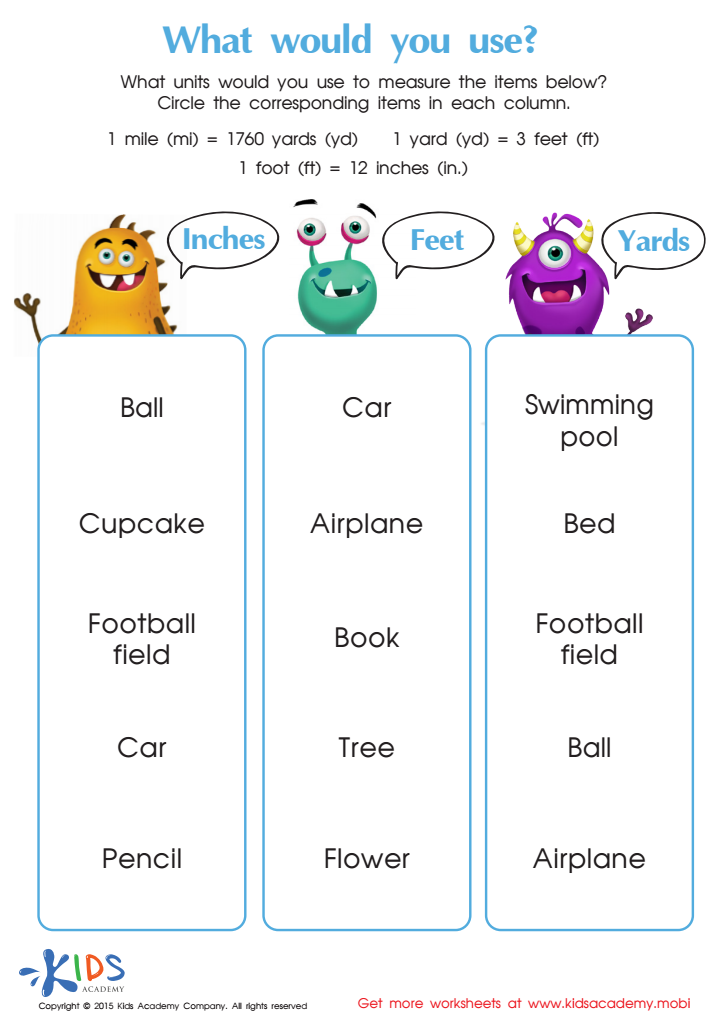
Learning about measuring objects in inches, feet and yards Worksheet
 Assign to My Students
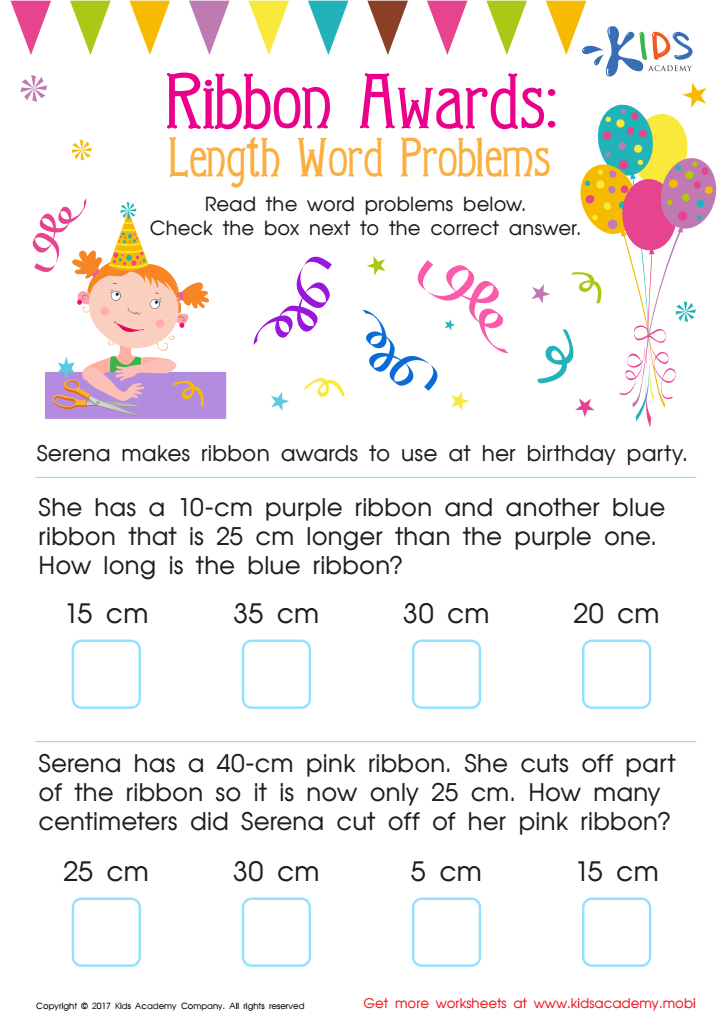
Length Word Problems Worksheet
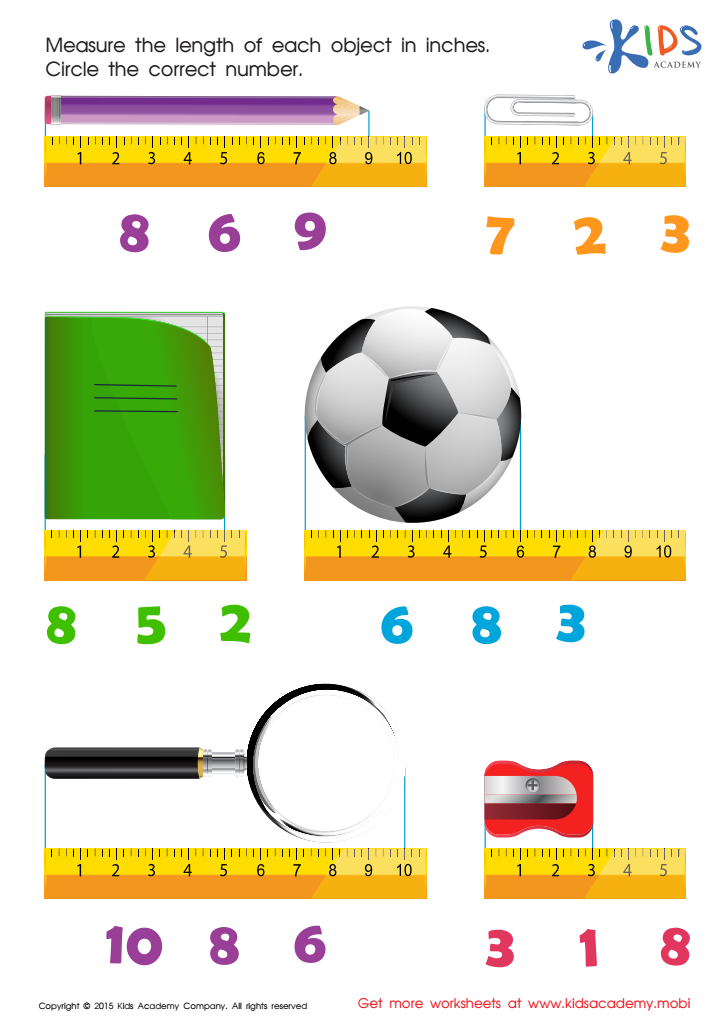
Learning measuring objects in inches Worksheet






Parents and teachers play critical roles in early childhood education, and engaging children in activities like the Comparing Lengths Extra Challenge can have far-reaching benefits. For children aged 3-5, understanding basic concepts such as comparing lengths lays the foundation for more complex mathematical thinking. This activity not only bolsters their cognitive development but also enhances their fine motor skills and attention to detail as they measure, compare, and discuss various objects.
By participating in length comparison challenges, children learn important vocabulary such as "longer," "shorter," "taller," and "smaller." This language development is crucial as it helps them articulate and conceptualize differences and relationships in the physical world. Moreover, these activities encourage problem-solving and critical thinking, as children must determine how to align objects correctly to compare their lengths effectively.
For teachers and parents, these exercises provide valuable insights into a child’s developmental progress. Observing how children approach the challenge can highlight strengths and areas needing support. Lastly, such activities can be fun and engaging, helping young children develop a positive attitude toward learning and problem-solving. Thus, incorporating comparing lengths challenges in early education promotes a strong, holistic foundation for lifelong learning and cognitive development.








