
Financial literacy Extra Challenge Worksheets for Ages 3-5
3 filtered results
Difficulty Level
Grade
Age
-
From - To
Subject
Activity
Standards
Introducing our Financial Literacy Extra Challenge Worksheets for Ages 3-5, designed to spark early financial awareness in young learners! These engaging worksheets use fun activities to teach foundational concepts like counting, saving, and budgeting in a playful manner. Tailored to the developmental stage of children aged 3-5, each worksheet encourages critical thinking and problem-solving skills while fostering an understanding of money management. These extra challenges go beyond traditional learning, providing hands-on practice that nurtures lifelong financial skills. Perfect for parents and educators looking to enrich their preschool curriculum, these worksheets will lay the groundwork for confident financial decision-making in the future!
Favorites
With answer key
Interactive
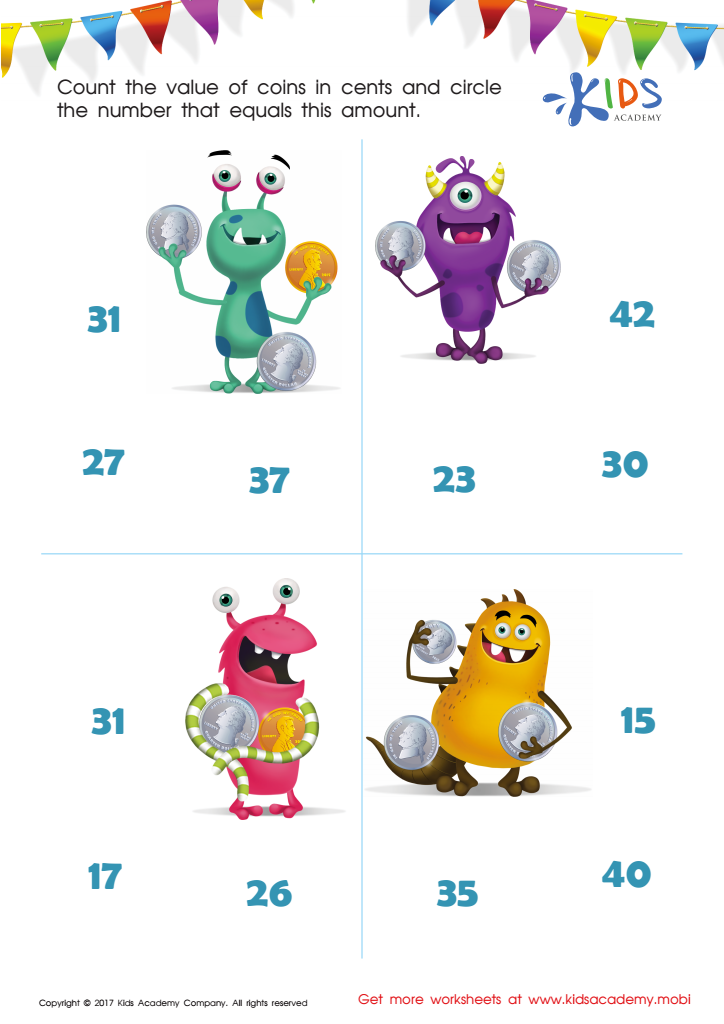
How Many Coins Money Worksheet
Have fun while counting coins: look at the monsters and count the coins in their hands. Challenge your little learners to count and write down the number of coins each one has. Enjoy the time together!
 Assign to My Students
How Many Coins Money Worksheet
Worksheet
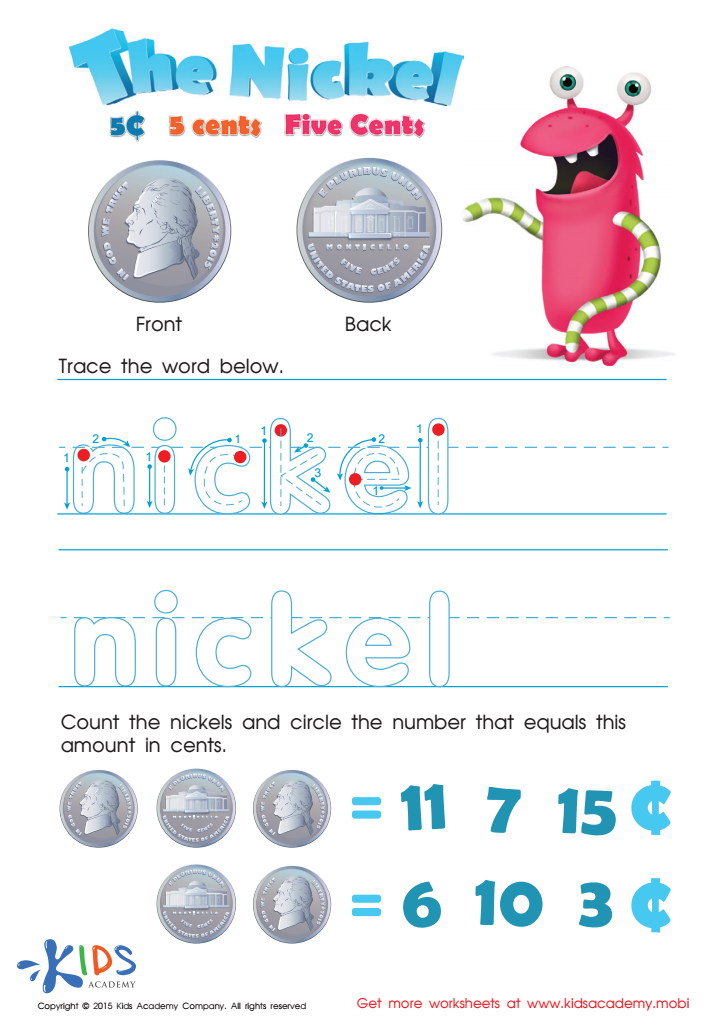
Five Cents or the Nickel Money Worksheet
Counting money games help kids make learning money fun and easy. Next up: the 5 cent coin, or nickel. Look at both sides and remember them. Then, trace the word "nickel" to help you remember. Finally, count the nickels and work out amounts in cents. Let's do this! Kids Academy helps make money learning easy and fun!
Five Cents or the Nickel Money Worksheet
Worksheet
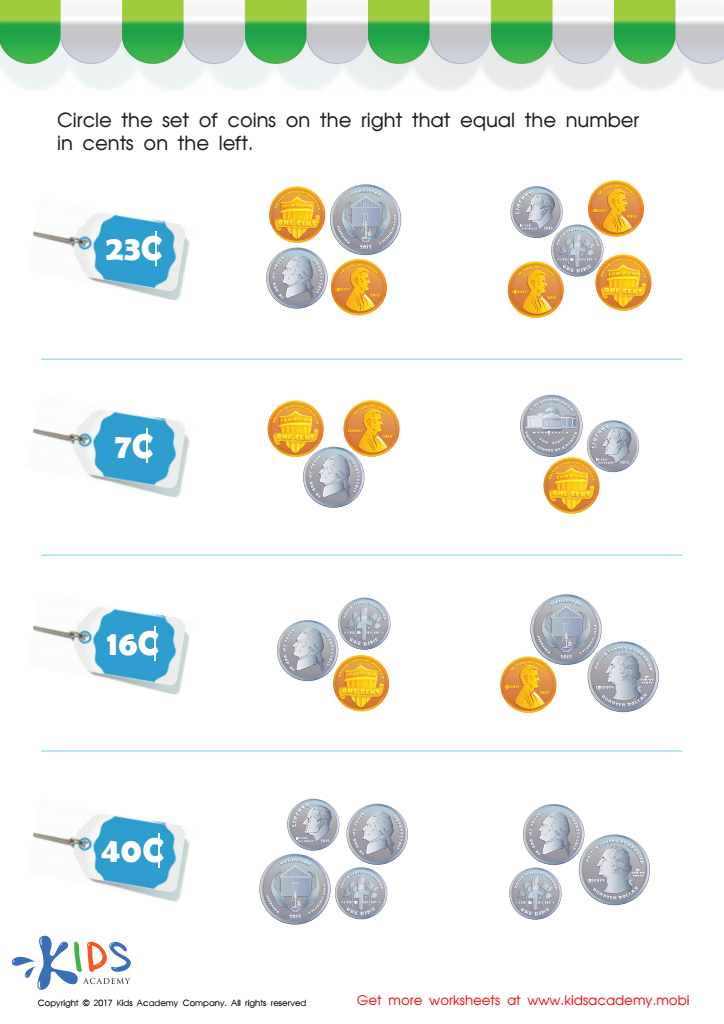
Picking the Coins You Need Money Worksheet
Let's learn to count money with Parents and Kids Academy! Investigate a real shop together: buy a globe, pencils, books, and a school bag using coins. Then, circle the coins you'll need. Visit our website for more free and fun money games for kids!
Picking the Coins You Need Money Worksheet
Worksheet
Join Kids Academy for Free
Who is primarily going to use this learning content?








Financial literacy is essential for children even at the early age of 3-5, as it lays the foundation for responsible money management in later years. Parents and teachers play a pivotal role in instilling these skills. At this stage, children begin to understand basic concepts like “spending” and “saving.” Introducing them to simple financial concepts in a fun and engaging way helps them to relate to the topic, cultivating an early awareness and interest in money management.
By integrating financial literacy into daily activities or educational games, parents and teachers can engage children in discussions about value, choices, and the importance of saving. This early exposure helps them develop critical thinking skills as they learn to make decisions about how to allocate resources, setting them up for future personal finance struggles.
Moreover, encouraging discussions around chores, allowances, or simple transactions can inspire a responsible approach to money, fostering a mindset of accountability. Ultimately, prioritizing financial literacy at an early age equips children with vital skills that promote confidence and autonomy as they grow, turning complex financial concepts into lifelong habits. Active involvement by parents and educators ensures children may thrive as informed financial consumers in an increasingly complicated world of money.








