Mathematical thinking Extra Challenge Worksheets for Ages 3-5
3 filtered results
-
From - To
Discover "Mathematical Thinking Extra Challenge Worksheets" for children aged 3-5, designed to ignite their passion for numbers and problem-solving! Our age-appropriate worksheets enhance cognitive skills through engaging activities including counting, shapes, patterns, and simple addition. Each worksheet is thoughtfully crafted to instill confidence in young learners while providing extra challenges to stimulate their critical thinking abilities. With vibrant illustrations and interactive elements, these worksheets make learning mathematics fun and exciting! Perfect for both classroom and home use, our resources support early math development and lay a strong foundation for future learning. Empower your child's mathematical journey today!
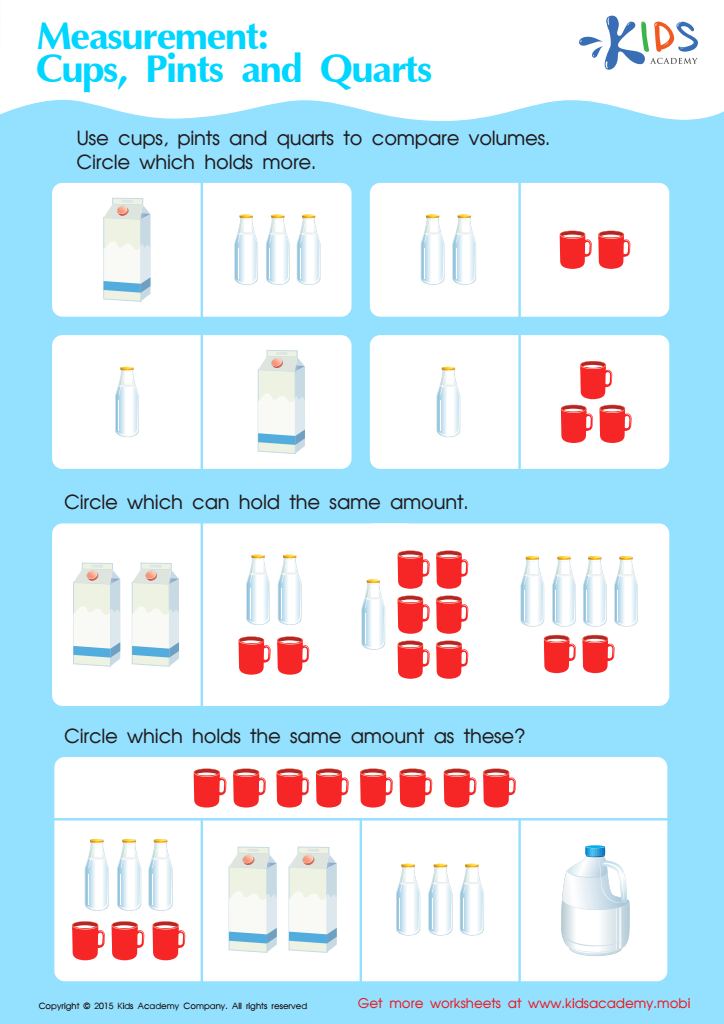
Measurement: Compare Volumes Worksheet
 Assign to My Students
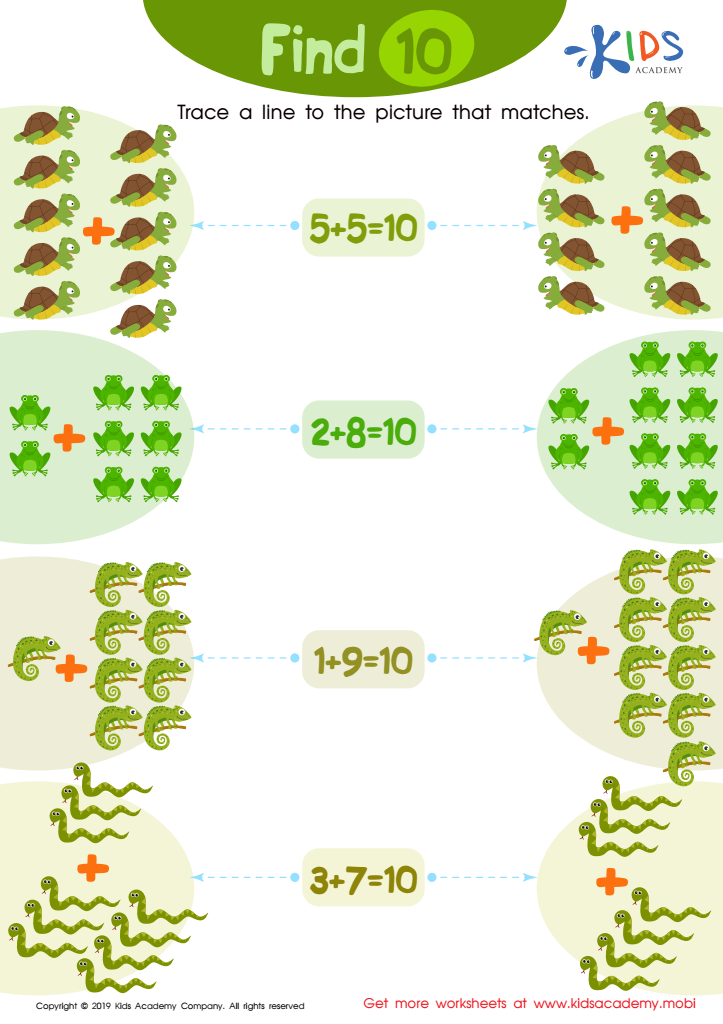
Find 10 Worksheet
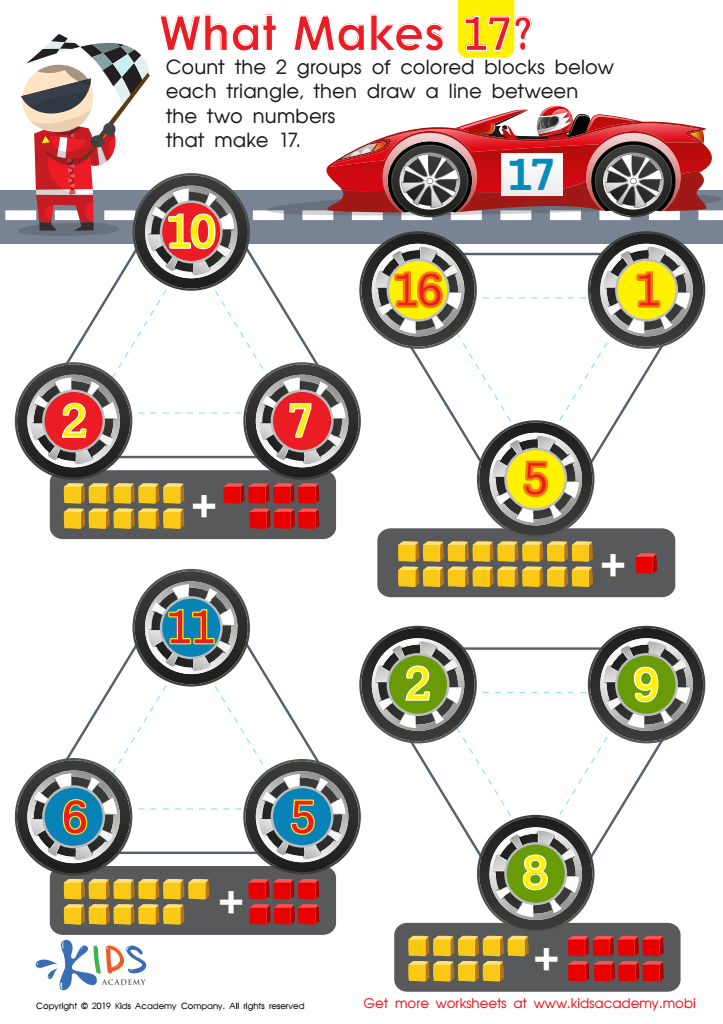
What Makes 17 Worksheet



.jpg)




Mathematical thinking in early childhood, especially through extra challenges for ages 3-5, is crucial for several reasons. At this developmental stage, children are naturally curious and eager to explore concepts around numbers, shapes, and patterns. Engaging them in math activities fosters critical thinking and problem-solving skills that lay the groundwork for future academic success.
Early mathematical experiences not only build basic numeracy skills, but they also enhance cognitive abilities, encouraging children to think logically and abstractly. It helps them understand the world around them, as math is everywhere in everyday life—from counting objects to recognizing patterns in nature.
Extra challenges can stimulate a child’s interest in mathematics and motivate them to explore further. These activities encourage perseverance and resilience as they tackle increasingly complex problems, nurturing a positive attitude toward challenges. Additionally, collaborative activities involving parents or teachers reinforce relationships and make learning a joyful experience.
Ultimately, fostering mathematical thinking at an early age sets a solid foundation for lifelong learning and equips children with essential skills for their academic journeys and everyday life. Thus, it is essential for parents and teachers to prioritize and promote mathematical thinking opportunities, ensuring each child thrives in a rapidly evolving world.








