Time reading skills Extra Challenge Worksheets for Ages 3-5
3 filtered results
-
From - To
Enhance your child's time-reading abilities with our Extra Challenge Worksheets designed for ages 3-5 by Kids Academy. Specifically curated to make learning fun and engaging, these worksheets focus on helping young learners recognize and tell time, including hours, and half-hours, and understanding the basics of clock-reading. Through playful activities and colorful visuals, children will develop critical thinking and problem-solving skills while mastering this essential math skill. Perfect for preschoolers and kindergarteners, these worksheets provide an excellent foundation for future academic success. Reinforce your little one's time-reading skills with these exciting and challenging exercises!
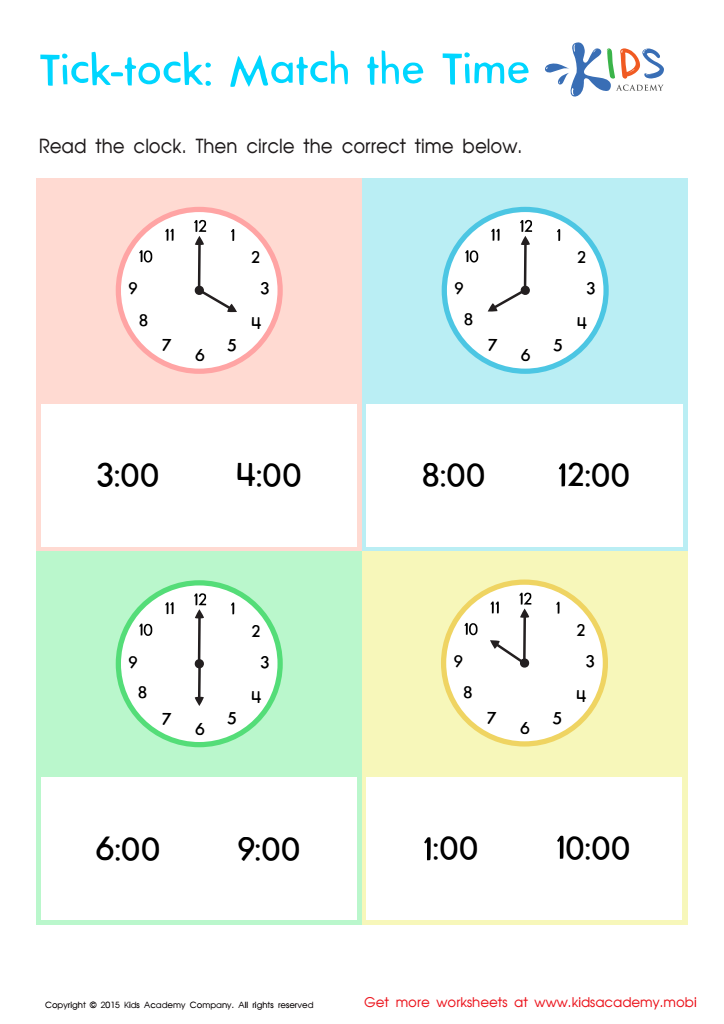
Telling The Time Worksheet: Part 4
 Assign to My Students
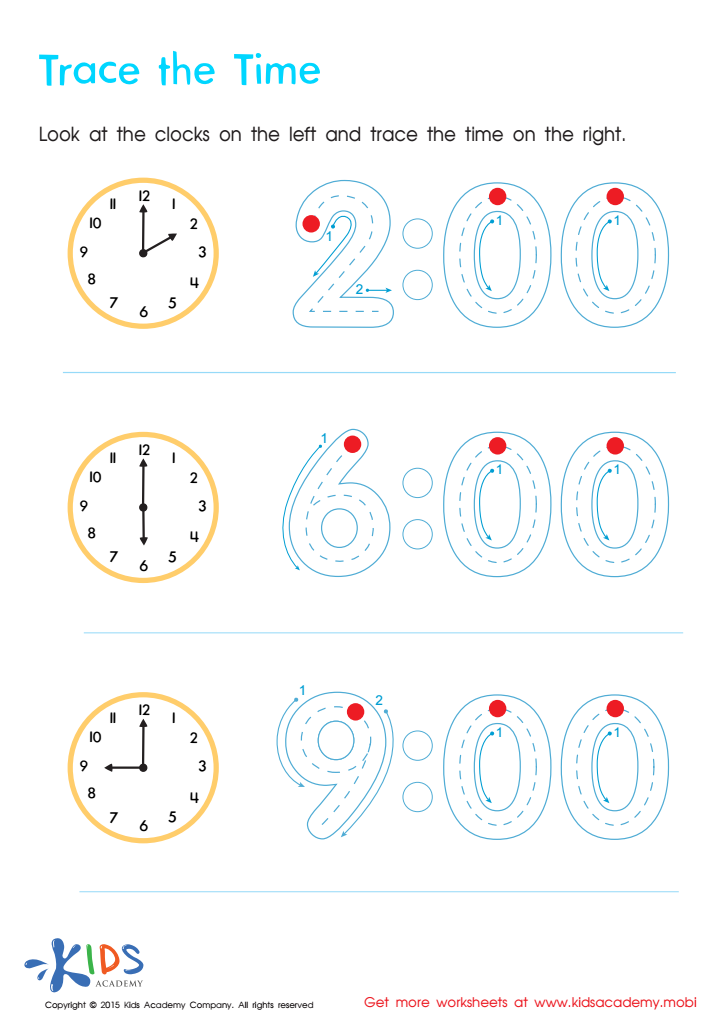
Telling The Time Worksheet: Part 2
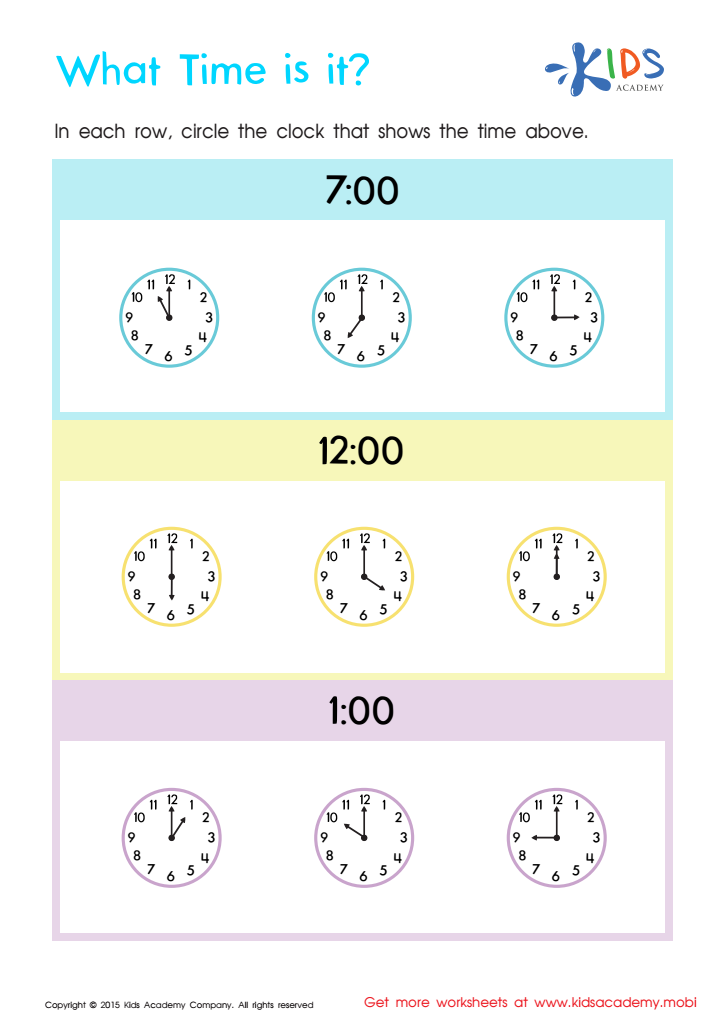
Telling The Time Worksheet: Part 3








Time reading skills are important, even at an early age, because they play a crucial role in a child’s cognitive and motor development. For ages 3-5, engaging in extra challenges related to time reading can be extremely beneficial. Firstly, these activities promote early numeracy skills. Learning to recognize numbers, understand sequences, and comprehend the concept of time units like minutes and hours helps build a strong mathematical foundation.
Additionally, grasping the idea of time fosters developmental skills like patience, punctuality, and planning. At this young age, children are naturally curious and eager to explore the world. Encouraging them to read clocks and understand routines helps instill a sense of structure and predictability in their daily lives. This can translate to better behavior and cooperation, both at home and in classroom settings.
Moreover, time-telling activities can be fun and engaging through games, songs, and storytelling, which makes the learning process enjoyable and impactful. Developing these skills early also improves fine motor skills as children interact with clocks and time-related tools.
Thus, parents and teachers should see time reading as not merely about knowing hours and minutes but as an essential developmental milestone that enhances a child's confidence, independence, and readiness for more advanced learning tasks.








