Animal recognition Extra Challenge Math Worksheets for Ages 3-5
5 filtered results
-
From - To
Discover our "Animal Recognition Extra Challenge Math Worksheets" designed for ages 3-5! These engaging printable worksheets blend early math skills with fun animal-themed activities to keep your little learners motivated and curious. Each worksheet incorporates concepts such as counting, sorting, and basic addition while reinforcing animal recognition. Perfect for preschool and kindergarten settings, our worksheets stimulate critical thinking and foster a love for learning in young minds. Parents and educators can easily download, print, and use these resources at home or in the classroom. Give children the chance to connect with nature while honing their math skills today!
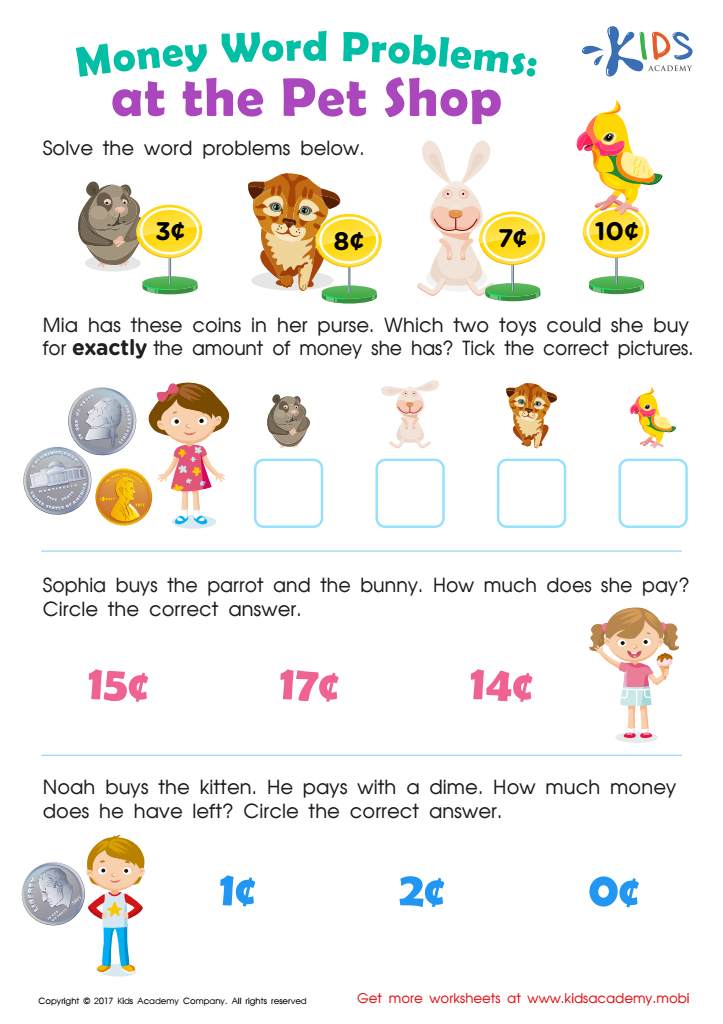
Pet Shop Worksheet
 Assign to My Students
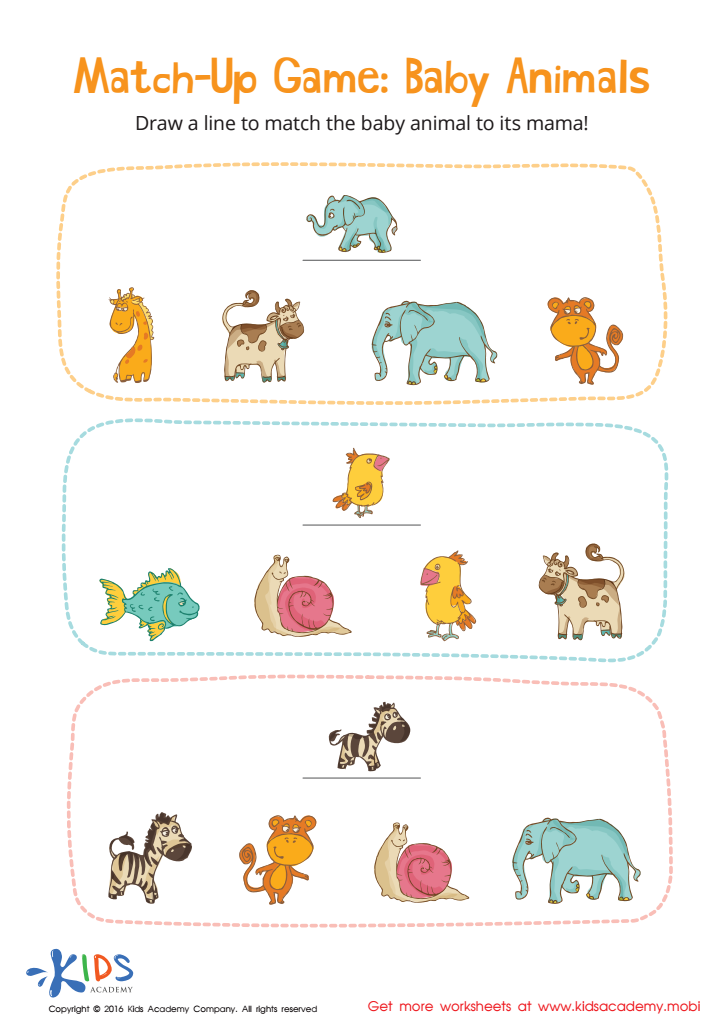
Baby Animals Match-Up Worksheet
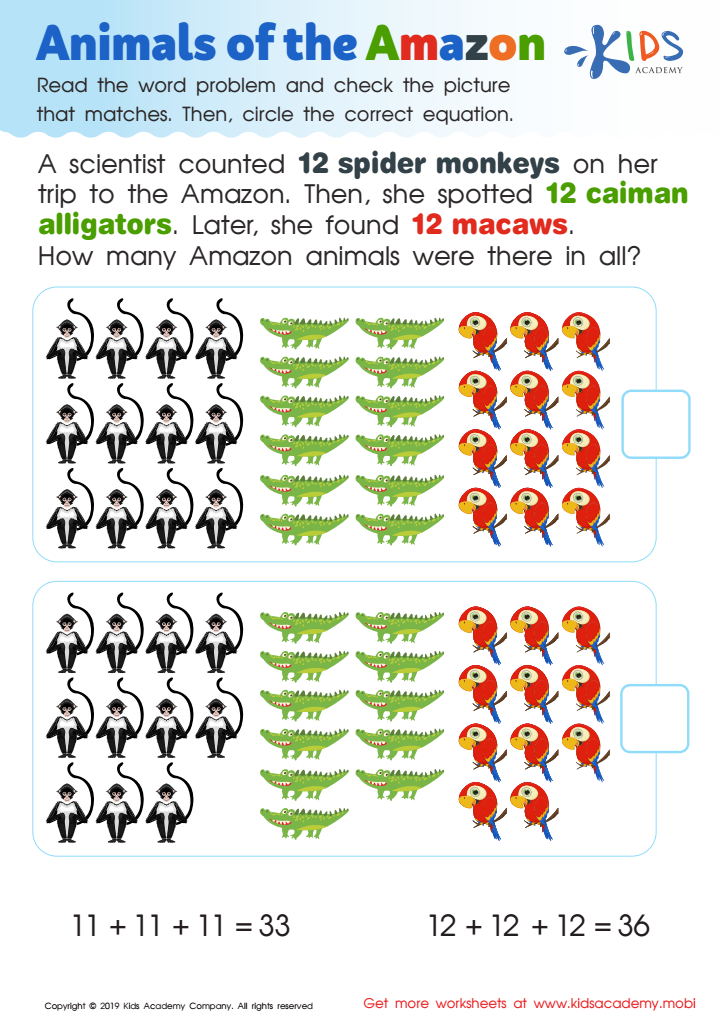
Animals of Amazon Worksheet
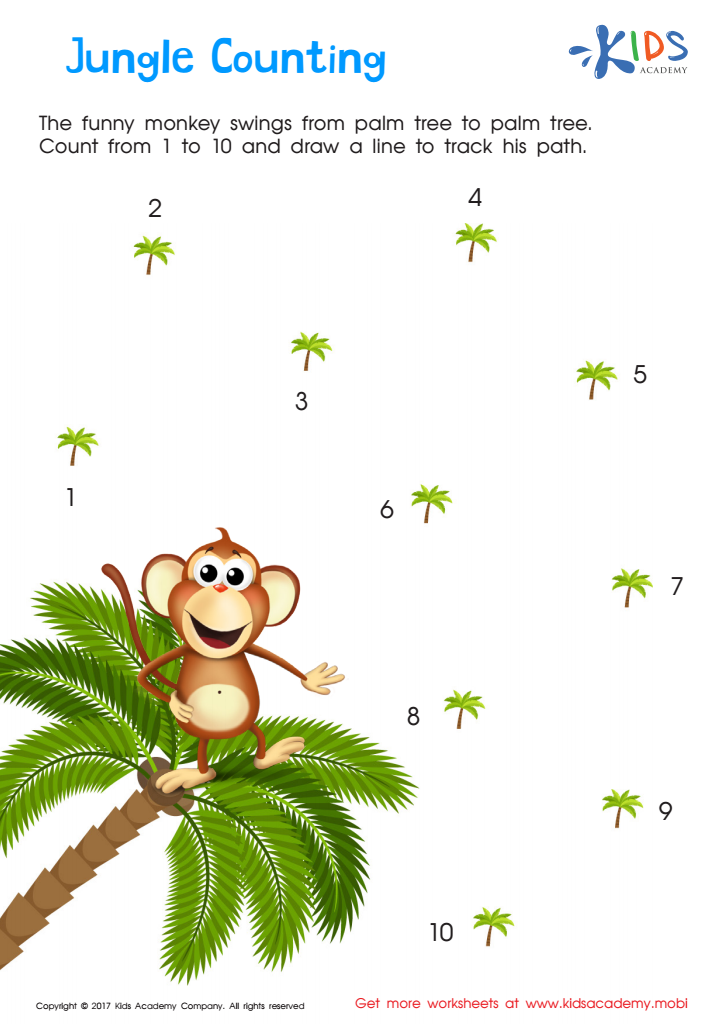
Jungle Counting Connect Dots Worksheet
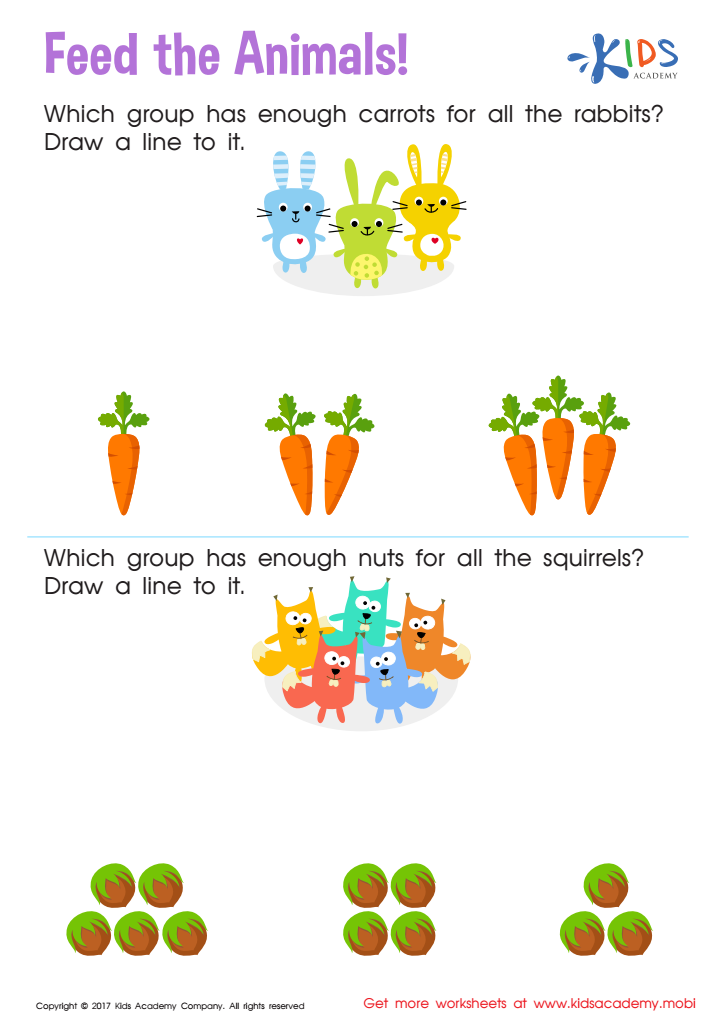
Count and Match: Feed the Animals Worksheet








Animal recognition Extra Challenge Math for Ages 3-5 is a valuable educational tool that merges foundational math skills with engaging content that captivates young learners. Parents and teachers should care about this approach because it fosters early cognitive development through interactive learning.
Recognizing animals not only enhances vocabulary and enhances observational skills but also connects children with the natural world. By integrating these skills into math challenges, children learn to categorize, compare, and quantify animals, helping to build a critical understanding of numbers and basic math concepts. This multi-faceted learning approach promotes critical thinking and problem-solving abilities, essential skills for future academic success.
Moreover, such activities encourage engagement and collaboration among children, fostering social skills as they work together or discuss their findings with adults. The playful nature of animal recognition keeps learning fun and reduces resistance, making math less intimidating. As children learn in a supportive environment, they develop a positive attitude towards math at a formative age.
In conclusion, Animal Recognition Extra Challenge Math for Ages 3-5 is not just about numbers; it is a holistic approach to early education that nurtures curiosity, creativity, and cognitive skills, preparing children for lifelong learning.