Math fluency Extra Challenge Math Worksheets for Ages 3-5
3 filtered results
Difficulty Level
Grade
Age
-
From - To
Subject
Activity
Standards
Boost your child's early mathematical skills with our "Math Fluency Extra Challenge Math Worksheets" designed specifically for ages 3-5. These engaging worksheets provide fun and interactive activities that foster essential math concepts, such as counting, addition, and number recognition. Tailored to stimulate learning through play, our challenges are perfect for both classroom and home environments. Each worksheet encourages children to think critically and solve problems independently, paving the way for a strong foundational understanding of math. Get ready to make math enjoyable and enriching for your little ones while boosting their confidence and fluency. Explore our collection today!
Favorites
With answer key
Interactive
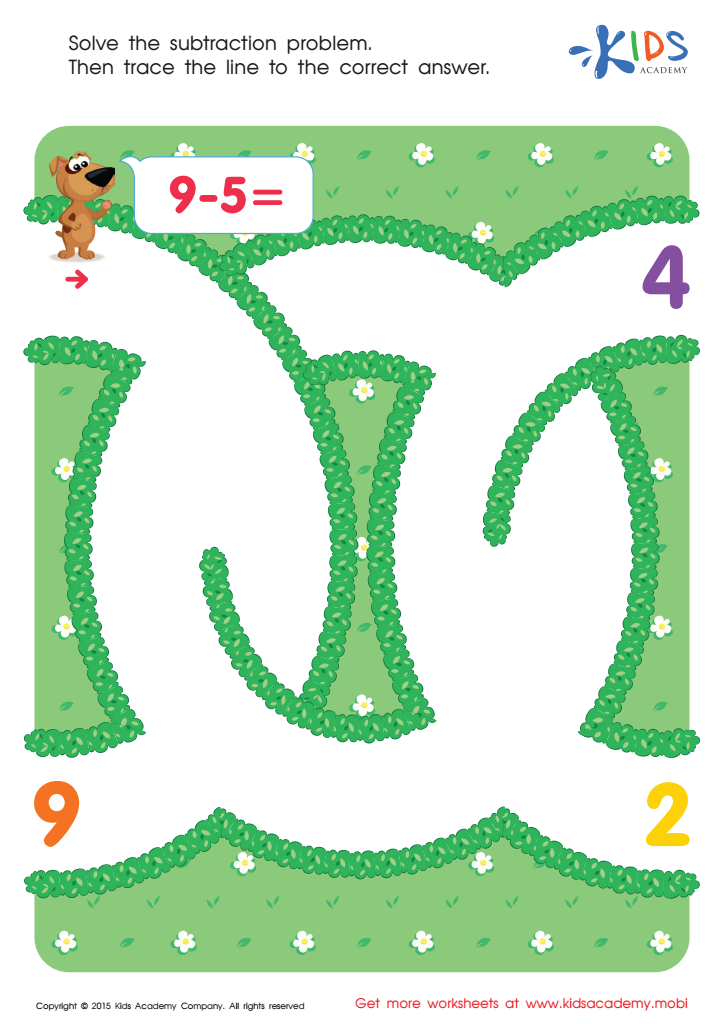
Subtraction Nine And Five Worksheet
Trace the path to the right answer and help the dog find its way out of the maze. Have fun while learning subtraction! (80 words)
 Assign to My Students
Subtraction Nine And Five Worksheet
Worksheet
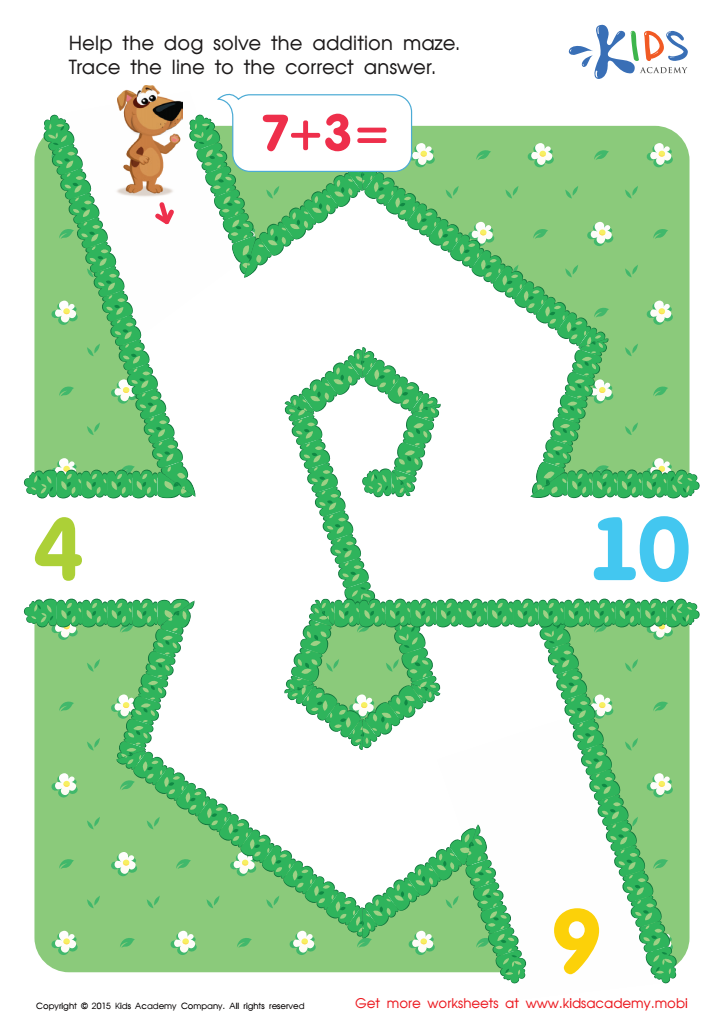
Seven Plus Three Worksheet
Practice addition and subtraction with your kids, help them out and make learning math an enjoyable activity.
Seven Plus Three Worksheet
Worksheet
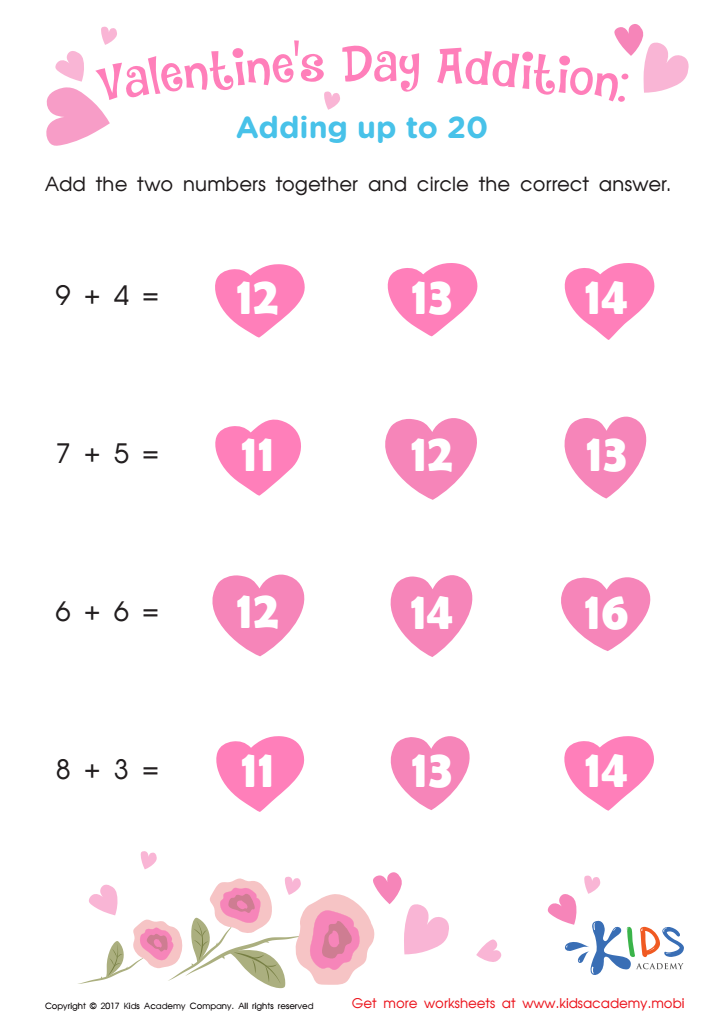
Valentine's Day Addition Worksheet
This Valentine's Day themed worksheet is a fun way for your child to practice adding single digits up to 20! Hearts feature to help your child increase their math skills and have fun at the same time.
Valentine's Day Addition Worksheet
Worksheet
Join Kids Academy for Free
Who is primarily going to use this learning content?







Parents and teachers should prioritize Math Fluency Extra Challenge Math for ages 3-5 because early math skills lay a critical foundation for future academic success. This program focuses on developing essential mathematical concepts, such as number recognition, counting, basic operations, and problem-solving skills, tailored to young learners' developmental stages.
Engaging children in high-quality, challenging math activities enhances their cognitive abilities and fosters a positive attitude toward mathematics. By incorporating repetitive practice and varied learning strategies, children not only improve their fluency but also build confidence in their problem-solving skills. This early exposure helps alleviate math anxiety, making learners more equipped to tackle mathematics as they progress through their educational journey.
Furthermore, strong math skills are linked to improved performance in other subjects like science and engineering. Parents and teachers can utilize this math program to create enjoyable learning experiences, facilitating a love for math that extends beyond the classroom. By investing time in developing math fluency during these formative years, we nurture not just proficient mathematicians but also critical thinkers and problem solvers, which are essential skills in an increasingly complex world. Ultimately, supporting math fluency in young children is an investment in their future success and well-being.