Handwriting practice Extra Challenge Letter Recognition Worksheets for Ages 3-6
5 filtered results
Difficulty Level
Grade
Age
-
From - To
Subject
Activity
Standards
Enhance your child's early literacy skills with our "Handwriting Practice Extra Challenge Letter Recognition Worksheets for Ages 3-6." These expertly designed printables from Kids Academy help preschoolers and kindergarteners boost their letter recognition abilities while honing their handwriting. Perfect for young learners eager to tackle more challenging tasks, our worksheets teach the alphabet through engaging activities that combine fun with education. Each worksheet is crafted to keep your child motivated, laying a solid foundation for reading and writing proficiency. Prepare your little one for success with these essential resources tailored for early learners. Download today and watch them thrive!
Favorites
With answer key
Interactive
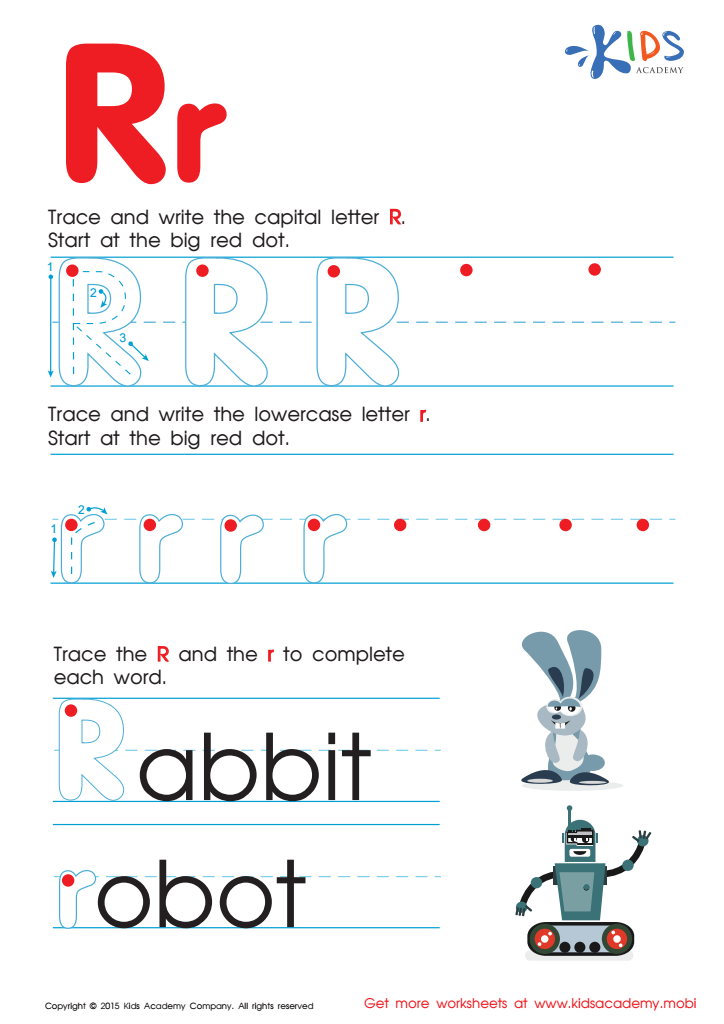
Letter R Tracing Page
Trace and write the letter "R" with this worksheet for kindergarten. Start with the uppercase, then move on to the lowercase. Write the letters several times for practice. Then help complete the words for the rabbit and robot, spelling carefully. More ABC worksheets can be found at Kids Academy.
 Assign to My Students
Letter R Tracing Page
Worksheet
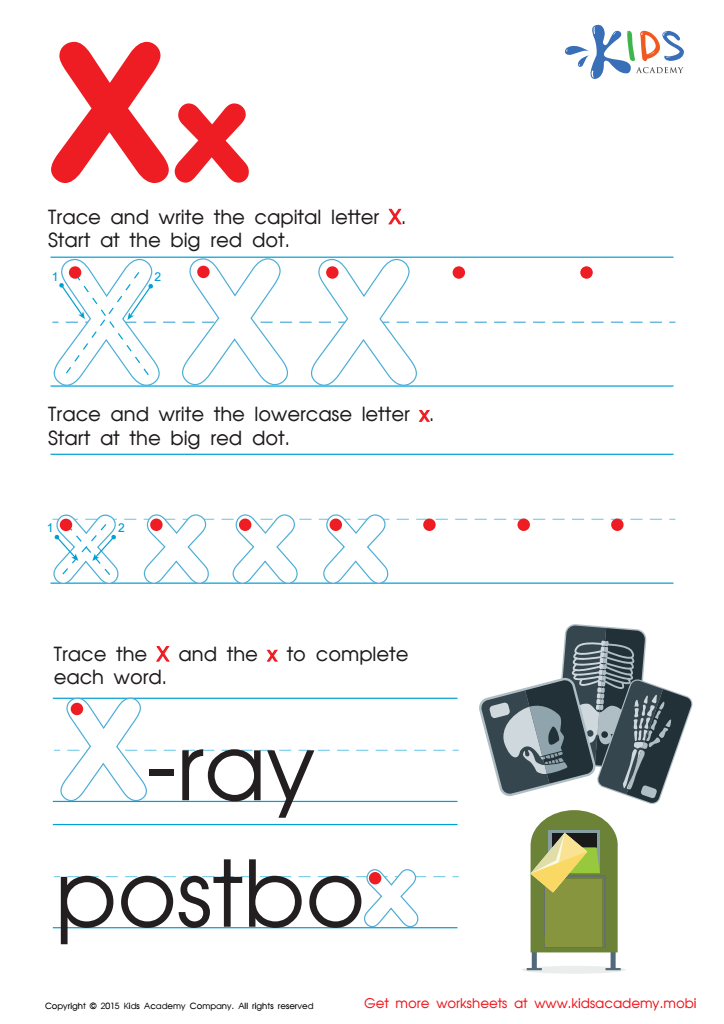
Letter X Tracing Page
Trace the uppercase letter "X" to learn, then write it yourself and practice. Then do the same with the lowercase "x" before completing the words "X-ray" and "postbox". Enjoy our alphabet printables!
Letter X Tracing Page
Worksheet
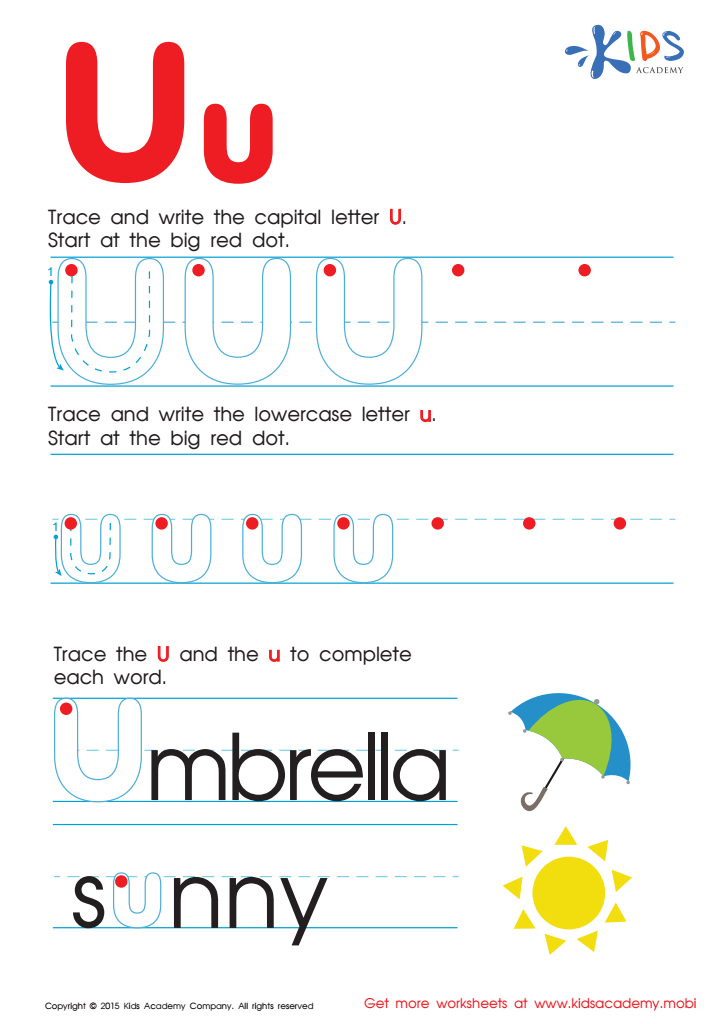
Letter U Tracing Page
Ready to trace and write the letter "U"? Use our worksheet and practice tracing both uppercase and lowercase letters. Complete the words "umbrella" and "sunny" with a capital "U". Check our full collection of alphabet printables for more activities.
Letter U Tracing Page
Worksheet
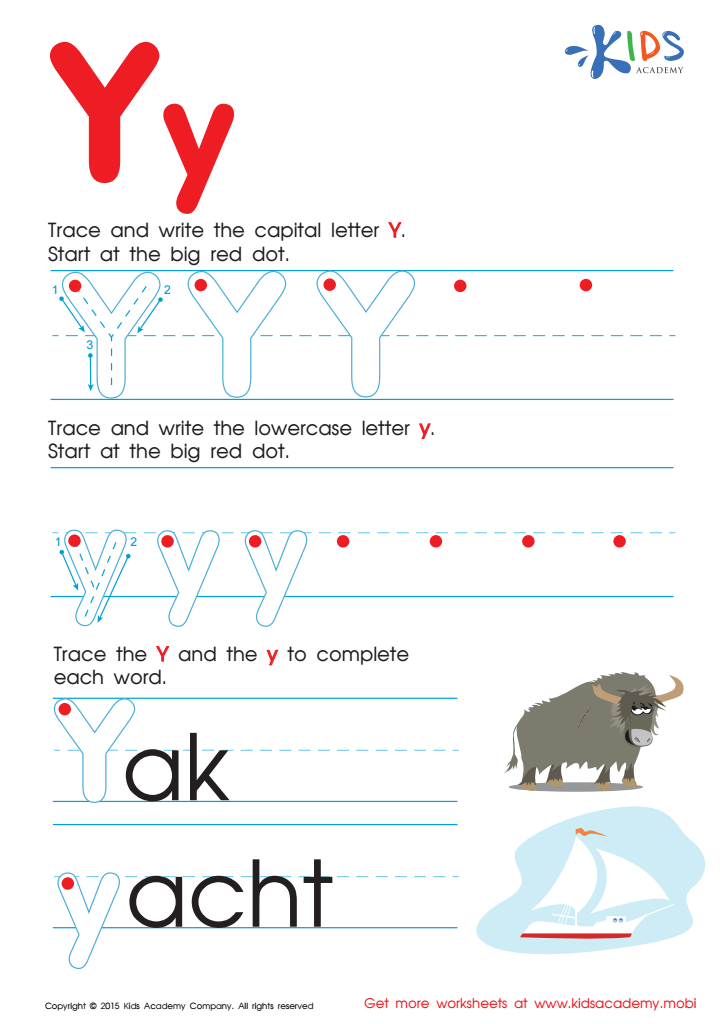
Letter Y Tracing Page
Trace the capital letter "Y" on the red dot, then trace and write the lowercase letter. Complete the words to help the Yak walk and the yacht swim. More worksheets at Kids Academy.
Letter Y Tracing Page
Worksheet
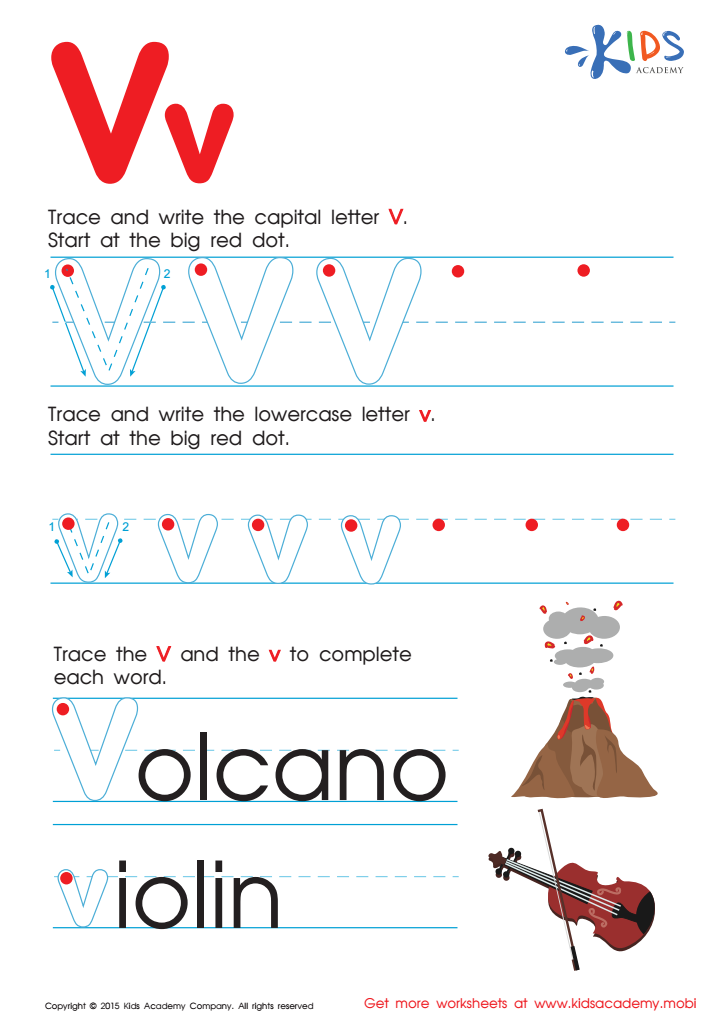
Letter V Tracing Page
Trace the uppercase and lowercase letter "V" with our kindergarten tracing worksheet. Begin at the red dot and follow the lines. Write it several times. Complete the words "Volcano" and "violin". Get more alphabet activities at Kids Academy.
Letter V Tracing Page
Worksheet
Join Kids Academy for Free
Who is primarily going to use this learning content?








Parents and teachers should place significant importance on handwriting practice and extra challenges for letter recognition in children ages 3-6 because these early years are crucial for foundational development. Handwriting practice enhances fine motor skills and hand-eye coordination, which are necessary for all kinds of learning beyond writing itself. This practice builds the physical muscles and skills needed for later tasks, such as typing or even playing musical instruments.
Moreover, letter recognition is a fundamental cornerstone of literacy. When children can easily identify letters, they begin to understand how letters form words and sentences, leading to smoother reading experiences as they age. Early challenges and puzzles related to letter recognition also stimulate cognitive development, encouraging problem-solving skills and logical thinking processes.
Practicing these skills regularly from a young age engrains habits of diligence and perseverance. Children also gain confidence as they overcome these early challenges, setting a positive tone towards learning. Additionally, handwriting expands expressive ability and nurtures creativity, giving children a medium to communicate their thoughts and feelings vividly.
In conclusion, emphasizing handwriting practice and letter recognition for young children is essential to nurturing well-rounded, confident, and competent learners, laying the groundwork for lifelong academic and personal success.