Vowel Recognition Extra Challenge Short Vowels Worksheets for Ages 3-6
4 filtered results
Difficulty Level
Grade
Age
-
From - To
Subject
Activity
Standards
Introducing our Vowel Recognition Extra Challenge Short Vowels Worksheets, designed specifically for children ages 3-6! These engaging and interactive worksheets help young learners master short vowel sounds while developing their alphabet recognition skills. With fun activities that incorporate coloring, matching, and identifying words with short vowels, your child will enhance their phonemic awareness in a playful way. Perfect for preschool and early grade classrooms, our worksheets provide a structured yet enjoyable approach to learning critical language skills. Give your child the support they need to become confident readers—explore our collection today and watch their literacy skills flourish!
Favorites
With answer key
Interactive
Short Vowel Sound U Worksheet
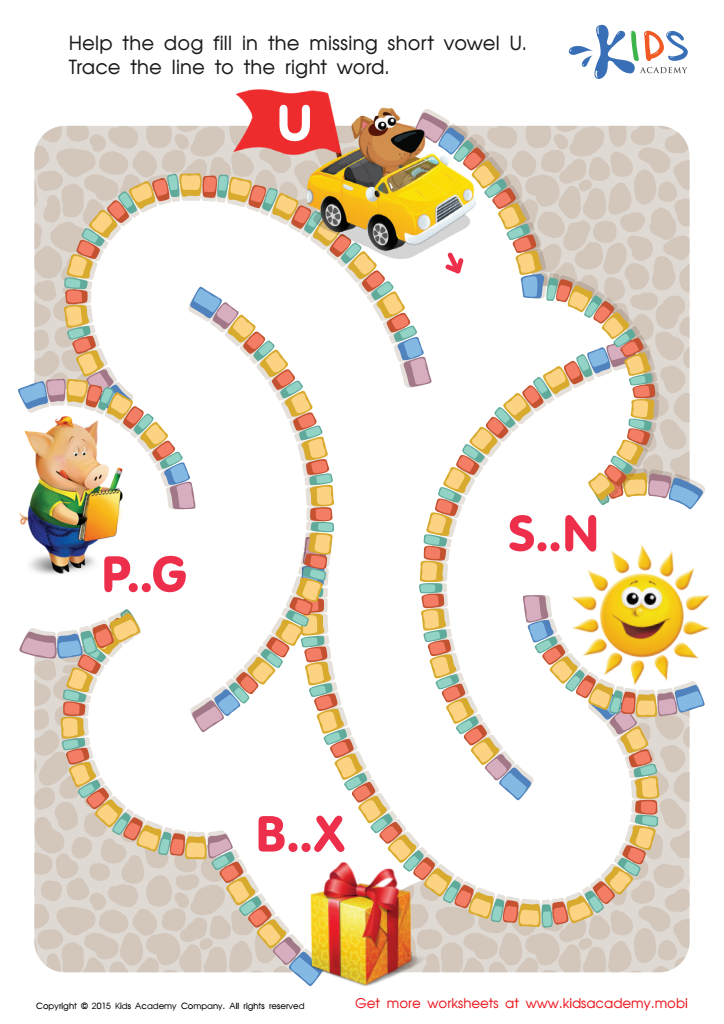
Practice abc phonics to help young learners link sounds to letters. This free printable phonics worksheet helps your kid learn the short vowel sound U. Guide them through the maze to help the dog complete the word "sun". Make sure they say the word out loud to emphasize the short U sound. Check out more phonics worksheets with mazes here.
 Assign to My Students
Short Vowel Sound U Worksheet
Worksheet
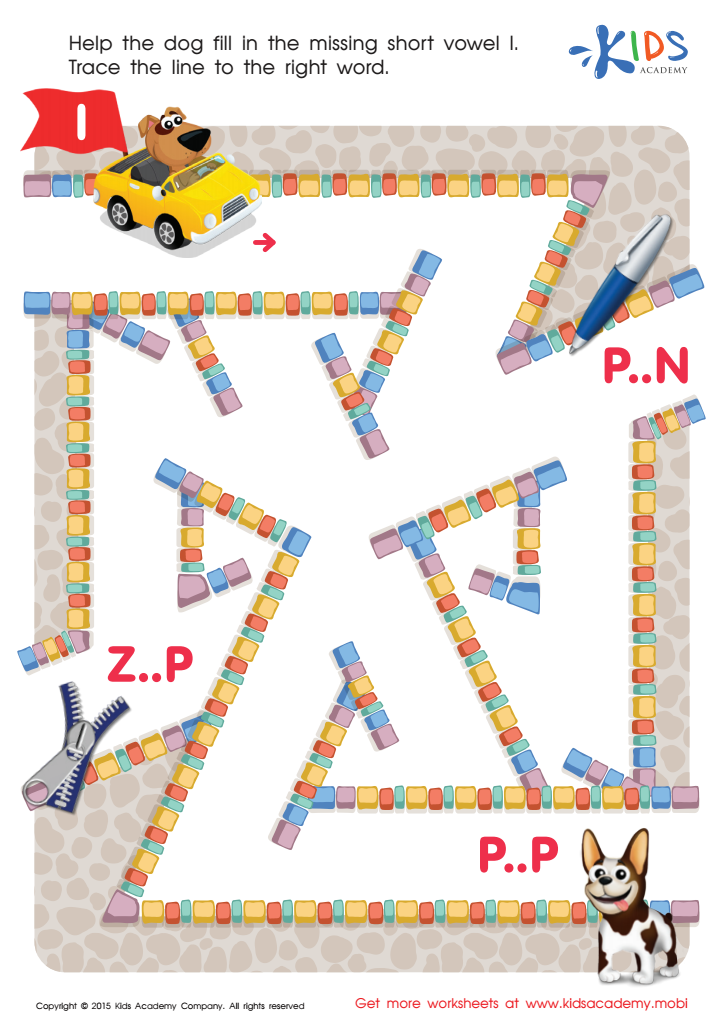
Short Vowel Sound I Worksheet
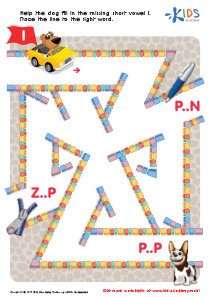
This free printable phonics worksheet will get your kid prepped for reading! It's a maze to help the dog complete the word “zip” with the missing letter I. Have your kid say the word aloud to learn the I sound. It's a great way to practice reading, writing and spelling skills. Check out here for more phonics worksheets!
Short Vowel Sound I Worksheet
Worksheet
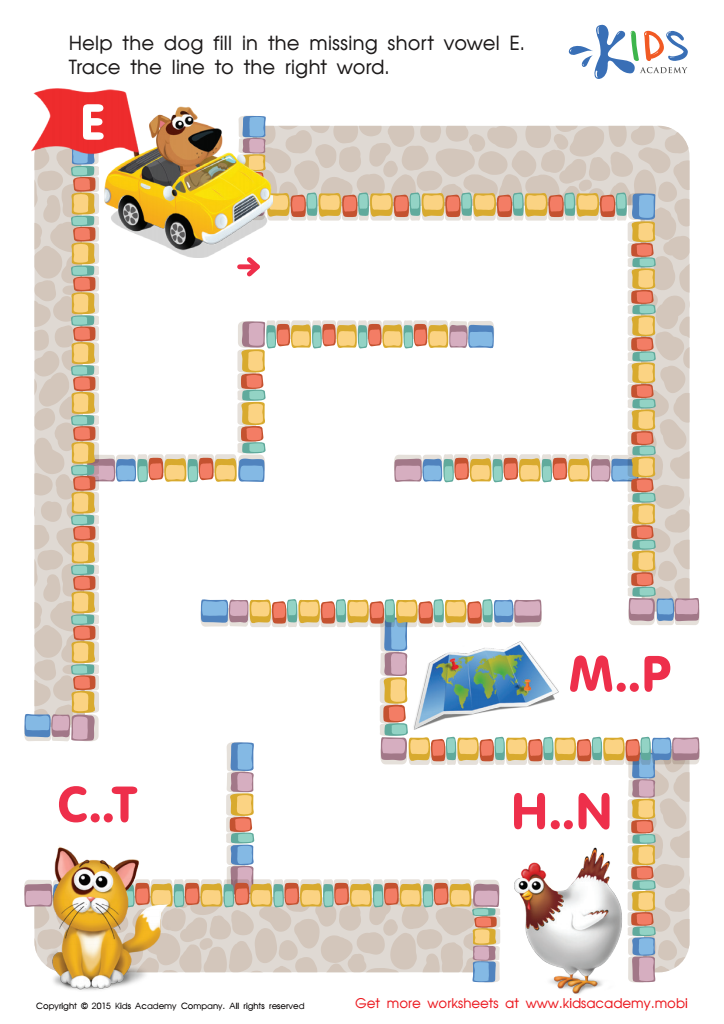
Short Vowel Sound E Worksheet
This free printable phonics worksheet helps kids learn the short vowel sound E. Kids need to help the dog complete the word “hen” by finding their way through a maze. It teaches kids to see the connection between letters and sounds and also strengthens their writing and spelling skills. Fun and educational, this phonics worksheet is great for kids. Want more? Check out here.
Short Vowel Sound E Worksheet
Worksheet
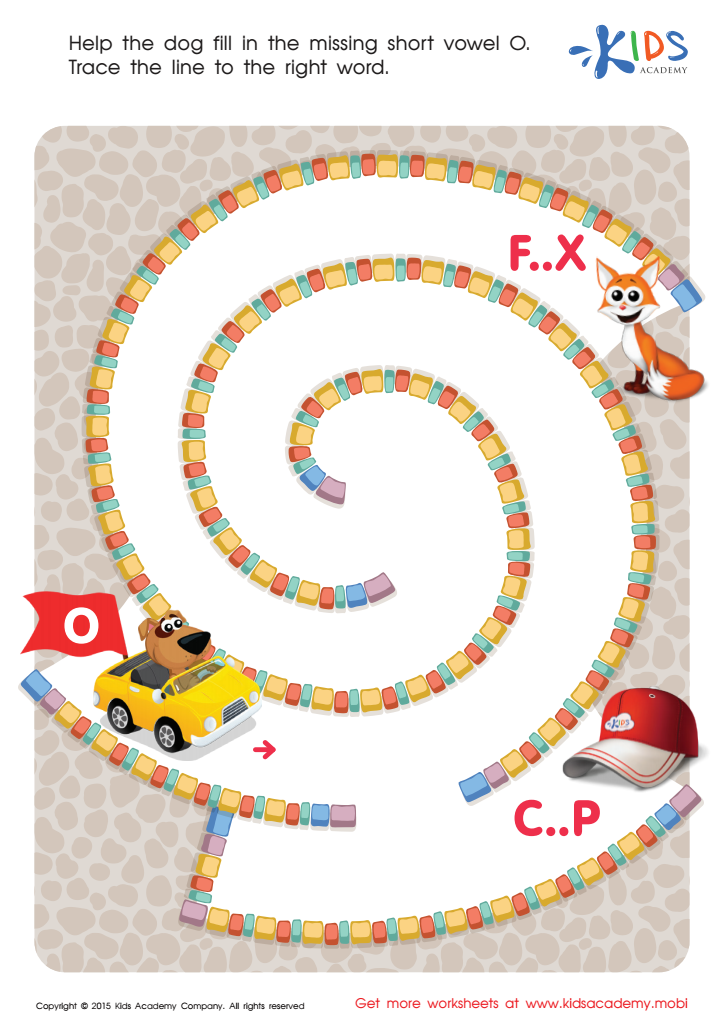
Short Vowel Sound O Worksheet
Help your child learn the short vowel sound O with this fun and free printable phonics worksheet! They'll need to complete the maze to help the dog finish the word "fox" with the missing letter O. Engage their fine motor muscles while they color or trace the maze with crayon or pencil. This educational activity is sure to bring a smile to your little learner's face! For more phonics worksheets, check here.
Short Vowel Sound O Worksheet
Worksheet
Join Kids Academy for Free
Who is primarily going to use this learning content?



Vowel recognition is a critical developmental milestone for children aged 3-6, setting the foundation for reading and overall literacy. During these formative years, children start to grasp the concept of phonics, and recognizing short vowels is essential for decoding words. Parents and teachers should care about their ability to recognize short vowels because these skills are key to promoting a child's confidence and competence in reading.
Short vowels – a, e, i, o, u – are prevalent in many simple words, and mastering them enables children to sound out words and enhances their vocabulary skills. Engaging children in activities that target short vowel recognition encourages phonemic awareness, improving their ability to segment sounds, blend them, and ultimately read statements and sentences fluently.
Additionally, recognizing short vowels fosters cognitive skills and attention, as children learn to differentiate between similar sounds. This dopamine-driven challenge not only captures their interest but also builds a culture of literacy at a young age. Teachers and parents, acting as their child's first educators, play a crucial role in integrating vowel recognition into daily activities, ensuring they lay a solid groundwork for lifelong learning and self-esteem as competent readers.