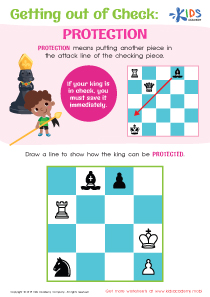
Critical thinking development Extra Challenge Chess Worksheets for Ages 3-6
4 filtered results
-
From - To
Enhance your child's critical thinking skills with our Extra Challenge Chess Worksheets designed for ages 3-6. These engaging worksheets offer a fun way for young learners to develop essential problem-solving abilities through the game of chess. Featuring age-appropriate activities, children can explore strategic thinking, pattern recognition, and decision-making while enjoying the basics of chess. Our thoughtfully created exercises encourage kids to think independently and creatively as they navigate through various challenges. Ideal for parents and educators seeking to foster cognitive growth in young minds, our worksheets make learning enjoyable. Start your child's journey toward becoming a critical thinker today!
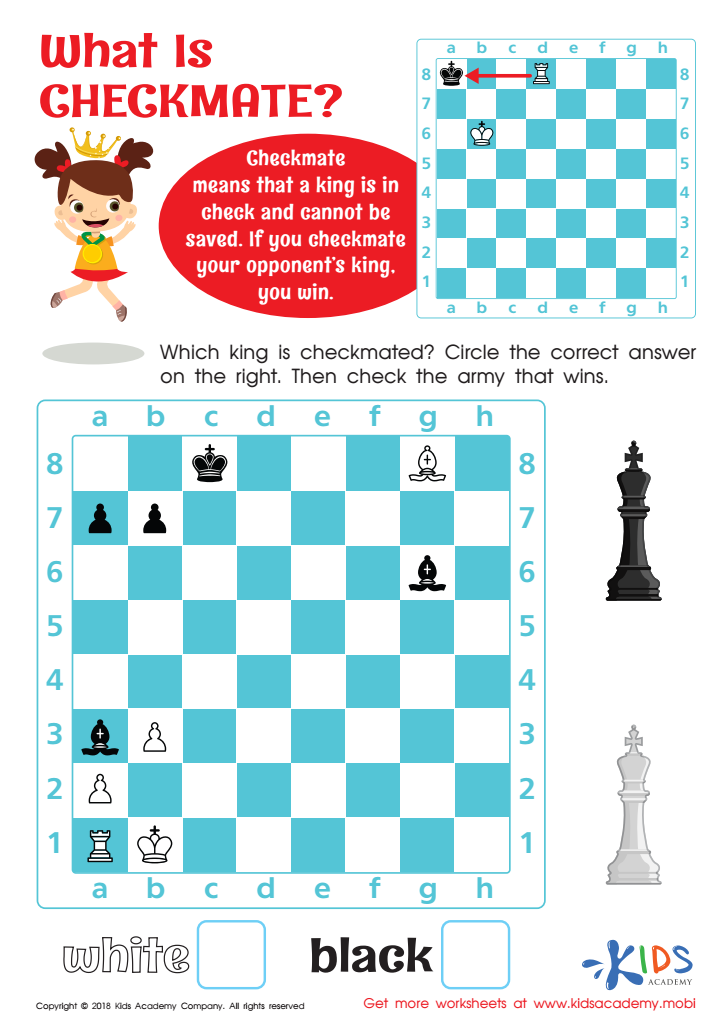
What is Checkmate? Worksheet
 Assign to My Students
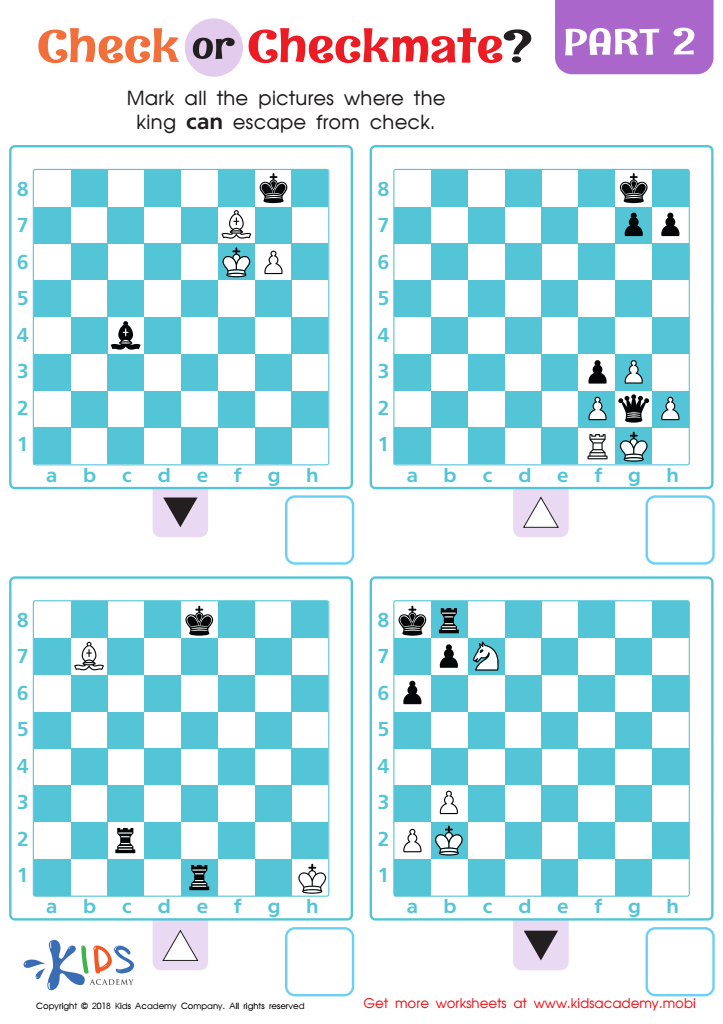
Check or Checkmate: Part 2 Worksheet
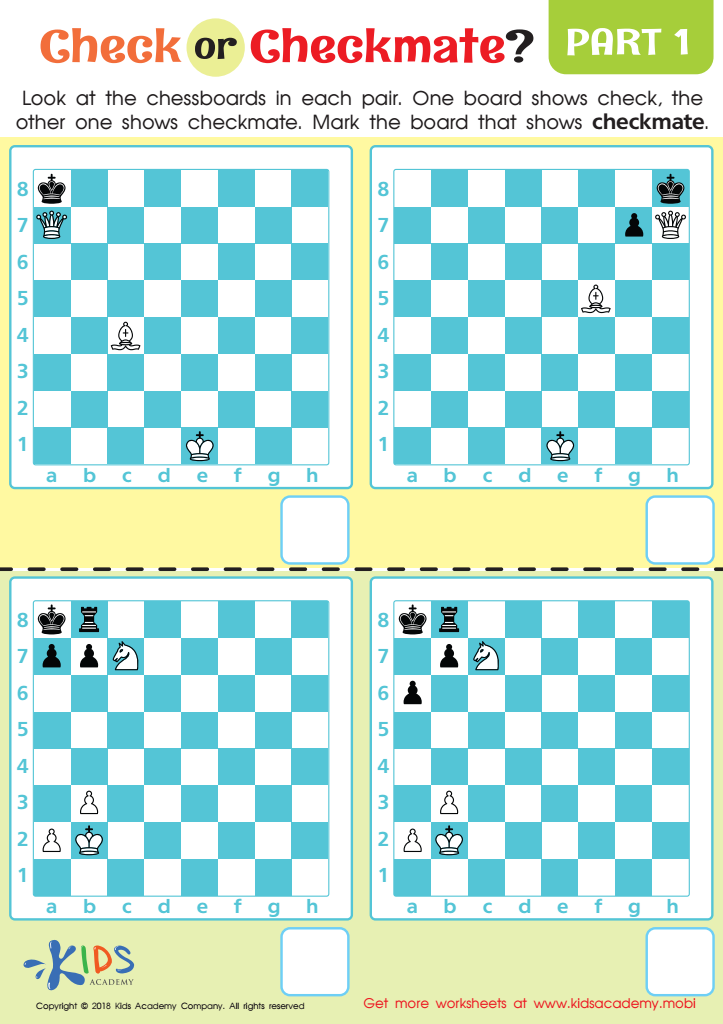
Check or Checkmate: Part 1 Worksheet
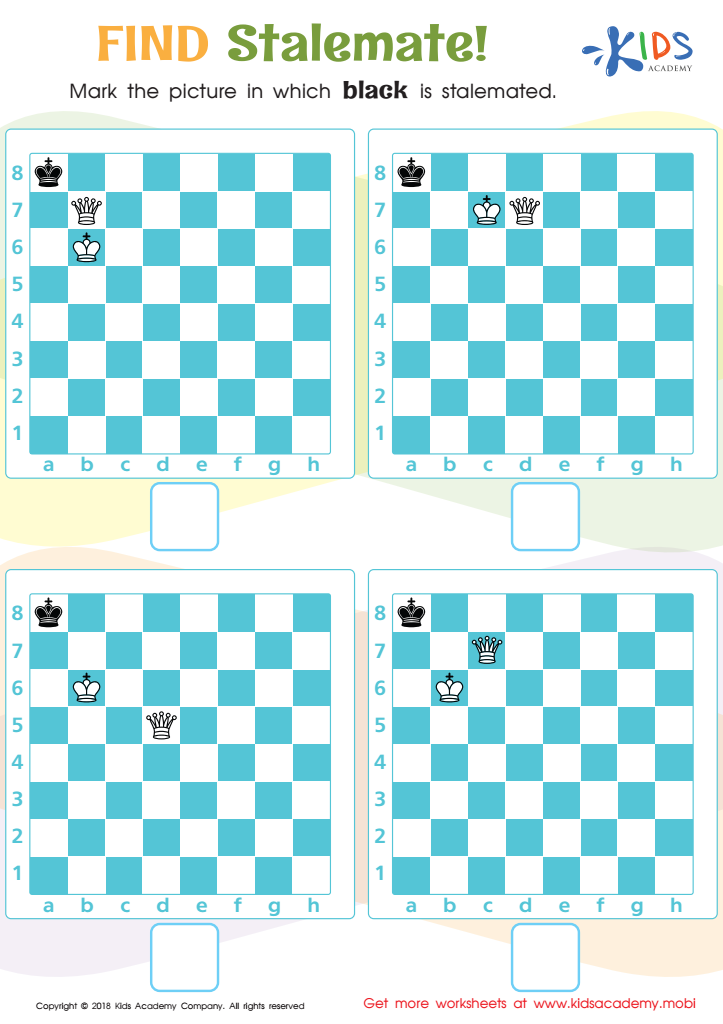
Find Stalemate! Worksheet






Critical thinking is an essential skill that enables children to analyze, evaluate, and synthesize information, setting the foundation for lifelong learning. Introducing Extra Challenge Chess for ages 3-6 is a unique way to nurture this ability in young children. Chess encourages strategic thinking, problem-solving, and decision-making skills. It challenges players to consider multiple outcomes based on their moves, fostering a mindset that values planning and foresight.
Parents and teachers should invest in such programs because early exposure to complex concepts through play enhances cognitive development. During these formative years, children's brains are highly plastic, making them more receptive to learning new skills and concepts. Introducing chess at this stage cultivates patience, improved concentration, and perseverance—essential traits for academic and personal success.
Moreover, Extra Challenge Chess instills confidence as children learn from both victory and defeat. Understanding how to analyze a game, reflect on their decisions, and adapt strategies fosters resilience. This helps children become better problem solvers in various aspects of life, not solely in academic settings. Ultimately, supporting chess development provides kids with tools to think critically and creatively, preparing them for challenges they will encounter as they grow.