Critical thinking development Extra Challenge Worksheets for Ages 3-6
5 filtered results
-
From - To
Unlock your child’s potential with our “Critical Thinking Development Extra Challenge Worksheets for Ages 3-6”! Designed to stimulate young minds, these engaging worksheets encourage innovative problem-solving and creative reasoning in a fun and interactive way. Each activity promotes critical thinking skills through captivating exercises that challenge their logic, analysis, and reasoning. Perfect for preschoolers and kindergarteners, these worksheets foster a love for learning while preparing children for future academic success. Ideal for home or classroom use, our critical thinking worksheets are a valuable resource for nurturing essential cognitive skills. Explore our collection today and watch your young learners thrive!
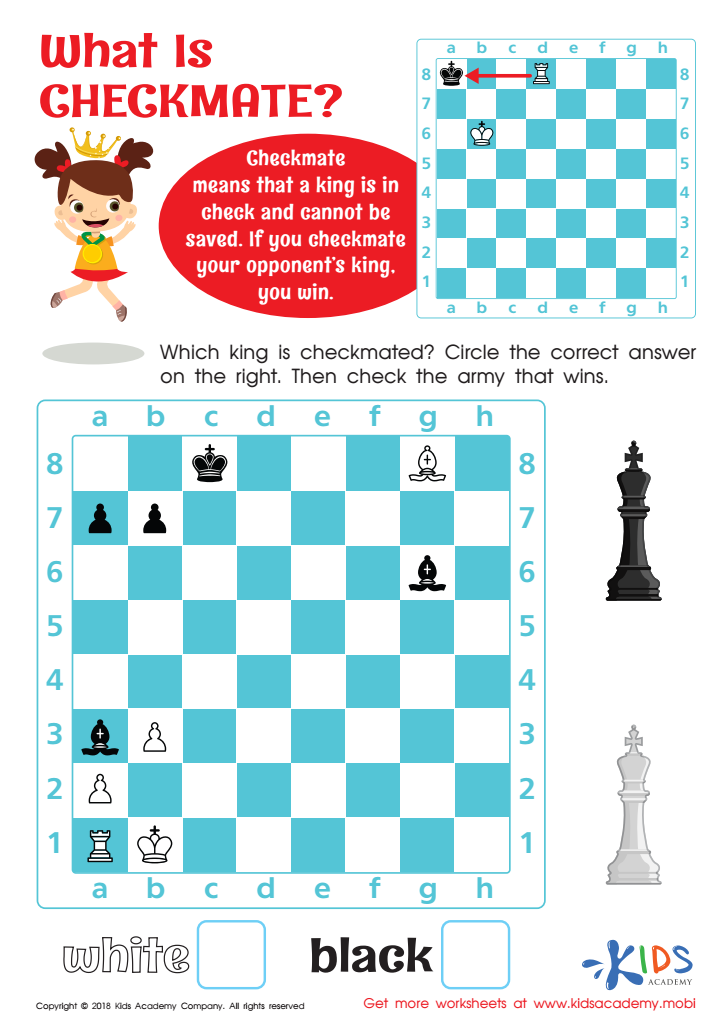
What is Checkmate? Worksheet
 Assign to My Students
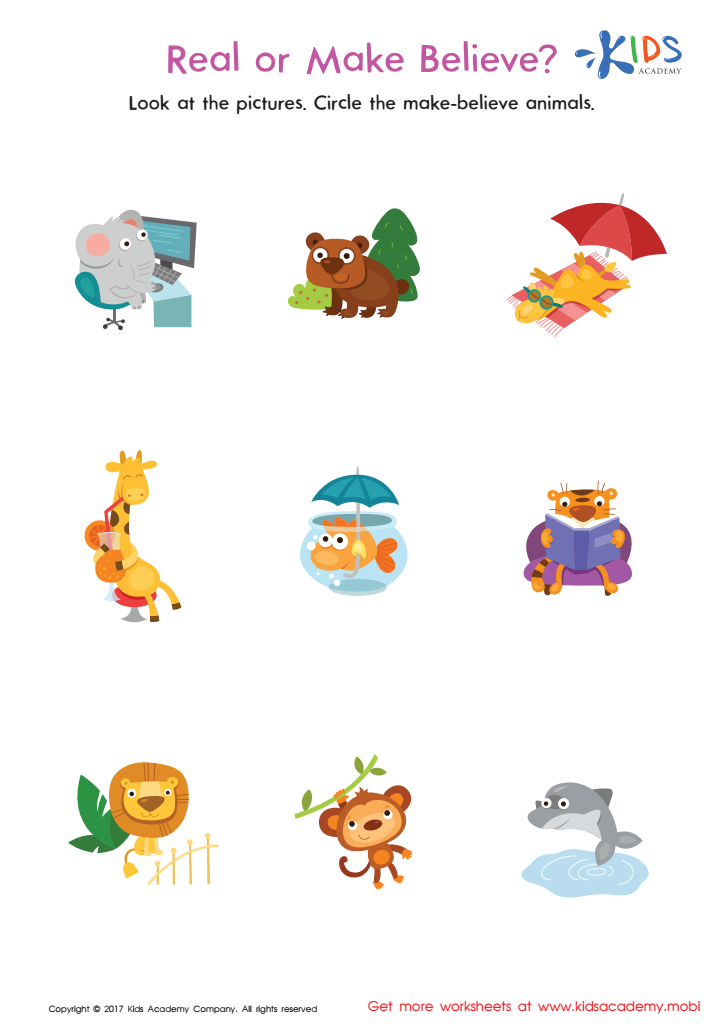
Fact or Make Believe Worksheet
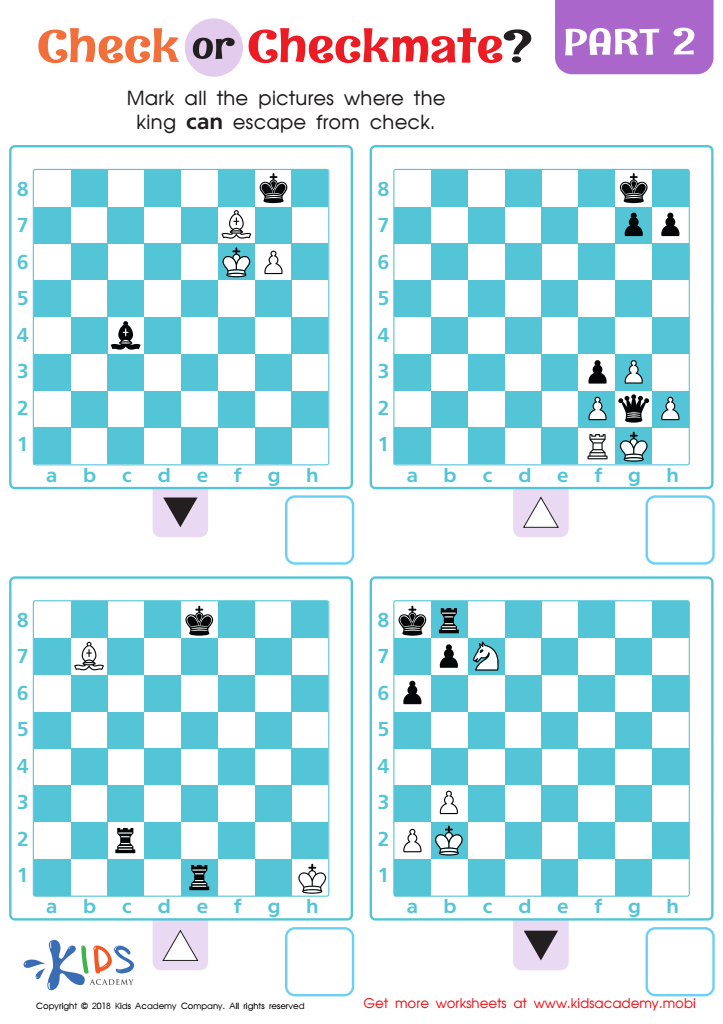
Check or Checkmate: Part 2 Worksheet
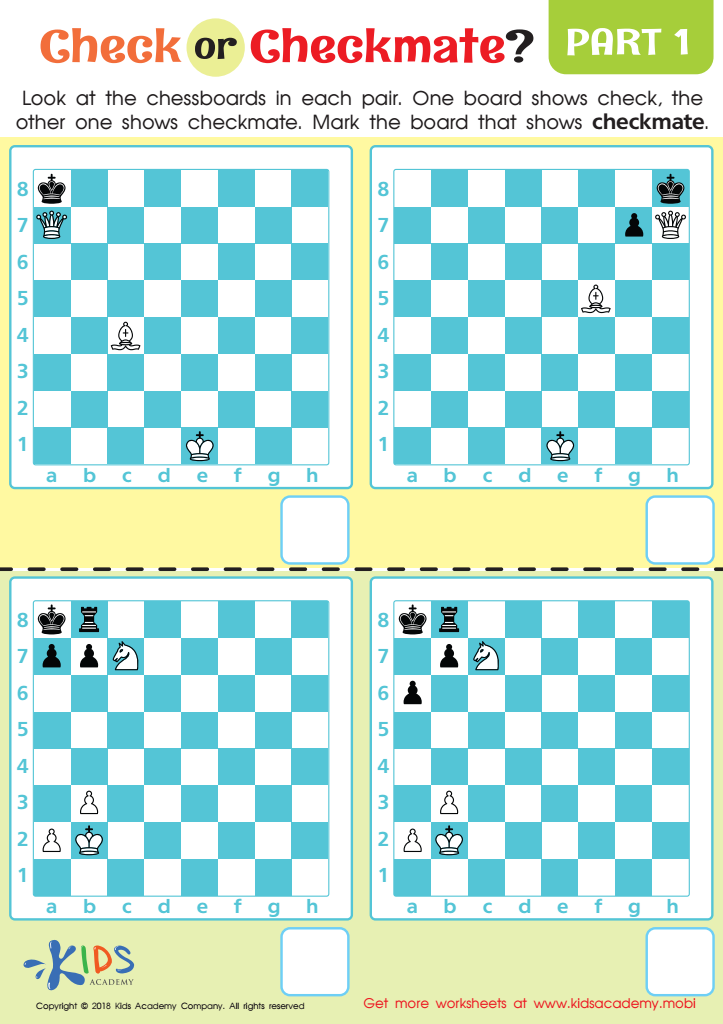
Check or Checkmate: Part 1 Worksheet
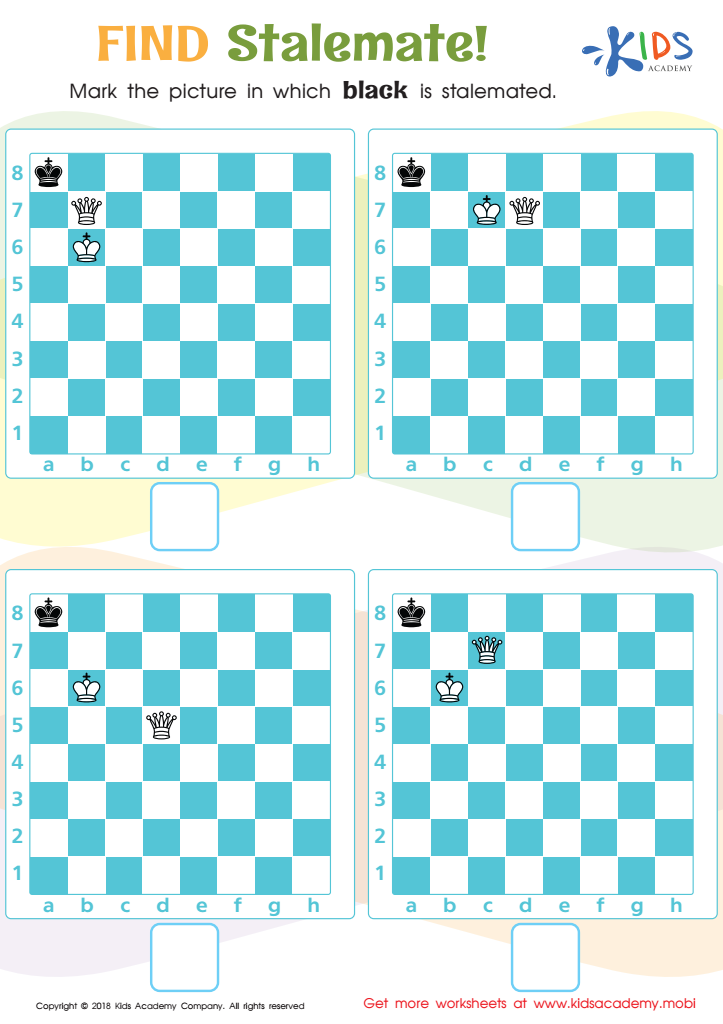
Find Stalemate! Worksheet







Developing critical thinking skills in children aged 3-6 is vital for their cognitive and emotional growth. During these formative years, children are naturally curious, and nurturing their ability to think critically enhances their problem-solving skills, creativity, and decision-making abilities. Parents and teachers should care about this development because it lays the foundation for effective lifelong learning.
Critical thinking encourages children to ask questions, consider different viewpoints, and evaluate information before drawing conclusions. This skill fosters independence and self-confidence, as children learn to trust their reasoning abilities and make informed choices. Furthermore, in an era characterized by rapid information availability and digital exposure, critical thinking equips young learners with the tools to navigate and discern relevant, accurate content from the noise.
Moreover, engaging children in activities that promote critical thinking—such as puzzles, open-ended questions, or collaborative play—strengthens their social and emotional skills, enabling effective communication and collaboration with peers. When parents and teachers prioritize critical thinking, they cultivate a generation of thoughtful, analytical, and engaged individuals prepared to tackle complex challenges in the future. Therefore, investing in critical thinking during early childhood is essential for holistic development and future success.








