
Mental math skills Extra Challenge Worksheets for Ages 3-6
3 filtered results
Difficulty Level
Grade
Age
-
From - To
Subject
Activity
Standards
Unlock your child's potential with our "Mental Math Skills Extra Challenge Worksheets" for ages 3-6! Designed to enhance cognitive development, these engaging worksheets encourage early math proficiency through fun activities. Perfect for young learners, they promote critical thinking, pattern recognition, and number sense in an enjoyable way. With a variety of exercises that challenge little minds, our resources are tailored for home or classroom use, ensuring a stimulating learning experience. Whether counting, simple addition, or number comparisons, your child will build confidence and enthusiasm for math. Download these worksheets today to support your child's journey to math mastery!
Favorites
With answer key
Interactive
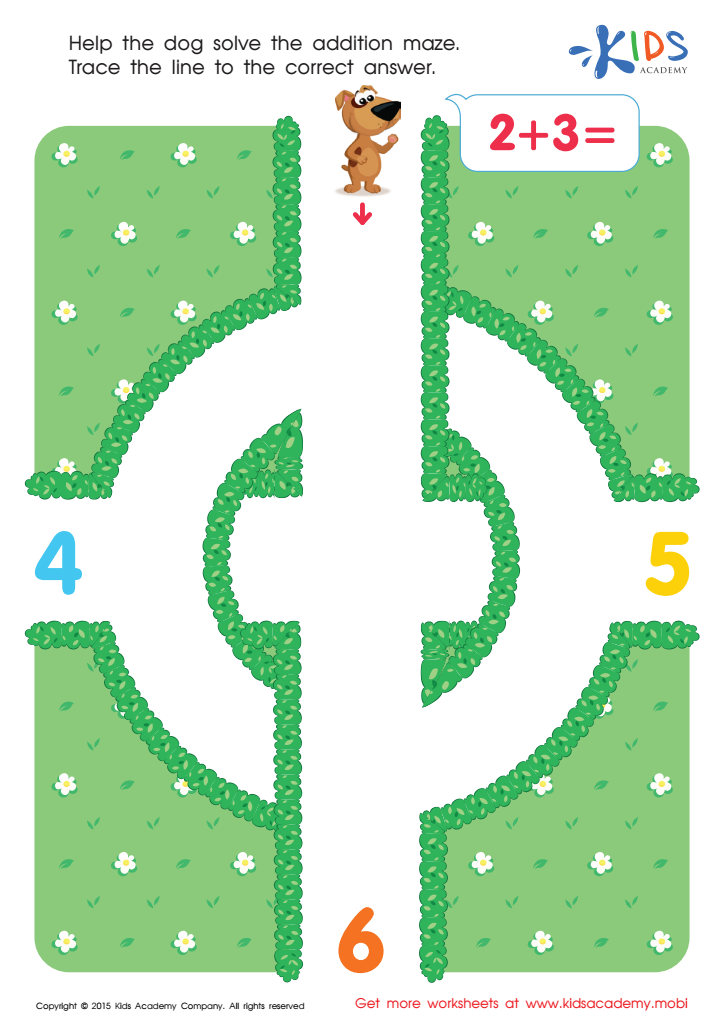
Two And Three Addition Worksheet
Give your children the task and let them find the path to the right answer while they make their way through the maze, and don't forget to let them trace the path.
 Assign to My Students
Two And Three Addition Worksheet
Worksheet
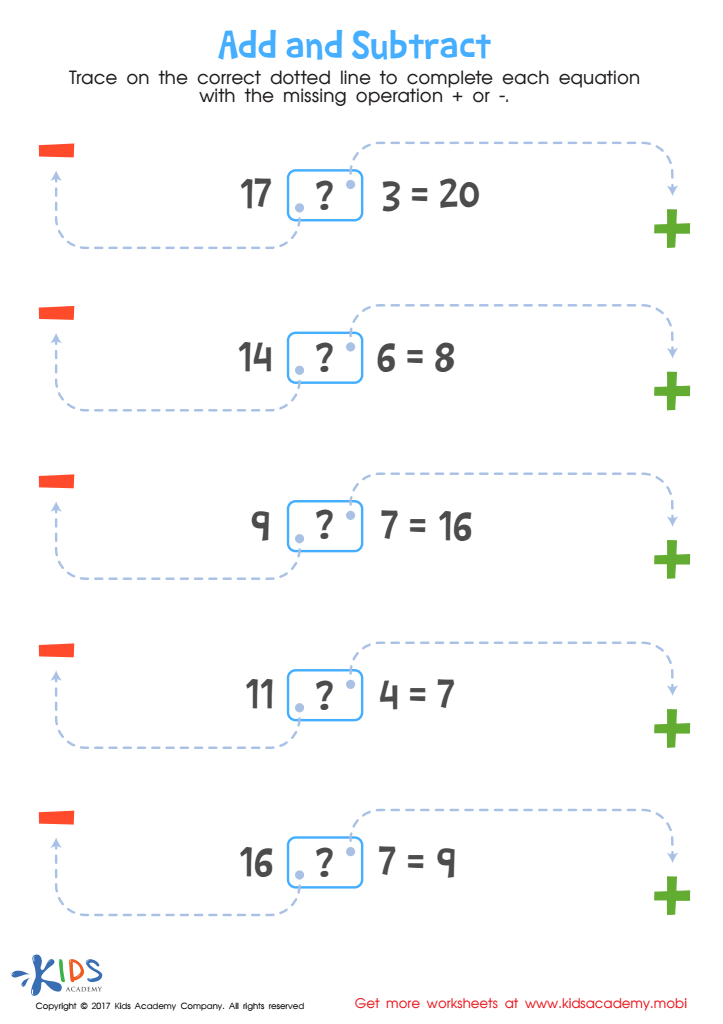
Add and Subtract Worksheet
Introduce your child to equations and advanced math concepts with this worksheet - designed to help them learn add and subtract up to 20. This logical reasoning exercise will help them gain a better understanding of math, preparing them for future success. Start early and watch them excel!
Add and Subtract Worksheet
Worksheet
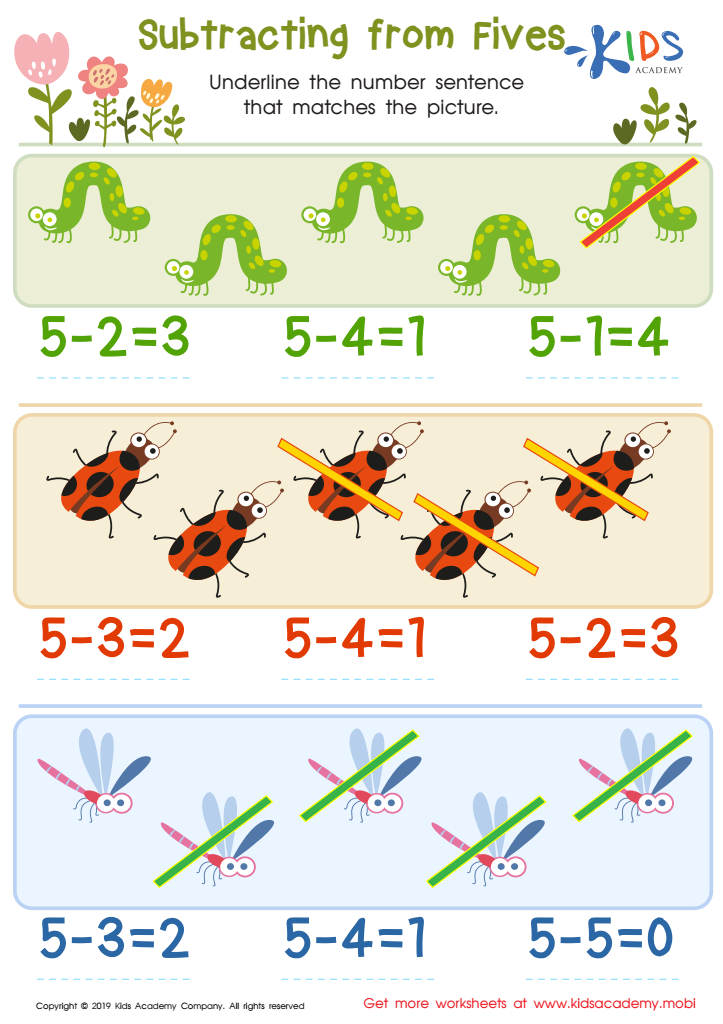
Subtracting From Fives Worksheet
Help your kids practice subtraction with this fun worksheet! Have them identify the insects, then solve the equations and find the matching number sentence. It's a great way to give them an edge in math and enjoy doing it!
Subtracting From Fives Worksheet
Worksheet
Join Kids Academy for Free
Who is primarily going to use this learning content?








Mental math skills are crucial for young learners aged 3-6, as they lay the foundation for future mathematical understanding and problem-solving abilities. Parents and teachers should care about fostering these skills because mental math promotes cognitive development, enhances confidence, and encourages a positive attitude towards learning.
At this age, children are naturally curious and absorb information quickly. Engaging them in activities that promote mental math helps develop their number sense, critical thinking, and processing speed. These skills not only contribute to success in math but also apply to daily life scenarios, strengthening their ability to make decisions and solve problems.
Moreover, practicing mental math can cultivate a love for numbers and math-related activities. When parents and teachers introduce fun challenges and games, it creates a positive environment that encourages exploration and perseverance. This is essential in nurturing resilient learners who are willing to tackle more complex concepts in the future.
Incorporating mental math challenges can also promote social interaction, as children often work together in groups. This cooperative learning fosters communication skills and teamwork. Ultimately, prioritizing mental math skills enriches children's educational experiences and provides them with vital tools for lifelong success.








