Money recognition Extra Challenge Worksheets for Ages 3-6
4 filtered results
-
From - To
Introducing "Money Recognition Extra Challenge Worksheets for Ages 3-6" by Kids Academy! Our engaging, printable worksheets are designed to make learning about money exciting and informative for young children. With fun activities that feature vibrant images and interactive tasks, kids will master the basics of coin identification, value comparison, and simple addition. Perfect for both classrooms and homeschooling, these worksheets encourage early math skills and develop financial literacy in a playful way. Boost your child's confidence and understanding of money with our expertly crafted resources—ideal for little learners ready for an extra challenge! Explore and download now!
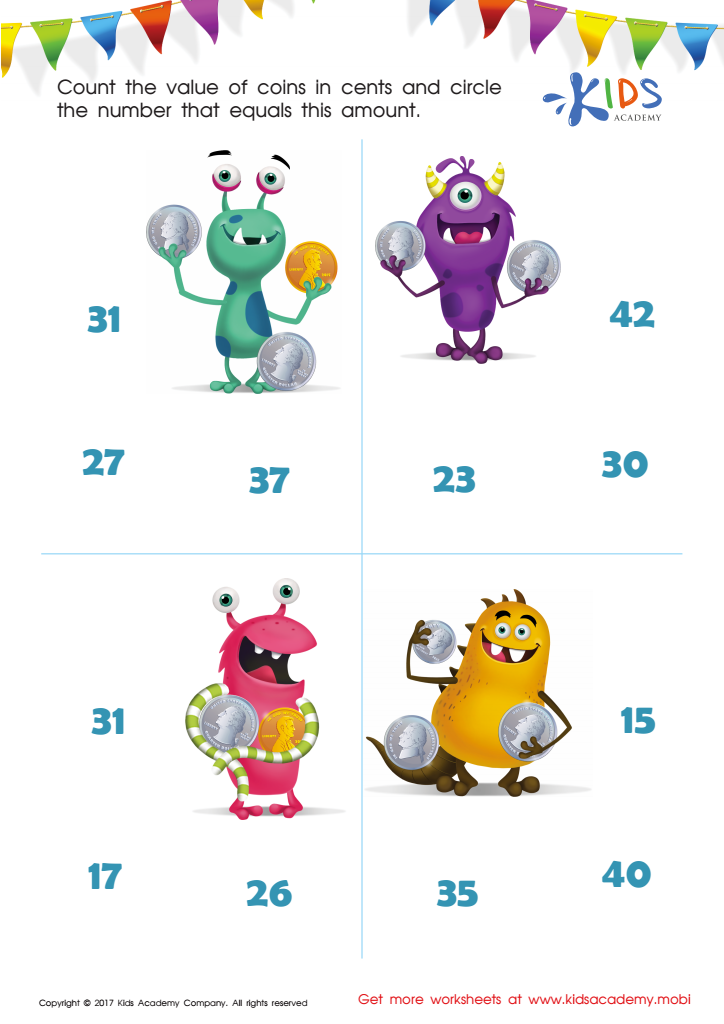
How Many Coins Money Worksheet
 Assign to My Students
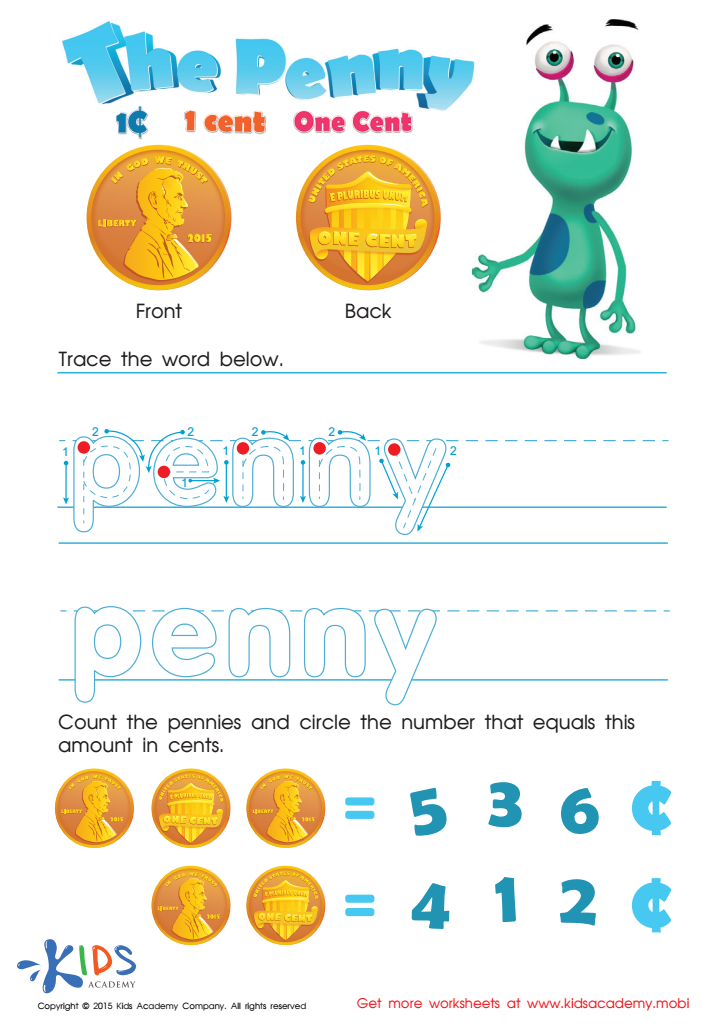
One Cent or the Penny Money Worksheet
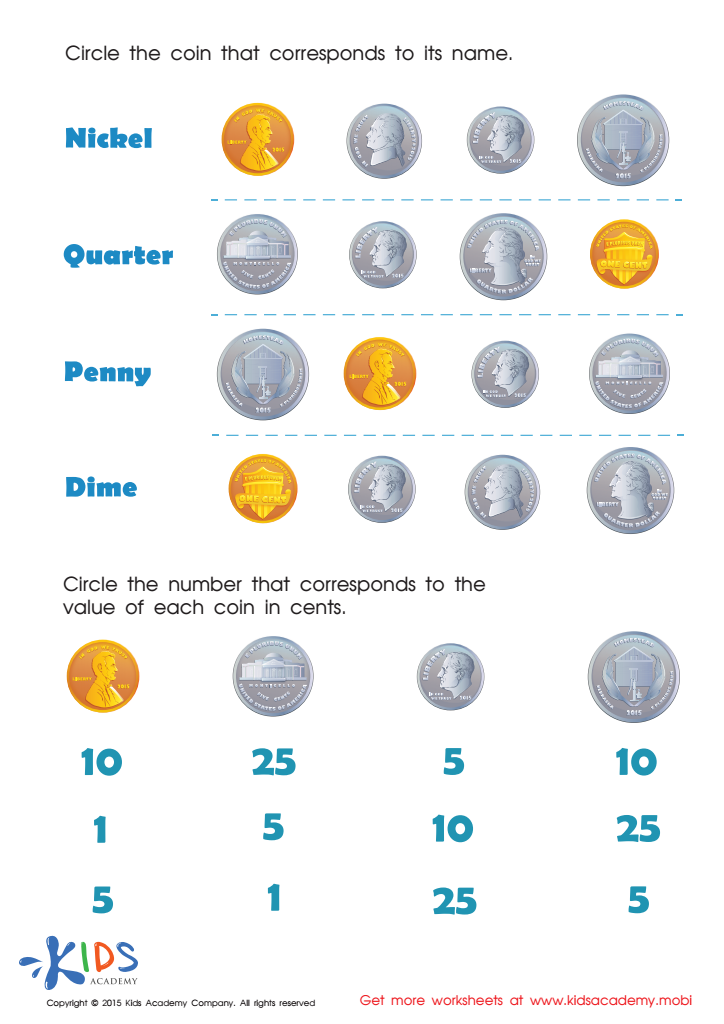
Coin Names and Values Money Worksheet
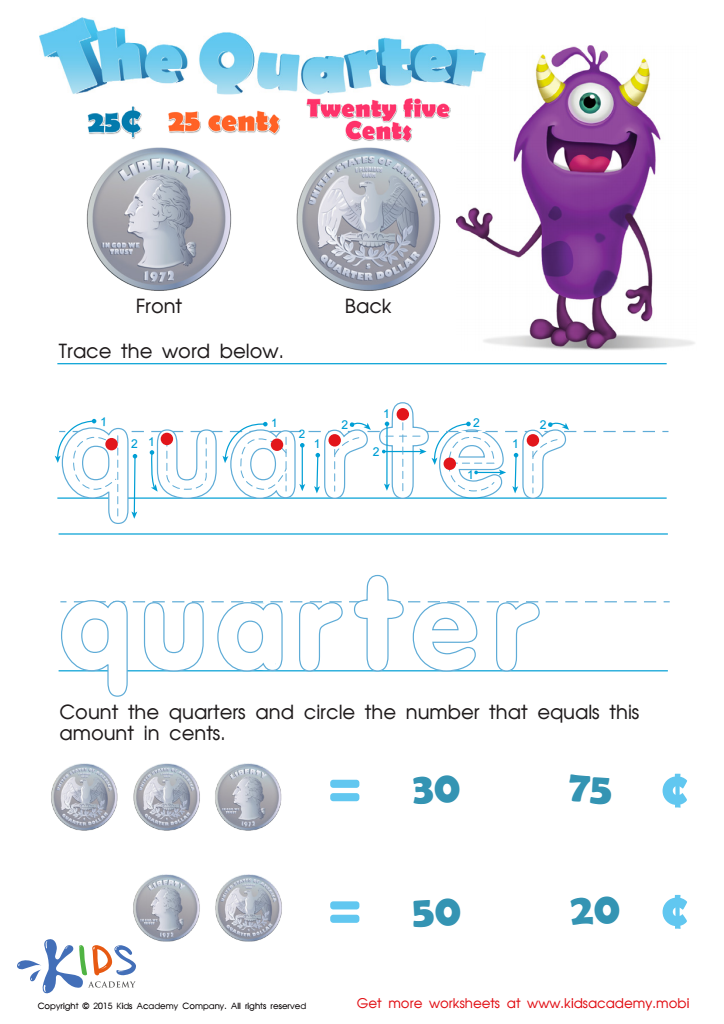
Twenty Five Cents or the Quarter Money Worksheet







Parents and teachers should place importance on money recognition activities for children aged 3-6 because this early exposure lays the groundwork for essential life skills. At this young age, kids are like sponges—they absorb information rapidly, and introducing them to money concepts can significantly benefit their cognitive development.
Understanding money fosters basic mathematical concepts such as counting, addition, and subtraction. For instance, recognizing different coins and bills introduces children to numbers and values, developing their numerical literacy. As they differentiate between a penny, nickel, dime, and quarter, they naturally learn to sort, categorize, and understand sequencing.
Moreover, money recognition activities enhance practical life skills crucial for future financial literacy. When children grasp how money is used in daily transactions, they begin to understand the value of things, enabling prudent decision-making and budgeting habits as they grow. These foundational skills carry over into adulthood, preparing them for managing personal finances, making informed shopping choices, and saving.
Additionally, such challenges can boost children's confidence and independence. Mastering money concepts can be empowering, giving them a sense of accomplishment. By embedding these skills through playful and educational activities, both parents and teachers significantly contribute to a child's comprehensive growth and preparedness for real-world experiences.








