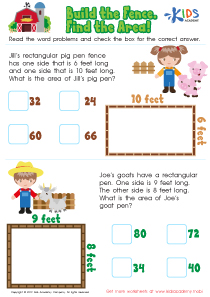
Basic counting skills Extra Challenge Numbers Worksheets for Ages 3-6
3 filtered results
-
From - To
Enhance your child's numerical proficiency and make learning fun with our "Basic Counting Skills Extra Challenge Numbers Worksheets for Ages 3-6". Designed to solidify foundational math skills, these worksheets introduce young learners to numbers through engaging activities and illustrations. Each worksheet provides an extra challenge to keep your child motivated and progressing. Perfect for preschool and kindergarten children, these printable resources support early math education by reinforcing counting, number recognition, and patterning in an enjoyable way. Foster a love for numbers in your little ones today with our expertly crafted and pedagogically sound worksheets!
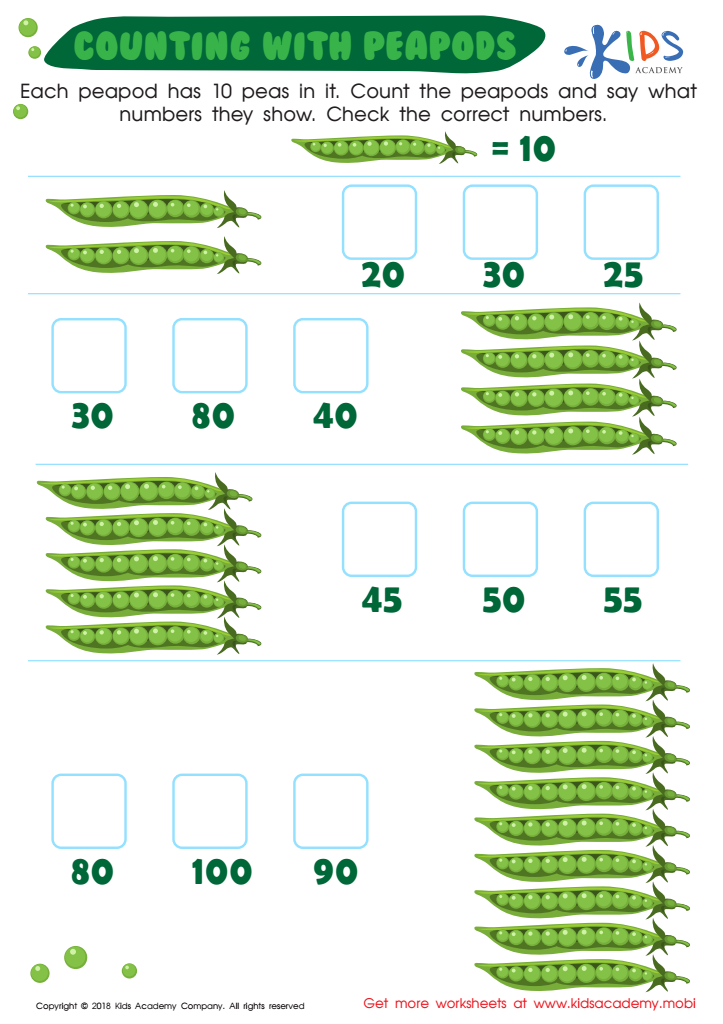
Number Worksheet: Counting With Peapods
 Assign to My Students
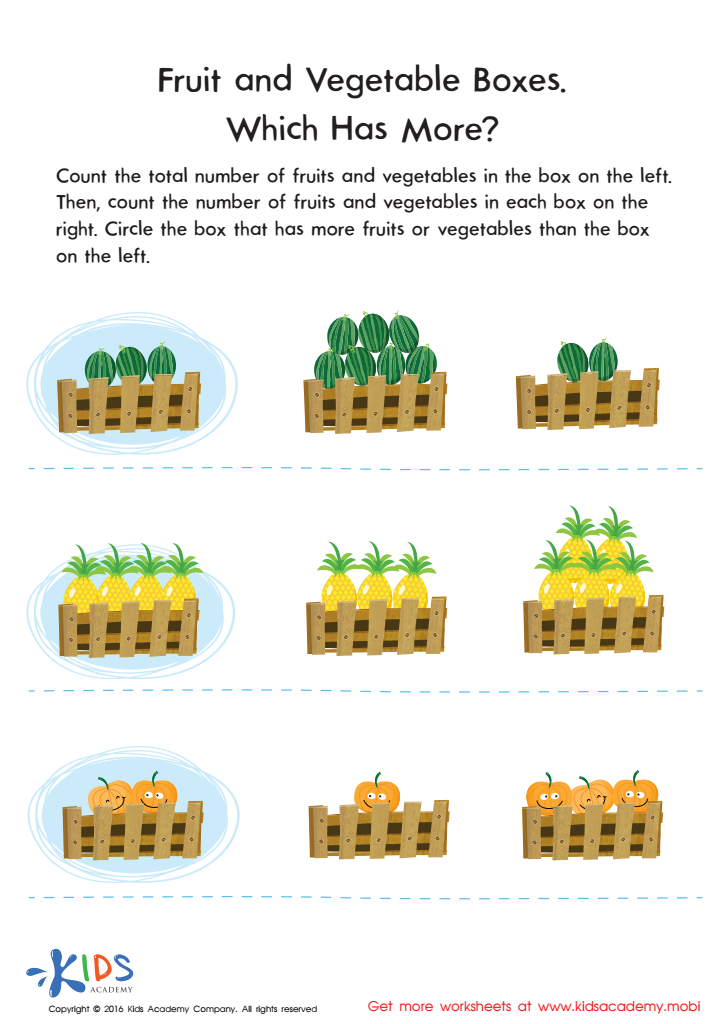
Which Has More? Size Worksheet
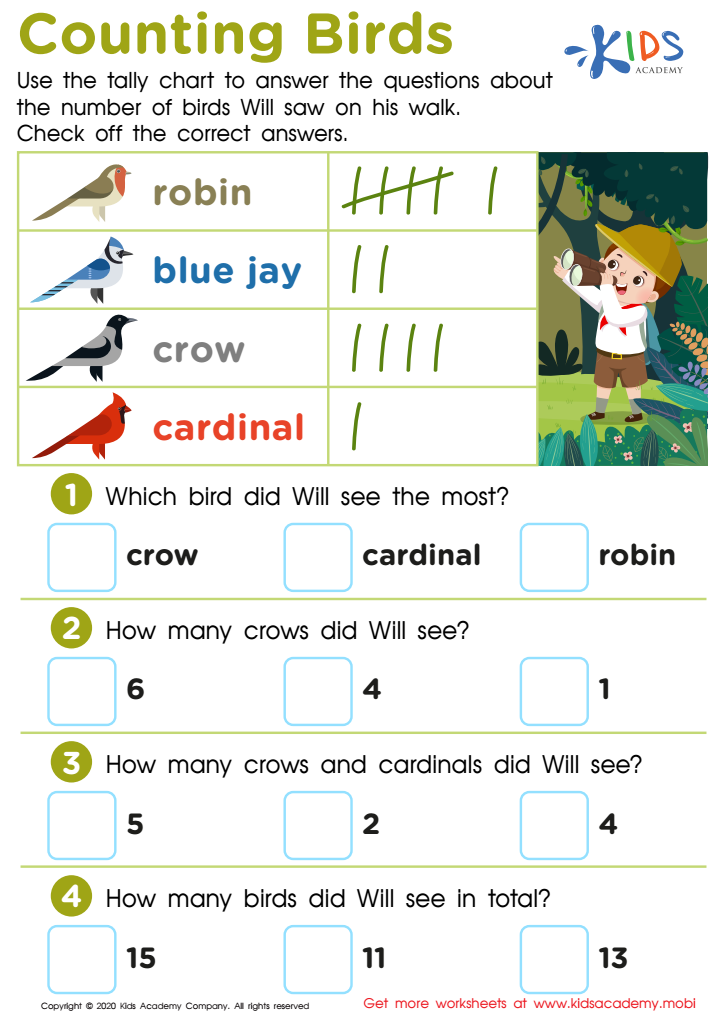
Counting Birds Worksheet







Parents and teachers should prioritize basic counting skills for young children ages 3-6 because these early math experiences lay the foundation for future academic success. Counting is more than just reciting numbers; it involves understanding quantity and the concept of one-to-one correspondence. These skills are critical for more complex mathematical reasoning and problem-solving abilities later in life.
Introducing extra challenge numbers extends beyond simple counting and engages children in recognizing number patterns, sequencing, and basic arithmetic. This advanced engagement helps boost their cognitive development, critical thinking, and reasoning skills. By challenging children with higher numbers, it encourages them to think logically and look for patterns, fostering a deeper understanding and appreciation for mathematics.
Early proficiency in math not only builds confidence but also correlates with better performance in other subjects. Children who establish solid counting and number sense skills tend to excel in reading and comprehension because they develop strong analytical and organizational skills.
Moreover, mastering basic and advanced counting at a young age sets a positive attitude towards learning and academic endeavors. Hence, parents and teachers who focus on these skills are investing in a child's holistic educational development, preparing them for a successful and enthusiastic lifelong learning journey.